Aging well starts when ordinary life feels a little more expensive than it used to. The stairs take more out of you, recovery lasts longer, and meals that used to hold you now leave you hunting for snacks an hour later. Those are early signals that protein, training, and daily intake need more attention.
01Strength for the long run
Healthy aging is not a vague wellness goal. It is the work of keeping strength, muscle, mobility, and day to day energy high enough that your body still does what you ask of it.
The nutrition side is simple in theory and easy to neglect in real life. Protein matters more, not less. Resistance training matters more, not less. Sleep and recovery become less optional. Weight control still matters, but the target is capacity first and appearance second.
02Who this goal fits
You're in the right place if you want to stay strong, independent, and active for the long run, or if you're in midlife and already noticing slower recovery, lower protein intake, creeping body fat, or less stable energy.
If the main target is muscle size, go to Build Muscle. If the main target is losing fat while keeping the scale moving, use Get Leaner and Stronger. Otherwise, the focus here is keeping performance, independence, and recovery intact across years.
03Priorities that drive this goal
| Priority | What to do | Why it matters |
|---|---|---|
| Protein intake | Aim for 1.6 to 2.2 g per kg of body weight daily | Older adults lose more ground when protein lands too low |
| Strength training | Lift 2 to 4 times each week with a clear plan | Strength protects the ability to move, carry, and climb |
| Food quality | Keep fiber, produce, and nutrient dense foods in rotation | Better food makes appetite, weight, and recovery easier |
| Recovery habits | Sleep on a regular schedule and walk every day | Recovery gaps show up as weaker training and lower energy |
| Weight stability | Keep weight from drifting up or down too fast | Slow drift often hides loss of muscle and daily capacity |
Protein is the first thing to lock in because it is the part most people think they are covering and usually are not.
Protein
Protein Calculator
Find exactly how much protein you need each day based on your weight, body composition, and goal.
Daily target
Per lb bodyweight
3 meals
4 meals
5 meals
6 meals
Calories
To hit 150g today, you could eat
Targets based on grams per kg of lean body mass using current literature. Individual needs vary by training intensity, age, and total caloric intake.
04How Fuel supports this goal
Fuel helps by making the week visible before the week gets away from you. Energy Dashboard shows whether intake actually matched the days that asked more of you, which matters when recovery is less forgiving than it used to be. Nutrition Planning helps you set protein and calories at a level you can repeat without relying on appetite alone. Weekly Review shows drift early, which matters more here than perfect single-day tracking.
For many adults, the app is most useful when it keeps four things steady: enough protein, enough food on active days, less random overeating on quiet days, and a reliable read on weight and recovery.
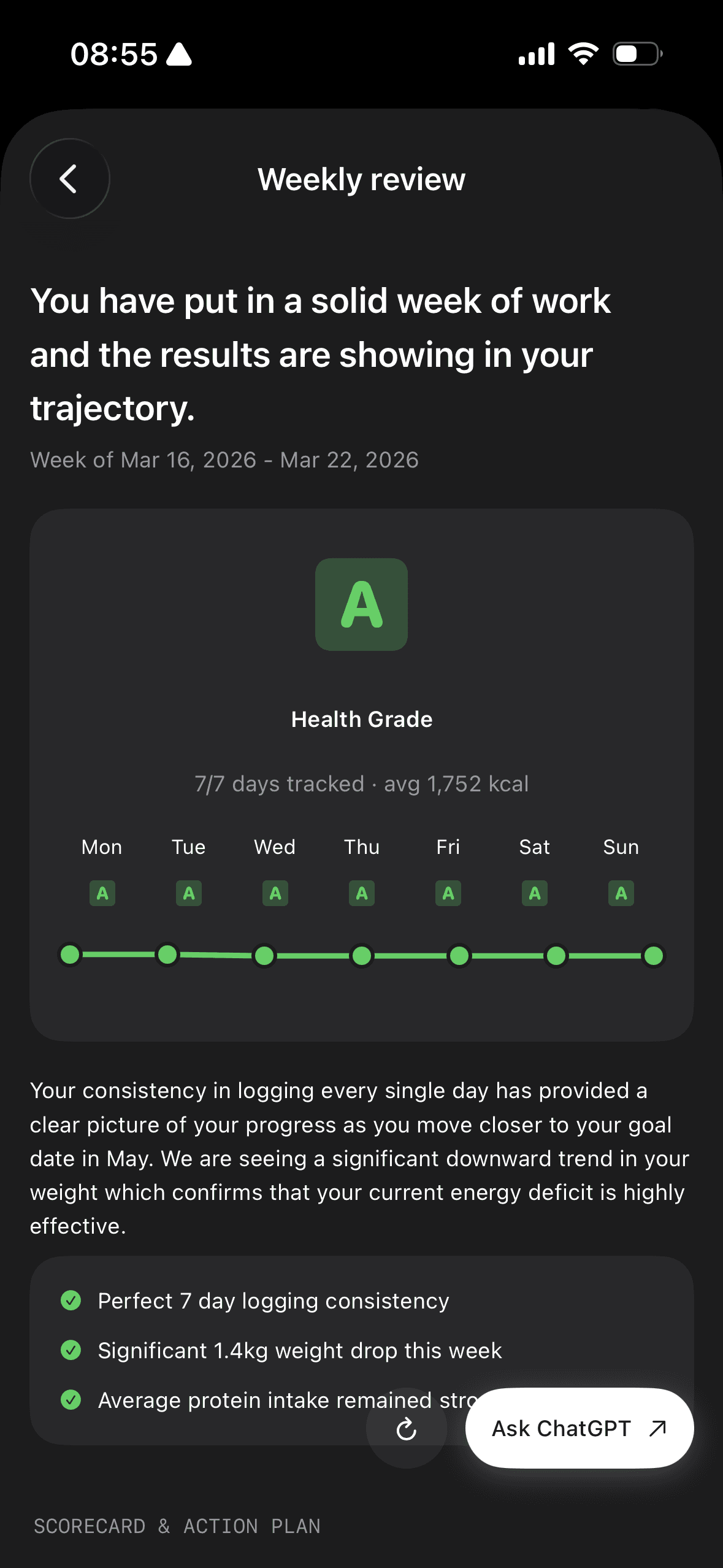
Use the weekly plan
A weekly review helps here because the goal is not one perfect day. It is a routine that keeps strength, food, and recovery in a workable range.
Start in Fuel
Set your protein target in Fuel
Open Fuel, set a protein target you can repeat, and use the weekly review to catch under-eating before it turns into weaker training and slower recovery.
05Nutrition targets for this goal
Protein is the anchor here. Many adults age into lower protein intake because appetite, routine, and food habits shift. That usually works against strength and recovery. Leucine Threshold: How Much Protein Per Meal Actually Matters is worth reading if most of your protein lands at dinner, because older adults often need a stronger meal level protein signal to hold muscle and function. Anabolic Resistance explains the physiology behind that shift and the meal-level adjustments that usually fix it.
Food quality matters as much as macros. Balanced Diet, Omega-3 Fatty Acids, Fiber Intake, and Protein Quality are better anchors than a trendy diet label. Stable weight can hide muscle loss when fat mass rises as muscle mass and function decline.1 Sarcopenic Obesity covers this combined pattern. If you want a diet pattern with broad support and good food quality, Mediterranean Diet is a strong base. If you want one supplement that is often useful in this phase, The Complete Guide to Creatine (2026) is the right read, and Creatine for Women covers the life stage angle.
The target is not dietary purity. The target is a week of eating that keeps training, weight control, and daily energy in a range that still feels normal.
06Progress markers that matter
Healthy aging progress often feels less dramatic than physique goals, though it is just as real. You recover better, strength holds longer, body weight stays calmer, and daily movement feels easier.
| Signal | What to look for |
|---|---|
| Strength | You keep or improve key lifts and basic capacity |
| Energy | Fewer low-energy stretches across the week |
| Recovery | Hard days do not linger as long |
| Body weight | Less slow upward drift and less loss of lean tissue |
| Daily life | Stairs, walks, travel, and chores feel easier |
These are high-value outcomes because they compound. Small strength losses ignored for years become hard to reverse.
07Mistakes that stall this goal
Aging well usually asks for more attention, not less. That is the part many people miss first, especially when they keep eating like they are trying to stay small and assume training alone will cover the gap.
Too little protein, too little strength work, and too much reliance on cardio usually travel together. They look disciplined on paper, but they leave muscle, balance, and day to day function underpowered. Waiting for a health scare before treating food quality and strength seriously only makes the catch up harder.
Restriction creates the next problem. Chasing youth through less food can make body weight fall and function fall with it. Aging well usually works better when protein, strength work, recovery, and food quality all rise enough to keep the body you already rely on.
08Guides that pair with this goal
Read The Importance of Protein and Fuel Your Body for the bigger frame. Then use Sleep Hygiene, Recovery Time, and Balanced Diet to tighten the basics. If you want the same theme through a body-composition lens, go next to Get Leaner and Stronger.
09Start this goal in Fuel
If you want a simple first move, start with protein and the weekly plan. Calculate your protein target, keep it visible in the app, and use Weekly Review once a week so small drift does not become the new normal.
Open the app
Build the week you can repeat
Start with protein, then use Fuel to keep intake, recovery, and weekly review in the same system instead of guessing from memory.
10FAQ
What does tracking add if I already eat reasonably well
It shows whether your habits are strong enough for the body you want to keep. Many adults eat reasonably well and still miss protein, under-fuel active days, or drift on weekends without seeing the pattern until recovery and strength start slipping.
What if I already lift and still feel slower to recover
That is exactly where intake and sleep usually need a closer look. The fix is often not more discipline. It is enough protein, enough food on harder days, and a weekly review honest enough to catch where the drop is happening.
What matters more with age, weight or strength
Strength matters first when the goal is to keep function. Body weight still matters, but it matters as a signal of what is happening to muscle, energy, and routine.