Plain creatine monohydrate at 3 to 5 grams per day is one of the lowest-cost, highest-confidence supplement decisions most lifters, team-sport athletes, older adults who resistance train, and many women can make. It is the single most-researched performance supplement in sports nutrition, and decades of data back that claim across strength, body composition, repeated high-intensity work, recovery, and aging.
People still get the basic questions wrong. They still ask whether it damages kidneys, whether it is basically a steroid, whether women should avoid it, whether HCl is better than monohydrate, and whether the first kilogram on the scale means they got fatter.
01Creatine is a stored energy compound in muscle
The biochemistry in plain English
Creatine is a nitrogen-containing compound made from arginine, glycine, and methionine. Your body synthesizes it mainly in the liver and kidneys, then transports it into tissues with high energy demand. Skeletal muscle holds about 95 percent of total body creatine. The rest sits in places like the brain and other tissues that also need fast energy buffering.1
That distribution matters. The muscle benefits are the easiest to see, though the same energy logic explains why researchers also keep testing creatine in sleep deprivation, aging, depression, and neurological disease.
Where your body gets it
Healthy adults make about 1 to 2 grams of creatine per day and often get another 1 to 2 grams from food if they eat meat or fish regularly. Even then, muscle stores are usually only about 60 to 80 percent saturated. That is the main reason supplementation still works in omnivores. You are usually not filling a zero-to-one gap. You are topping off a system that is not fully loaded.1
Vegetarians and vegans often begin with lower baseline stores. That is one reason they frequently respond well to supplementation, especially for training and possibly for cognition.1
That synthesis is not free. The last step, done by the liver enzyme GAMT, spends a methyl group from the body's SAM pool, the same pool that builds phosphatidylcholine, the body's own route to choline. Dietary creatine reduces how much the body has to build this way, which is the mechanism behind treating creatine as methyl-group-sparing. Whether that reliably protects choline status in someone who also skips egg yolks is a separate question, covered in how choline and creatine share a methyl-group budget.
Where it is stored
Muscle stores creatine as free creatine and phosphocreatine. Phosphocreatine is the immediately useful form during hard effort because it can donate a phosphate to ADP and help rebuild ATP fast. That is the whole economic engine of creatine supplementation.
Creatine in food
Food contributes meaningful background intake, though it is a clumsy way to hit a stable supplemental dose.
| Food | Approximate creatine per 100 g |
|---|---|
| Herring | 0.7 to 1.0 g |
| Beef | about 0.4 to 0.5 g |
| Pork | about 0.4 to 0.5 g |
| Salmon | about 0.4 to 0.5 g |
| Tuna | about 0.3 to 0.4 g |
| Cod | about 0.2 to 0.3 g |
If you want 3 to 5 grams of creatine every day, supplementing is much easier than building the entire target from food alone.
02Creatine reloads ATP for short hard efforts
The ATP-PCr system
The phosphocreatine system is your fastest energy pathway. ATP depletes very quickly during maximal effort. Phosphocreatine helps regenerate it fast enough to keep force output from dropping immediately. That matters in heavy lifting, sprinting, jumping, change-of-direction work, and repeated-bout training.
The chain is simple. Higher phosphocreatine stores let you restore ATP faster between efforts. That means more high-quality reps, sprints, or intervals before fatigue forces output down. Across a training week, those extra quality sets add up to a stronger stimulus. The acute effect is small. The training effect compounds.
Why the muscle gain story is bigger than ATP
Creatine also changes cell hydration. Water moves into muscle cells, which increases cell volume. That cell swelling appears to act as an anabolic signal and can reduce proteolysis while creating a better environment for muscle protein synthesis. Researchers have also proposed secondary mechanisms involving IGF-1 signaling and myostatin suppression, though the practical value of creatine still comes back to one thing. It helps you do more high-quality work and recover from it better.1
03Strength power lean mass and recovery benefits
Benefits summary
| Benefit | Evidence strength | Who benefits most |
|---|---|---|
| Strength and power output | Tier 1 | Lifters, team-sport athletes, mixed-modal athletes |
| Lean-mass gain during training | Tier 1 | Almost everyone who resistance trains |
| Repeated high-intensity performance | Tier 1 | Sprinters, football, combat sports, HIIT |
| Recovery between bouts | Tier 1 to Tier 2 | Athletes with repeated hard sessions |
| Muscular endurance | Tier 2 | Depends on protocol and sport |
| Cognitive support under stress | Tier 2 | Sleep-deprived, mentally taxed, low-intake groups |
| Sarcopenia and aging support | Tier 1 to Tier 2 with resistance training | Adults 55+ |
| Bone-health support | Tier 2 to Tier 3 | Most useful when paired with resistance training |
| Depression support | Tier 3 | Emerging, mainly clinical settings |
Strength and power
This is still the core use case. A 2024 meta-analysis found significant improvements in upper- and lower-body strength and power outcomes with creatine supplementation during training. Another 2024 meta-analysis found greater upper- and lower-body strength gains in adults under 50 when creatine was paired with resistance training.23
In practice, that means more reps at a fixed load, slightly better repeat sprint capacity, more stable bar speed, and stronger performance later in a session. Over one session that looks modest. Over twelve weeks it matters.
Muscle mass and body composition
Creatine does not increase fat mass. It often increases scale weight early because water is pulled into muscle tissue. After that early phase, the benefit shifts toward genuine lean-mass support because training volume and recovery tend to improve.
A 2024 meta-analysis on body composition found an added lean-body-mass benefit when creatine was paired with resistance training in adults younger than 50. That added lean mass is one of the reasons creatine keeps showing up in serious hypertrophy plans and in muscle-retention phases during a cut.2
If you are dieting hard and trying to keep performance stable, pair this with Fat Loss and Muscle Preservation, Leucine Threshold: How Much Protein Per Meal Actually Matters, and Build Muscle.
Repeated high-intensity performance
Creatine earns its place outside the weight room here. Team sports, combat sports, mixed-modal training, and repeated sprint work all depend on the ability to restore ATP between bouts. Creatine helps here because the sport itself is basically a long string of partial recoveries.
The effect is most useful when the sport demands multiple bursts instead of one continuous steady-state effort. Creatine often matters more for soccer than for a flat marathon because of this. It can still help endurance athletes in the gym, in sprint finishes, or in phases that depend on power, though it is rarely the first supplement an endurance-first athlete needs.
Recovery
Creatine also helps you recover the ability to produce performance again. Research suggests it can support glycogen resynthesis and reduce some markers of muscle damage, especially when paired with carbohydrate intake. The practical effect is often easier to notice in the second session than the first.
Cognitive function and brain health
Most creatine content handles cognition badly. Some pages ignore it. Other pages imply creatine is a universal nootropic. Neither version is honest.
The brain stores much less creatine than muscle, and brain uptake is slower and more limited. That helps explain why the clearest cognitive effects often show up under stress rather than in well-rested, well-fed healthy adults going about a normal day.
A 2024 trial published in Scientific Reports found that a single high dose during 21 hours of sleep deprivation improved word memory and processing speed. That is real and useful. It is also very different from saying every office worker should expect dramatic cognitive gains from 5 grams per day.4
The stronger current position is this. Brain-energy support from creatine looks promising, especially under sleep deprivation, hypoxia, high mental demand, lower baseline intake, and possibly in some clinical populations. The case is interesting and still developing.
Aging, sarcopenia, and bone
Aging may be the highest-value section of the creatine literature and the least-covered part of the commercial supplement internet.
A 2025 meta-analysis in older adults found that creatine supplementation combined with exercise training improved some body-composition and strength outcomes. Reviews led by Candow and colleagues keep pointing to the same practical lesson. Creatine helps older adults most when it sits on top of resistance training.5
Muscle loss with aging changes function, fall risk, training tolerance, and independence. A small training edge matters more when the penalty for losing muscle is that steep.
Bone-health effects remain less settled. The direction is interesting, especially when training is present, though the evidence is not as strong as the evidence for muscle and strength.
04Creatine for Women
Most creatine guides fall apart here. They mention women for two sentences, call the supplement safe, and move on. The research story is better than that.
Hormonal status appears to matter. Creatine synthesis enzymes, creatine kinase activity, protein turnover, and fluid handling may all shift across the menstrual cycle and across life stages such as pregnancy, postpartum recovery, perimenopause, and menopause. The 2021 review Creatine Supplementation in Women's Health: A Lifespan Perspective and the 2025 review Creatine in women's health: bridging the gap from menstruation through pregnancy to menopause both argue that the female-specific case deserves far more attention than it usually gets.67
The practical payoff is simple. Women who lift, sprint, cut weight while trying to preserve muscle, or want to hold strength through midlife have good reason to consider creatine. The dedicated version of that argument lives in Creatine for Women, which covers body-weight interpretation, life-stage questions, and the current female-specific evidence in more detail.
One newer paper worth knowing is the NHANES 2017-2020 analysis that found women with higher dietary creatine intake had lower odds of several adverse reproductive-health outcomes. That study does not prove supplementation causes better reproductive health. It does show that creatine is showing up in wider female-health conversations now, not only in sports performance.8
05Creatine monohydrate beats other forms
The verdict-first table
| Form | Research depth | Verdict |
|---|---|---|
| Creatine monohydrate | Deepest evidence by far | Default choice |
| Micronized monohydrate | Same compound, smaller particles | Fine if mixing or stomach comfort is better |
| Creatine HCl | Limited but growing | Reasonable if monohydrate bothers your stomach |
| Buffered creatine | No clear advantage | Skip the premium |
| Creatine ethyl ester | Inferior in prior work | Skip |
| Creatine nitrate | Sparse evidence | Skip |
| Liquid creatine | Stability problem | Skip |
Monohydrate vs HCl
The 2024 Eghbali trial comparing creatine hydrochloride and creatine monohydrate during resistance training found very similar outcomes for strength, body composition, and hormonal markers. HCl can be a tolerance option if monohydrate bothers your stomach, though it has not earned a performance advantage over monohydrate in any head-to-head trial.9
The broader critical review literature keeps landing in the same place. Novel forms may sound cleaner on the label, though monohydrate already has high absorption, low cost, and the strongest efficacy data.10
06Load at 20g or take 3 to 5g daily
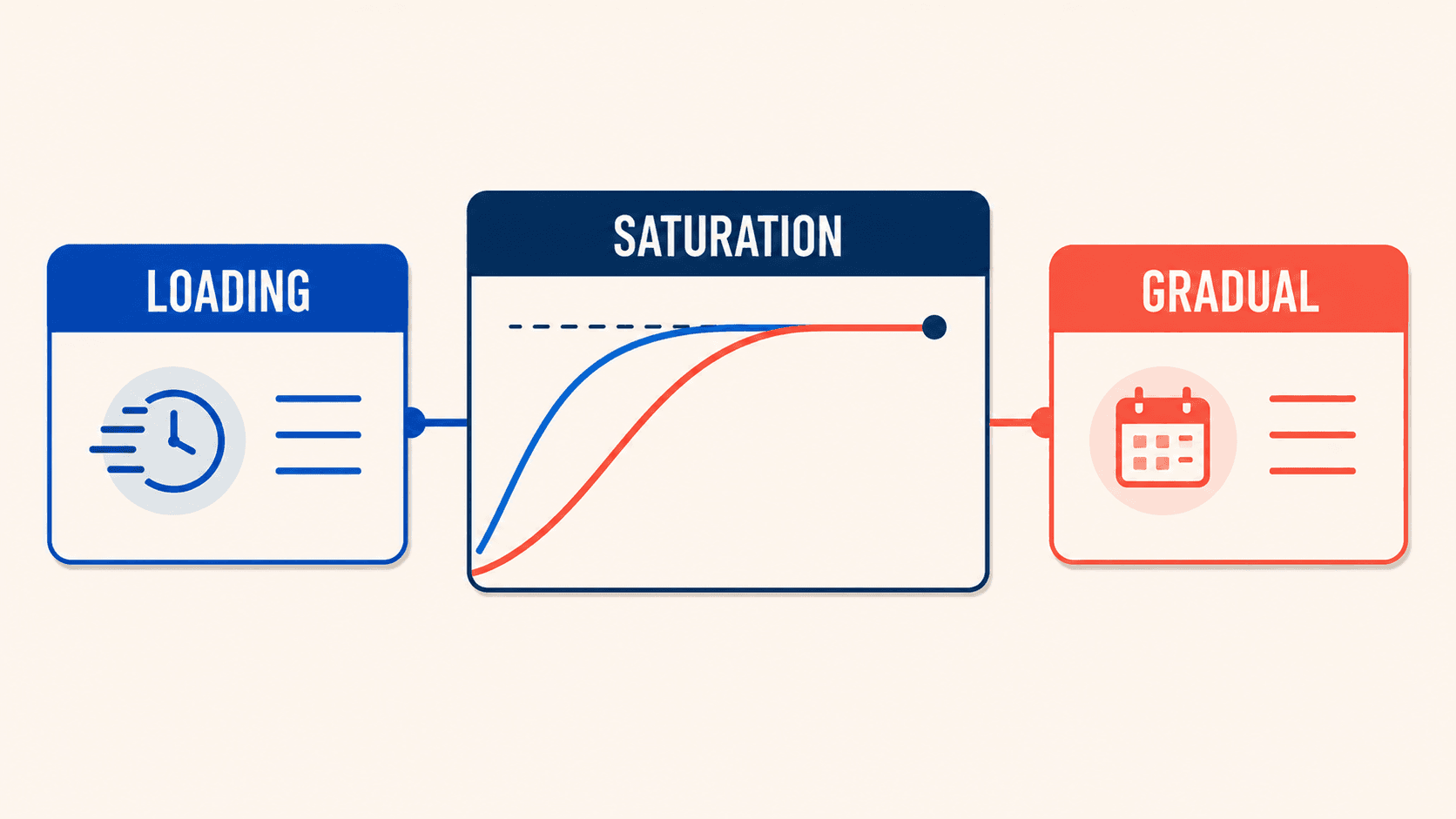
Two valid ways to saturate muscle
| Approach | Protocol | Time to saturation | Best for |
|---|---|---|---|
| Loading | 20 g per day split into 4 doses for 5 to 7 days, then 3 to 5 g per day | About 1 week | Athletes who want faster saturation |
| Gradual | 3 to 5 g per day from the start | About 3 to 4 weeks | Most people |
| Body-weight loading | About 0.3 g/kg per day for 5 to 7 days, then 0.03 to 0.05 g/kg per day | About 1 week | People who want a size-based protocol |
| Older-adult relative dose | About 0.1 to 0.14 g/kg per day | Slower but practical | Adults 55+ focused on muscle and function |
Loading changes speed, not the final destination. If you do not care whether the muscle is saturated in week one or week four, daily maintenance is the easier default.
Creatine
Creatine Dose Calculator
A practical daily creatine dose based on your body weight and chosen protocol.
Your dose
Protocol
How to take it
Timeline
Long-run rule
If you have kidney disease, unusual lab monitoring, or pregnancy-related questions, use clinician guidance.
Body-weight lookup
Body weight alone gets you close enough for everyday use, even without the calculator.
| Body weight | Maintenance target | Loading target |
|---|---|---|
| 60 kg | 3 to 5 g/day | 18 g/day for 5 to 7 days |
| 75 kg | 3 to 5 g/day | 22.5 g/day for 5 to 7 days |
| 90 kg | 3 to 5 g/day | 27 g/day for 5 to 7 days |
| 105 kg | 4 to 5.5 g/day | 31.5 g/day for 5 to 7 days |
Does timing matter
Timing matters much less than consistency. Some small studies have suggested post-workout timing may have a slight edge for body composition, though the effect is small and not cleanly replicated. Just take creatine every day at a time you will actually remember.
Taking it with a meal can help tolerance. Taking it with carbohydrate and protein may improve retention, though the real-world difference is smaller than the difference between consistent use and inconsistent use.
Do you need to cycle it
No. There is no good reason for most healthy adults to cycle creatine. Stores drift back toward baseline after you stop. That is all. The supplement does not need a ritual on-off structure to keep working.
Fasting, travel, and Ramadan
Creatine does not need a perfect clock. That makes it easy to keep when life gets messy. During travel, the main goal is to keep taking the same daily dose rather than chasing an ideal time zone.
For strict fasting windows, the practical sports-nutrition rule is simple. If swallowing any supplement breaks the fast you are observing, take creatine during your eating window instead of trying to force it earlier. During Ramadan, the cleanest pattern is usually one dose with suhoor or iftar and then leaving it alone for the rest of the day.
07Kidney myths side effects and who should be careful
Kidney function
Kidney safety is the loudest fear and still the most misunderstood.
Creatinine is a normal breakdown product of creatine metabolism. Serum creatinine can rise a little during creatine use. That does not mean kidney damage. A 2025 systematic review and meta-analysis found no significant reduction in glomerular filtration rate with creatine supplementation despite a small rise in serum creatinine.11
Healthy adults can stop treating a creatinine bump as automatic proof of harm. People with existing kidney disease, a single kidney, or medication regimens that complicate renal monitoring should talk with a clinician first. High muscle mass and high protein intake produce the same creatinine confusion independent of creatine use. The evidence on high-protein diets and kidney health covers how to tell an adaptive lab reading from an actual problem.
Who should avoid creatine or get medical guidance first
Most healthy adults do not need much drama around creatine. A few groups should slow down and treat it as a clinician-guided decision.
| Group | Practical guidance |
|---|---|
| Known kidney disease or a single kidney | Talk to a clinician before starting |
| People with ongoing renal monitoring | Disclose creatine use before interpreting labs |
| Pregnancy or lactation | Use clinician guidance rather than internet confidence |
| Youth athletes without supervision | Skip casual use and involve parents and coaches |
| People with repeated unexplained GI issues | Start slower or pause until the cause is clearer |
Water retention and weight gain
The first 1 to 3 kilograms are usually not fat. They are usually intracellular water, glycogen-associated storage, and fuller muscle tissue. That is one reason creatine works.
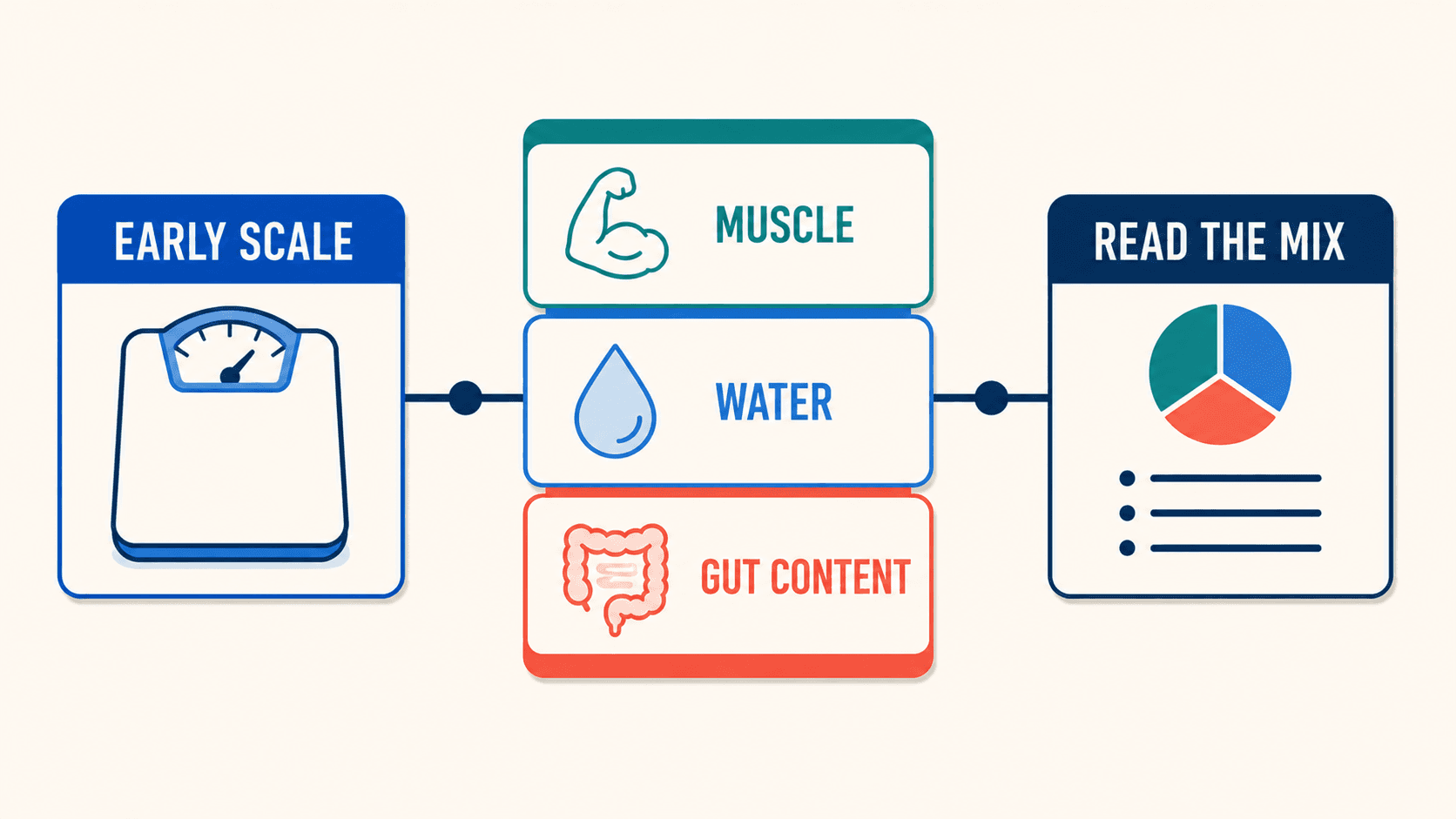
Most of that water sits inside muscle cells, where it contributes to cell volume and performance. The problem is interpretation. If you change calories, sodium, training, and creatine at the same time, the scale becomes harder to read. If you want a better framework for that, read DEXA Scan for Body Composition: How Accurate Is It for Fat Loss and Muscle Gain?.
Hair loss
The hair-loss story lives on the internet because one 2009 rugby study found a DHT increase after creatine loading. It did not measure actual hair loss. It has never earned the level of confidence people give it.
More recent evidence has gone the other direction. A 2024 randomized controlled trial found strong evidence against the claim that creatine contributes to hair loss.12
GI issues
GI problems are usually mechanical. They show up most often during loading when people take large single doses that do not dissolve well. The fixes are simple. Split the dose, take it with food, use micronized monohydrate if needed, or skip loading entirely.
Caffeine interaction
This part of the story is still messy. One classic trial suggested caffeine blunted creatine's performance effect during loading. A later systematic review found mixed evidence. If you are worried about the stack, take creatine with a meal and let caffeine stay attached to the training window.
08Creatine and Medical Conditions
Traumatic brain injury and concussion
Injured brain tissue faces extreme energy stress, and the mechanistic case for creatine here is strong. Phosphocreatine buffering could help stabilize energy supply during recovery from head trauma. The human outcome data is still early. Reviews argue that creatine is promising for TBI and concussion support, though clinical protocols have not caught up to the preclinical signal yet. This remains a high-interest research area worth watching, especially for contact-sport athletes and military populations. It is not yet a basis for self-treatment.13
Type 2 diabetes and insulin resistance
Creatine has a better case here than most people realize, especially when it is paired with exercise. Some trials and reviews suggest creatine may improve glucose handling or glycogen-related adaptations when training is already in place. Creatine is not a diabetes treatment. It may be a useful support tool inside an exercise plan for people managing insulin resistance, and the evidence is strong enough to justify continued research.14
Fibromyalgia
Small trials suggest creatine may improve muscle function or strength-related measures in people with fibromyalgia, though the evidence is too thin to call it a standard recommendation. If future research confirms a benefit, it will likely work through the same energy-buffering mechanism that helps in other populations. For now, this is a clinical niche with limited data.15
09Creatine vs Other Supplements
Buying behavior gets messy when people compare creatine against supplements that solve different problems.
| Supplement | Main mechanism | Best use case | Stack compatibility | Verdict |
|---|---|---|---|---|
| Creatine | ATP-PCr support and cell hydration | Strength, power, repeat efforts, lean-mass support | Stacks well with most basics | High-priority default |
| Beta-alanine | Increases muscle carnosine and buffers acidity | Efforts that live in the 1 to 4 minute pain zone | Stacks well with creatine | Add only if your sport fits it |
| BCAAs | Adds isolated leucine, isoleucine, and valine | Usually low value if total protein is already adequate | Usually redundant with good protein intake | Skip for most people |
| Protein powder | Adds whole-protein convenience | Hitting daily protein targets | Stacks well with creatine | Food-gap tool, not a creatine replacement |
If you want the short version, think of creatine as a performance and training-output tool, beta-alanine as a narrower event-specific tool, BCAAs as mostly redundant, and protein powder as a convenience food.
10Creatine myths that do not hold up
Verdicts use three labels. False means the claim conflicts with current evidence. Overstated means it contains a grain of truth but misrepresents the size or nature of the effect. Unsupported means there is no reliable evidence behind the claim.
| Myth | Reality | Verdict |
|---|---|---|
| Creatine damages kidneys | Healthy-adult evidence does not support that claim at recommended doses | False |
| Creatine is a steroid | It is chemically and physiologically different from anabolic steroids | False |
| You need to load it | Loading is optional and only changes speed of saturation | Overstated |
| Creatine causes bloating | Early water gain is mostly inside muscle tissue | Overstated |
| HCl is more bioavailable and superior | It is more soluble, though not meaningfully more effective in current head-to-head data | Unsupported |
| Creatine causes hair loss | The evidence does not support this | Unsupported |
| Creatine is only for men | Women have good reasons to use it and may have specific life-stage advantages | False |
| You need to cycle creatine | There is no good reason for most healthy adults to do that | False |
| Creatine makes you fat | It does not add fat mass by itself | False |
| Vegetarians do not need creatine | They often respond very well because baseline stores are lower | False |
| You can only absorb a tiny dose at once | Absorption and storage are not that simplistic | False |
11Who Benefits Most
| Population | Benefit level | Main reason |
|---|---|---|
| Strength athletes | Very high | Strength, power, lean mass |
| Team-sport athletes | Very high | Repeated sprint performance |
| Recreational lifters | High | Better training quality and lean-mass support |
| Vegetarians and vegans | Very high | Lower baseline stores |
| Women who train hard | High | Performance, muscle retention, life-stage relevance |
| Adults 55+ | Very high | Strength, function, lean tissue |
| Endurance athletes | Moderate | Useful in selected phases, less universal |
| Sleep-deprived or cognitively taxed people | Moderate | Brain-energy support under stress |
| Sedentary adults | Low to moderate | Smaller payoff unless training is present |
Creatine does more for a lifter than for a sedentary office worker. It does more for an older adult who resistance trains than for an older adult who refuses to train and hopes the supplement will cover the gap.
12How to Choose a Creatine Supplement
| Filter | What to look for |
|---|---|
| Form | Creatine monohydrate |
| Particle size | Micronized if stomach comfort or mixing is a concern |
| Purity | Creapure is a useful signal, though not the only acceptable option |
| Third-party testing | NSF Certified for Sport or Informed Sport if you compete |
| Label clarity | Exact grams per serving, no proprietary blend hiding the dose |
| What to avoid | Liquid creatine, ethyl ester, vague blends, inflated HCl marketing |
Creatine is not a category where spending more usually buys more effect. It usually buys branding.
A stronger buying filter is this. Start with plain creatine monohydrate. Move to micronized monohydrate if mixing or stomach comfort is the issue. Consider HCl only if you have already given monohydrate a fair trial and still dislike it.
13Carbs and protein can help creatine uptake
Carbohydrates can improve creatine retention through insulin-mediated transport, especially during loading. Protein can help for the same reason. That does not mean you need to engineer a special insulin protocol to make creatine work.
Beta-alanine stacks fine with creatine because the two supplements target different parts of performance. Caffeine is more context dependent, as noted above. Alcohol is a cleaner story. Heavy drinking is hostile to recovery and muscle protein synthesis, so it is an easy way to blunt the return from the training block that creatine is trying to support.
Hydration matters too. Creatine does not mean you need to drink absurd amounts of water. It does mean your daily intake should stop being sloppy. If hydration is already inconsistent, clean that up with The Complete Guide to Hydration before you blame creatine for how you feel.
14Practical Protocol
The best creatine plan is simple enough that you can still follow it six weeks from now. Most mistakes happen when people overcomplicate dosing, chase perfect timing, or react to the scale before the supplement has had time to settle.
- Choose the easy version unless you have a real reason to load. For most people that means 3 to 5 grams per day from day one.
- Attach it to a daily meal or shake. Morning, lunch, dinner, post-training, any of them work if they happen every day.
- Mix it in water, juice, or a protein shake. All are fine.
- Expect nothing dramatic in the first week if you skip loading. Expect a possible scale increase in weeks two to three. Expect the training benefit to show up in the logbook before it shows up in your feelings.
- Track it. If you already use Fuel, log creatine as a daily supplement and review it against strength, body-weight trend, recovery, and training quality instead of trying to remember whether it felt different.
15Creatine FAQ on timing water weight and caffeine
Does creatine work without working out
The return is much smaller. Creatine helps most when the training plan gives it something to amplify.
Can you take creatine every day indefinitely
Long-term use is common in the literature and there is no good reason most healthy adults need to cycle it.
Does creatine affect testosterone
There is no good evidence that standard creatine supplementation meaningfully raises testosterone in a way that explains its performance effects.
What happens when you stop taking it
Muscle stores drift back toward baseline over a few weeks and the small water-related scale increase usually falls with them.
Is creatine safe for teens
It depends on training maturity, supervision, product quality, and context. Creatine is chemically and physiologically different from hormones and steroids. The bigger issue is whether the athlete actually has a real training plan, adult supervision, and a product they can trust. If those pieces are missing, supplement use is usually moving faster than the training environment deserves.
Does creatine expire
Like most dry powders, it has a shelf life. Stored well, plain creatine monohydrate is usually quite stable.
Can creatine improve sleep
The most interesting brain-related data for creatine sits in energy support during sleep loss rather than sleep quality itself.
Does creatine interact with medications
It can complicate lab interpretation and needs more care in people taking medications that affect renal monitoring or fluid balance. The most common practical issue is a confusing lab read when creatinine rises slightly and nobody accounts for creatine use. If you have kidney disease, renal follow-up, or medication regimens that already make kidney markers important, tell your clinician before you start.
Can you take creatine while losing weight
Yes, and this is one of the most useful times to take it. Dieting lowers training quality for many people because recovery gets tighter, glycogen gets lower, and each hard session costs more. Creatine can help keep repeated efforts, strength work, and session quality steadier while the deficit is in place. The main trap is interpretation. A short-term increase in scale weight after starting creatine often reflects intracellular water, not fat gain.
Should you take creatine on rest days
Yes. Creatine works by raising and maintaining tissue saturation, so skipping rest days solves nothing. Rest-day use matters for the same reason brushing your teeth matters when you are not eating dessert that minute. It is maintenance behavior.
16Daily 3 to 5g monohydrate is enough for most people
Creatine works. It has worked consistently across decades of research, and it continues to work in 2026. Among performance supplements, nothing else comes close to its combination of evidence, safety, and practical benefit.
It will not fix a broken training program, compensate for inadequate protein intake, or overcome poor sleep. The fundamentals still have to be in place. But when they are, creatine helps you get more from the effort you are already putting in.
Consider it if you lift weights regularly, play sports that demand repeated bursts of power, or train hard enough that small improvements in recovery and strength matter to you. Women often respond particularly well. So do older adults who resistance train and people who eat little or no meat. Plain creatine monohydrate, three to five grams daily, taken consistently. That is the approach that has held up for decades, and it is still the one that works.
17References
Footnotes
- Back to textBack to text 2Back to text 3Back to text 4
- Back to textBack to text 2
- Back to text
- Back to text
- Back to text
Creatine Supplementation in Women's Health: A Lifespan Perspective
Back to textCreatine in women's health: bridging the gap from menstruation through pregnancy to menopause
Back to text- Back to text
- Back to text
- Back to text
Effect of creatine supplementation on kidney function: a systematic review and meta-analysis
Back to textDoes creatine cause hair loss? A 12-week randomized controlled trial
Back to text- Back to text
Pinto CL, Botelho PB, Pimentel GD, Campos-Ferraz PL. Creatine supplementation and glycemic control: a systematic review. Amino Acids. 2016;48:2103-2129. https://doi.org/10.1007/s00726-016-2277-1
Back to text- Back to text