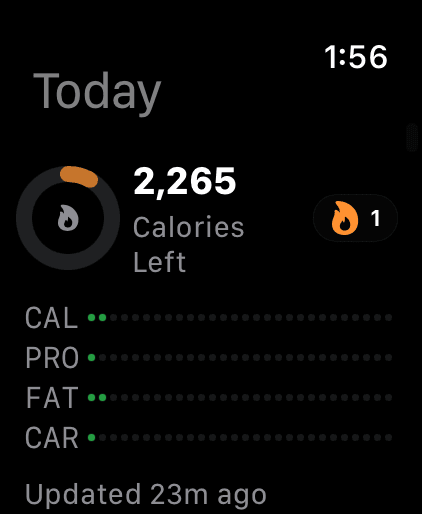
Fuel uses Apple Watch activity and workout data to keep targets honest and to make coaching reflect what you actually did, not what you planned to do.
01What Fuel reads from Apple Watch
Fuel does not talk to the watch as a separate silo. Apple Watch writes activity and workout data into Apple Health, and Fuel reads those records after you grant permission.
The most important inputs are active energy and workout sessions, since they shape daily energy context and the way your day is summarized in coaching.
02GLP-1 status on Apple Watch
If GLP-1 support is enabled, Apple Watch can mirror the same medication-cycle context from iPhone, including phase, cycle day, hydration urgency, and protein floor. Treat it as a glanceable status layer on top of iPhone setup, not a separate medication log.
Use GLP-1 Support for dose check-ins, symptom logging, reminders, and safety boundaries.
03Pair Apple Watch and grant Health permissions
- Confirm your Apple Watch is paired with the iPhone you use for Fuel and that both are signed into the same Apple ID.
- Install Fuel on iPhone and open it once so iOS can offer the Apple Health permission prompt.
- When prompted, allow Fuel to read activity and workouts, and allow the nutrition and body metrics you want Fuel to track.
- Open Apple Health and confirm permissions if anything was skipped or denied.
If you want a precise checklist of what permissions matter and how to change them later, start with Apple Health Permissions.
04When watch burn data appears in Fuel
Apple Watch data appears in Apple Health after the watch has synced to iPhone. Keep the watch within Bluetooth range during normal use and avoid force quitting Fuel if you want background updates to keep flowing.
If your day looks stuck on old activity, it is usually a sync delay, not a calculation problem. The fastest fix is to open Apple Health and confirm that new Move and workout records are updating, then return to Fuel.
05Avoiding double counting
If you track the same category with multiple sources, Apple Health picks a priority order. A common example is workouts recorded by Apple Watch and also imported from another app, which can make totals look inflated.
Apple Health Permissions explains how to inspect data sources so your watch stays the primary source for activity totals.
For a complete guide to turning Apple Watch data into adaptive calorie targets for body recomposition, including calibration, deficit protocols, and GLP-1 medication overlays, see Apple Watch-Based Calorie Targets.
If you want the practical follow-through after setup, including how to read lift days, rest days, and recovery flags without overreacting to a single calorie number, read How to Use Apple Watch for Body Recomposition.