Getting fitter at the same body weight is a real goal. Your squat climbs, the Saturday ride stops wrecking your Sunday, and a hard week at work no longer leaves you flat in the gym.
The food behind that looks like an ordinary week of meals, eaten with a plan. Set Fuel's Maintain goal around your training schedule, build one training day and one rest day you can repeat, and judge each week by how you trained and recovered before you change a single number.
01What progress looks like when your weight holds steady
Most nutrition goals point at the scale. This one points at your training log. If the loads you lift, the pace you hold at a familiar effort, or the number of sessions you finish each week keep improving while your weight stays put, the plan is working.
A steady scale is useful context, and it still leaves questions open. A World Athletics expert review describes athletes who hold a stable weight, without low body weight or body fat, and still show impaired physiology from eating too little for their training.1 The cost can show up in performance. In a 2024 crossover trial, 12 endurance-trained women ate a deliberately low intake for 14 days while their training stayed the same. Their 20-minute time-trial power fell by 7.8% and had not recovered after three days of normal eating.2 That was a severe, controlled exposure in trained athletes, so the size of the drop says little about a recreational lifter. The direction is what to take from it. Eating too little for your training can cost you performance, and a steady scale will not always warn you.
This goal fits someone who lifts a few times a week, runs, rides or plays a sport on other days, and has no weight they want to lose or gain. If you want to add muscle on purpose, Gain muscle with Fuel is the better fit. Fat loss has its own plan in Lose weight with Fuel, and a race or competition date belongs in Train for an event with Fuel.
02Write down your week before you open the app
Start with ten minutes and a notes app. Write down your real training week, with days, session types and rough durations, taken from your calendar or training plan. Add your usual meals, including the ones that go wrong, like the skipped lunch on meeting-heavy days. List your constraints, such as budget, cooking time, commute and foods you refuse to eat.
Then pick one performance or recovery signal you can repeat without special equipment. The weight and reps on your main lift work. So does your pace for an easy 5 km, or the count of planned sessions you finished that week. Record it wherever you already track training, whether that is a lifting app, a spreadsheet or a paper notebook. Fuel records your food and your plan. Your training log tells you whether the plan is helping.
Finally, put the goal in your own words. "Keep my weight steady and feel strong in the gym" or "stay consistent through a busy quarter at work" gives you something concrete to check against every week.
03How to set up Maintain in Fuel
Maintain has no goal weight, no pace setting and no finish date. It gives you a weekly calorie baseline and, if you want it, a schedule that moves some of those calories toward the days you train.
- Open You > Personal Details > Goal Type and choose Maintain.
- Back in Personal Details, open Coaching Plan > Maintain.
- Under Training schedule, choose the preset closest to your usual week. Balanced week plans three sessions, Training-focused week plans five including one hard day, and Lighter training week plans two. Choose None if your week has no regular pattern.
- Decide whether to turn on Automatic training-day fueling.
- Decide whether to turn on Show visible maintenance range, and pick a Range style if you do.
- Open Coaching Plan > Your Plan to see your daily calories and recommended macros.
The presets describe how often you plan to train. They do not build a program or know what you did in the gym, and they are a rough fit by design. Balanced week plans Monday, Wednesday and Friday. If you lift on those days and ride on Saturday, Fuel's plan treats Saturday as a rest day. Eat for the ride anyway.
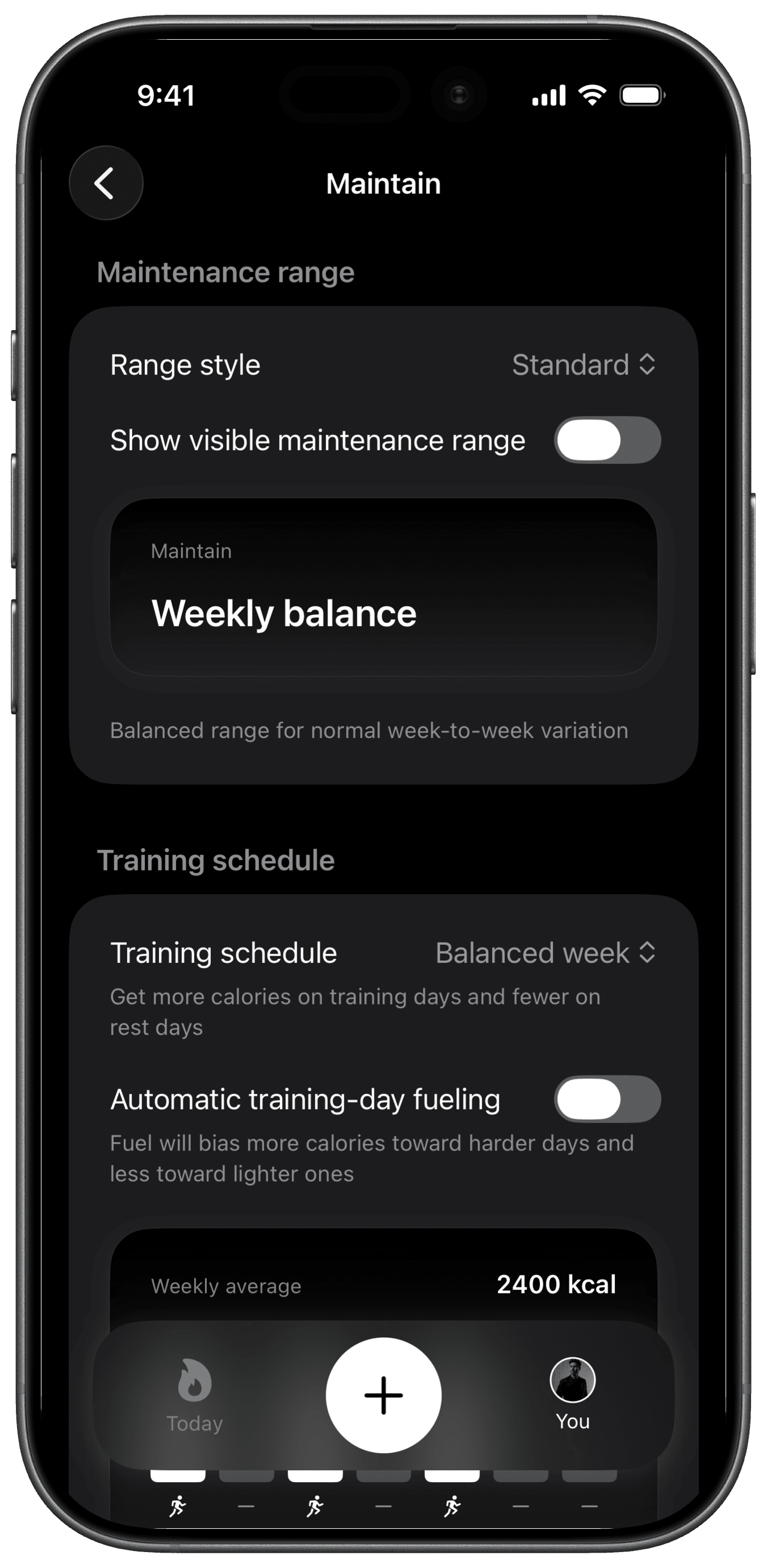
This example has Show visible maintenance range and Automatic training-day fueling switched off. Enable either if it fits how you want to use Maintain. The 2,400 kcal figure in the settings preview illustrates the weekly schedule; check Your Plan for your actual calorie target.
The Daily Calories figure in Your Plan is a weekly average. With a training schedule chosen and Automatic training-day fueling on, Fuel gives planned training days a higher target and planned rest days a lower one, and the seven planned targets still average out to your baseline. Turn the switch off and every day gets the same planned target. The shift follows a fixed template for the schedule you picked. It does not tell you how many carbs a given session needs or how hard to train.
Dynamic Calories is a separate choice. Open You > Personal Details > Dynamic calories to choose Dynamic calories or Plan calories. When it is on, recorded activity can raise a day's target if you move more than expected. With Plan Calories selected instead, the target stays where the plan put it. Neither mode adds a separate bonus for each logged workout. If you like predictable numbers, keep Plan Calories and let the training schedule do the shifting.
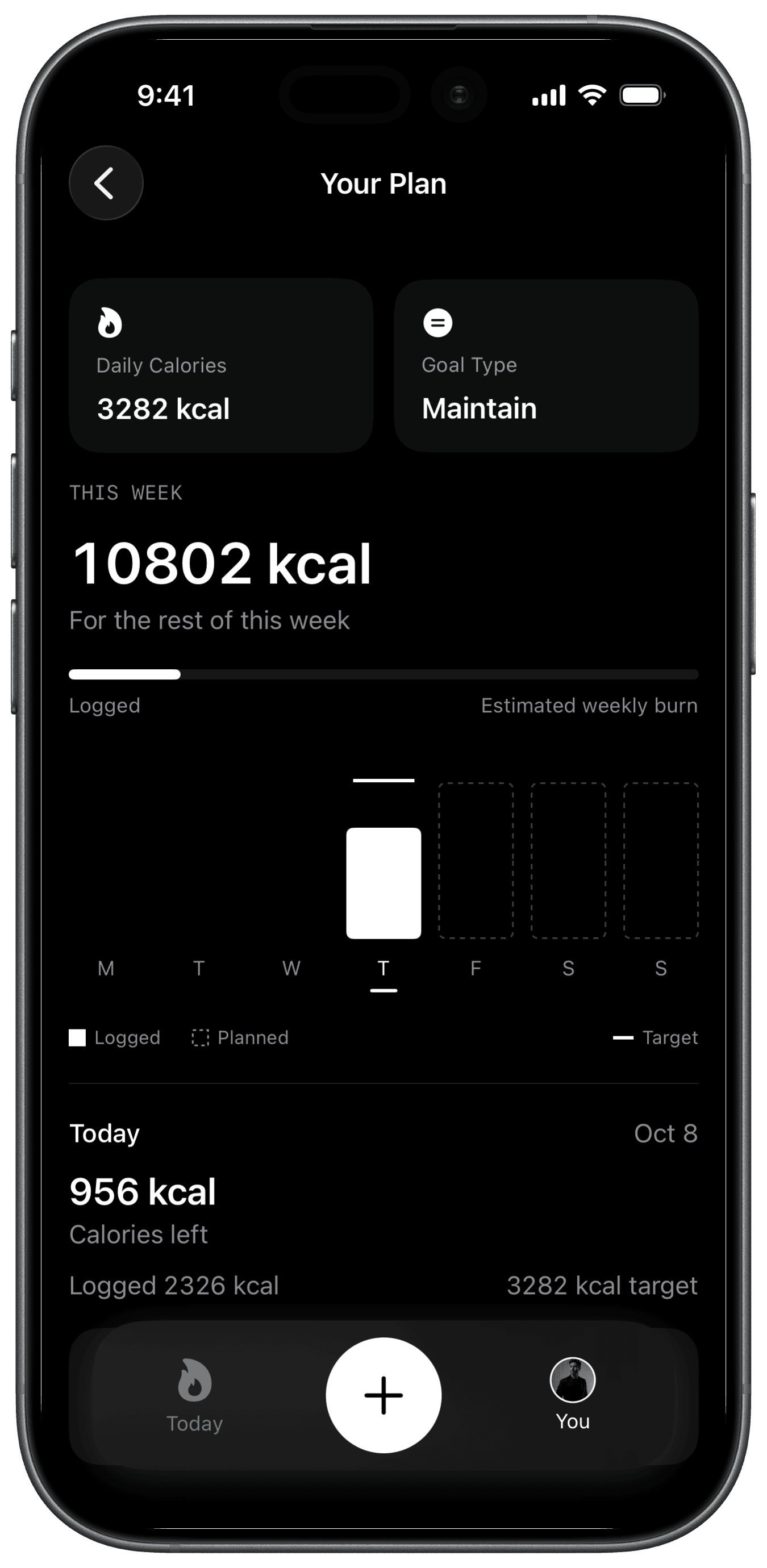
The illustrative plan here uses 3,282 kcal a day and 139 g protein. Your own targets depend on your saved plan. The week view separates recorded days from planned days; days marked insufficient data cannot tell you whether intake met the target.
Macros stay put. Your Plan shows Recommended macros for protein, carbs and fat as saved daily targets, and the training-day calorie shift does not cycle those grams by day. To change them, open Adjust Macronutrients from the You tab. The Maintain mode help page covers every setting in more detail.
04How to eat on a training day and a rest day
Start with protein. The joint sports nutrition position from the Academy of Nutrition and Dietetics, Dietitians of Canada and the American College of Sports Medicine gives 1.2 to 2.0 grams per kilogram of body weight a day as a reference range for active people.3 That range spans recreational exercisers and athletes in heavy training, so treat it as context. As an example, a 70 kg person eating 1.5 g/kg lands around 105 grams a day, which works out to four meals or snacks with 25 to 30 grams each. Going higher is optional. A meta-analysis of 49 resistance training studies found extra lean-mass gains flattened around 1.6 g/kg, and that estimate carried a wide margin and measured muscle gain rather than maintenance.4
Spread protein across the day. In a 2013 lab study of 24 trained men, 20 grams every three hours after a workout drove more muscle protein synthesis over 12 hours than the same total taken in two large doses or eight small ones.5 That was a short measurement after a single session, using whey. The useful version for real life is simple. Put a protein food in each meal and let dinner after training handle recovery. You do not need a shake in the locker room.
Match carbohydrate to the work. The same joint position lists 3 to 5 g/kg a day for light training and 5 to 7 g/kg for about an hour a day of moderate training.3 Those are planning ranges built for athletes, and a 45-minute gym session does not obligate you to hit them. They explain why a training day deserves a proper serving of rice, potatoes, bread, oats or fruit, and why a rest day can carry a smaller one. Round out each plate with vegetables or fruit and enough fat to make the meal satisfying.
For ordinary sessions of 30 to 60 minutes, water and your normal meals are enough. The 30 to 60 grams of carbohydrate per hour you see in endurance advice comes from research on long or demanding sessions.6 Gels and sports drinks can stay on the shelf for a lunchtime lift.
A sample strength training day
| Meal | Example | Why it works |
|---|---|---|
| Breakfast | Oats with milk or soy milk, Greek yogurt, berries and a spoon of nuts | Carbs, protein and fruit in one bowl |
| Lunch | Rice with chicken, tofu, eggs or beans, plus vegetables and a piece of fruit | Familiar food you can buy or batch-cook |
| Before training | Banana with yogurt, or toast with peanut butter, if lunch was hours ago or you feel hungry | Small and easy to digest |
| Dinner after training | Potatoes, rice or noodles with salmon, tofu or eggs, and vegetables | Carbs and protein for recovery, with no special timing |
| Evening snack, if needed | Cereal and milk, cottage cheese and fruit, or hummus with pita | Extra food when hunger or a hard session calls for it |
What changes on a rest day
Keep breakfast, lunch and dinner. Keep the protein and the produce. If you are less hungry, drop the pre-training snack or take a smaller starch portion at dinner. Recovery from yesterday's session happens today, so skipping meals to "save" calories works against the goal. If you turned on training-day fueling, Fuel's lower rest-day target is a planned share of your week. It gives you no reason to eat less than you need.
05A sample week of strength and cardio
Three strength sessions and two cardio sessions is a common recreational week, and it shows where food needs to change and where it can stay the same. Swap in your own sessions. This table is an example of the food side, and your training plan should come from you or your coach.
| Day | Session | Food cue |
|---|---|---|
| Monday | Full-body strength, 45 to 60 minutes | Normal meals, plus a snack beforehand if lunch was early |
| Tuesday | Easy jog, walk or ride, 30 to 40 minutes | Usual meals and water |
| Wednesday | Full-body strength, 45 to 60 minutes | A carbohydrate source in the meal before or after training |
| Thursday | Rest or mobility | Regular meals and protein, with nothing to make up |
| Friday | Full-body strength, 45 to 60 minutes | Repeat whatever made Monday and Wednesday feel good |
| Saturday | Longer ride, hike or sport, 75 to 100 minutes | Water to suit conditions, optional familiar carbohydrate fuel for session demands, then a normal recovery meal |
| Sunday | Rest | Normal meals, a grocery run and an hour of prep |
Sunday carries more of this week than it looks. One grocery list and an hour of batch cooking can cover lunches through Wednesday, with a pot of rice or a tray of potatoes, one cooked protein and washed fruit ready to grab. Saturday is the one session in this week long enough that carbohydrate during exercise starts to earn a place, when the duration and intensity call for it.
Drink with meals and when you are thirsty. For ordinary sessions that is a sound plan. The third international consensus on exercise-associated hyponatremia names overdrinking as a primary cause and supports drinking to thirst in many exercise settings.7 Long sessions in heat and heavy sweating call for more thought, and position stands from ACSM and the National Athletic Trainers' Association recommend an individual plan for those conditions.8 Electrolyte drinks can help on those days. They do not make drinking far past thirst safe.
06Log food to learn your pattern
Fuel's food log shows whether the plan on paper survives a real week. If tracking feels useful and safe, log what you eat for two to four weeks, including the snacks and the evenings that go sideways.
Tap the center + to open Log Meal. Describe the meal in What did you have? or add a photo, review the estimate, and tap Log Food. For packaged food and restaurant items, Food Library uses stored nutrition data instead of an AI estimate. The food logging guide covers every capture method.
Look for patterns across the week instead of grading single meals. Watch for meals with no real protein food, a long gap before an evening session, and rest days that shrink to two meals. Check your protein on Today against the recommended target from your plan, then decide whether one meal needs a change.
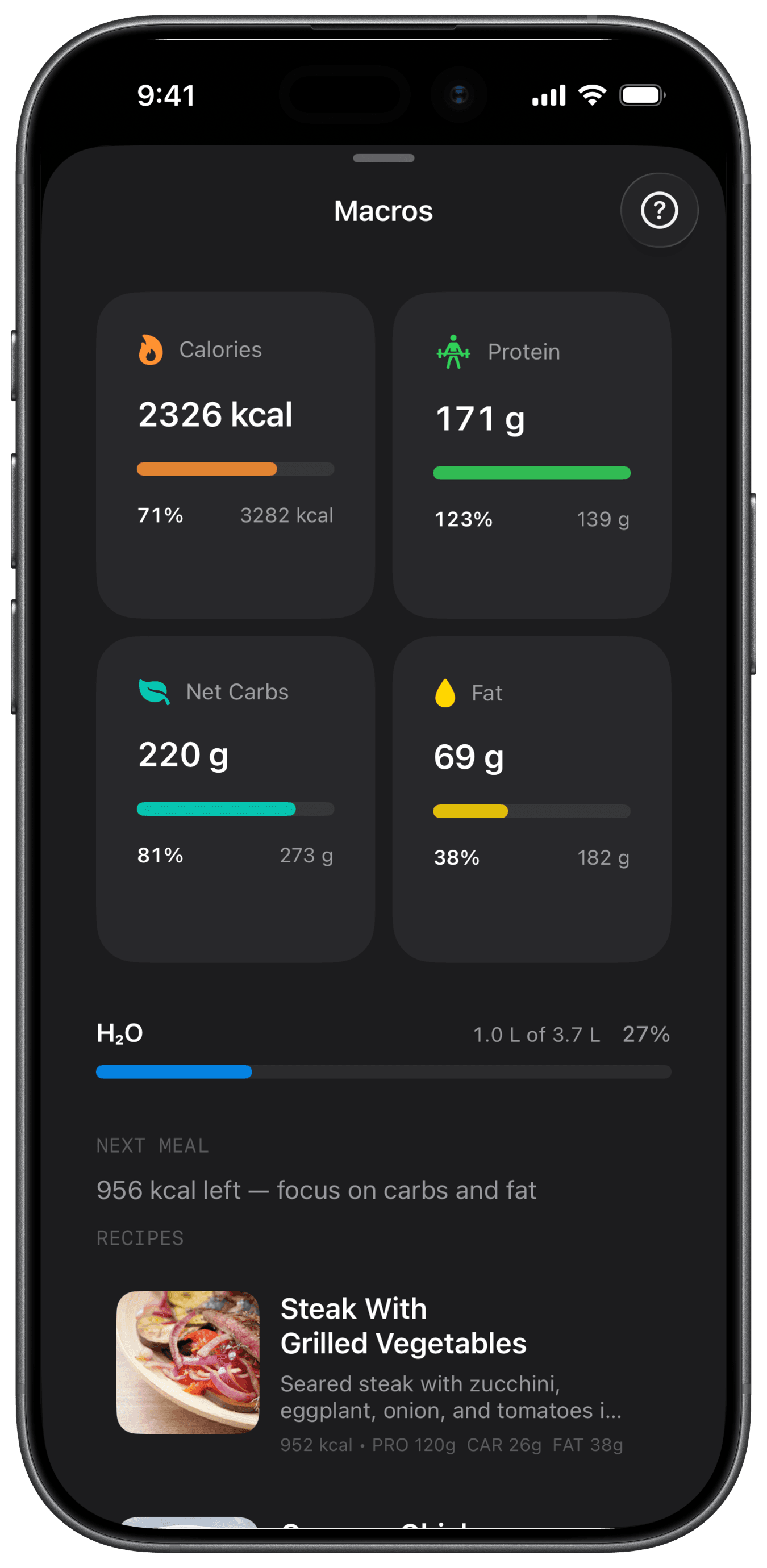
In this example, 2,326 kcal are logged and 956 kcal remain. Protein is already above the plan's 139 g target, while the sheet points toward carbs and fat for the next meal. Use that budget alongside hunger and the session ahead; an incomplete log can make the remaining figure misleading.
A missing entry is unknown food. It does not mean you ate nothing, and it does not free up calories for later in the week. Treat a watch's workout calories with the same caution. The IOC's review of energy availability methods found that wearable estimates of exercise energy can be off by hundreds of calories depending on the method, so a number to "eat back" is shakier than it looks.9
Two optional tools help once the log is solid. After you have logged food on at least ten days with caloric food entries in the previous 30 completed days, Nutrient Insights on Pro shows which nutrients your recorded meals keep falling short on. It can only judge nutrients your entries recorded, so thin entries give thin answers. The next-meal coach sees today's Maintain allocation and training context when it suggests what to eat next, which helps on days when you are deciding what to have before an evening session.
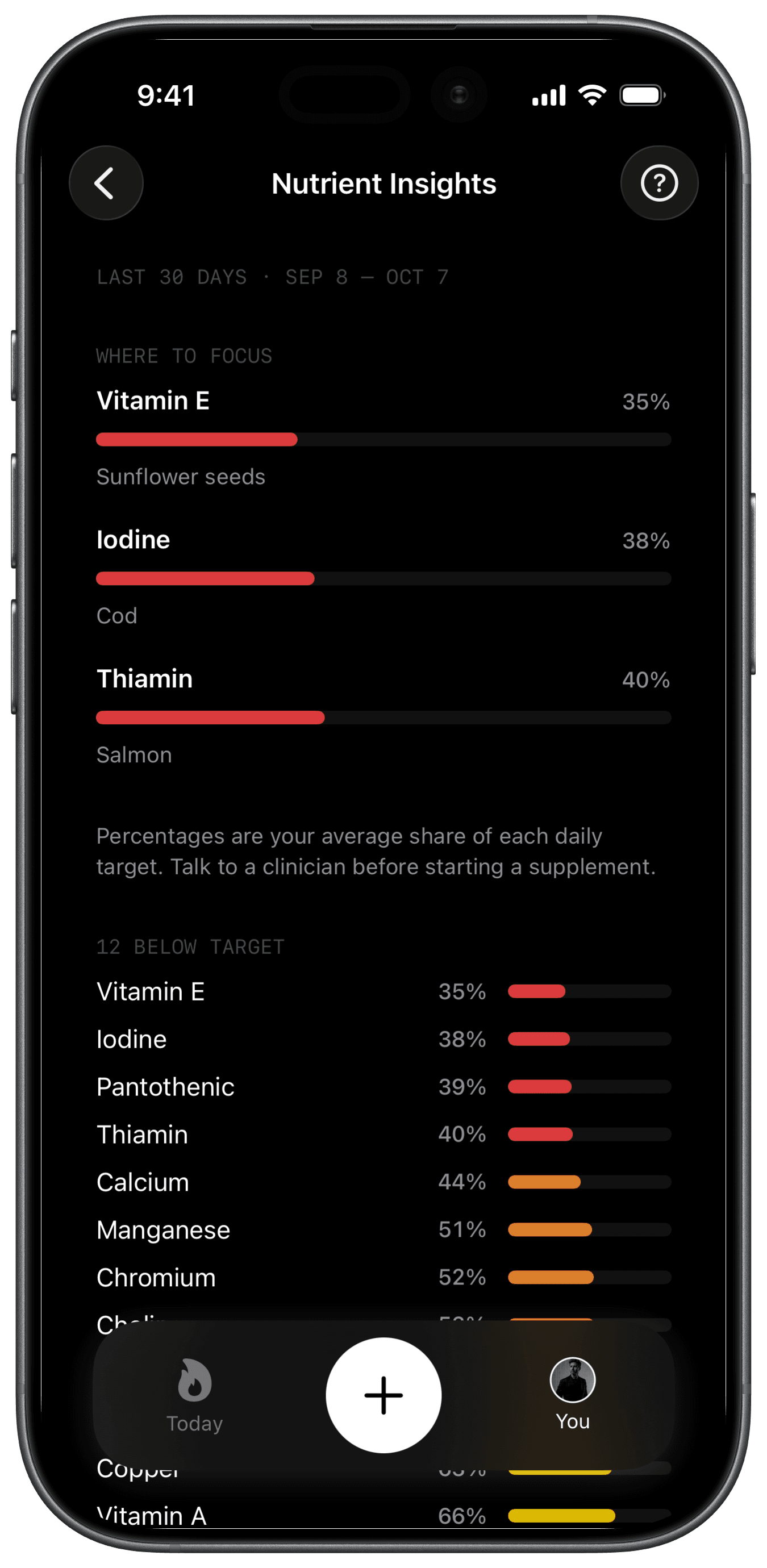
This example flags vitamin E, iodine and thiamin as food-choice priorities for the displayed 30-day period. Compare those suggestions with the meals you actually recorded before changing your routine. A nutrient marked no data needs better entries before you can judge its intake, and a recorded shortfall is not a diagnosis of deficiency.
Fuel Free covers seven saved food entries a week, which is enough to try the log. The two to four weeks of complete tracking and repeated weekly reviews described here work best with Pro. Free and Pro lists the differences.
If logging makes you anxious, or you have a history of disordered eating, skip calorie tracking. Use a written meal template and work with a registered dietitian instead. The routine is what you are building, and a food log is one way to see it.
07Track training and recovery outside the food log
Fuel sees what you log and, with Apple Health permission, some of your activity and sleep. How the session went lives in your training log. After each workout, note what you did, how hard it felt on a 1 to 10 scale, and one line about energy or soreness. That takes 30 seconds and gives your weekly review something to compare against food.
Sleep sits next to food in recovery. An expert consensus on athlete sleep treats sleep and daily schedule as part of training support and avoids setting one hour count for everyone.10 A consistent bedtime and a wind-down routine you actually keep are cheap habits to protect. If you allow Apple Health access, Fuel's daily coaching can read your sleep as context. It does not score your readiness or decide whether you should train.
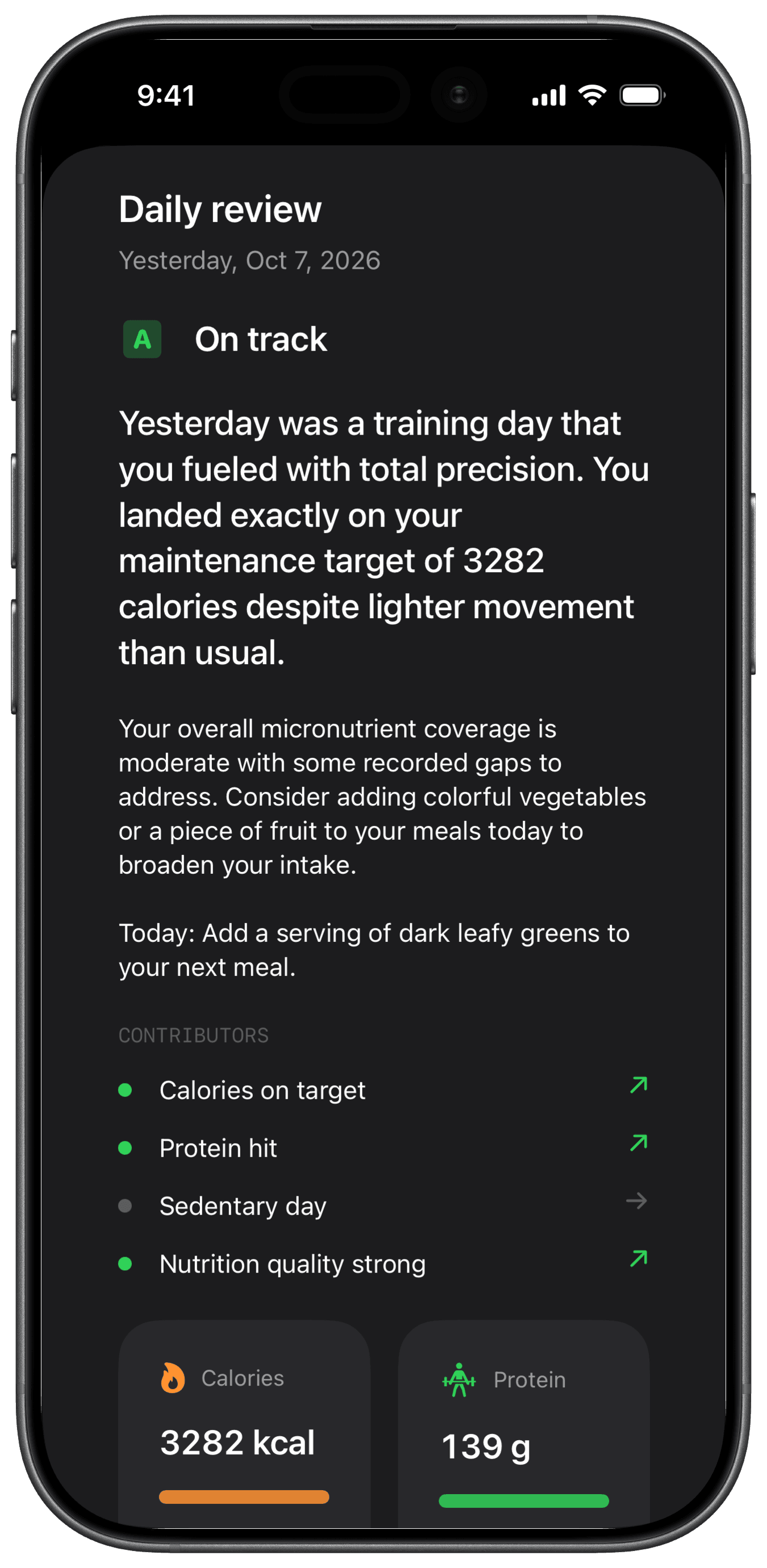
The Daily review shown here is an example log for October 7, with 3,282 kcal and 139 g protein recorded. Its suggestion to add dark leafy greens gives you one meal choice to consider. Read the review against your own food and training notes; the displayed grade does not establish recovery or performance gains.
08Review the week before you change a number
Set aside ten minutes at the start of each week and ask four questions in this order.
- Did you complete the sessions you planned?
- Did your performance signal hold or improve?
- How were hunger, energy and sleep across the week?
- Were the food logs complete enough to trust?
Fuel's Weekly Review covers the previous full week and appears during the first three days of your configured week. In Maintain it reviews the week without pace, deficit or surplus judgments. The Maintain tile on You shows what you have logged and what remains, and tapping it opens Maintain Balance. There, For the rest of this week shows the calories left across the remaining days, a bar compares Logged calories with Estimated weekly burn, and daily bars compare logged intake with targets for past and current days and show planned targets for future days. The Maintain tile and ongoing weekly reviews need Pro.
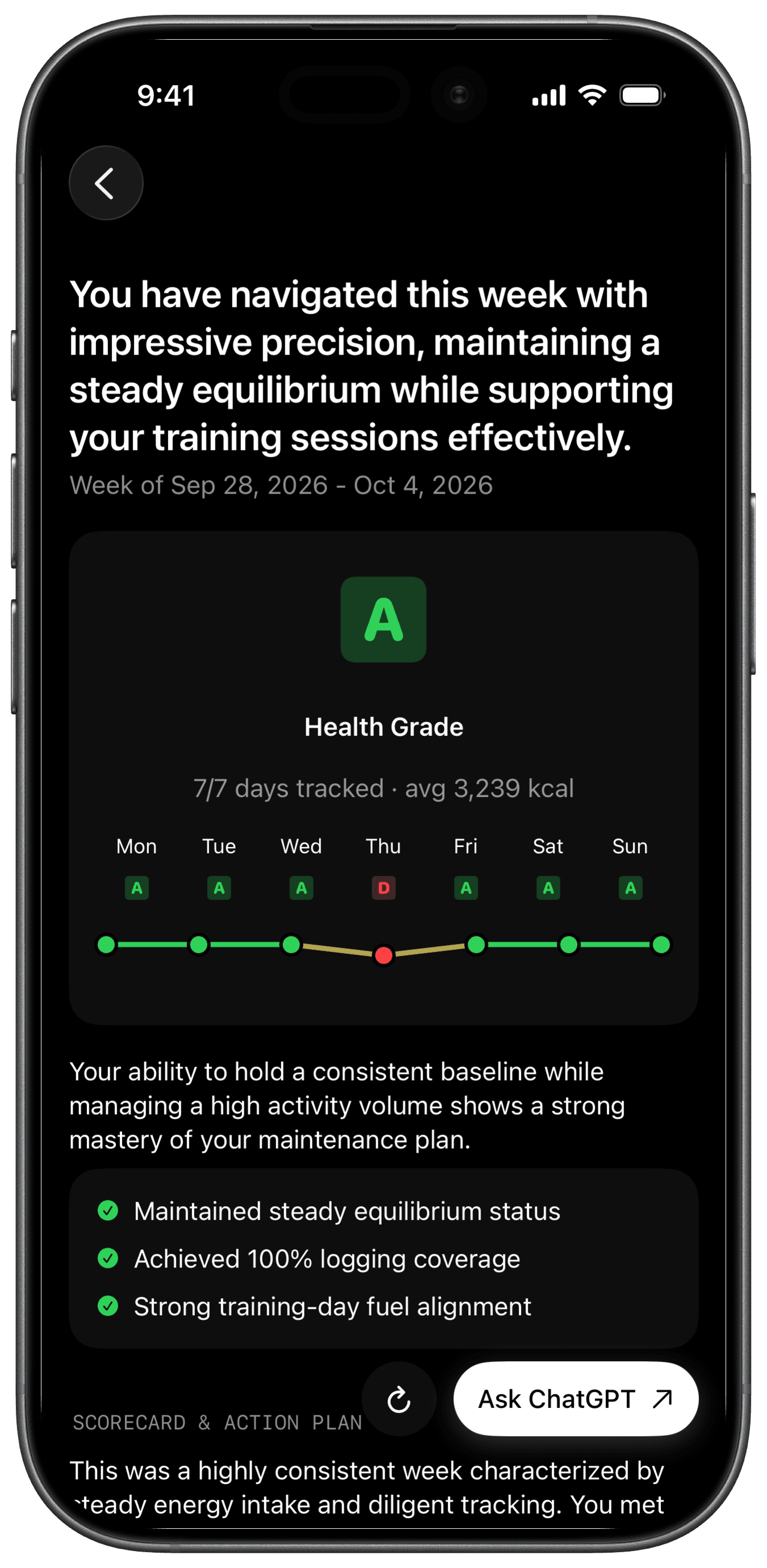
This example week has seven tracked days and an average of 3,239 kcal. The daily badges still vary, which is a reason to inspect the days behind the average. These are illustrative logs: a full week of entries and a favorable grade do not prove that training improved or that calorie needs were measured accurately.
Weight is optional. With Show visible maintenance range on, Maintain shows a band around your reference weight, at ±0.5% for Tight, ±1% for Standard or ±1.5% for Relaxed, plus a 14-day median once you have at least three weigh-ins. If the scale pulls your attention away from training, turn the range off. That hides the range and numeric weight from Maintain screens and Maintain coaching. Your weigh-ins stay saved, and weight still appears elsewhere in Fuel.
Give any change two to four weeks before you judge it, and change one thing at a time. That interval is a practical coaching window. No study set it. If sessions are going well and energy is steady, leave the plan alone even when a few days look messy. If sessions feel flat and you are hungry every evening, add food on training days before you touch the calorie target. A snack before training or a bigger lunch is the usual first move. Only if the pattern holds after that change does it make sense to revisit your plan's numbers.
09When a busy week breaks the routine
Picture a Wednesday. Lunch is a sandwich at your desk around noon. Meetings run until six, you reach the gym at half past, and your working sets feel heavy from the first warm-up. Dinner lands at nine, you are starving, and you graze until bed. Thursday feels flat.
Six hours between lunch and a hard session is a long gap, and the fix is small. A study of 25 elite female endurance athletes found that those with menstrual disruption spent more of each day in an energy deficit than the others, even when their 24-hour totals looked similar.11 It was a small observational sample of elite athletes, so it supports paying attention to long gaps without proving what they cause.
Add one planned snack at 4 p.m. on training days. Put Greek yogurt and a banana in the office fridge when you pack on Sunday, or keep a peanut butter sandwich in your bag. Log it the same way each time so the weeks stay comparable. Next Wednesday, check two things. Did the session feel better, and did the evening grazing ease off? Leave Thursday's meals alone. Cutting them to make up for Wednesday night only moves the problem to Friday's session.
10When to talk to a sports dietitian or doctor
The 2023 IOC consensus on Relative Energy Deficiency in Sport lists signs that deserve a professional look.12 These include performance that keeps declining without an obvious reason, recovery that gets worse week after week, repeated illness or injury, bone stress injuries, fatigue that does not lift, missed or changed periods, low libido and persistent mood changes. Any one of these can have other causes. The IOC's assessment tool relies on a physician weighing several indicators together, which is why a sports dietitian and a doctor should look at them with you.
Fuel cannot diagnose low energy availability, and no single number can either. Tighter tracking is the wrong answer to a worsening health or performance pattern. Book the appointment and bring your training log and a few weeks of meals.
11Your plan for next week
Set Maintain up tonight with the training schedule closest to your real week. Write down one performance signal and last week's number for it. Pick the training-day meal you will repeat, and plan one snack for the longest gap before a session. If logging suits you, log for the week. Otherwise, use your meal template and training notes. Run your first review in the opening days of the following week. If the lifts hold, the Saturday session feels better and Thursday stops dragging, you are making progress, whatever the scale says.
Footnotes
Heikura, Stellingwerff and Burke, Energy Availability in Athletics, World Athletics, 2019. Expert review for track and field athletes. It is not a controlled trial and does not estimate how common the problem is among recreational exercisers.
Back to textCaldwell and colleagues, 14 days of low energy availability in endurance-trained females, The FASEB Journal, 2024. Randomized, blinded crossover trial in 12 endurance-trained women with regular cycles, comparing about 22 and 52 kcal per kg fat-free mass a day with training held constant. The sample was small and the low condition was deliberately severe, so the magnitude and recovery timeline may not apply to recreational exercisers.
Back to textThomas, Erdman and Burke, Nutrition and Athletic Performance, joint position statement of the Academy of Nutrition and Dietetics, Dietitians of Canada and the American College of Sports Medicine, Medicine and Science in Sports and Exercise, 2016. Written for athletes and active adults. ACSM approved an update in 2026 that was still in development when this guide was written.
Back to textBack to text 2Morton and colleagues, A systematic review, meta-analysis and meta-regression of protein supplementation on resistance training gains, British Journal of Sports Medicine, 2018. Pooled 49 studies with 1,863 healthy adults. The 1.62 g/kg breakpoint had a 95% confidence interval of 1.03 to 2.20 and concerns maximizing training gains. It does not describe maintenance needs.
Back to textAreta and colleagues, Timing and distribution of protein ingestion during prolonged recovery from resistance exercise, Journal of Physiology, 2013. Twenty-four trained young men, eight per group, received 80 grams of whey over 12 hours after one session. The endpoint was acute myofibrillar protein synthesis, which does not establish long-term muscle outcomes or a required meal schedule.
Back to textBurke and colleagues, Carbohydrates for training and competition, Journal of Sports Sciences, 2011. Evidence review focused on athletes in training and competition. The higher intake ranges do not apply to every recreational workout.
Back to textHew-Butler and colleagues, Statement of the third international exercise-associated hyponatremia consensus development conference, British Journal of Sports Medicine, 2015. Expert consensus focused on prolonged activity. It does not replace an individual plan for long exposure to heat or for medical conditions.
Back to textSawka and colleagues, ACSM position stand on exercise and fluid replacement, Medicine and Science in Sports and Exercise, 2007, and McDermott and colleagues, National Athletic Trainers' Association position statement on fluid replacement for the physically active, Journal of Athletic Training, 2017. Both recommend individual strategies based on sweat losses and conditions. Their performance guidance depends on heat, session type, duration and acclimation.
Back to textStellingwerff and colleagues, IOC REDs methodology review on measuring energy availability, British Journal of Sports Medicine, 2023. This is a methods review. It explains why free-living intake and exercise expenditure estimates carry large errors.
Back to textWalsh and colleagues, Sleep and the athlete, narrative review and 2021 expert consensus recommendations, British Journal of Sports Medicine, 2021. Narrative review and consensus centered on athletes. It supports sleep as a recovery habit and does not set a precise nutrition outcome.
Back to textFahrenholtz and colleagues, Within-day energy deficiency and reproductive function in female endurance athletes, Scandinavian Journal of Medicine and Science in Sports, 2018. Observational reanalysis of seven-day food and expenditure records from 25 elite endurance athletes. The small sample and reliance on intake and expenditure estimates limit causal conclusions.
Back to textMountjoy and colleagues, 2023 International Olympic Committee consensus statement on Relative Energy Deficiency in Sport, British Journal of Sports Medicine, 2023. International consensus for athletes that updates REDs risk assessment and calls for clinical diagnosis by a physician. Much of the underlying evidence is cross-sectional and weighted toward female athletes.
Back to text