The hardest part of cutting on a GLP-1 is that the plan can feel clean right up until it stops working. Appetite goes quiet, the scale moves, meals get smaller, and for a few weeks it can look like everything is finally clicking. Then your top sets slow down, protein starts clustering into one late meal, and the medication hides the difference between productive fat loss and a cut that is getting too expensive.
In that middle phase, the medication is working, the deficit is real, and you need a way to tell whether your current rate of loss, protein intake, training output, and recovery still fit together. The goal is not to make you obsessive. The goal is to help you catch the quiet drift before a good cut turns into weak training, flat recovery, and lean mass you did not mean to give away.
How to Prevent Muscle Loss on GLP-1s: A Men's Protein Guide builds the full system: protein floor math, 12-week training blocks, injection-cycle meal pacing, and the four-metric scoreboard. If you want the broad medication setup first, read the GLP-1 diet guide. If you want the foundational evidence on lean mass risk during GLP-1 therapy, read How to Preserve Muscle on GLP-1 Medications. If you are still sorting through the broader peptide landscape, start with Peptides for Body Recomposition or the peptide podcast roundup.
01Muscle Risk Shown in GLP-1 Studies
The research on GLP-1 medications and muscle loss has built up in layers, and the clearest picture comes from reading the studies in sequence. STEP 1 and the SURMOUNT-1 body-composition substudy show the scale of the problem. SEMALEAN adds functional data like grip strength that pure weight-and-scan numbers miss. From there, a multi-society nutrition advisory and an exercise follow-up study turn those findings into guidelines you can actually train and eat around.
In STEP 1, adults with overweight or obesity received semaglutide 2.4 mg weekly or placebo. At 68 weeks, the semaglutide group lost 14.9 percent of body weight versus 2.4 percent with placebo. The body-composition sub-analysis showed fat mass fell by approximately 8.4 kg and lean mass fell by approximately 5.3 kg.1 That lean-mass number is the one that concerns lifters. It also changes meaning with context, because the trial population was not resistance-trained and the lifestyle intervention did not include structured progressive overload.
In the 2025 SURMOUNT-1 body-composition substudy, adults on tirzepatide lost substantial weight, and the composition of that loss was roughly 25 to 33 percent lean tissue across dose groups, with a fairly consistent fat-to-lean ratio whether subjects started heavier or lighter.2 The lean fraction is higher than most lifters want. It is also measured in a sedentary population without a protein floor or lifting program.
In the 2026 SEMALEAN study, 106 adults with obesity received semaglutide 2.4 mg for 12 months. Mean weight loss reached 13 percent. Lean mass dropped by about 3 kg at 7 months and then stabilized for the remaining 5 months. Handgrip strength improved by 4.5 kg over the full year. The prevalence of sarcopenic obesity fell from 49 percent to 33 percent.3 This study is useful because it separates lean-mass change from one practical function marker. It does not prove that trained lifters will maintain barbell performance under the same conditions.
The 2025 joint advisory from the American College of Lifestyle Medicine, the American Society for Nutrition, the Obesity Medicine Association, and The Obesity Society recommends a protein target of 1.2 to 1.6 g/kg adjusted body weight during GLP-1 therapy, combined with strength training and body-composition assessment.4 A 2026 secondary analysis of the Danish weight-maintenance trial showed that structured exercise combined with GLP-1-based pharmacotherapy improved physical performance and cardiorespiratory fitness more than pharmacotherapy alone.5 That study did not isolate lifting specifically, so it should be read as support for exercise as a protective layer, not as proof of a resistance-training prescription for trained men.
The trials above describe what happened in mostly sedentary obesity-treatment populations. The lifting-specific decision rules are coaching inferences drawn from these trials plus sports-nutrition and aging evidence. The practical summary for a man who lifts is still straightforward: GLP-1 therapy during a deficit can cost lean tissue, and the size of that cost is shaped by protein intake, training stimulus, rate of loss, and monitoring quality.
02How a quiet deficit turns into muscle loss in six weeks
You are 34 years old, 205 pounds, eight weeks into tirzepatide 5 mg. The first month was productive. You lost seven pounds, your bench stayed at 225 for sets of five, and your squat felt normal. Then the appetite suppression deepened. Lunch became a protein bar or nothing. Dinner became the only real meal. Your tracker still showed 150g of protein on some days because that one big dinner pulled the average up.
By week six, your squat dropped to sets of three at the same weight. Your bench moved to 215 and you blamed a bad night of sleep. You lost another four pounds in a single week and felt fine about it because the scale looked great.
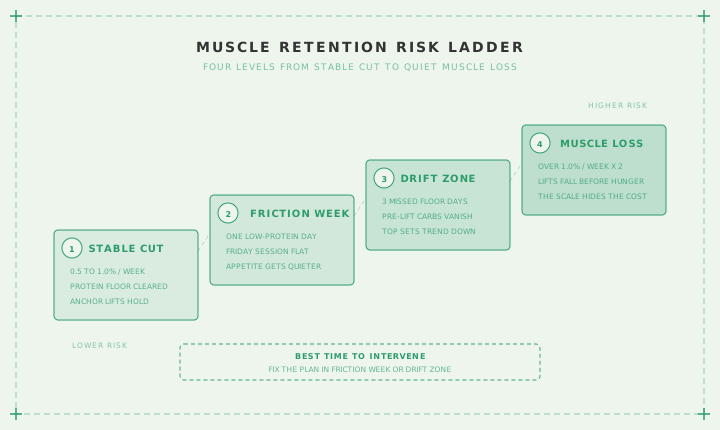
Here is what actually happened. Your protein averaged 120g on three of the last seven days. You ate fewer than 50g of carbs before training four times. Your weekly loss jumped to 2.0 percent of body weight, well above the range where a trained man keeps most of his strength. The medication hid the problem because you never felt hungry enough to notice the shortfall.
Catch that pattern before week six, not after.
03Age and GLP-1 muscle loss risk
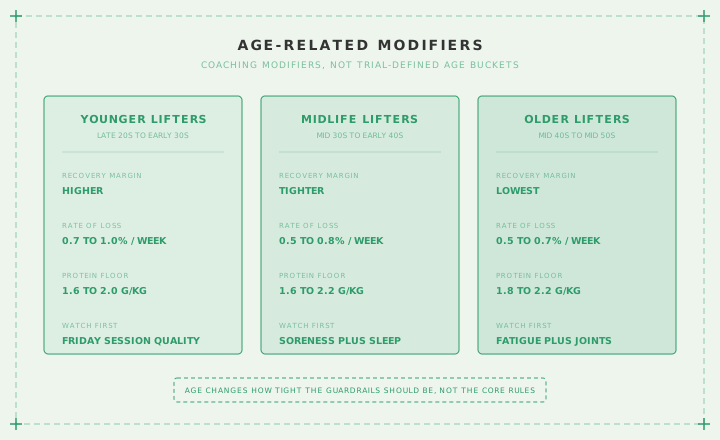
A 28-year-old and a 52-year-old on the same medication at the same body weight do not need identical guardrails. The evidence does not give neat GLP-1-specific age buckets for lifters, so the sections below should be read as evidence-informed coaching modifiers, not trial-defined categories. The main pattern from the broader literature is that sarcopenia risk, anabolic resistance, and the cost of rebuilding lost tissue all rise with age, which makes resistance training quality and protein sufficiency more protective in older adults.6789
Younger lifters
Younger lifters usually have more recovery margin and a lower immediate risk of sarcopenia than older adults. The main risk in this group is overconfidence. A man in his late 20s or early 30s can often tolerate sloppy meal timing and a faster cut for longer before the damage shows up clearly in training, which makes it easier to drift into a plan that looks fine on the scale and weak in the gym.
| Variable | Working range |
|---|---|
| Rate of loss. | 0.7 to 1.0 percent of body weight per week can be workable if sleep, intake, and training quality stay intact. This is a coaching range, not a trial-backed age threshold. |
| Protein floor. | 1.6 to 2.0 g/kg per day. For many younger trained men, the lower end of the lifter range is often workable when meals are distributed well. |
| Training frequency. | 3 to 4 sessions per week. Can handle higher volume if sleep and intake support it. |
| Recovery signal to watch. | Session quality across the week. If Friday sessions are consistently worse than Monday, weekly fatigue is accumulating faster than recovery. |
Midlife lifters
Midlife lifters often have less room for sloppy execution. Work stress, sleep disruption, family schedule, and accumulated training wear make the same deficit feel more expensive than it did earlier. The most useful adjustment here is not chasing a hormone story. It is setting tighter recovery guardrails and refusing to let the cut outrun meal structure.
| Variable | Working range |
|---|---|
| Rate of loss. | 0.5 to 0.8 percent of body weight per week. The higher end is productive only when sleep, protein, and training are all locked in. |
| Protein floor. | 1.6 to 2.2 g/kg per day. The higher end often becomes more useful here because protein distribution and recovery quality start deciding more of the outcome. |
| Training frequency. | 3 sessions per week is the reliable minimum. A fourth session is fine if recovery supports it, but three hard sessions beat four mediocre ones. |
| Recovery signal to watch. | Soreness duration and sleep quality. If you are still sore 72 hours after a session or waking up unrested most nights, the plan is outrunning your recovery. |
Older lifters
In older lifters, anabolic resistance and sarcopenia risk become more relevant, and the cost of losing muscle is higher because rebuilding it takes longer.678 This is the group where resistance training plus adequate protein is most clearly protective. Per-meal protein doses and training continuity matter more here than they did earlier.
| Variable | Working range |
|---|---|
| Rate of loss. | 0.5 to 0.7 percent of body weight per week. Err toward the low end. The cost of losing muscle at this age is higher because it takes longer to rebuild. |
| Protein floor. | 1.8 to 2.2 g/kg per day, with at least 35 to 45g per feeding from complete protein sources. This is an evidence-informed coaching rule drawn from aging and protein literature, not a GLP-1-specific trial target. |
| Training frequency. | 3 sessions per week with at least one full rest day between lower-body sessions. Prioritize compound lifts at moderate intensity over maximal-effort singles. |
| Recovery signal to watch. | Joint discomfort, persistent fatigue, and falling session quality. If two or more of these show up together, the deficit is often too aggressive for your current recovery capacity. |
The physician conversation usually matters more in this group because dose titration, medication tolerance, and muscle-loss risk deserve tighter monitoring than they do in a younger lifter who is recovering well.
04GLP-1 muscle risk by age and protein
| Pattern you see now | Risk to lean mass | What the evidence suggests | First correction |
|---|---|---|---|
| Weight trend is dropping 0.5 to 0.8 percent per week and anchor lifts are stable. | Lower | This pace is often easier to support in trained lifters. SEMALEAN suggests lean mass and function do not always move in the same direction, but it does not define a lifter-safe zone.3 | Keep food structure and training steady. |
| Weight trend is dropping 0.8 to 1.0 percent per week and training motivation is slipping. | Medium | SURMOUNT-1 showed a meaningful lean-mass fraction across dose groups in sedentary adults.2 In a lifter, this pace often becomes a warning sign when meal completion is getting worse. | Raise meal structure and protect carbs around training. |
| Weight trend is above 1.0 percent per week for two straight weeks and two main lifts are down. | High | STEP 1 showed that substantial weight loss without a structured lifting plan still carries lean-mass cost.1 For a trained man, this pattern usually means the current plan is running too hard. | Add 100 to 250 calories around training before changing programming. |
| You keep missing protein on low-appetite days and calling it good compliance. | High | The joint advisory explicitly flags protein shortfall during appetite suppression as a primary risk.4 | Install low-volume protein defaults immediately. Use Meal Templates for Low Appetite Days. |
| Weekend intake rebounds after very low weekdays. | High | The oscillation between restriction and catch-up eating undermines the consistent protein distribution that supports muscle protein synthesis. | Fix weekday under-fueling before tightening weekends. |
Work stress, poor sleep, and the accumulated fatigue of a long cut make it easy to blame the medication for what is really a recovery problem. Aggressive dieting can also drag testosterone, libido, and training output down even before major muscle loss is obvious. If the cut is making you flatter, weaker, and harder to recover from, the scale does not get the final vote.
05Practical patterns during dose escalation
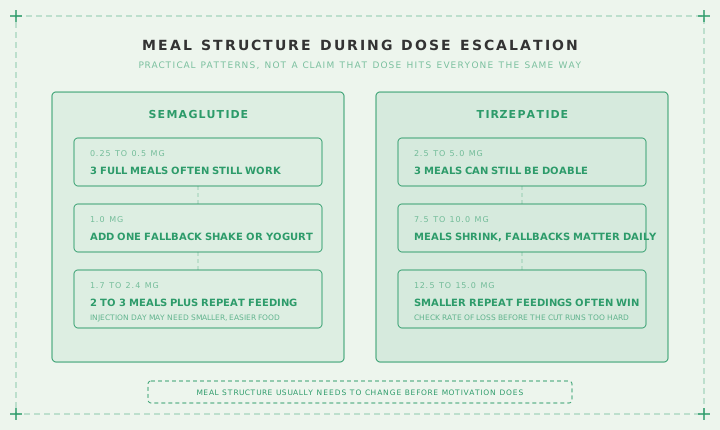
Both medications use step-up titration schedules designed to improve tolerability, and both official brand materials flag nausea, vomiting, diarrhea, constipation, abdominal pain, and reduced appetite as common side effects during treatment.1011 The dose-by-dose notes are evidence-informed practical guidance, not a claim that appetite suppression scales in a uniform way at each dose in all men.
Semaglutide
At 0.25 to 0.5 mg, many men can still eat three normal meals. Appetite is often lower, but meal completion may still feel manageable. This is usually the easiest phase to lock in structure before escalation makes the process less forgiving.
At 1.0 mg, tolerability issues and smaller meal size commonly become more noticeable. Lunch often shrinks first. A mid-afternoon shake or yogurt can become a useful fallback when the second protein feeding is starting to disappear.
At 1.7 to 2.4 mg, appetite suppression can be strong enough that two full meals become difficult on some days. Injection day and the day after can be less predictable for meal completion. At this stage, low-volume protein feedings and simpler pre-workout carbs may be needed more often.
Tirzepatide
At 2.5 to 5.0 mg, many men can still eat three meals, but the window for comfortable eating may feel shorter as titration progresses.
At 7.5 to 10.0 mg, appetite suppression and early satiety can become stronger for many users. Meal completion may turn into a daily issue rather than an occasional one. Liquid protein and low-volume fallback meals often become more useful here than they were at lower doses.
At 12.5 to 15.0 mg, some users can experience enough appetite suppression that the cut starts running faster than intended. The practical risk at this level is not just eating less. It is eating less without noticing the performance cost quickly enough. Weekly rate-of-loss checks and smaller repeat feedings often matter more here.
| Variable | Semaglutide 1.0 to 2.4 mg | Tirzepatide 7.5 to 15.0 mg |
|---|---|---|
| Appetite suppression. | Commonly strong enough to shrink meal size. | Often strong enough that meal structure may need to become more deliberate. |
| Meal-completion problem. | Common, especially around escalation and rough-tolerance days. | Common and often more persistent once doses climb. |
| Training under-fueling risk. | Moderate to high. Pre-workout carbs can start getting missed. | High. A deeper-than-planned deficit can build quietly when meals get very small. |
| Protein feeding structure. | 3 to 4 meals per day often works, with one fallback shake or yogurt. | 4 to 5 feedings may work better, including 1 to 2 low-volume fallbacks. |
| Pre-workout carb rule. | Important on lower-appetite training days. | Often important on most training days once suppression is high. |
| Weekly loss guardrail. | 0.5 to 1.0 percent body weight is often workable. | 0.5 to 0.8 percent body weight is often safer when performance matters. |
A man who did well on semaglutide and switches to tirzepatide may find that the old meal structure stops working. The useful move is to rebuild the feeding structure early in the transition instead of waiting for performance to drop first.
For the molecule-specific training and protein setup, read Protein Targets and Training Strategy on Semaglutide or Retatrutide and the GLP-1 receptor agonist glossary entry.
06Weekly operating template
Five day types map onto an actual training week. Most men running a medicated cut will train three days per week on an upper-lower or full-body split. The nutrition rules are tied to the day type, not to a rigid calendar.
For the 200lb example below, use a normal-day protein target window of 160 to 180g. On a true low-appetite day, 140 to 150g can function as a damage-control floor if the next day returns to the normal target range. That fallback floor is a coaching rule, not a claim from a GLP-1 trial.
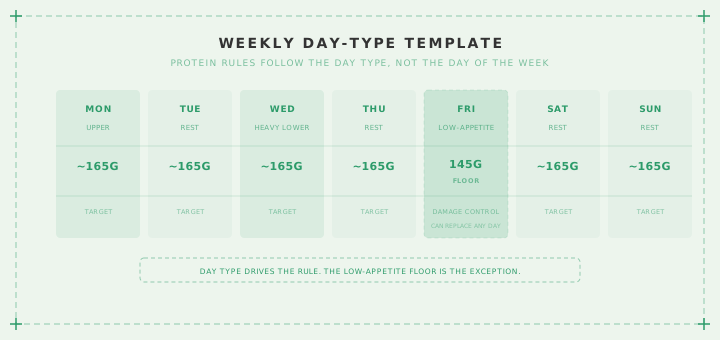
Sample week layout: Monday (upper), Tuesday (rest), Wednesday (heavy lower), Thursday (rest), Friday (upper or full-body), Saturday (rest or active recovery), Sunday (rest).
Heavy lower-body day (Wednesday in the sample week)
Train after at least two meals. Eat 30 to 40g of carbs and 30g of protein within two hours before the session. A bowl of rice with chicken thighs or oatmeal with whey and a banana both work. After training, eat another full protein meal within two hours. Do not train fasted on this day if recent intake has been low.
Sample day at 200lb:
- 7 AM: 3 eggs scrambled, Greek yogurt, 1 slice toast, coffee. 45g protein.
- 11 AM: 6 oz chicken thigh, 1 cup rice, vegetables. 40g protein, 45g carbs.
- 2 PM: Train. Squats, RDLs, leg press, walking lunges.
- 4 PM: Whey shake with a banana and 1 tbsp peanut butter. 35g protein.
- 7 PM: 7 oz salmon, sweet potato, salad. 45g protein.
- Total: approximately 165g protein with adequate carbs around training.
Upper-body day (Monday and Friday)
Keep at least one hard press pattern and one hard row pattern in the session. Eat at least two protein meals before training if the session is in the afternoon. If the session is early, eat one solid meal or a shake beforehand and front-load protein in the meals after.
Sample day at 200lb:
- 7 AM: Greek yogurt (1 cup) with berries and a scoop of protein powder. 40g protein.
- 12 PM: Turkey and cheese wrap with an apple. 35g protein.
- 3 PM: Train. Bench press, barbell rows, overhead press, chin-ups, lateral raises.
- 5 PM: 5 oz deli turkey rolled up, string cheese, milk. 35g protein.
- 7 PM: 7 oz ground beef stir fry with rice and vegetables. 45g protein.
- Total: approximately 155g protein. Add a second yogurt, milk, or half shake if your target is closer to 170 to 180g.
Rest day (Tuesday, Thursday, Saturday, Sunday)
Hold the protein floor without over-correcting calories. Slightly lower carbs if appetite is normal. Steps and walking are fine and encouraged.
Sample day at 200lb:
- 8 AM: 3 eggs, Greek yogurt, coffee. 40g protein.
- 12 PM: Cottage cheese (1 cup) with fruit and a side of deli turkey. 45g protein.
- 3 PM: Whey shake. 30g protein.
- 6:30 PM: 8 oz chicken breast, roasted vegetables, small portion of pasta. 50g protein.
- Total: approximately 165g protein. Lower-calorie day with the target intact.
Low-appetite day (can replace any day type)
This is the day that decides whether the week works or fails. Do not wait for hunger. Eat on a schedule using foods that go down easy in small volumes. If this day falls on a training day, reduce volume if needed but do not remove the session by default.
Sample day at 200lb:
- 7 AM: No appetite. Start with whey plus milk. 35g protein.
- 10 AM: 1 cup Greek yogurt plus half scoop whey stirred in. 30g protein.
- 1 PM: 5 oz deli turkey, 1 oz cheese, a few crackers. 35g protein.
- 4 PM: Whey shake with peanut butter. 35g protein.
- 7 PM: 3 scrambled eggs with cottage cheese and toast. 30g protein.
- Total: approximately 165g protein. If that is not realistic on a rough day, a fallback floor of about 145g is still far better than letting the day collapse.
Travel or social day
Front-load protein early and use simpler fallback meals. Hit the main session or move it to the day before or after. Do not improvise both food and training on the same day.
If low meal completion is the recurring problem, use Meal Templates for Low Appetite Days: High-Protein, Low-Volume Options. That page has the full set of fallback meals designed for days when the medication is doing its job and your protein floor is paying the bill.
07How the plan changes as the cut progresses
The guardrails above are starting points. The plan should shift as body fat drops, the dose titrates up, and the deficit accumulates over months.
| Phase | What changes | How to adjust |
|---|---|---|
| Weeks 1 to 4, early titration. | Appetite suppression is moderate. Most men can still eat three full meals. | Set the protein floor and training minimums. Build the habit of tracking anchor lifts. This is the easiest phase to coast through, which makes it the most important phase to lock in structure. |
| Weeks 5 to 12, dose climbing. | Appetite suppression gets stronger. Meal completion starts to fail. Rate of loss may accelerate. | Add one low-volume protein feeding if meals are getting smaller. Tighten the pre-workout carb rule. Start comparing the 14-day weight trend against your anchor lifts every week. |
| Weeks 13 to 20, deeper into the cut. | Body fat is lower. Recovery is slower. Training output starts to feel harder even when nutrition looks adequate on paper. | Narrow the rate-of-loss target toward 0.5 percent per week. Consider a one-week diet break at maintenance calories if lifts have trended down for three or more weeks. Trim accessory volume before trimming compound work. If you need the exact floor for how much lifting to keep, use Strength Training Minimum Effective Dose During a Cut. |
| Week 20 and beyond, or below 15 percent body fat. | Hormonal downregulation becomes a real factor. Sleep, libido, and mood may all degrade. Training performance gets harder to maintain. | Reassess whether the cut should continue or transition to maintenance. A planned two-week maintenance phase preserves more muscle over six months than grinding through an unbroken deficit. |
The most common mistake in the back half of a cut is holding the same aggressive targets that worked in month one. What felt like discipline in week four becomes over-reaching by week sixteen.
08Weekly decision tree for muscle retention
Start with your 14-day weight trend and your last two weeks of anchor-lift performance.
Weight trend is on pace (0.5 to 1.0 percent per week) and lifts are stable or improving. The plan is working. Change nothing. Review again in two weeks.
Weight trend is on pace but lifts are trending down over two or more weeks. The deficit size is fine but something in the support structure is off. Check protein first. If the weekly average is below your floor on three or more days, fix meal structure before anything else. If protein is adequate, check pre-workout carbs and sleep quality.
Weight trend is too fast (above 1.0 percent per week for two straight weeks). Add 100 to 250 calories around training. Hold the change for 7 to 14 days and reassess. Do not add more cardio to try to earn the result back.
Weight trend is too slow or stalled. Before cutting calories further, check whether you are under-reporting intake on weekends or high-social days. If tracking is honest and the stall has lasted three or more weeks, reduce calories by 100 to 150 per day from non-training carbs.
You cannot tell whether the plan is working because data is inconsistent. Fix the consistency of tracking before making any nutrition change. Use the Fuel workflow to audit it.
09Self-adjustments vs physician-only changes
Meal structure, protein targets, training programming, rate-of-loss adjustments, and monitoring are all within your control once the medication is prescribed.
The following warrant a conversation with your prescribing clinician:
- Persistent nausea or GI symptoms that prevent you from holding the protein floor for more than two consecutive weeks.
- Rate of loss that stays above 1.5 percent per week despite raising intake.
- Symptoms that go beyond normal dieting fatigue. Persistent low libido, poor sleep quality that does not improve with better habits, or a flat mood for more than two weeks.
- Dose titration decisions. Moving up or down in dose based on appetite, GI tolerance, or rate of loss should involve your prescriber.
- Any plan to discontinue the medication. The transition off GLP-1 therapy has its own set of risks for fat regain and appetite rebound. Read How to Stop GLP-1s Without Rapid Fat Regain for the framework, and discuss timing with your physician.
10Fuel workflow for this phase
Open Nutrition Planning in Fuel and set your daily protein target to match your age band and training status from the tables above. A 38-year-old at 200lb training three days per week would usually run a target around 160 to 180g per day. If your generated plan is close but not quite right, use Adjusting Macronutrients to raise protein without rerunning the whole plan. If you want the broader body-composition context first, the Get Leaner and Stronger goal page is the right cross-link.
Once the target is set, use these two screens weekly:
- Open Timeline. Compare the days where Apple Watch calorie burn ran high and logged intake ran low. These are the days where the deficit is deepest and the protein floor is most likely to have broken. Flag any day where protein came in more than 20g below your target.
- Open Weekly Review, then check Plan Progress. Compare the seven-day protein average, adherence pattern, and weight trend against your anchor-lift performance from the same period. If protein ran below your floor on three or more days and your top lifts trended down, raise the floor or add a fallback feeding before changing training.
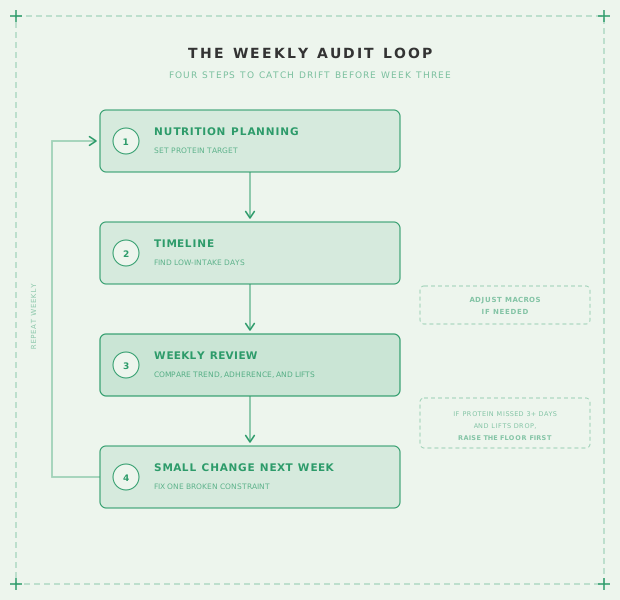
The goal is to catch the two or three days each week that decide whether this cut preserves muscle or burns through it. If the pattern repeats for two consecutive weeks, change the plan before the third week starts.
11Start the weekly muscle-retention template
Read How to Prevent Muscle Loss on GLP-1s: A Men's Protein Guide for the full system with 12-week training blocks, injection-cycle meal pacing, and the four-metric scoreboard.
Use How to Preserve Muscle on GLP-1 Medications for the broader lean-mass evidence and risk framework.
Use Meal Templates for Low Appetite Days: High-Protein, Low-Volume Options if low meal completion is the thing breaking your week.
Use Peptides for Body Recomposition if you want to understand how GLP-1 receptor agonists fit into the broader peptide landscape alongside growth hormone secretagogues and other compounds.
Footnotes
Wilding JPH, Batterham RL, Calanna S, et al. Once-weekly semaglutide in adults with overweight or obesity. N Engl J Med. 2021, 384(11), 989-1002. PubMed
Back to textBack to text 2Frias JP, Heise T, Nauck MA, et al. Body composition changes during weight reduction with tirzepatide in the SURMOUNT-1 study of adults with obesity or overweight. Obesity. 2025. PubMed
Back to textBack to text 2Alissou M, et al. Impact of semaglutide on fat mass, lean mass and muscle function in patients with obesity: the SEMALEAN study. Diabetes Obes Metab. 2026. PubMed
Back to textBack to text 2Mozaffarian D, et al. Nutritional priorities to support GLP-1 therapy for obesity: a joint advisory from the American College of Lifestyle Medicine, the American Society for Nutrition, the Obesity Medicine Association, and The Obesity Society. Obesity. 2025. PubMed
Back to textBack to text 2Lundgren JR, et al. Physical fitness with exercise and GLP-1 receptor agonist treatment alone or combined after diet-induced weight loss: a secondary analysis of a randomized controlled trial in adults with obesity. Obesity. 2026. PubMed
Back to textProkopidis K, et al. Weighing the risk of GLP-1 treatment in older adults: should we be concerned about sarcopenic obesity? J Nutr Health Aging. 2025. PubMed
Back to textBack to text 2Brown JD, et al. Treating sarcopenic obesity in the era of incretin therapies: perspectives and challenges. Diabetes Care. 2025. PubMed
Back to textBack to text 2Kirwan RP, Mazidi M, Rodríguez García C, et al. Protein interventions augment the effect of resistance exercise on appendicular lean mass and handgrip strength in older adults: a systematic review and meta-analysis of randomized controlled trials. Am J Clin Nutr. 2022;115(3):897-913. https://doi.org/10.1093/ajcn/nqab355
Back to textBack to text 2Jager R, et al. International Society of Sports Nutrition position stand: protein and exercise. J Int Soc Sports Nutr. 2017. PubMed
Back to textNovo Nordisk. Wegovy dosing information and Wegovy dosing and prescribing guide
Back to textEli Lilly. Zepbound FAQ and Managing possible side effects
Back to text