Peptides have become one of the most talked-about topics in the health podcast world, and the most useful thing an editorial article can do is preserve the evidence gradient inside that conversation instead of flattening it. The discussion actually spans four lanes with very different depth. Prescription GLP-1 receptor agonists like semaglutide and tirzepatide sit on large-scale RCTs. GH-axis peptides (tesamorelin, sermorelin, ipamorelin, CJC-1295) are a real pharmacology lane with steep internal gradients: tesamorelin has controlled human body-composition data, sermorelin is a legacy clinical peptide with older but real signal, and ipamorelin and CJC-1295 show human endocrine activity in small pharmacokinetic studies with thin direct recomposition trials. Repair peptides like BPC-157 and TB-500 have compelling animal data and community anecdote but essentially no human RCTs, and they belong to a tissue-repair lane, not a recomposition one. Collagen is a supplement, not a therapy. Most confusion in the podcast peptide conversation traces back to people treating these lanes, and the tiers inside them, as interchangeable.
After pulling together the most practical discussions from Huberman Lab, The Peter Attia Drive, FoundMyFitness, and The Tim Ferriss Show (2021 through 2026), one throughline stands out. The highest-leverage advice across all four podcasts is about how you approach peptides, and it centers on five things: selecting the right compound for a clearly defined goal, getting real medical supervision, verifying sourcing at every step, protecting lean mass from day one if you are using GLP-1s, and building an exit plan before you start. The per-episode takeaways are preserved under each section for readers who want the specific insights from individual conversations.
If you want the shortest route from that podcast noise to a practical decision tree, use Peptides for Body Recomposition as the hub that separates GLP-1 drugs, GH-axis peptides, repair peptides, and collagen before you drill into any individual episode.
01Start with the episode that matches your question
These are entry points into the source material, not treatment recommendations. Episode discussion describes what a host or guest said; research evidence refers to the linked studies; Fuel's interpretation is our editorial application. A podcast anecdote does not become a clinical result when repeated in a roundup.
| Show and episode | Published | Main use for the reader |
|---|---|---|
| Huberman Lab on peptide therapeutics | April 1, 2024 | Understanding why different peptide categories need different evidence |
| The Drive with David Allison, #314 | August 19, 2024 | Obesity treatment and the limits of nutrition research |
| FoundMyFitness on Ozempic | September 2, 2024 | Weight loss, appetite, and muscle-related questions |
| Tim Ferriss Q&A, #826 | September 10, 2025 | A personal recovery account to read as anecdote |
The dates identify the episodes, not a new clinical review in 2026. Follow the study links when assessing a medical claim and distinguish the guest's recommendation from evidence for your own situation.
02Four peptide lanes explained
The first distinction worth making is between prescription GLP-1 drugs, the GH-axis lane (tesamorelin, sermorelin, ipamorelin, CJC-1295) available through compounding or medical prescription, repair peptides obtained almost entirely through grey-market supply chains, and collagen, which is a supplement rather than a therapy. The GH-axis lane in particular has sharp internal tiers that are easy to collapse if the categories get flattened.
GLP-1 receptor agonists like semaglutide and tirzepatide sit on a foundation of large-scale clinical trials. The molecules themselves have demonstrated efficacy for weight loss, glycemic control, and cardiovascular risk reduction across thousands of patients in controlled settings. When these drugs are obtained through legitimate pharmacies and prescribed by qualified clinicians, the evidence base for the active compound is strong. Compounded versions of these drugs introduce a separate set of questions around purity, potency, and manufacturing consistency, and those questions are real. The regulatory and quality-control concerns around compounded GLP-1 products deserve serious attention. They are separate from the question of whether the molecule works.
Peter Attia made this point clearly in his 2021 conversation with Tim Ferriss when he described GLP-1 agonists as a categorically different tier of obesity pharmacotherapy compared to stimulant-based approaches. The mechanism is different. The addiction risk is different. The effect sizes with newer agents like semaglutide and tirzepatide became large enough to change real clinical outcomes. That conversation, recorded before GLP-1 drugs became a mainstream cultural phenomenon, captures the moment when the medical community recognized these compounds as genuinely effective tools rather than marginal interventions.
GH-axis peptides occupy a middle lane that is best read in three tiers, not one. Tesamorelin, a growth-hormone-releasing hormone analog, is the anchor: FDA-approved for HIV-associated lipodystrophy and backed by controlled 26-week data showing roughly 14 to 18 percent visceral fat reduction and about 1.2 to 1.3 kg lean-body-mass gain in the studied population, with use beyond that population being inference rather than direct proof. Sermorelin, an older GHRH(1-29) analog, has been largely displaced by tesamorelin on evidence depth, though the FDA's own Federal Register determination on Geref's withdrawal explicitly states it was not for safety or effectiveness, which is what makes it a legacy clinical peptide rather than a disproved one. It is now supplied almost entirely through compounding, and the older human GHRH(1-29) data still shows real GH-axis activation with some lean-mass and metabolic signal. Ipamorelin and CJC-1295 are the third tier. Small human pharmacokinetic and pharmacodynamic studies show real GH and IGF-1 stimulation at predicted doses, but direct body-composition RCTs in healthy adults are essentially absent, so this tier is mechanistically active and heavily used but outcome-light. Across all three tiers, supply through clinician-supervised compounding pharmacies is a different risk surface than overseas grey-market vials, which is the conversation that matters most in practice.
Repair peptides sit in a separate lane. BPC-157 and TB-500 are the most commonly discussed compounds. They have generated strong interest in the biohacker and longevity communities, and there is real anecdotal evidence from users who report meaningful improvements in injury recovery, joint health, and sleep quality. That anecdotal signal is worth taking seriously as a reason to fund rigorous trials. It is not the same thing as clinical proof in humans. The animal data for BPC-157 is extensive and genuinely interesting. The compound shows tissue-protective and angiogenic properties across multiple rodent models. The gap between those rodent findings and validated human outcomes remains large. As Huberman noted in his April 2024 episode on peptide therapeutics, animal data should be treated as hypothesis-generating, and the distance between rodent pharmacology and human pharmacology is a recurring source of disappointment across biomedical research.
The sourcing problem compounds the evidence problem, especially for the repair-peptide lane and for the ipamorelin or CJC tier of the GH-axis lane. An online seller’s label alone does not establish identity, purity, or sterility. Assess the documentation for the actual product and its source rather than assuming quality from a country of manufacture. Dr. Craig Koniver, speaking on Huberman Lab in October 2024, described a trust hierarchy for peptide sourcing. Clinician-supervised pharmacy-grade supply sits at the top. Compounded products with third-party verification sit in the middle. Internet-sourced vials from unknown manufacturers sit at the bottom. For injectable compounds used chronically, the difference between these tiers can determine the outcome more than the peptide itself.
03Why Podcasters Treat GLP-1 Drugs and Research Peptides Differently
A pattern emerges across all four podcasts. Hosts and guests speak with considerably more confidence and specificity about GLP-1 drugs than about research peptides. This reflects the state of the evidence.
When Rhonda Patrick discusses semaglutide on FoundMyFitness, she can reference specific trial outcomes for weight loss, glycemic control, and cardiovascular endpoints. She can describe discontinuation data showing weight regain rates. She can point to bone density concerns and lean mass loss as documented failure modes with known management strategies. The conversation is grounded because the data allows it to be grounded.
When the same hosts discuss BPC-157 or TB-500, the tone shifts toward caution, hedging, and emphasis on the absence of human trial data. Huberman, Attia, and Ferriss all acknowledge the anecdotal signal. They all stop short of recommending these compounds with the same directness they apply to GLP-1 drugs. The reason is straightforward. Recommending a compound that has passed Phase III trials and earned FDA approval for specific indications carries a different professional and epistemic risk than recommending a compound whose entire human evidence base consists of user reports and extrapolation from rodent studies.
Attia and Derek from More Plates More Dates articulated this standard clearly on The Drive (#291). If a peptide is claimed to work, it should be testable against hard outcomes in a defined use case. "Did my injury heal faster than expected with controlled comparison?" is a meaningful question. "I felt better" is not sufficient to establish efficacy for a compound you are injecting.
04The GLP-1 Playbook That All Four Podcasts Converge On
Across fifteen-plus episodes covering GLP-1 drugs, a consistent operational framework emerges. The individual hosts arrive at it from different angles. Huberman approaches it through mechanism and decision structure. Attia approaches it through metabolic medicine and risk stratification. Patrick approaches it through nutritional biochemistry. Ferriss approaches it through provider selection and sourcing pragmatics. The convergence is striking because these are independent thinkers with different audiences and different intellectual styles.
Appetite suppression creates a protein and muscle crisis if you do not plan for it. This is the single most repeated warning across all four shows. GLP-1 drugs reduce hunger effectively. Reduced hunger leads to reduced food intake. Reduced food intake, without deliberate protein targeting and resistance training, leads to lean mass loss alongside fat loss. Dr. Zachary Knight, a neuroscientist studying hunger circuits, explained on Huberman Lab in June 2024 that GLP-1 drugs change the difficulty of dietary adherence. They make it easier to eat less. They do not make it easier to eat correctly. The distinction matters because someone who loses thirty pounds, fifteen of which is muscle, has not improved their metabolic health or functional capacity in a durable way. Patrick's Aliquot #128 adds bone density to the concern. Rapid weight loss without resistance training can compromise skeletal health, particularly in populations already at risk.
The practical consensus is clear. Protein intake of at least 1.6 grams per kilogram of bodyweight should be planned and tracked from day one of GLP-1 therapy. Resistance training at least three days per week should be treated as a co-intervention, prescribed alongside the drug. High-protein, small-volume meals that are tolerable even on days with GI side effects or low appetite should be identified before starting therapy. This is part of the medical intervention.
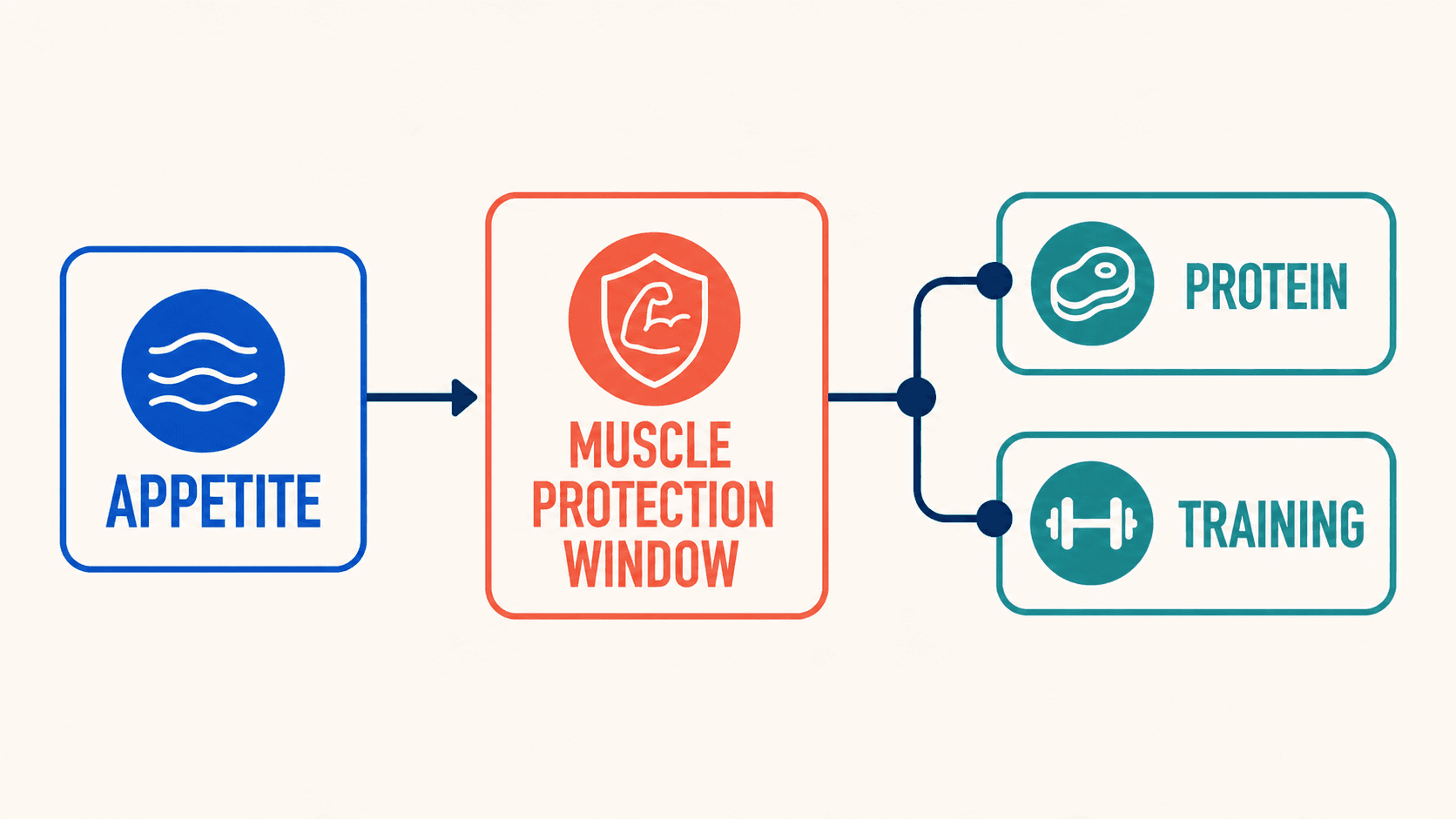
Discontinuation planning should happen before the first dose. Rhonda Patrick's September 2024 episode and Ralph DeFronzo's appearance on The Drive (#337) both address the same problem. Weight regain after GLP-1 discontinuation is common and well-documented. The drug suppresses appetite. Remove the drug and the appetite returns. If the behaviors, environment, and metabolic habits that will sustain the new weight were not built during the treatment window, the treatment becomes a temporary intervention with a predictable rebound. The window of reduced appetite is the training period for maintenance. Treat it that way.
Monitoring should match the actual goal. DeFronzo places GLP-1 drugs inside a broader metabolic toolkit and argues that treatment looks different depending on whether the primary target is insulin resistance, body composition, or cardiovascular risk. Scale weight alone is misleading. Glycemic markers, cardiometabolic risk factors, body composition changes, and functional capacity are all trackable and all relevant. David Allison, on The Drive (#314), adds that safety is a value judgment layered on top of a factual risk estimate. Two people looking at the same side-effect profile can rationally make different decisions depending on their health situation, goals, and values. This means the monitoring strategy should be personalized, and the decision to start, continue, or stop therapy should be anchored to the specific outcomes that matter to the individual patient.
GLP-1 drugs are distinct from behavioral GLP-1 support. A Huberman Lab Essentials episode from April 2025 draws a line between dietary and behavioral interventions that modestly support endogenous GLP-1 signaling and pharmacologic GLP-1 receptor agonists that deliver a drug-level effect. These differ by orders of magnitude in both potency and risk. Post-meal walking, fiber intake, and protein-forward meals can support natural appetite regulation. They are not comparable to semaglutide. Confusing the two categories leads to either underestimating the drug or overestimating the lifestyle tool.
Provider quality is part of the intervention. Tim Ferriss made the most memorable version of this argument on his April 2024 Random Show. If the provider offering you semaglutide also does manicures, the screening, dosing management, and follow-up infrastructure are probably inadequate. Convenience-driven access to prescription medications predictably correlates with sloppy care. A qualified provider should be able to explain their monitoring protocol, their approach to dose titration, their plan for managing GI side effects, and their strategy for discontinuation. If they cannot, that tells you what you need to know about the quality of care you will receive.
Huberman Lab, Dr. Zachary Knight (Jun 17, 2024)
Knight studies hunger circuits at the neural level, and his contribution here is mechanism clarity. GLP-1 drugs reshape appetite signaling in ways that can drive substantial weight loss. But reduced hunger can easily translate into under-eating protein and losing muscle if you are not deliberate about it. His framing: these drugs change the difficulty of adherence, and the job of the patient is to build the right behaviors on top of that easier environment.
- Use GLP-1 therapy to reduce the appetite tax of dieting, but plan high-protein, small-volume meals you can tolerate even when hunger is low.
- Decide whether your goal is improved metabolic health, bodyweight reduction, or both. Then match your monitoring to the goal, because scale weight alone will mislead you.
- Expect GI side effects as a variable that changes food choices. Have a short list of protein-dense options that work even on nauseous days.
- Treat resistance training as a co-therapy. If fat loss is the goal, muscle preservation requires active effort on these drugs.
- If you stop therapy, assume the old environment and old behaviors still matter. Build maintenance habits during the period when appetite is quieter.
- Avoid casual or self-directed access. Dose escalation, contraindications, and side-effect management are core to safety.
Huberman Lab Essentials (Apr 3, 2025)
Huberman draws a line between behavioral tools that nudge endogenous GLP-1 signaling and pharmacologic agonists that deliver a drug-level effect. The practical advice is to build a fat-loss approach that starts with movement, meal timing, and training structure before pharmacology enters the picture.
- Treat fat loss as an adherence problem first. Use movement, training structure, and appetite-supporting meal patterns before reaching for drugs.
- Distinguish between foods and habits that support your body's own GLP-1 signaling and prescription GLP-1 receptor agonists. They are different in magnitude and risk by orders of magnitude.
- If using pharmacologic appetite suppression, proactively schedule protein so that reduced hunger does not erase it from your day.
- Use post-meal movement and consistent training as multipliers that improve metabolic outcomes regardless of drug use.
- Avoid stacking multiple stimulatory and appetite-suppressing interventions simultaneously. You want predictable signals you can learn from, not noise.
- Pick interventions you can sustain after the drug ends. Maintenance is the whole game.
Huberman Lab, Dr. Craig Koniver (Oct 7, 2024)
Koniver brings practical clinical experience across GLP-1 drugs, BPC-157, and hormone-axis peptides. His through-line is that most harm comes from the grey-market layer: unverified sourcing, polypharmacy, and sloppy monitoring. His most useful advice is about reducing uncertainty by changing fewer variables at a time and tracking real outcomes.
- If you are considering GLP-1 drugs for fat loss, treat lean-mass loss as a predictable failure mode and plan around it from day one with protein targets and resistance training.
- Change one primary variable at a time so you can attribute benefits and side effects to something real. Stacking multiple compounds by feel is a recipe for confusion.
- When people debate oral vs. injection for a repair peptide, zoom out. Sterility, dosing accuracy, and provenance are often bigger variables than route of administration.
- Use a trust hierarchy for sourcing: legitimate clinician oversight with pharmacy-grade supply at the top, compounding with verification in the middle, and internet-sourced vials at the bottom.
- For sleep-altering or appetite-altering hormone-axis peptides, assume that second-order effects (sleep quality changes, appetite drift) can be the real mechanism driving your outcomes.
- If the plan requires complicated logistics with multiple injections, multiple compounds, and fuzzy endpoints, that complexity is itself a risk factor. Simplify until you can measure.
The Peter Attia Drive, David Allison (#314, Aug 19, 2024)
Allison reframes GLP-1 drugs as a cultural inflection point. For the first time, obesity treatment has medications that appear both powerful and reasonably safe, and that changes incentives, stigma, and how people interpret willpower. He pushes a distinction that clarifies confused conversations: risk is a factual estimate, and safety is a value judgment. Two people can see the same risk profile and rationally choose differently.
- Evaluate GLP-1 use through an ethical lens. What problem are you solving (health risk, function, quality of life) and what social pressure are you responding to?
- Treat safety as preference-sensitive. The same risk profile can lead to different rational decisions depending on someone's values and situation.
- Use GLP-1s as part of a realistic plan that includes environment design and habit-building. Drugs do not replace context.
- If athletes use GLP-1s for body-composition manipulation, that is a separate risk-benefit equation than treating metabolic disease. Keep the categories clear.
- Keep protein strategy and resistance training central. Drug-driven weight loss can create misleading success if lean mass is dropping alongside fat.
- Demand higher-quality evidence for long-term questions like maintenance, cycling, and discontinuation before copying influencer protocols.
The Peter Attia Drive, Ralph DeFronzo (#337, Feb 24, 2025)
DeFronzo places GLP-1 drugs in their proper clinical context: one lever in a broader pharmacologic strategy aimed at metabolic dysfunction across multiple organs. That framing pushes toward clinician-guided, multi-metric monitoring rather than single-metric chasing.
- Match the therapy to the dominant problem you are solving. GLP-1 treatment looks different when the primary target is insulin resistance vs. body composition vs. cardiovascular risk.
- Monitor outcomes beyond weight. Glycemic control, cardiometabolic risk markers, and functional capacity all matter and can move independently of the scale.
- Lifestyle remains what makes the post-drug future viable. Do not ignore it because the medication is working.
- If the goal is healthspan, avoid interventions that reduce muscle and fitness. Preserving function is the primary aging target.
- Avoid stacking multiple metabolic drugs without a clear rationale. Side effects and tradeoffs compound in ways that are hard to attribute.
- Make continuity plans early. Long-term maintenance, discontinuation effects, and behavior scaffolding should be decided before you start, not after.
FoundMyFitness, Rhonda Patrick (Sep 2, 2024)
Patrick's primary contribution here is expectation-setting. GLP-1 agonists can meaningfully reduce appetite and improve blood sugar, but discontinuation often leads to weight regain unless behavior and environment have been rebuilt during treatment. She also emphasizes the muscle-loss risk that emerges when appetite drops and protein intake falls without a plan to prevent it.
- Treat appetite suppression as a tool, not a plan. Stopping the drug can expose you to the same environment that created the problem.
- Assume regain is a real risk after discontinuation. Build maintenance behaviors while on therapy, not after.
- Protect muscle deliberately. Resistance training and adequate protein are part of the treatment, not optional lifestyle additions.
- Consider blood sugar and metabolic benefits as part of the value proposition. The decision should involve more than just scale weight.
- Watch for adverse effects and take them seriously. Side effects should change the decision, not be minimized as the cost of results.
- Make the decision with medical supervision. Contraindications and individual risk factors matter more than internet anecdotes.
FoundMyFitness, Aliquot #128 (Jun 3, 2025)
This is the most operationally dense GLP-1 discussion in the roundup. Patrick covers how to preserve muscle and bone during treatment, what to expect when stopping, and how to translate weight loss into durable health change. If you only listen to one GLP-1 episode from this list, this is a strong candidate because it addresses the full lifecycle of treatment.
- Use GLP-1s to facilitate fat loss, but treat muscle maintenance as an explicit objective with its own actions and metrics.
- Plan for discontinuation early. Maintenance after stopping these drugs requires skills and habits you need to build while appetite is still quieter.
- Reduced appetite should not reduce nutrient quality. Protein, minerals, and overall dietary quality still drive outcomes even when total intake is lower.
- Watch bone health risk signals if weight and food intake drop quickly. Losing weight fast can compromise bone density, especially without resistance training.
- Track side effects and tolerability as first-class data. If tolerability is poor, adherence degrades and outcomes follow.
- Keep the intervention goal health-centered. Function and risk reduction should drive the decision, not purely cosmetic targets.
05GLP-1 effects on mood and cravings
The FoundMyFitness episode with Dr. Ben Bikman from July 2025 expanded the GLP-1 conversation into territory that the other podcasts had mostly left unexplored. Some GLP-1 users report reduced compulsive behaviors and cravings that extend beyond food. Reduced alcohol desire, reduced shopping compulsivity, and reduced general impulsivity have been reported anecdotally and are beginning to attract research attention. Other users report emotional blunting, reduced motivation, or flat affect.
Both signals matter. If GLP-1 therapy alters craving and reward circuitry in ways that reduce harmful compulsive behavior, that is a meaningful therapeutic benefit worth monitoring. If it simultaneously produces emotional flattening that degrades quality of life, that is a side effect that should change the treatment decision. The practical recommendation from Patrick and Bikman is to treat mood, motivation, and craving patterns as first-class outcome data, tracked with the same seriousness as weight and metabolic markers. If mood deteriorates, the response should be dose adjustment or discontinuation, not acceptance as the cost of weight loss.
Patrick's Q&A #66 from January 2025 adds that GLP-1 agonists may carry cardiovascular and neurological benefits beyond glucose control. These possibilities are promising but remain hypothetical at the level of evidence required to justify starting therapy. The primary indication should remain the primary reason for treatment. Speculative benefits can inform a monitoring plan but should not drive a prescribing decision.
FoundMyFitness, Dr. Ben Bikman (Jul 14, 2025)
Bikman expands the GLP-1 conversation beyond weight and appetite into cravings, mood, and behavior. Some users report reduced compulsive behaviors across multiple domains. Others report emotional blunting. His practical advice is to treat mental health signals as real outcomes and to investigate upstream drivers of cravings rather than relying on a drug to mask them.
- If GLP-1 therapy changes cravings, treat that as a behavioral tool worth paying attention to. Monitor for emotional blunting or mood shifts just as carefully.
- Dosing strategy is tightly tied to side effects and adherence. More is not better. Work with a clinician to find the right level.
- Treat nausea and appetite suppression as risks for under-fueling protein and exercise. Protect training continuity even when eating feels harder.
- If mood changes occur, take them seriously and reassess. Do not override mental health signals to preserve weight loss.
- Evaluate the reasons behind your cravings. Sleep, stress, and environment are often fixable upstream drivers that deserve attention regardless of drug use.
- Keep the goal metabolic and functional. Improved insulin sensitivity and daily function are better anchors than chasing a number on the scale.
FoundMyFitness, Q&A #66 (Jan 4, 2025)
Patrick's segment here is most useful for scope management. GLP-1 agonists may have broader implications beyond glucose control, including potential cardiovascular and neurological benefits. But possible benefits are hypotheses, and the actionable advice is to avoid speculative stacking, stick to evidence-aligned indications, and let evidence maturity drive your confidence level.
- Treat beyond-diabetes benefits as promising hypotheses. They are interesting but should not be the primary reason to start therapy.
- Decide based on your highest-risk problem first (obesity, metabolic disease), then consider speculative benefits only after the primary indication is working safely.
- Keep monitoring aligned with the benefit you are targeting. Cardiometabolic markers, function, and sleep are all trackable.
- Maintain the muscle-preservation basics regardless of the indication.
- Do not expand to off-label goals until you can show the primary goal is working safely.
- Uncertainty should push you toward conservative, supervised use. Let the evidence catch up before you get creative.
06BPC-157 TB-500 and Ipamorelin evidence limits
BPC-157 is the most discussed research peptide across these four podcasts, and the conversation around it is instructive because it demonstrates how sophisticated thinkers handle a compound with a strong anecdotal following and a weak clinical evidence base.
The animal literature on BPC-157 is genuinely compelling. Studies in rodent models show accelerated healing of tendons, ligaments, muscle, gut epithelium, and bone. The proposed mechanisms include promotion of angiogenesis, modulation of nitric oxide pathways, and upregulation of growth factor expression. If these effects translated cleanly into humans, BPC-157 would be a remarkable therapeutic agent. The problem is that the translation has not been demonstrated. There are no published, peer-reviewed, randomized controlled trials in humans establishing efficacy for any indication. The human evidence consists entirely of case reports, anecdotes from biohacker communities, and extrapolation from the animal data.
Dr. Keith Baar, a tendon and connective-tissue researcher who appeared on The Tim Ferriss Show (#797), set a standard that cuts through the noise. If a peptide works for tissue repair, it should produce measurable changes in the mechanical properties of the tissue. A tendon that tolerates more load. A ligament that demonstrates improved stiffness and strength on testing. In-vitro studies showing changes in receptor expression or molecular markers are interesting starting points. They are not evidence of clinical efficacy. This standard matters because much of the enthusiasm around BPC-157 rests on mechanism-level findings that have not been validated against functional human outcomes.
Tim Ferriss, who is open about his own experimentation with BPC-157, provided one of the most intellectually honest framings in his September 2025 Q&A. He described his use of the peptide as a hedge, a speculative addition to a rehab protocol that he expected to work on its own merits. The rehab program, including progressive loading, swelling management, and protein and collagen timing, was the intervention. The peptide was the low-confidence adjunct. He paired it with objective milestones for pain, range of motion, and strength so that he could evaluate whether the peptide added anything beyond what the rehab alone would have produced. That framing is the right one. If you want to experiment with a research peptide, structure the experiment so that the proven interventions remain primary and the peptide's contribution can be isolated and measured.
TB-500, a synthetic fragment of thymosin beta-4, carries a similar profile. Animal data suggesting tissue repair and anti-inflammatory effects. Growing anecdotal use in athletic and biohacker communities. No published human RCTs. Ipamorelin, a growth-hormone secretagogue, has somewhat more human pharmacokinetic data but still lacks the kind of efficacy trials that would support confident clinical recommendations. Dr. Kyle Gillett, on Huberman Lab Essentials in December 2025, framed peptides and hormones as last-mile tools that should only be considered after sleep, training, nutrition, and stress management are consistently dialed in. His point applies with extra force to research peptides, where the expected effect size is uncertain and the downside risk from contaminated or misidentified product is real.
The sourcing question deserves repeated emphasis for research peptides because it is the variable most likely to determine the actual outcome. A vial labeled BPC-157 that was purchased through an unregulated overseas supplier may contain the correct peptide at the correct concentration. It may contain a degraded or incorrectly synthesized product. It may contain bacterial endotoxins from non-sterile manufacturing. It may contain an entirely different compound. The consumer has no way to verify this without independent third-party testing, which most users do not pursue. Koniver's sourcing hierarchy applies with particular urgency here. If you cannot obtain a research peptide through a clinician who uses a verified compounding pharmacy, you are adding an unknown and potentially dominant source of risk to an already speculative intervention.
Huberman Lab (Apr 1, 2024)
Huberman builds a practical decision framework for evaluating any peptide. His core argument is that most real-world risk comes from three places: weak human evidence, mechanisms that can plausibly backfire (pro-growth signaling in someone with cancer risk, for example), and sourcing problems that compromise the product before the pharmacology even matters.
- Start by classifying the peptide by its biological job (metabolic appetite control vs. tissue repair vs. hormone-axis manipulation), then evaluate it strictly inside that goal.
- Treat animal data as hypothesis-generating. Many popular peptides have a massive gap between rodent outcomes and human outcomes.
- Build a red-flag list based on mechanism. Anything that meaningfully promotes growth signaling or angiogenesis deserves extra caution in cancer-risk contexts.
- Make sourcing part of the intervention. Sterility, identity, purity, and contamination risk can dominate the real-world outcome more than the compound itself.
- Prefer clinician-supervised, pharmacy-grade access. Avoid research-chemical supply chains for anything injected or taken chronically.
- Define off-ramps before you start. If you cannot explain why continuous use is safer than limited use, assume it is the opposite.
Huberman Lab Essentials, Dr. Kyle Gillett (Dec 25, 2025)
Gillett's most useful point is about sequencing. If the foundation of sleep, training, diet, and stress management is broken, peptide and hormone tinkering becomes a distraction that carries risk without addressing the upstream problem. His peptide-specific advice centers on avoiding dangerous shortcuts and treating sourcing and monitoring as part of the therapy itself.
- Use peptides and hormones as last-mile tools only after the big lifestyle factors are consistent and dialed in.
- Do not chase growth-hormone-axis manipulation to compensate for poor sleep. Sleep quality is upstream of the hormone profile you want.
- For BPC-157 and similar peptides, assume sourcing and contamination risk is real. Treat verification and medical oversight as requirements.
- Avoid cosmetic or high-risk peptides (tanning-related compounds, for example) if you cannot clearly articulate the risk-benefit trade for your situation.
- If you are changing anything in the hormone axis, decide what biomarkers and symptoms you are tracking before you start.
- Keep the plan boring. One change at a time, clear endpoints, and a bias toward long-term safety over short-term effects.
The Peter Attia Drive, Derek (More Plates More Dates) Pt.2 (#291, Feb 26, 2024)
Attia and Derek push a useful standard: if a peptide is claimed to work, it should be testable in tightly defined use cases with hard outcomes. If you cannot define those use cases, you are probably using the compound as a general tonic, which is where risk balloons and self-deception takes over.
- Treat a lack of FDA approval and active regulatory crackdowns as a safety signal. It often correlates with weak evidence and inconsistent manufacturing.
- Push for outcome-based thinking. "Did my injury or function improve faster than expected?" is the right question. "Did a biomarker move?" is not.
- If a peptide is plausibly pro-angiogenic or pro-growth, do not hand-wave long-term risk just because short-term downsides feel absent.
- Define a narrow use case (a specific injury-recovery scenario, for example) before starting. Without one, you are experimenting without a hypothesis.
- Many edge-case peptides will never rival the fundamentals of training, sleep, and nutrition. Be honest about expected magnitude of effect.
- If a compound's best argument is widespread anecdotal use, treat that as motivation for better trials, not as proof.
07Tim Ferriss peptide self-experiments
Tim Ferriss has more documented public history with peptides than any other host in this roundup, and the full arc of that history is more useful than the reputation that precedes it. He is often categorized as a biohacker who experiments first and asks questions second. The record shows something different: a thinker whose public peptide positions have become notably more cautious over twelve years, not because he lost interest, but because he got more precise about what evidence and supervision actually require.
The earliest documented experiment predates BPC-157 by several years. A 2018 episode transcript describes college-era intranasal use of desmopressin, a synthetic vasopressin analog, taken before Mandarin character quizzes. He describes the performance effects as reliable and then reports headaches emerging over months of use. His conclusion is explicit: importing and self-administering a prescription hormone analog was not something he recommended. The pattern established here repeats throughout his later peptide discussions. Genuine interest in a mechanism, honest accounting of the downside, and a clear warning against copying the protocol.
By 2012, he was experimenting with BPC-157 by local injection, years before the compound became a fixture of biohacker circles. When an audience member surfaced that history during a 2024 Q&A, he acknowledged it and immediately flagged that his knowledge was out of date. He did not use old personal experience to anchor a current recommendation. The gap was named and left open. His 2024 post "No Biological Free Lunches" codifies the logic that runs through all of his peptide commentary: if something is designed to produce a meaningful change in how the body works, it functions as a drug in practical terms regardless of its regulatory label. That standard applies to peptides with the same force it applies to anything else on the pharmacologically active spectrum.
His 2023 appearance on Huberman Lab surfaced a separate and underappreciated point. In discussing why compounds like BPC-157 may never accumulate the trial evidence their anecdotal following seems to warrant, he pointed to institutional incentives: the people who run studies have careers, and the funding structure does not reliably direct resources toward unpatentable compounds with no commercial backers. That is not an argument for acting on weak evidence. It is an explanation for why the evidence gap exists and why it is unlikely to close through the normal publication pipeline.
The collagen thread runs alongside the BPC-157 thread and needs to stay distinct. Ferriss describes a timing protocol drawn from Baar's research consistently across multiple episodes: approximately 15 grams of hydrolyzed collagen peptide powder with around 200 to 250 milligrams of vitamin C, taken about an hour before loading or isometrics. That is a nutritional intervention with published human trial support. It is not in the same category as a grey-market research peptide. When the two appear together in his 2025 post-surgery stack, the collagen is the anchor and the BPC-157 is the speculative addition on top.
The September 2025 Q&A, covering his elbow surgery recovery, is the most operationally detailed account in the public record. The stack includes oral BPC-157, the collagen timing protocol, BFR training, Marc Pro electrical stimulation, lymphatic drainage massage, and active oversight from both his surgeon and physical therapist. He is explicit that oral bioavailability for BPC-157 is uncertain and that the GI tract may render the compound inactive before systemic exposure. His framing for taking it anyway: hedging bets on top of a rehab protocol he expects to work regardless. He discourages copying the injection approach from his earlier use without professional supervision. The rehab is the intervention. The peptide is the low-confidence adjunct. Any experiment structured that way, where the proven work remains primary and the speculative addition is paired with measurable outcomes, is at minimum an honest experiment.
A broader list that has appeared in Ferriss Instagram post previews, including TB-500, CJC-1295, GHK-Cu, and Epitalon, has not been accompanied by protocols, dosing, or reported outcomes in any retrieved transcript. These are category-level signals of awareness, not endorsements. The FDA compounding risk list flags all four compounds for immunogenicity and impurity concerns when used via injectable routes, and none carry approved clinical indications for the applications implied by biohacker adoption. His most consistent position across all public sources is that personal experimentation requires professional oversight, objective milestones, and enough intellectual honesty to acknowledge when the evidence is genuinely weak.
Tim Ferriss, Dr. Peter Attia (#517, Jun 14, 2021)
This 2021 conversation captures the moment when GLP-1 drugs moved from a niche endocrinology tool to a mainstream conversation. Attia argues that GLP-1 agonists represent a fundamentally different tier of obesity treatment than older approaches, especially stimulants. The mechanism and risk profile are distinct, and newer agents changed the practical landscape because their effect sizes became large enough to matter.
- GLP-1 drugs work through appetite and satiety signaling, which makes them mechanistically different from stimulant-based weight loss. The risk-benefit equation is different too.
- Earlier GLP-1 options were modest in their effects. The conversation shifted because newer agents delivered effect sizes that changed real-world outcomes.
- If you are considering pharmacology, make "avoid habit-forming shortcuts" a decision filter. GLP-1s score well here compared to stimulants.
- Use GLP-1 therapy to reduce friction, then spend the window of reduced appetite building durable habits around protein, training, and sleep.
- Real clinical screening and follow-up are required. Self-prescribing based on online enthusiasm is a different risk category entirely.
- If weight is recalcitrant, ask what is driving it (metabolic disease, sleep disruption, medications, environment) before assuming you need a drug.
Tim Ferriss, Live Random Show (#733, Apr 25, 2024)
Ferriss offers pure practical safety guidance. The modern health market is full of low-credibility providers bundling serious medical interventions with unrelated services. His memorable line about not getting semaglutide from someone who also does manicures captures a real problem: convenience-driven access often means sloppy care, poor screening, and no follow-up infrastructure.
- Use a credibility filter. Prefer clinicians with deep, relevant experience and real oversight structures.
- Avoid setups that offer serious medications as an add-on to unrelated services. That incentive structure predicts sloppy care.
- Do not DIY prescription peptide drugs. The risks extend beyond the drug itself to the entire system around it: screening, dosing management, and follow-up.
- Easy access and safe access are different things. Beware of convenience-driven decisions.
- If a provider cannot clearly explain their monitoring and side-effect management protocol, that tells you what you need to know.
- Treat where you got the drug as part of the medical intervention. Sourcing is clinical, not logistical.
Tim Ferriss, Dr. Keith Baar (#797, Feb 27, 2025)
Baar is a tendon and connective-tissue researcher, and his contribution is methodological rigor. He pushes a high standard: if a peptide works, it should change the mechanical properties and function of the tissue. A tendon that actually tolerates more load is meaningful. In-vitro studies showing receptor expression changes are interesting but weak. This distinction matters because much of the BPC-157 enthusiasm rests on mechanism-level data that has not been validated in human functional outcomes.
- Use outcome-first reasoning. Tendon and ligament improvement means greater load tolerance and better function, measured by testing, not just feelings.
- Treat in-vitro and marker studies as weak evidence until they translate into real mechanical performance.
- If a peptide does not improve tissue properties in a controlled model, be skeptical of broad healing claims based on anecdote.
- Redirect effort to proven rehab tools: progressive loading, appropriate isometrics and eccentrics, and consistency over weeks and months.
- If you want to experiment, do it with measurement. Use pain and function scales, range of motion, and strength benchmarks on a schedule so you can actually evaluate the result.
- Rehab programming is the intervention with the strongest expected value. A peptide might add something on top, but it should never replace the work.
Tim Ferriss, Q&A (#826, Sep 10, 2025)
Ferriss explicitly frames his own peptide use as a hedge rather than a sure thing. He pairs it with the fundamentals of rehab: decongestion, progressive work, protein and collagen timing. The peptide is the speculative add-on. The rehab is the intervention. That epistemic humility is the lesson.
- If you are using a peptide as a hedge, be honest about it. Keep the rest of the plan evidence-based and measurable.
- Do not inject anything without professional supervision. The procedural risk can dominate the theoretical benefit.
- Keep rehab fundamentals primary: swelling control, progressive loading, and consistency are the main drivers of recovery.
- Pair any repair experiment with objective milestones (pain, range of motion, strength) so you do not credit the peptide for the rehab.
- If oral availability is uncertain, treat the peptide as low-confidence and do not let it displace proven interventions.
- Use a minimal stack. One or two adjuncts at most. A long list of compounds you cannot evaluate individually is a liability.
08Lifestyle still outranks peptides
A recurring argument across all four podcasts, stated most directly by Gillett and reinforced by every other guest, is that peptide and pharmacologic interventions should be sequenced after foundational lifestyle work. Sleep quality is upstream of the hormone profile that growth-hormone secretagogues are trying to manipulate. Training consistency is upstream of the body composition that GLP-1 drugs are trying to improve. Protein intake is upstream of the muscle preservation that every host warns about losing.
The Huberman Lab Essentials episode from April 2025 makes the point that fat loss is first an adherence problem. Movement patterns, training structure, and appetite-supporting meal timing should be established before pharmacology enters the picture. The Gillett episode extends this to the hormone axis. Chasing growth hormone optimization through peptides when sleep architecture is broken is a misallocation of effort and risk.
This sequencing principle also applies to compound stacking. Koniver's advice to change one variable at a time is echoed by Huberman, Attia, and Patrick in different episodes. If you are taking a GLP-1 drug, a research peptide, and a hormone-axis compound simultaneously, you cannot attribute benefits or side effects to any single intervention. The complexity of the stack becomes its own risk factor. Simplify until you can measure. If you cannot explain what each compound is doing and verify that it is doing it, the stack is too complex.
For broader coverage of nutrition fundamentals that complement GLP-1 and peptide strategies, see our Huberman Lab nutrition advice roundup.
09Peptide takeaways from the four shows
Every host and guest in this roundup returns to the same set of principles. Protect lean mass with protein and resistance training. Plan for discontinuation before you start. Monitor real outcomes instead of relying on scale weight alone. Build the lifestyle foundation first and treat pharmacology as the last step, not the first. Work with qualified providers who can explain their monitoring protocol and adjust your treatment based on data.
The scientific evidence for GLP-1 receptor agonists is strong and growing stronger. Large randomized controlled trials support their use for weight loss, glycemic control, and cardiovascular risk reduction under medical supervision. Clinically studied peptides like tesamorelin carry published human trial data for specific indications. Research peptides like BPC-157, TB-500, and ipamorelin occupy genuinely different ground. The animal data is interesting. The anecdotal reports from experienced users are consistent enough to justify funding rigorous human trials. That signal deserves respect. It also deserves honesty about where it sits on the evidence spectrum.
The smartest path is to work with a knowledgeable practitioner who can help you navigate these tiers, verify sourcing, and track outcomes with real data. If you choose to go it alone, at minimum verify the supply chain for any peptide you plan to use. Research the known side effects for the specific compound and dose you are considering. Prepare yourself for the possibility of negative outcomes. A grey-market vial from an unverified supplier carries risks that have nothing to do with the peptide's theoretical mechanism. Know what you are putting in your body, know what the documented side effects look like, and have a plan for what to do if something goes wrong.