Tim Ferriss popularized the slow-carb diet in The 4-Hour Body in 2010, and it has stayed relevant because the structure is unusually clear: a short list of allowed foods, five rules, and one day off per week.
You follow a food list rather than counting calories or calculating macros. The slow-carb diet focuses on low-glycemic index carbs (beans and legumes) while avoiding fast-digesting carbs (grains, sugars, and most fruits), and it combines these simple food rules with a weekly cheat day to support fat loss and muscle retention.
Sixteen years in, some of Ferriss's claims have held up and some have been falsified: slow-carb 2.0 is what's left once you keep the first group and drop the second. Fuel supports slow-carb by helping you track your allowed foods, maintain protein targets, and see whether this rule-based approach is working for your goals. For more on Ferriss' broader philosophy on health, see the Tim Ferriss podcast roundup.
01Choose the original rules or the flexible adaptation
Ferriss's original slow-carb protocol and Fuel's flexible adaptation are different plans. The flexible version keeps repeatable protein-and-bean meals while allowing fruit, dairy, and training carbohydrates as needed. The original rules below are documented so you can compare them, not because every restriction is necessary for fat loss.
| Decision | Original protocol | Fuel's flexible adaptation |
|---|---|---|
| Everyday meals | Protein, legumes, non-starchy vegetables | The same meal base, with portions matched to your needs |
| Fruit and dairy | Restricted, with limited exceptions | Whole fruit and unsweetened dairy if tolerated |
| Starches | Avoid on six days | Add rice, oats, or potatoes when they help fuel training |
| Weekly flexibility | One unrestricted cheat day | Planned flexibility without requiring a binge or compensatory restriction |
For a first day, try eggs, beans, and spinach at breakfast; chicken, lentils, and salad at lunch; and fish, beans, and vegetables at dinner. A starter shopping list is eggs, chicken or tofu, fish, canned beans, lentils, frozen spinach, salad vegetables, and a dressing you can portion. Add fruit, yogurt, or training starches if you choose the flexible version. Quantities depend on appetite, energy needs, and the number of people eating.
02Slow-carb rules that aged well after 16 years
The 4-Hour Body was published in 2010. The exercise physiology, behavioral science, and clinical literature have all moved since.
| Claim | Verdict | Why |
|---|---|---|
| 30g protein within 30 minutes of waking | Held up | Aligns with leucine threshold and protein-distribution research for satiety and lean mass |
| Beans and legumes as primary carb | Held up | Pulses score well on satiety, fiber, and modest weight loss in randomized trials 4 |
| High-protein, high-fiber, low-processed-food base | Held up | The boring fundamentals of every successful weight-loss diet |
| Same-meals-on-repeat to kill decision fatigue | Held up | Behavioral economics keeps validating habit defaults over willpower |
| Structured weekly break from restriction | Half held up | The break itself helps adherence. The leptin-rebound mechanism is overstated 8 |
| The fast-carb vs. slow-carb dichotomy | Falsified | A 2013 meta-analysis found no significant anthropometric differences between low- and high-GI/GL diets, and a 2021 ASU review found no consistent weight-loss advantage 39 |
| No fruit (except tomatoes and avocados) | Falsified | Whole fruit is consistently linked to lower disease risk and is not a weight-loss villain 1 |
| The cheat day as metabolic hack via leptin | Mostly falsified | Leptin can rebound quickly with refeeding, but that does not create a week-long metabolic reset 8 |
| PAGG stack as a fat-loss accelerator | Not supported | Policosanol's cholesterol effects failed replication, and the stack lacks any controlled trial in humans 10 |
| Unrestricted cheat day for everyone | Risky | Cheat-meal patterns associate with eating-disorder behaviors in vulnerable populations 2 |
The short version: the boring nutritional fundamentals in slow-carb (protein, fiber, simplicity, structure) are what worked. The flashy biohacks (leptin tricks, PAGG, the slow-vs-fast dichotomy) are what aged badly. Slow-carb 2.0 keeps the first set, drops the second, and reintroduces fruit.
03Slow-carb versus other low-carb approaches
Slow-carb sits between moderate carb and low-carb, with specific rules about carb sources rather than carb grams.
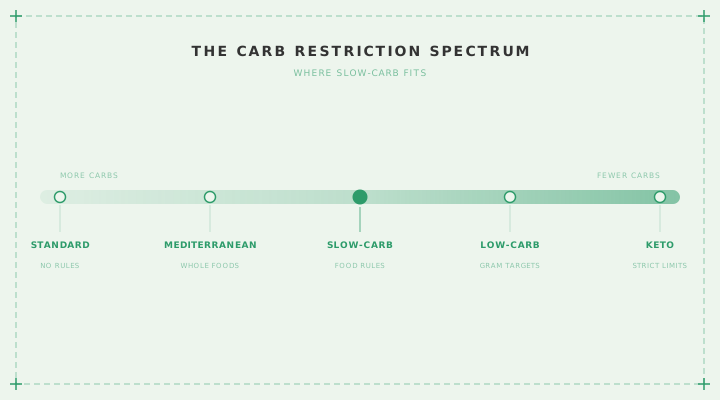
| Approach | Carb sources allowed | Main structure | Key difference |
|---|---|---|---|
| Low carb | Limited amounts of various carb sources | Daily carb gram targets | More flexibility in food choices |
| Slow-carb | Beans and legumes only | Food rules plus weekly cheat day | Specific allowed and banned foods |
| Keto | Very minimal carbs from any source | Strict daily carb limits | Much lower total carbs |
| Paleo | Fruits, vegetables, tubers | Evolutionary food framework | Allows fruit, restricts legumes |
If you prefer clear food lists over macro tracking, slow-carb can feel simpler than tracking grams of carbs daily. The distinction matters. Most low-carb and keto approaches let you eat any food as long as you stay under a number, while slow-carb gives you a binary yes-or-no list for every food.
04Slow-carb vs keto Mediterranean and calorie counting
The bigger question is how slow-carb stacks up against the diets it actually competes with for your attention.
| Diet | Structure | Restriction | Social ease | Evidence base for weight loss | Sustainability | Best fit |
|---|---|---|---|---|---|---|
| Slow-carb | Food rules plus weekly cheat day | High | Medium | Indirect (protein, fiber, low-GI) | 3-6 months | Rule-followers with 15-30 lbs to lose |
| Mediterranean | Pattern, no rules | Low | High | Strong (long-term cardiometabolic) | Indefinite | Anyone who wants to never diet again |
| Whole30 | 30-day elimination protocol14 | Very high | Low | No published controlled trial identified in PubMed. Whole30 reports an unpublished cohort and a self-report survey131415 | 30 days | Reset after a long off-plan stretch |
| Carnivore | Animal products only | Extreme | Very low | Thin, mostly testimonials | Weeks | Curious experimenters, not most people |
| Intermittent fasting | Eating-window timing, no food rules | Low | High | Comparable to calorie restriction | Indefinite | People who hate breakfast and tracking |
| DASH | Sodium and pattern guidance | Low | High | Strong (blood pressure, cardiometabolic) | Indefinite | Anyone managing blood pressure |
| Keto | Strict carb limit | High | Low | Strong short-term, mixed long-term | Months to year | Insulin resistance, seizure history |
| Calorie counting | Track everything, eat anything | Low | High | Strong (it works if you do it) | Indefinite | Detail-oriented, data-comfortable people |
The slow-carb advantage is that the rules do almost all of the calorie work for you without you ever counting. The slow-carb cost is that those rules also do not flex for the rest of your life. If you can imagine eating this way in five years, look at Mediterranean. If you need a 90-day fat-loss sprint, slow-carb is one of the better-engineered ones.
05The five original slow-carb rules
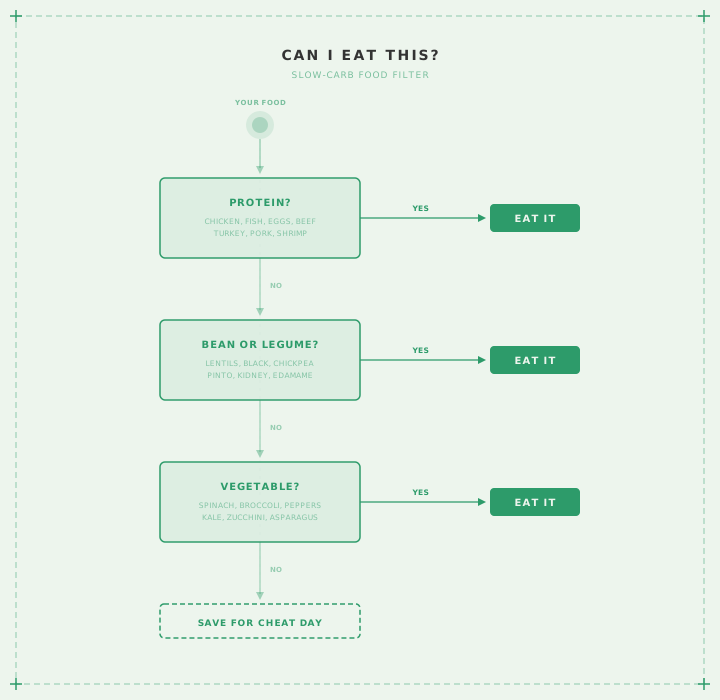
Slow-carb follows five main rules that determine what you eat six days per week.
| Rule | What it means | Why it helps |
|---|---|---|
| Avoid white carbs | No bread, rice, pasta, potatoes, or cereals | Eliminates calorie-dense, easy-to-overeat foods |
| Eat the same meals | Rotate a small set of meals repeatedly | Reduces decision fatigue and portion drift |
| No fruit | Except tomatoes and avocados | Simplifies the original list; whole fruit can fit fat loss |
| No dairy | Except cottage cheese in small amounts | An original food restriction, not a general inflammation rule |
| Take one day off weekly | Eat whatever you want on cheat day | A scheduled break, not an established metabolic reset |
Rule 1: Avoid white carbs
The protocol bans bread, rice, pasta, cereal, potatoes, tortillas, and anything breaded or fried in batter. This eliminates the most calorie-dense, easy-to-overeat foods in most people's diets. The one exception is immediately after resistance training. Ferriss allows a window of roughly 30 minutes post-workout where white carbs are permitted, based on the idea that glycemic load matters less when muscle glycogen is depleted. If you are not training with weights, this exception does not apply.
Rule 2: Eat the same meals
Pick three to four meals you enjoy and rotate them. This sounds restrictive, but most people already eat the same seven to ten meals on repeat without realizing it. The benefit is that once you know a meal is compliant and fills you up, you stop making daily food decisions. Portion drift also decreases because you become familiar with what a normal serving looks like for your go-to meals.
06Contested slow-carb rules
Most of slow-carb is uncontroversial. Three rules are not.
Contested rule 1: No fruit (except tomatoes and avocados)
Ferriss's claim: fructose drives fat storage and complicates the protocol, so cut fruit for simplicity and faster results.
The evidence: a 2017 dose-response meta-analysis covering 95 prospective studies and roughly 2 million participants found that higher fruit intake was associated with significantly lower risk of cardiovascular disease, cancer, and all-cause mortality, with benefits up to about 800g per day 1. Whole fruit is also consistently neutral or favorable in randomized weight-loss trials.
Practical verdict: drop this rule. Berries, in particular, are a free win. They are low-sugar, high-fiber, high-polyphenol, and they pair perfectly with a protein-focused breakfast. A cup of blueberries or strawberries with eggs and beans is more sustainable than the white-knuckled "no fruit for six days" rule and produces the same fat loss for almost everyone. If you want a hard cap, keep it to one or two servings of whole fruit per day and skip the juice.
Contested rule 2: No dairy
Ferriss's claim: dairy is insulinogenic out of proportion to its calories and easy to overeat.
The evidence: dairy does spike insulin more than its glycemic index would predict, but in randomized weight-loss trials, dairy is neutral to slightly helpful, particularly for protein-driven satiety and lean-mass retention. The "domino food" concern is real, especially with cheese and yogurt. The metabolic concern is overstated.
Practical verdict: keep the rule loose. Plain Greek yogurt and cottage cheese are excellent slow-carb-adjacent foods (high protein, low sugar). Hard cheese in measured amounts will not stall most people. Skip the cream-laden coffee drinks, ice cream, and flavored yogurts.
Contested rule 3: 30g protein within 30 minutes of waking
Ferriss's claim: a fast, large protein hit at breakfast improves satiety, lowers calorie intake the rest of the day, and helps preserve lean mass.
The evidence: this one held up better than almost anything else in The 4-Hour Body. Higher-protein breakfasts (around 30g) consistently outperform low-protein breakfasts on satiety, total daily calorie intake, and protein-distribution-based muscle protein synthesis 5. The "within 30 minutes" specifically is more habit anchor than physiology, but the protein target is sound.
Practical verdict: keep the rule. The 30g target is the single highest-leverage habit in the protocol. Three eggs (18g) plus a half cup of black beans (8g) plus a slice of turkey (8g) gets you there in five minutes. The 30-minute clock is optional. The 30g is not.
07The meal timing protocol
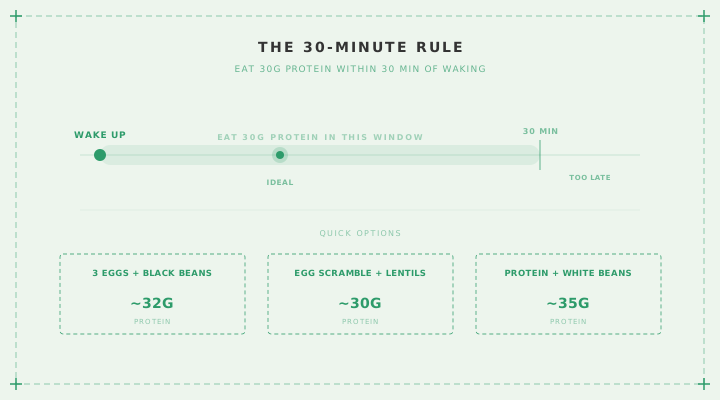
The slow-carb protocol includes specific timing and quantity guidelines that go beyond just food selection.
| Protocol element | Specific guideline | Why it matters |
|---|---|---|
| First meal timing | Within 30 minutes of waking | Jumpstarts protein timing early in the day |
| First meal protein | At least 30g | Supports satiety and reduces snacking through the morning |
| Meal frequency | 4 meals, roughly 4 hours apart | Keeps protein distribution even across the day |
| Per-meal protein | 20g minimum | Ensures adequate total daily protein without counting grams |
| Last meal | At least 2 hours before sleep | Supports sleep quality and overnight fasting window |
These numbers come from The 4-Hour Body and represent the specific protocol as Ferriss described it. The 30g breakfast protein rule is the most distinctive element and the one most people cite as the hardest habit to build. Eggs plus beans is the simplest way to hit it.
08Complete slow-carb food list
The allowed foods create a high-protein, moderate-carb pattern with an emphasis on satiety and fiber intake.
Proteins
| Food | Notes |
|---|---|
| Chicken breast | Leanest option, most versatile |
| Chicken thighs | Higher fat, more flavor, still compliant |
| Turkey | Ground turkey works well in bean-based meals |
| Lean beef | 90/10 or leaner ground beef, sirloin, flank steak |
| Pork loin | Lean cut, pairs well with lentils |
| Pork tenderloin | One of the leanest pork cuts |
| Whole eggs | The slow-carb breakfast staple |
| Egg whites | Higher protein density if you need to reduce fat |
| Fish (all types) | Salmon, tuna, cod, tilapia, trout, sardines |
| Shrimp | High protein, very low calorie |
| Other shellfish | Crab, mussels, scallops are all compliant |
| Bison | Leaner than beef with similar flavor |
09Legumes and beans
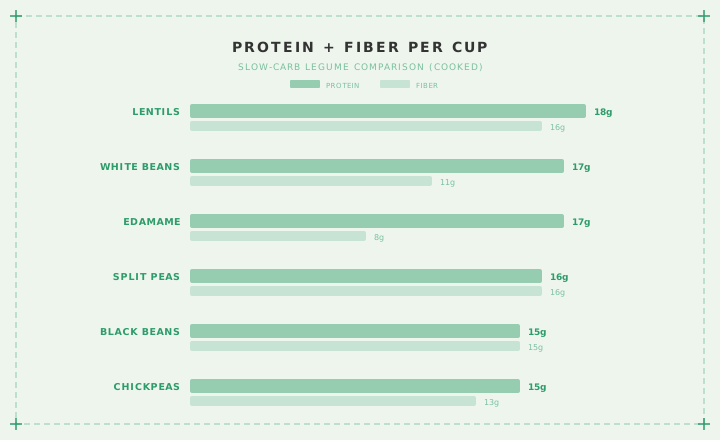
Beans are the primary carb source on slow-carb. They digest slowly, provide fiber, and add meaningful protein to every meal.
| Bean or legume | Protein per cup (cooked) | Notes |
|---|---|---|
| Black beans | 15g | Most common slow-carb staple |
| Pinto beans | 15g | Great for Mexican-style meals |
| Red kidney beans | 15g | Classic option for chili and stews |
| Lentils (all) | 18g | Cook fastest, highest protein per cup |
| Chickpeas | 15g | Works in salads, stews, and roasted snacks |
| White beans | 17g | Cannellini and navy, mild flavor |
| Lima beans | 15g | Creamy texture, works well mashed |
| Split peas | 16g | Best for soups and dal-style dishes |
| Black-eyed peas | 13g | Quick cooking, Southern-style dishes |
| Edamame | 17g | Good snack option, highest protein soybean |
Vegetables (eat freely)
| Vegetable | Vegetable | Vegetable |
|---|---|---|
| Spinach | Broccoli | Cauliflower |
| Kale | Asparagus | Green beans |
| Peppers (all) | Onions | Mushrooms |
| Zucchini | Brussels sprouts | Cabbage |
| Celery | Cucumber | Lettuce (all) |
| Tomatoes | Bok choy | Swiss chard |
Starchy vegetables like potatoes, corn, sweet potatoes, and beets are not on this list. The general rule is that white starches and sweet vegetables are off the protocol.
Fats and condiments
| Food or condiment | Notes |
|---|---|
| Olive oil | Primary cooking fat |
| Avocado | Counts as fat, not fruit on this protocol |
| Nuts (small handfuls) | Almonds, walnuts, cashews in measured amounts |
| Seeds | Chia, flax, sunflower, pumpkin |
| Butter | Small amounts for cooking are acceptable |
| Salsa | Unlimited, check for added sugar |
| Hot sauce | Unlimited |
| Mustard | All varieties except honey mustard |
| Vinegar | All varieties, useful for dressings |
| Herbs and spices | All allowed, essential for meal variety |
10Edge cases and domino foods
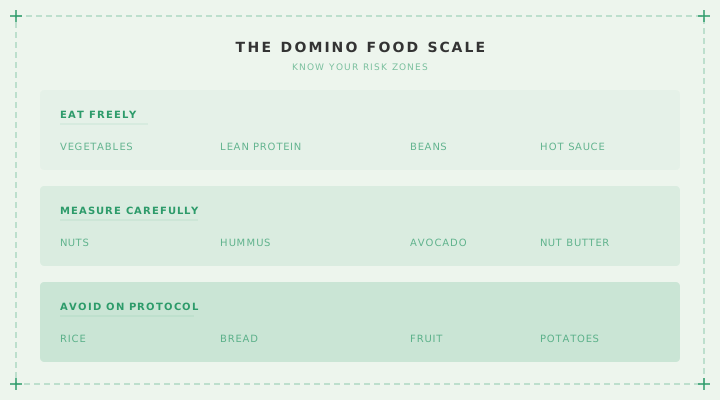
These are the foods that generate the most questions. "Domino foods" are technically allowed but tend to trigger overeating.
| Food | Status | Practical recommendation | Why it matters |
|---|---|---|---|
| Cottage cheese | Allowed (limited) | Under 2 tablespoons per meal | Easy to overeat, can stall some people |
| Hummus | Allowed | Limit to 2-3 tablespoons per serving | Calorie-dense, often leads to mindless snacking |
| Quinoa | Not allowed | Treat it like a grain on this protocol | Technically a seed, but behaves like a complex carb |
| Sweet potatoes | Not allowed | Save for cheat day | Too starchy for the slow-carb framework |
| Corn | Not allowed | Treat as a grain | High glycemic, high starch |
| Diet soda | Allowed (limited) | Maximum 16oz per day | Can increase cravings for sweet foods in some people |
| Nut butters | Allowed (domino) | Measure strictly, 1 tablespoon max | The most common domino food on slow-carb |
| Protein bars | Generally avoid | Check ingredients, most have banned sweeteners | Too processed for the protocol's intent |
| Protein powder | Allowed | Use if struggling to hit 20g per meal | Whey, casein, or plant-based without added sugar |
| Soy sauce | Allowed | Use freely | Low calorie, adds flavor to stir-fry meals |
11Beverages on slow-carb
The beverage rules are simple but specific.
| Beverage | Allowed | Notes |
|---|---|---|
| Water | Yes (primary) | Drink plenty, especially with increased fiber intake |
| Black coffee | Yes | No limit |
| Tea (unsweetened) | Yes | Green, black, herbal all fine |
| Coffee with cream | Yes (limited) | 1-2 tablespoons of cream per cup, no sugar |
| Red wine | Yes (limited) | 1-2 glasses per day, Ferriss specifically allows this |
| White wine | Less ideal | Red preferred, but small amounts will not derail the plan |
| Beer | No | Too many carbs |
| Diet soda | Yes (limited) | Maximum 16oz per day |
| Fruit juice | No | Concentrated fructose with no fiber |
| Milk | No | Falls under the dairy restriction |
| Smoothies | Depends | Only if made with compliant ingredients and no fruit |
Ferriss specifically allows red wine because in his self-experimentation it did not appear to impair fat loss. This is unusual for a restrictive diet protocol and one of the reasons slow-carb feels more socially sustainable than keto or strict calorie counting.
12A typical slow-carb day
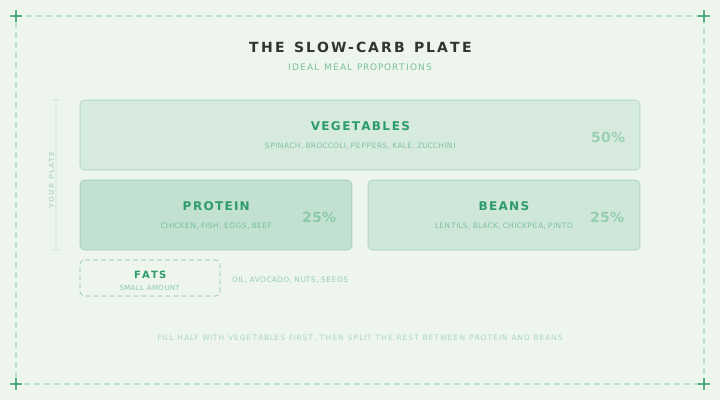
Most people follow a simple template that makes meal planning easier.
| Meal | Basic structure | Example |
|---|---|---|
| Breakfast | Protein + beans + vegetables | Scrambled eggs with black beans and spinach |
| Lunch | Protein + beans + vegetables + small amount of fat | Chicken salad with chickpeas and mixed greens |
| Dinner | Protein + beans + vegetables + small amount of fat | Salmon with lentils and roasted broccoli |
| Snack | Protein-focused if needed | Hard-boiled eggs, small portion of nuts |
The repetition is intentional. It removes daily food decisions while keeping nutrition consistent.
13Lazy and varied slow-carb meal plans
Ferriss's actual recommendation is to find three meals you enjoy and eat them on repeat. Most people ignore this and try to cook a different meal every day. Version A is the protocol as intended; Version B is a varied seven-day plan for people who genuinely cannot stomach the same breakfast every morning. Start with Version A.
Version A: the lazy default (recommended)
Pick once. Eat for thirty days. This is how the protocol was designed to work.
| Meal | Single rotation choice | Time to assemble |
|---|---|---|
| Breakfast | 3 eggs + half cup black beans + handful spinach + salsa | 5 minutes |
| Lunch | Chicken breast + chickpeas + mixed greens + olive oil vinegar | 5 minutes |
| Dinner | Salmon (or lean beef) + lentils + roasted broccoli | 15 minutes |
| Snack | 2 hard-boiled eggs OR a small handful of almonds | 0 minutes |
| Cheat day | One day per week, see protocol below | N/A |
The point of Version A is that after week one you stop thinking about food entirely. Grocery list, shopping, prep, and cooking all collapse into one Sunday session. Most successful slow-carb followers we have surveyed at Fuel run something close to this for the first 30 days.
Version B: full variety (if you must)
| Day | Breakfast | Lunch | Dinner | Snack |
|---|---|---|---|---|
| Monday | 3 eggs + black beans + spinach | Chicken breast + chickpea salad + greens | Salmon + lentils + roasted broccoli | Hard-boiled eggs |
| Tuesday | 3 eggs + lentils + peppers | Turkey + black beans + tomato salad | Lean beef stir-fry + edamame + bok choy | Almonds (small) |
| Wednesday | Egg scramble + white beans + kale | Tuna + white beans + cucumber + arugula | Chicken thighs + pinto beans + asparagus | Hard-boiled eggs |
| Thursday | 3 eggs + black beans + mushrooms | Chicken + lentil soup + mixed greens | Pork loin + black-eyed peas + Brussels sprouts | Edamame |
| Friday | Egg scramble + pinto beans + spinach | Salmon + chickpeas + roasted peppers | Turkey chili + kidney beans + cauliflower | Walnuts (small) |
| Saturday | 3 eggs + lentils + tomatoes + avocado | Lean beef + black beans + green salad | Shrimp + white beans + zucchini + garlic | Hard-boiled eggs |
| Sunday | Cheat day | Cheat day | Cheat day | Cheat day |
Version B has more variety, but it also has more decisions, more grocery items, and more chances for "I will figure dinner out later" to become takeout. We recommend Version B only if you have hit week three of Version A and are genuinely sick of your meals.
1430-day slow-carb timeline
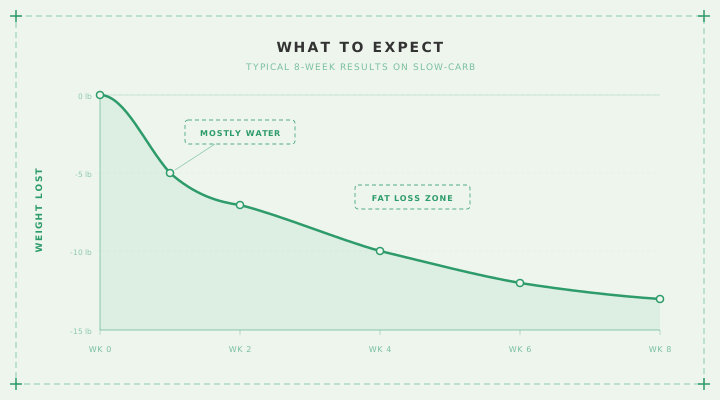
Most slow-carb articles tell you what to expect by giving a single weekly weight target. That misses the point. The real story is psychological, and it follows the same arc for almost everyone.
Days 1 to 3: adaptation
Bean digestion is the headline. Gas, bloating, and irregular bowel movements are common. Energy is often lower than baseline because glycogen is depleting and you have not yet adapted to the fiber load. Most people sleep slightly worse the first two nights as cortisol adjusts. Mood is fine, motivation is high, and the scale is flat or up 1 to 2 lbs from water.
What helps: half-cup bean portions instead of full cups, plenty of water, a magnesium supplement at night, no comparing yourself to anyone else's results yet.
Week 1: the water-weight drop
By day five to seven, most people see a 3 to 8 lb drop on the scale. This is glycogen and water, not fat. Energy stabilizes. The breakfast habit is starting to lock in. Bean tolerance is improving. The cheat day at the end of week one feels like a celebration.
What helps: weighing daily but only looking at the seven-day average, not individual numbers. Take a starting waist measurement and progress photo today if you have not.
Week 2: the first plateau
The scale slows or stalls for three or four days mid-week. This is normal. Glycogen has stabilized, the easy water is gone, and now you are losing actual fat (which is slower). Bean tolerance issues often resurface this week if you have ramped portion sizes too aggressively. Mood dips slightly. Sleep is usually back to baseline or better.
What helps: do not change anything. The scale will move again by the weekend. Resist the urge to add a "smarter" rule.
Week 3: the danger zone
This is where most people quit. The novelty is gone. The cheat day feels less rewarding because you anticipated it all week. Energy is fine but motivation is low. The scale moves about 1 lb. Friends are asking why you will not eat the office bagel. You start fantasizing about pasta. Sleep is usually solid by now, which is the only obvious win.
What helps: a small meal-plan tweak (swap out the most boring meal), a non-scale milestone goal (waist measurement, jeans fit), and a stern reminder that this is the week the people who finish are different from the people who quit.
Week 4: the decision point
The scale catches up. Most people see another 2 to 4 lbs of loss this week. Visual changes are now obvious in the mirror, not just in measurements. The diet feels easier than it did at week three. Cheat day is genuinely enjoyable again. Sleep is better than baseline for most people. This is also the week to decide: another 30 days, transition to a less restrictive plan, or stop.
What changes by stage:
| Stage | Weight | Energy | Mood | Sleep |
|---|---|---|---|---|
| Days 1-3 | Up 1-2 lbs (water) | Lower than usual | Motivated | Slightly worse |
| Week 1 | Down 3-8 lbs | Returning | High | Baseline |
| Week 2 | Down 1-2 lbs | Steady | Slight dip | Baseline or better |
| Week 3 | Down ~1 lb | Steady | Low motivation | Solid |
| Week 4 | Down 2-4 lbs | Solid | Climbing | Better than start |
If you have not lost weight by the end of week four, the issue is almost always carb creep, cheat-day creep, or bean portion sizes outside the protocol.
15Fix a week-3 slow-carb stall
If progress stalls, do not change five things at once. Check the most likely cause first.
| Symptom | Most likely cause | What to check | Fix |
|---|---|---|---|
| Scale unchanged, waist unchanged | Carb creep | Are you adding fruit, sneaking sweet potatoes, or using sweet sauces? | Audit every meal for the last 7 days. Cut any non-list food. |
| Scale unchanged, waist down 0.25-0.5 in. | Body recomposition | Are you doing resistance training? Has lean mass increased? | You are progressing. Ignore the scale, keep going. |
| Scale up after cheat day for 5+ days | Cheat-day creep | Did your cheat day stretch into Saturday-and-Sunday eating? | Hard 24-hour limit, end-of-cheat-day cutoff time, return to plan Monday morning. |
| Strength dropping in the gym | Underfueling | Are you eating enough total calories? Skipping the snack? Bean portions too small? | Add a fourth meal. Bump beans to a full cup at lunch and dinner. |
| Bloating, gas, irregular GI | Bean tolerance | Did you ramp from zero beans to three cups in a week? | Soak beans longer, switch to lentils, add digestive enzymes for two weeks. |
| Cravings spiking, sleep poor | Cortisol or sleep debt | Are you under-sleeping? Over-caffeinating? Lifting hard with no recovery? | Cut caffeine after noon. Prioritize 7-8 hours of sleep before any diet tweak. |
| Hunger relentless even after meals | Protein too low | Are all four meals hitting their protein minimum? Especially breakfast? | Re-anchor on the 30g breakfast rule. Add a protein shake to the lowest meal. |
| Fine all week, ravenous on cheat day | Six-day deficit too aggressive | Are your six days too low-calorie? Are you "earning" cheat day with extra restriction? | Eat more on plan days. The cheat day should not feel like a rescue mission. |
The most common single answer at week three is carb creep through condiments, "small" servings of off-list foods, or a cheat day that is now 36 hours long. Audit before you adjust.
16The cheat day strategy
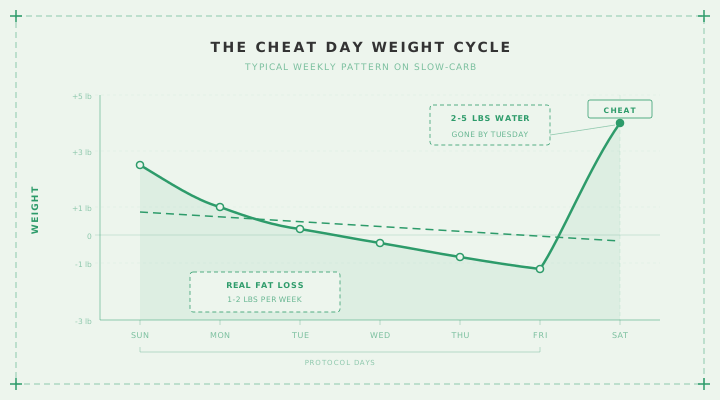
One day per week, typically Saturday or Sunday, you eat whatever you want without restrictions. This serves multiple purposes beyond just psychological relief.
| Cheat day benefit | How it works | What to expect |
|---|---|---|
| Metabolic effect | Brief leptin bump after refeeding, without evidence that it extends fat-loss gains across the week 8 | Modest, mostly hour-of-day, not week-long |
| Psychological relief | Prevents feeling completely deprived | Makes the other six days more sustainable |
| Social flexibility | Allows normal social eating once per week | Reduces isolation from food-centered activities |
| Appetite reset | Often reduces cravings for processed foods | Many people feel ready to return to clean eating |
The honest update: leptin does rise with refeeding, and short-term fasting or refeeding can move leptin quickly 8. The cheat day does not give you a six-day metabolic head start. The benefit is real but mostly behavioral and adherence-driven.
Cheat Day Damage Control Protocol
A normal cheat day lands in a 2-5 lb water-weight spike that clears by Wednesday. A bad cheat day costs you four days of progress and feels physically awful. This cheat-day protocol is the one we recommend at Fuel, synthesized from Ferriss's original tactics and what actually works in practice.
The morning of cheat day
| Time | Action | Why it matters |
|---|---|---|
| Wake | 16-20oz cold water with lemon | Front-loads hydration before you start eating, and citric acid may slow gastric emptying |
| Wake + 5 min | 30g protein breakfast (compliant slow-carb meal: eggs and beans) | Anchors blood sugar and reduces total cheat-day calories by hundreds of calories |
| Wake + 30 min | Coffee or green tea, 200mg caffeine total | Mild thermogenic effect and helps you feel less ravenous before the first cheat meal |
| Pre-first-cheat | Half a grapefruit OR 4oz unsweetened grapefruit juice | Naringin may modestly blunt blood sugar response |
The single biggest cheat-day mistake is starting with a cinnamon roll on an empty stomach at 9 AM. By noon you are inhaling everything in sight. The 30g protein breakfast is non-negotiable.
Sequencing your cheat meals
Order matters. Eat protein and fiber before sugar and refined carbs at every cheat meal, not just at breakfast.
| Meal sequence rule | What it looks like |
|---|---|
| Protein first | Steak before fries, pizza toppings before crust, eggs before pancakes |
| Vegetables before starch | Side salad before pasta, slaw before sandwich |
| Liquids before solids during a long meal | Glass of water before each cheat course |
| 30 air squats or 60 wall press-ups before each meal | Pulls blood glucose into muscle (Ferriss's original tactic, the only one with reasonable mechanistic support) |
Caffeine, hydration, and movement
| Action | Target | Why |
|---|---|---|
| Total caffeine | 200-400mg, last dose by 2 PM | Modest thermogenic boost without trashing sleep |
| Total water | 100oz across the day | Cheat-day foods are high-sodium and high-carb, both pulling water |
| Post-meal walk | 10-20 minutes within an hour of each cheat meal | Lowers post-meal blood glucose meaningfully |
| Cold exposure (optional) | 2-3 minute cold shower morning or evening | Marginal effect, mostly a wake-up tool |
| Cheat-day cutoff | Stop eating by 8 PM | Lets digestion clear before sleep, protects Monday |
Monday morning reset
The day after cheat day matters more than cheat day itself. The biggest enemy is the urge to "earn back" the cheat by skipping breakfast or going to 1,200 calories on Monday. Don't.
| Action | Target | Why |
|---|---|---|
| Wake hydration | 24oz water with electrolytes | Cheat-day sodium and carbs cause overnight dehydration |
| 30g protein breakfast | Non-negotiable, same as every other day | Stops the "I already blew it" spiral and re-anchors satiety |
| No extra restriction | Eat your normal Monday meals | Restricting now starts the binge-restrict cycle |
| 20-30 minute walk | Easy pace, fasted or fed | Gentle blood-glucose normalization |
| Ignore the scale | Trust the trend by Wednesday | Cheat-day water weight takes 2-3 days to clear, the scale lies |
If you finish Monday on plan, the cheat day cost you nothing. If you bring cheat-day energy into Monday, the cheat day cost you four days of progress.
A note on cheat day and disordered eating
For most people, a structured cheat day is a healthy pressure valve. For people with a history of binge eating or disordered eating patterns, however, an unrestricted cheat day can reinforce binge-restrict cycling 2. A 2025 scoping review on cheat meals and refeeds found that while planned cheat meals can support adherence, the same patterns associate with eating-disorder behaviors and body dissatisfaction in vulnerable populations 11. If your cheat day consistently feels out of control rather than enjoyable, or if you find yourself "earning" cheat day through excessive restriction on other days, this protocol may not be appropriate for you. A more flexible approach like standard calorie counting or a moderate low-carb diet can achieve similar results without the all-or-nothing structure.
17Slow-carb for women
The slow-carb literature was written by a man for a male audience and tested mostly on men. Women run into specific issues that the original protocol does not address, based on what Fuel sees in practice.
Energy availability and the thyroid
Slow-carb is naturally low in calories for many women, and it gets lower fast if you cut bean portions in pursuit of faster results. Sustained low energy availability (broadly under about 30 kcal per kg of fat-free mass per day) is associated with reduced T3, lower estrogen, and elevated cortisol in women 12. Symptoms include cold extremities, hair shedding, irritability, and a flatlined metabolism. If any of these show up in week two or three, the answer is more food, not less.
Menstrual cycle effects
Mild luteal-phase increases in cravings and water retention are normal and pass. Anything more dramatic is a signal. A late or skipped period can have several causes, including pregnancy and low energy availability. Functional hypothalamic amenorrhea (FHA) is a diagnosis of exclusion, according to the Endocrine Society guideline. Seek clinical evaluation for persistent cycle changes; do not assume the diet explains them. If low energy availability is identified, restoring adequate nutrition and adjusting exercise are part of treatment.
PCOS
Slow-carb tends to work well for PCOS in the short term because it lowers refined-carb intake and can improve insulin sensitivity. The cheat day is the trap. A binge-pattern cheat day can spike insulin and undo a week of progress in a population that is already insulin-resistant. If you have PCOS, swap the unrestricted cheat day for a planned refeed of 1.5x normal carbs (still from compliant sources plus one fruit serving) and skip the all-bets-off model.
Calorie floors
There is no single calorie floor that fits every woman. Body size, activity, health, and life stage change energy needs. Persistent fatigue, menstrual changes, or worsening training are reasons to reassess intake with a qualified clinician or dietitian rather than tighten the food rules.
Adding starch back
Most women do better long-term with one to two daily servings of starchy carbs (sweet potato, rice, oats) reintroduced after the first 30 days, particularly around training. This is a deliberate departure from Ferriss's protocol and a place where slow-carb 2.0 explicitly diverges.
Pregnancy and breastfeeding: hard stop
Do not follow slow-carb during pregnancy or breastfeeding. The protocol is calorie-restrictive by design, restricts fruit and dairy that pregnant and nursing women need, and is not appropriate during these life stages. Work with a registered dietitian or your OB.
18Who loses weight on slow-carb
The famous Ferriss stat is that 84% of survey respondents lost weight on slow-carb, averaging 8.6 lbs over four weeks, in a self-reported survey of about 3,500 readers run with Lift in 2012 6. That stat gets quoted constantly, and it gets misread just as often: the distribution underneath the headline number is wider than the average suggests.
The survey cannot establish what a new reader should expect: respondents self-selected, intake and weight were self-reported, and there was no randomized comparison. Fuel does not have a published adherence study supporting a separate success rate. The MATADOR trial, discussed below, studied intermittent energy restriction in men with obesity and did not test this slow-carb protocol or its cheat-day rules.7
19Expected slow-carb results and tracking
Setting realistic expectations prevents the discouragement that causes most people to quit.
| Timeframe | What to expect | Notes |
|---|---|---|
| Week 1 | 3-8 lbs lost | Mostly water and glycogen depletion. Do not extrapolate this rate. |
| Weeks 2-4 | 1-2 lbs per week of fat loss | Ferriss reported that 84% of survey respondents lost fat by week 4, averaging 8.6 lbs 6. This is self-reported data, not clinical trial results. |
| Weeks 4-8 | Rate may slow | Body composition changes become more visible than scale changes. |
| Beyond 8 weeks | Sustained fat loss if adherent | Plateaus are normal and usually mean portions have drifted or cheat day has expanded. |
What to track
Tracking helps you separate signal from noise, especially with the weekly cheat day fluctuations.
| Metric | How to measure | Frequency | Why it matters |
|---|---|---|---|
| Body weight | Same scale, same time daily | Daily (use weekly average) | Daily weigh-ins smooth out cheat day water fluctuations |
| Waist measurement | Tape measure at navel | Weekly | More reliable than scale for fat loss progress |
| Progress photos | Same lighting, same pose | Every 2 weeks | Shows changes the scale and tape miss |
| Energy levels | Subjective 1-5 rating | Daily | Catches calorie or protein shortfalls early |
| Strength | Log key lifts or exercises | Per session | Dropping strength may indicate too much calorie deficit |
| Adherence | Did you follow the rules | Daily (yes/no) | The single best predictor of results |
Use Fuel's weekly review to look at these trends together rather than reacting to any single day.
20Why slow-carb can reduce intake
Slow-carb is not a clinically studied diet protocol. No randomized controlled trial has tested the specific combination of rules that Ferriss describes. That said, many of the individual components align with well-supported nutritional principles, while a few of the central claims do not.
What the evidence supports
Legume consumption has a strong evidence base. A meta-analysis of randomized controlled trials found that eating about one serving of pulses per day led to greater feelings of fullness and was associated with modest weight loss 4. Beans also improve the satiety index of meals through their combination of protein, fiber, and slow digestion.
The emphasis on protein aligns with robust evidence that higher protein intake increases satiety, preserves lean mass during a calorie deficit, and has a higher thermic effect of food than carbohydrates or fat 5. The slow-carb protein minimums (30g at breakfast, 20g at other meals) align well with the leucine threshold research on muscle protein synthesis.
Periodic relief from a continuous deficit has some support. The MATADOR study found that intermittent two-week diet breaks during a calorie deficit resulted in greater fat loss and less metabolic adaptation than continuous dieting 7. A weekly cheat day is not the same as a two-week break, but the underlying principle of periodic calorie restoration has some support.
What the evidence challenges
The "fast carb vs. slow carb" dichotomy is the most aggressive claim in the original book, and the evidence has not been kind to it. A 2021 perspective paper from Glenn Gaesser at Arizona State University reviewed 43 study populations covering nearly 2 million participants and 30 meta-analyses of randomized controlled trials, and concluded that low-glycemic-index diets are not consistently better than high-GI diets for body weight or body fat 9. The glycemic index matters for blood sugar control in diabetes. It is a poor predictor of weight loss in healthy adults.
The fruit restriction is the second most scientifically questionable rule. Large prospective studies consistently find that fruit consumption is associated with lower rates of cardiovascular disease, cancer, and all-cause mortality 1. Slow-carb restricts fruit for simplicity and fructose control, but the broader evidence supports fruit consumption for long-term health.
The cheat-day-as-leptin-hack mechanism is the third. Leptin does respond to refeeding, but that response does not establish a week-long metabolic advantage 8. The behavioral benefit of cheat day is real. The endocrine benefit is largely a story.
The Ganson et al. study on cheat meals matters most for anyone deciding on the cheat day. In a national sample of 2,717 Canadian adolescents and young adults, cheat-meal engagement was associated with greater eating-disorder behaviors and psychopathology, including binge-eating-related behaviors 2. For a population already prone to binge-restrict cycling, an unrestricted cheat day is a risk factor, not a release valve.
The honest summary
Slow-carb is a heuristic system that happens to align with several well-supported nutritional principles (high protein, high fiber, reduced processed food, structured eating) wrapped around a few claims that do not survive scrutiny (fast vs. slow carb dichotomy, fruit restriction, leptin manipulation via cheat day). Its value comes from adherence and simplicity rather than metabolic novelty. Slow-carb 2.0, in our view, keeps the scaffolding and quietly retires the biohacks.
21Common slow-carb mistakes
The simplicity can be deceptive. There are several ways the plan can go off track.
| Mistake | Why it happens | How to fix it |
|---|---|---|
| Portion sizes creep up | No specific portion guidelines | Use your hand as a guide or track portions in Fuel |
| Not enough protein at breakfast | Relying too heavily on beans alone | Always include eggs or another protein source |
| Cheat day becomes cheat weekend | Lack of clear boundaries | Stick to one 24-hour period, then return to the plan |
| Skipping vegetables | Focusing only on protein and beans | Fill half your plate with non-starchy vegetables |
| Not drinking enough water | Higher fiber intake requires more fluids | Aim for adequate hydration, especially early on |
| Not eating enough total calories | Bean-and-vegetable meals can be very filling | Especially relevant for women. Add fats if energy drops. |
| Treating allowed foods as unlimited | Nuts, avocado, and olive oil are calorie-dense | Measure calorie-dense foods even on a rule-based plan |
| Delaying breakfast past 30 minutes | Habit of skipping or delaying first meal | Prepare breakfast ingredients the night before |
| Not adjusting bean portions | Jumping from zero beans to three cups daily | Start with half a cup per meal and increase over a week |
| Ignoring micronutrients | Limited fruit means less vitamin C and potassium | Eat colorful vegetables at every meal to compensate |
22Who slow-carb works for
Slow-carb removes decision-making from your diet, which is a huge advantage if decisions are where you usually fall off. The tradeoff is rigidity. If you thrive on variety or need flexibility for social eating during the week, the six days of strict rules will feel like a cage rather than a framework.
| Profile | Why slow-carb fits | What to watch |
|---|---|---|
| Rule-followers who dislike counting | Binary yes/no food list removes daily decisions | May feel too restrictive after several months |
| People with 20+ lbs to lose | Clear structure produces visible early results | Transition to flexible approach once near goal weight |
| Busy professionals | Meal repetition means minimal planning | Watch for boredom leading to off-plan snacking |
| People who respond well to all-or-nothing | The rules are unambiguous | Monitor cheat day for binge-restrict patterns |
| People who enjoy a weekly reward | Cheat day provides built-in motivation | Keep cheat day to 24 hours, not a full weekend |
23Who should avoid slow-carb
The cheat day makes slow-carb psychologically easier for most people, but it creates real problems for others. Six days of restriction followed by one day of unlimited eating is a binge-restrict pattern by design. For people with certain medical conditions or eating histories, that pattern can do more harm than the fat loss is worth.
| Population | Why slow-carb is risky | Better alternative |
|---|---|---|
| History of binge eating or eating disorders | Cheat day can trigger or reinforce binge-restrict cycling 2 | Flexible calorie tracking or intuitive eating |
| Pregnant or breastfeeding | Restrictive protocols are not appropriate during pregnancy or lactation | Work with a registered dietitian |
| Type 1 or insulin-dependent type 2 diabetes | Carb restriction requires medication adjustment and medical supervision | Consult your doctor. See insulin sensitivity. |
| Competitive or endurance athletes | Insufficient carbohydrate for high training loads | Carb cycling or periodized nutrition |
| Adolescents and children | Restrictive diets are not recommended for growing populations | Focus on whole foods without restriction |
| Women with menstrual irregularity or FHA | Low energy availability worsens the underlying problem 12 | Restore energy intake first, work with an OB or RD |
Slow-carb is a fat-loss protocol. It is not designed to be a permanent way of eating. Most people transition to a less restrictive pattern after reaching their goal weight.
24Slow-carb for vegetarians
Slow-carb was written for omnivores, and most vegetarian adaptations on the internet are halfhearted. This version works through the protein math per meal, with a sample seven-day plan. One honest note: strict vegan slow-carb is not a protocol we recommend. The protein density just is not there without dairy, eggs, or substantial soy, and the people who try it usually end up either underfueling or supplementing so heavily that calorie counting would have been simpler.
Vegetarian protein math
The target is at least 20g protein per meal and 30g at breakfast.
| Source | Protein | Slow-carb compliant | Use case |
|---|---|---|---|
| Eggs (3 large) | 18g | Yes | Breakfast anchor, pair with beans |
| Tofu (firm, 1 cup) | 20g | Yes | Lunch or dinner protein |
| Tempeh (1 cup) | 31g | Yes | Highest density, hearty texture |
| Edamame (1 cup) | 17g | Yes | Counts as bean and protein |
| Lentils (1 cup) | 18g | Yes | Dual-purpose carb and protein |
| Pea protein (scoop) | 20-25g | Yes (no added sugar) | Top up any meal short on protein |
| Cottage cheese | 13g per ½ cup | Limited (domino) | Skip unless tolerance is good |
Seitan vs. soy: a decision
Seitan has the highest protein density of any vegetarian option (25g per 3.5oz) and the best meat-like texture. It is also pure wheat gluten, which makes it borderline for slow-carb purists. Our take: seitan is fine in moderation if gluten is tolerated. If gluten bothers you or you are slow-carb-strict, build around tempeh and tofu instead.
Sample 7-day vegetarian plan
| Day | Breakfast (30g+) | Lunch (20g+) | Dinner (20g+) | Snack |
|---|---|---|---|---|
| Monday | 3 eggs + black beans + spinach (28g) | Tofu stir-fry + edamame + bok choy (32g) | Tempeh + lentils + roasted broccoli (40g) | Almonds |
| Tuesday | 3 eggs + lentil scramble + peppers (32g) | Chickpea salad + pea protein dressing (24g) | Tofu chili + kidney beans + cauliflower (28g) | Hard-boiled eggs |
| Wednesday | Tofu scramble + black beans + kale (32g) | Tempeh + chickpeas + greens (35g) | Lentil soup + edamame + asparagus (28g) | Walnuts |
| Thursday | 3 eggs + white beans + mushrooms (28g) | Edamame bowl + tempeh + cabbage (35g) | Tofu + black-eyed peas + zucchini (24g) | Edamame |
| Friday | Egg scramble + lentils + tomatoes (32g) | Tempeh wrap (no tortilla) + beans (28g) | Tofu curry + chickpeas + spinach (24g) | Almonds |
| Saturday | 3 eggs + black beans + avocado (28g) | Lentil + chickpea salad + pea protein (28g) | Tempeh + white beans + Brussels sprouts (32g) | Hard-boiled eggs |
| Sunday | Cheat day | Cheat day | Cheat day | Cheat day |
Vegetarian slow-carb works. It just requires deliberate planning around tempeh, tofu, and pea protein because the bean-only path will fall short of the protein targets at most meals.
25Slow-carb on travel and social meals
Slow-carb does not survive contact with airports, weddings, and family holidays without a playbook.
Airports and travel days
Pre-flight: eat a 30g protein meal at home so you are not hungry at the gate. Pack two backups (bag of almonds, tuna pouches, hard-boiled eggs in a cooler bag for short trips). At the airport, the reliable picks are Cobb salads (skip the dressing or use vinegar), grilled chicken bowls without rice, omelets without toast, and beef jerky. If the only option is a burrito chain, get the bowl: double protein, beans, vegetables, salsa, no rice, no tortilla.
Hotels
Breakfast is the trap. Most hotel breakfasts default to pastries, fruit, and yogurt. Order from the menu instead of the buffet: eggs, sausage, side of beans if available, side of avocado. For lunch and dinner, hotel restaurants almost always have a protein-and-vegetable dish that works. If the hotel has a fridge, stock it with hard-boiled eggs, hummus, and pre-cut vegetables on day one.
Weddings
Eat a 30g protein meal before you arrive. Skip the cocktail-hour bread and pasta stations. At the plated dinner, eat the protein and vegetables, leave the starch. At the bar, dry red wine, vodka soda, or bourbon on the rocks all work. Skip beer and cocktails with sugar. The cake is fine if it is your cheat day. If it is not, take three bites and pass the plate.
All-inclusive resorts
This is the hardest one. The default is to eat and drink whatever, all day. Pre-commit: one cheat day during the trip, not seven. On non-cheat days, lean on the breakfast omelet station, lunch grilled-fish stations, dinner protein-and-vegetable plates, and dry red wine. Skip the buffet for plated meals when possible (smaller portions, fewer decisions).
Business dinners
Order first. This is the single highest-leverage move. If you order steak and salad, the rest of the table often follows, and you have already locked in your meal before the bread basket lands. Skip the appetizer or order a salad. Drink red wine. Pass on dessert with a polite "I'm full, thanks."
Family holidays
This is where the cheat day earns its keep. If Thanksgiving lands on Thursday, make Thursday your cheat day. Eat what you want, including the pie, and resume the protocol Friday morning. Trying to white-knuckle a holiday meal usually ends with worse outcomes than a planned cheat day.
The 3-line decline script
You do not owe anyone an explanation, and "I'm doing slow-carb" invites debate you do not want. Three lines cover it:
- "No thanks, I'm full."
- "Already had my plan for today, but it looks great."
- "I'm good, thank you."
Short, polite, no opening for negotiation. The more you explain, the more pushback you invite.
26Slow-carb meal prep
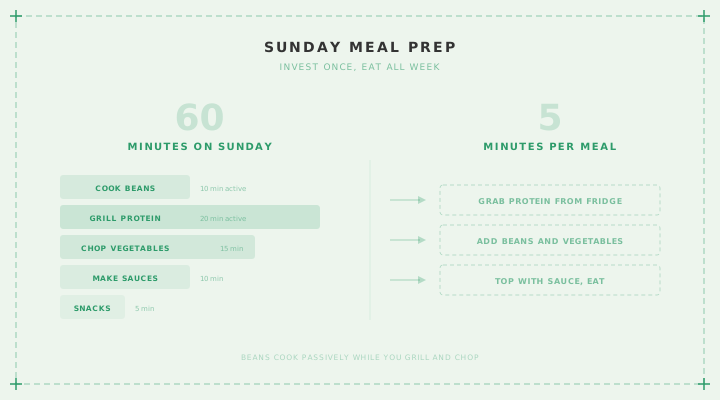
The biggest practical barrier to slow-carb is daily cooking. One hour on Sunday means every weekday meal takes five minutes to assemble from prepped components. Most people who quit slow-carb quit because they skip this step and end up cooking from scratch on a Tuesday night.
| Task | Time required | What it covers | When to do it |
|---|---|---|---|
| Cook 2 types of beans | 10 min active | Enough beans for the entire week | Sunday |
| Grill or bake 2-3 proteins | 20 min active | Chicken, beef, or fish for 3-4 days | Sunday |
| Wash and chop vegetables | 15 min | Prep for quick assembly all week | Sunday |
| Prepare 2-3 sauces | 10 min | Salsa, vinaigrette, or spice blends | Sunday |
| Portion snacks | 5 min | Nuts, hard-boiled eggs in containers | Sunday |
Total estimated prep time: 60-90 minutes on Sunday. After that, weekday meals take five minutes to assemble by combining prepped components.
Canned beans are a perfectly fine shortcut. Rinse them to reduce sodium and the texture is nearly identical to home-cooked. Many successful slow-carb followers use canned beans exclusively. If you want to freeze meals, bean and protein combinations freeze well for up to three months. Cook a double batch of chili or lentil soup and freeze individual portions for weeks when you cannot prep.
27Eating out on slow-carb
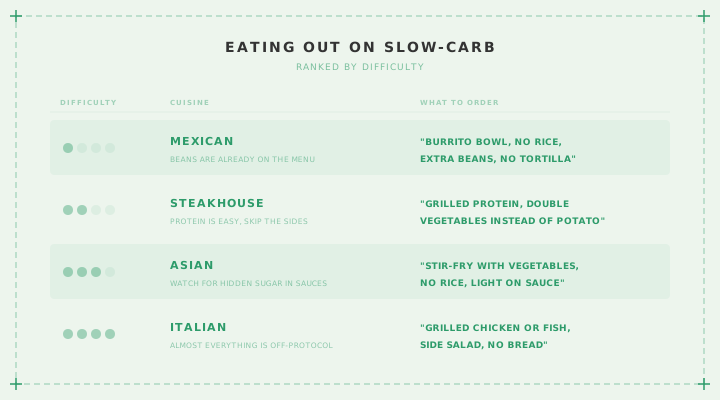
Eating out on slow-carb is manageable at most restaurants if you focus on protein plus vegetables and accept that beans will not always be available.
| Restaurant type | What to order | What to avoid |
|---|---|---|
| Mexican | Burrito bowl with beans, protein, and vegetables (no rice, no tortilla) | Tortillas, rice, chips, cheese, sour cream |
| Asian | Stir-fry with protein and vegetables, no rice | Rice, noodles, sweet sauces |
| American/steakhouse | Steak or grilled protein with steamed vegetables | Bread basket, potatoes, creamy sides |
| Italian | Grilled protein with salad or vegetable sides | Pasta, bread, risotto (hardest cuisine for slow-carb) |
When beans are not on the menu, just eat a protein-and-vegetable meal and add extra beans at your next home meal. Missing one bean serving will not derail your progress.
Fuel's eat out feature makes restaurant meals easier. Point your camera at a menu and Fuel scans it, flags compliant options, and suggests specific modifications you can request from the server. It takes the guesswork out of ordering and gives you the exact words to use when customizing your meal.
28Supplements on slow-carb
Slow-carb does not require supplements, but the food restrictions create a few potential gaps worth addressing.
| Supplement | Why it might help on slow-carb | Necessary? |
|---|---|---|
| Magnesium | High bean and fiber intake can increase magnesium needs | Helpful, especially if you get cramps |
| Vitamin C | Limited fruit reduces a primary source | Eat colorful vegetables first, supplement if needed |
| Potassium | Limited fruit and no potatoes reduces intake | Beans help, but monitor if energy drops |
| Protein powder | Useful if struggling to hit 20g per meal | Only if needed for protein targets |
| Digestive enzymes | The jump in bean intake can cause gas and bloating | Optional, mainly useful in the first two weeks |
A word on Ferriss's PAGG stack
The 4-Hour Body included a four-supplement stack called PAGG: Policosanol, Alpha-lipoic acid, Green tea flavonols, and Garlic extract. Ferriss claimed it accelerated fat loss and improved cholesterol markers. The honest assessment in 2026 is that the evidence is thin.
| Component | What Ferriss claimed | What the evidence shows |
|---|---|---|
| Policosanol | LDL reduction, HDL increase | Early Cuban studies showed strong effects, but independent replication outside Cuba mostly failed 10 |
| Alpha-lipoic acid | Insulin sensitivity, antioxidant | Modest insulin-sensitivity effects, mostly in diabetes, no strong fat-loss signal |
| Green tea flavonols | Modest fat oxidation | Real but small effect, mostly stimulant-driven from caffeine, not catechins |
| Garlic extract | Cardiovascular markers, fat regain | Modest blood pressure effects, no fat-loss data of note |
There has never been a controlled trial of the PAGG stack as a combined intervention. Save the money. If you want one supplement that has a chance of helping, magnesium for the bean fiber load is the better bet.
29Should you do slow-carb in 2026?
The honest answer is "maybe, and probably not as written."
| Are you... | Then... |
|---|---|
| Looking for a 30 to 90-day fat-loss sprint with clear rules? | Yes, slow-carb is one of the better-engineered protocols for this. |
| Open to running slow-carb 2.0 (keep beans and protein anchor, drop fruit ban, drop PAGG, plan the refeed)? | Yes, this is what we recommend. |
| A woman with menstrual irregularity, low body weight, or FHA history? | No. Address energy availability first. |
| Pregnant or breastfeeding? | No. Hard stop. |
| A history of binge eating or disordered eating? | No. Use a non-cheat-day approach. |
| Looking for a way of eating you will follow for years? | No. Switch to Mediterranean or a flexible high-protein pattern. |
| Curious about Ferriss's full original protocol including PAGG? | Try the diet, skip the supplements. |
If any of the "No" rows describes you, slow-carb is not the right protocol for you. Pick a different one and skip the heroics.
30Printable original-protocol food list
This reference follows the original restrictions. For the flexible adaptation, add the fruit, dairy, and starch choices described above, and do not treat the Avoid column as off limits.
| Eat freely | Eat in measured amounts | Avoid (six days a week) |
|---|---|---|
| Chicken, turkey, lean beef, pork, bison | Olive oil, butter (small amounts) | Bread, pasta, rice, cereal, oats, tortillas, crackers |
| All fish and shellfish | Avocado (1 per day) | Potatoes, sweet potatoes, corn, beets |
| Eggs (whole and whites) | Nuts and seeds (small handfuls) | Quinoa (treat as grain on this protocol) |
| Tofu, tempeh, edamame | Cottage cheese (under 2 tbsp per meal) | All fruit except tomatoes and avocados |
| Black, pinto, kidney, lentils, chickpeas, white, lima, split peas, black-eyed peas | Cream in coffee (1-2 tbsp per cup) | Milk, yogurt, cheese (most), ice cream |
| Spinach, kale, broccoli, cauliflower, asparagus, peppers, onions, mushrooms, zucchini, Brussels sprouts | Hummus (2-3 tbsp), nut butter (1 tbsp) | Sugar, honey, agave, syrups |
| Tomatoes, lettuce, cucumber, celery, cabbage, bok choy, Swiss chard | Pea/whey protein powder (no added sugar) | Fruit juice, soda (regular), sweetened coffee drinks |
| Salsa, hot sauce, mustard, vinegar, herbs, spices | Diet soda (max 16oz/day), red wine (1-2 glasses) | Beer, sweet wines, sugary cocktails |
31Track this approach in Fuel for slow-carb
Slow-carb is a selectable diet in Fuel. If you use the flexible adaptation, tell the coach which original restrictions you have changed. When you select slow-carb, all coaching, recommendations, and food logging respect the protocol. The AI coach knows your rules, flags non-compliant foods, and tailors suggestions to the slow-carb food list.
| Fuel feature | How to use it | Why it helps |
|---|---|---|
| Slow-carb diet mode | Select slow-carb as your diet in settings | All coaching and targets align to the protocol |
| Meal templates | Save your go-to slow-carb combinations | Makes daily logging faster |
| Protein tracking | Set a daily minimum protein target | Ensures adequate protein across all meals |
| AI coach | Ask about food compliance | Flags non-compliant foods and suggests swaps |
| AI photo and voice logging | Snap a photo or describe your meal by voice | Logs meals in seconds without manual searching |
| Eat out | Scan a restaurant menu with your camera | Flags compliant options and suggests modifications |
| Weekly review | Review patterns and cheat day impact | Helps you see if the plan is working overall |
| Food notes | Mark cheat day meals differently | Separates cheat day data from regular days |
32Start this diet plan this week
Choose which version you are following before shopping. Review hunger, training, and your weight trend over several weeks, and reassess sooner if restrictions cause symptoms or distress.
Start this weekend with three repeatable meals and batch-cooked beans and proteins. If you choose the original version, its weekly cheat day is part of that protocol. The flexible adaptation does not require one.
If the restrictions feel too limiting or trigger problematic eating patterns, consider a more flexible approach. A standard low-carb diet gives you more food choices while keeping carbs moderate. A high-protein diet focuses on the protein piece without banning specific foods. And straightforward calorie counting gives you the most flexibility of all while still supporting fat loss.
Footnotes
Aune D, Giovannucci E, Boffetta P, et al. Fruit and vegetable intake and the risk of cardiovascular disease, total cancer and all-cause mortality: a systematic review and dose-response meta-analysis of prospective studies. International Journal of Epidemiology. 2017;46(3):1029-1056.
Back to textBack to text 2Back to text 3Ganson KT, Cunningham ML, Pila E, Rodgers RF, Murray SB, Nagata JM. Characterizing cheat meals among a national sample of Canadian adolescents and young adults. Journal of Eating Disorders. 2022;10:113. https://jeatdisord.biomedcentral.com/articles/10.1186/s40337-022-00642-6
Back to textBack to text 2Back to text 3Back to text 4Schwingshackl L, Hoffmann G. Long-term effects of low glycemic index/load vs. high glycemic index/load diets on parameters of obesity and obesity-associated risks: a systematic review and meta-analysis. Nutrition, Metabolism and Cardiovascular Diseases. 2013;23(8):699-706. PubMed
Back to textKim SJ, de Souza RJ, Choo VL, et al. Effects of dietary pulse consumption on body weight: a systematic review and meta-analysis of randomized controlled trials. American Journal of Clinical Nutrition. 2016;103(5):1213-1223.
Back to textBack to text 2Leidy HJ, Clifton PM, Astrup A, et al. The role of protein in weight loss and maintenance. American Journal of Clinical Nutrition. 2015;101(6):1320S-1329S.
Back to textBack to text 2Ferriss T. The 4-Hour Body: An Uncommon Guide to Rapid Fat-Loss, Incredible Sex, and Becoming Superhuman. Crown Archetype; 2010. Self-reported survey data from readers, not a controlled clinical trial. See also Ferriss, "Is The 4-Hour Body a Scam? Tracking 3,500 People to Find Out," tim.blog, 2013.
Back to textBack to text 2Byrne NM, Sainsbury A, King NA, Hills AP, Wood RE. Intermittent energy restriction improves weight loss efficiency in obese men: the MATADOR study. International Journal of Obesity. 2018;42(2):129-138.
Back to textBack to text 2Dirlewanger M, di Vetta V, Guenat E, et al. Effects of short-term carbohydrate or fat overfeeding on energy expenditure and plasma leptin concentrations in healthy female subjects. International Journal of Obesity. 2000;24(11):1413-1418. See also Weigle DS, et al. Effect of fasting, refeeding, and dietary fat restriction on plasma leptin levels. J Clin Endocrinol Metab. 1997;82(2):561-565. https://doi.org/10.1210/jcem.82.2.3757
Back to textBack to text 2Back to text 3Back to text 4Back to text 5Gaesser GA, Miller Jones J, Angadi SS. Perspective: Does Glycemic Index Matter for Weight Loss and Obesity Prevention? Examination of the Evidence on "Fast" Compared with "Slow" Carbs. Advances in Nutrition. 2021;12(6):2076-2084.
Back to textBack to text 2Marinangeli CPF, Jones PJH. Policosanols as Nutraceuticals: Fact or Fiction. Critical Reviews in Food Science and Nutrition. 2010;50(3):259-267. Independent replications of policosanol's lipid effects outside Cuba have largely failed.
Back to textBack to text 2Pila E, Murray SB, Le Grange D, et al. The Role of Cheat Meals in Dieting: A Scoping Review of Physiological and Psychological Responses. Nutrition Reviews. 2025;83(11):2240-2256.
Back to textGordon CM, Ackerman KE, Berga SL, et al. Functional Hypothalamic Amenorrhea: An Endocrine Society Clinical Practice Guideline. Journal of Clinical Endocrinology and Metabolism. 2017;102(5):1413-1439.
Back to textBack to text 2National Library of Medicine. PubMed search results for Whole30. PubMed
Back to textWhole30. The Original Whole30 Program Rules. Whole30
Back to textBack to text 2Whole30. The Science Behind Whole30's Success. Whole30
Back to text