A bowl of Greek yogurt, a plate of cottage cheese, a two-egg scramble, and avocado toast all look like the same kind of healthy breakfast on a phone camera. They do not produce the same morning macro line. If breakfast has to land 30 to 40 grams of protein inside a real calorie budget, three of these meals can pass and one of them rarely does until it is rebuilt around a real protein anchor.
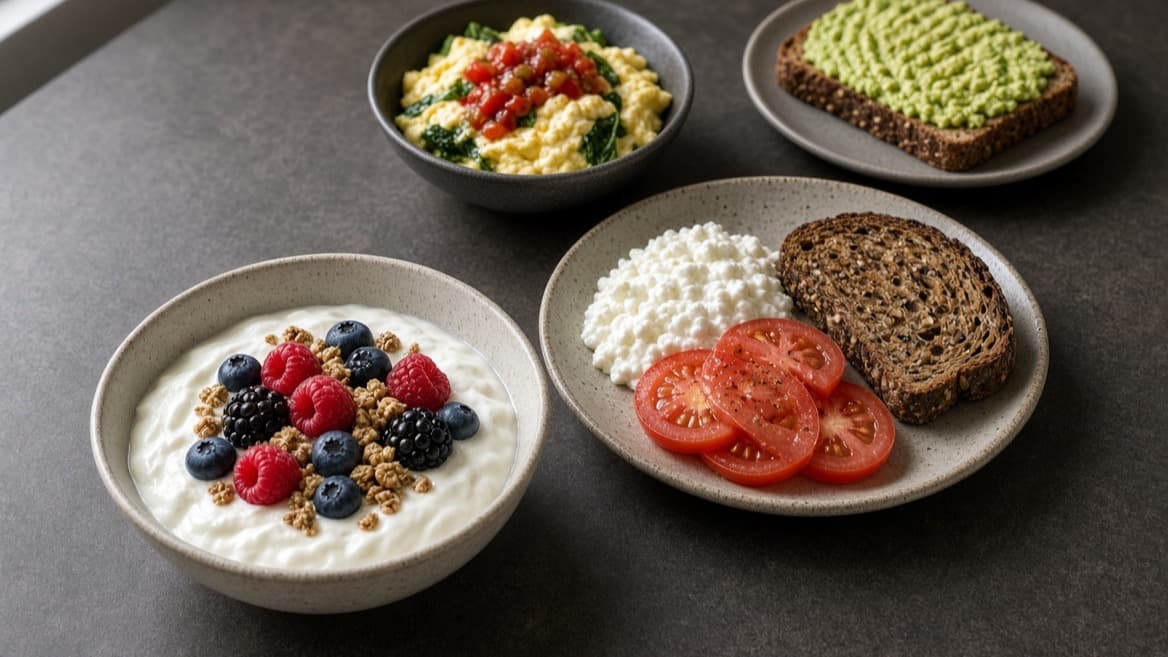
Most morning breakfast pages will tell you that all four are protein options. The honest version is that two are protein-dense by default, one is good food that needs help to reach 30 grams of protein on a normal plate, and one is mostly fat plus a slice of bread until something with protein in it goes on top.
01Six checks that decide a high-protein breakfast rank
The ranking is built around six questions a tracking client actually asks before they pick breakfast.
- Protein per calorie. How much protein does a normal portion deliver per 100 calories of food.
- Ease of clearing 30 to 40 g of protein. Can a typical serving hit the per-meal protein floor for muscle protein synthesis without doubling the volume of the plate.
- Calorie control. Does the breakfast stay where you left it once you account for toppings, oil, cheese, and bread size.
- Satiety. Does it hold appetite for three to four hours inside a deficit.
- Appetite tolerance. Does it work on a low-appetite morning, including GLP-1 medication days, reflux, or post-training nausea.
- Logging reliability. Can you log it accurately from a real label or USDA entry without guessing.
Greek yogurt and cottage cheese win on questions one, two, three, and six. Eggs win on satisfaction and micronutrients, then lose ground on question two because a normal scramble does not clear 30 g of protein by itself. Avocado toast loses on questions one and two because the base ingredients are mostly fat and bread carbohydrate. The full per-meal protein logic sits in our companion piece on the leucine threshold, and protein distribution covers the broader argument for landing breakfast in the per-meal range instead of saving protein for dinner.
The ranking is for breakfast as a 30 to 40 gram protein meal inside a calorie budget. It is not a verdict on which food is healthiest. Eggs are excellent food. Avocado is excellent food. The question is whether they are doing the job that breakfast is supposed to do for a tracking client.
02The ranked breakfast list
| Rank | Breakfast | Default protein at a normal portion | Why it ranks | Where it fails |
|---|---|---|---|---|
| 1 | Greek yogurt bowl | 20 to 30 g before toppings, 30 to 40 g with a 300 g portion plus seeds or whey | High protein per calorie, easy to weigh, easy to save in a logger | Granola, honey, and banana can move the bowl from 300 to 500 calories without raising protein |
| 2 | Cottage cheese plate | 24 to 28 g per one-cup serving | Almost as protein-dense as Greek yogurt, savory or sweet, calorie-controlled | Sodium can run high, texture turns some people off, brands vary widely |
| 3 | Egg scramble | 12 to 15 g from two eggs, 30 to 45 g with whites and a dairy or fish add-on | Saturating, easy on the gut, strong micronutrient base | Two whole eggs alone rarely clear 20 g of protein, cheese and cooking fat scale calories fast |
| 4 | Avocado toast | 6 to 10 g from the base, 25 to 40 g when rebuilt around a real protein anchor | Low effort, satisfying on a calorie budget when honest | The default version is roughly 80 percent fat and bread carbohydrate by calorie |
Greek yogurt bowl
Plain nonfat Greek yogurt at FDC ID 170894 lists 59 kcal, 10.19 g of protein, 3.6 g of carbohydrate, 0.39 g of fat, and 36 mg of sodium per 100 g.1 At a 300 g portion, that is 177 kcal and roughly 30 g of protein before anything goes on top. Use the product label when you buy a specific tub because Greek yogurt can move by brand, fat level, serving size, and formulation.8
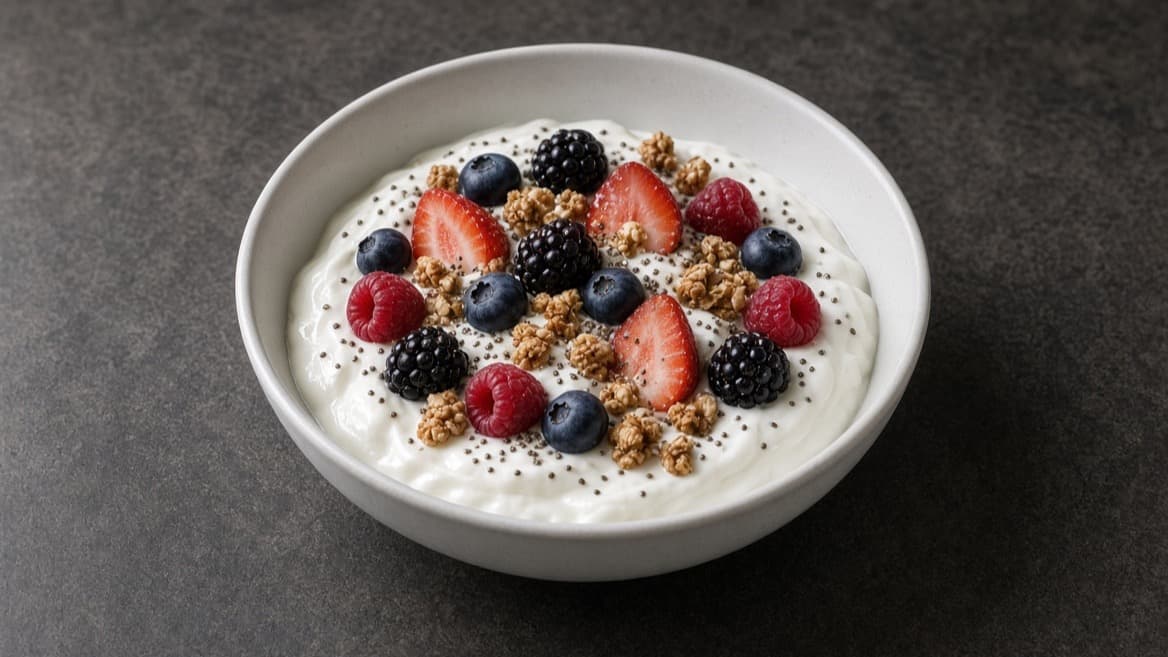
That math is why the yogurt bowl ranks first. You can hit 30 g of protein inside 200 calories of yogurt alone. Berries are cheap calories and cheap volume. The bowl breaks when 40 g of granola goes on top without weighing it. Oats at FDC ID 169705 list 389 kcal and 16.89 g of protein per 100 g, which is mostly carbohydrate and fat at that density.7 A heaped scoop of granola can be twice the calories of the yogurt it sits on.
Use the bowl as a protein meal. Weigh the yogurt, weigh the granola, treat honey as a calorie ingredient, and add chia, hemp, or a small whey scoop only if breakfast still needs another 5 to 10 g of protein.
Cottage cheese plate
Cottage cheese has the same usefulness as Greek yogurt and a different flavor profile. 1% cottage cheese at FDC ID 173417 lists 72 kcal and 12.39 g of protein per 100 g.2 A full one-cup serving of about 226 g lands near 163 kcal and 28 g of protein. 2% cottage cheese at FDC ID 172182 lists 81 kcal and 10.45 g of protein per 100 g, so a one-cup serving is closer to 24 g of protein and a little more fat.9 Good Culture 2% Low-Fat Classic lists a half-cup 110 g serving at 90 kcal, 14 g of protein, 4 g of sugar, 2 g of fat, and 380 mg of sodium on the product page.10
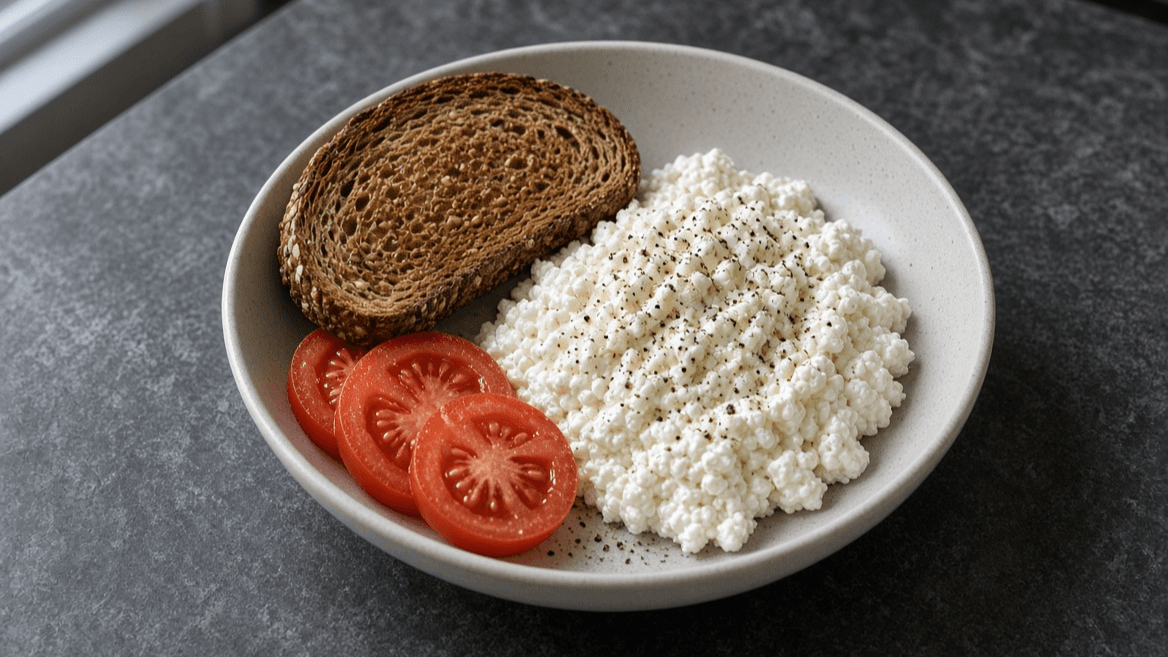
Two practical points keep cottage cheese out of the top spot. Sodium is the first. A cup of 1% cottage cheese is roughly 900 mg of sodium on the USDA entry, and brand labels often run between 350 and 450 mg per half cup. That is fine for most lifters and less fine on a low-sodium day or when breakfast also includes deli meat or a salty bread. Texture is the second. Some clients eat cottage cheese on rotation for months without trouble. Others reach a wall after a week. Pairing it with tomatoes and cracked pepper, pineapple, peaches, or a slice of seedy toast keeps the plate eatable.
Egg scramble
Scrambled whole egg at FDC ID 172187 lists 149 kcal and 9.99 g of protein per 100 g.3 Two eggs weigh roughly 100 to 110 g cooked, which puts a plain two-egg scramble near 12 to 15 g of protein and 150 to 170 calories. The scramble feels like more food than the math says. That is its strength on a low-appetite morning and its weakness on a tracking day.
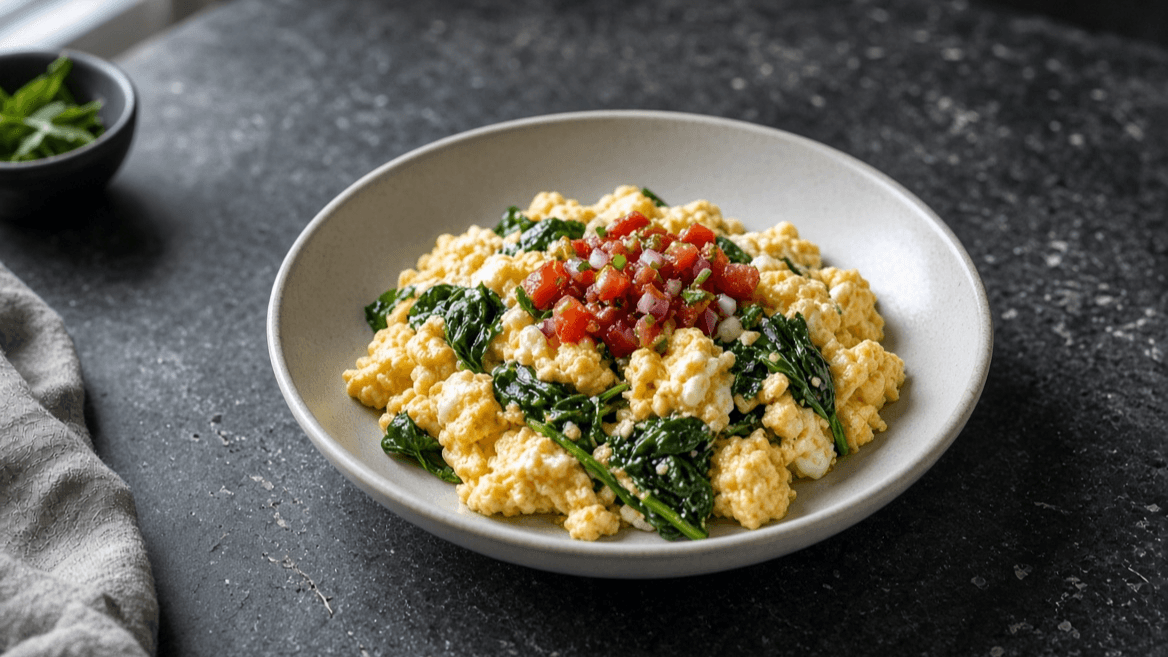
A 30 g protein target out of whole eggs alone takes roughly five eggs and about 400 to 500 calories before cooking fat, depending on egg size and preparation. That is a fine breakfast on a high day. It is a heavy way to spend the morning calorie budget on a fat-loss day. The faster path is to add 150 to 200 g of liquid egg whites. Egg whites at FDC ID 172183 list 52 kcal and 10.9 g of protein per 100 g.4 A 200 g pour adds about 22 g of protein and roughly 100 calories with almost no fat. Two eggs plus 200 g of whites lands at 34 to 36 g of protein under 300 calories before vegetables and cheese. That pour also leaves most of the egg's choline behind with the discarded yolks, since yolks hold nearly all of it. How choline and creatine share a methyl-group budget covers what that trade actually costs and how to cover it without giving up the swap.
The scramble also pairs well with a half cup of cottage cheese stirred in or served on the side. That single move puts the plate at 35 to 40 g of protein without raising fat.
Avocado toast
The default plate is one slice of whole-wheat bread plus about 50 g of avocado, sometimes with a sprinkle of seeds or chili flakes. Whole-wheat bread at FDC ID 172688 lists 252 kcal and 12.45 g of protein per 100 g.5 A 40 g slice runs near 100 kcal and 5 g of protein. Hass avocado at FDC ID 171705 lists 160 kcal and 2 g of protein per 100 g.6 A 50 g spread adds 80 kcal and 1 g of protein. The plate is roughly 180 kcal and 6 g of protein. Adding olive oil, flaky salt, and a second avocado layer moves the plate toward 350 to 500 kcal without raising protein.
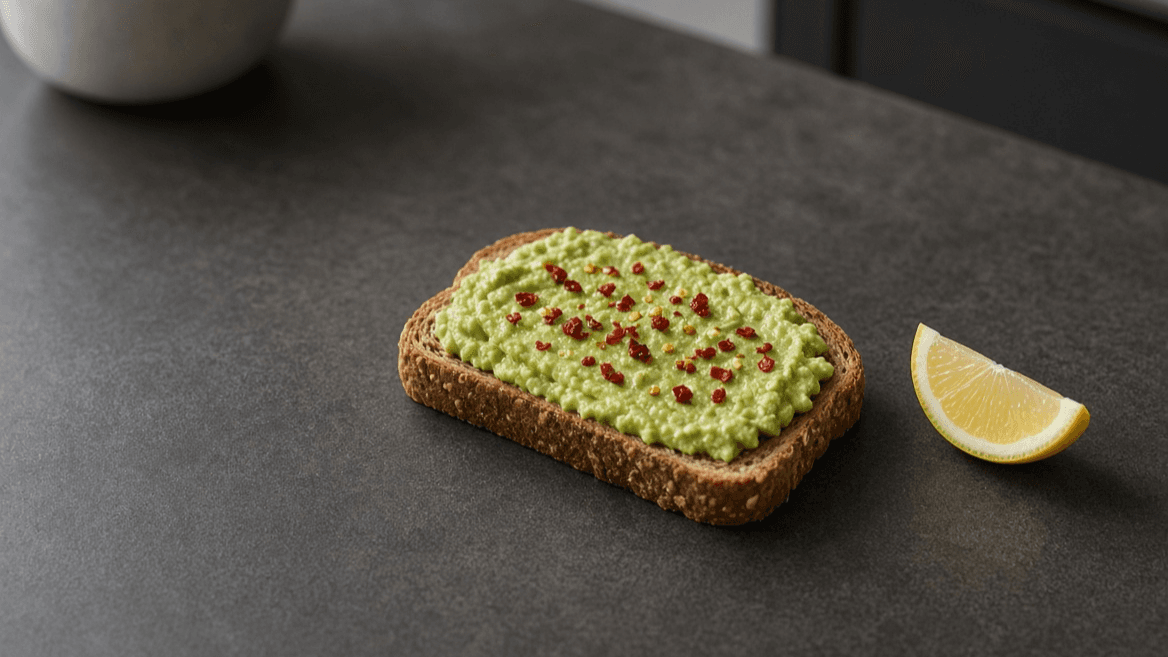
That is the protein gap people miss. The avocado toast you see on Instagram is a fat-and-bread meal with a small protein side. It can still be a fine breakfast. It is not a 30 g protein meal until something with protein in it goes on the plate.
03Why avocado toast keeps failing the protein test
The shortest answer is that the two main ingredients are not protein foods. Bread carries enough protein to be useful in context, around 4 to 6 g per slice. Avocado carries almost none. A normal restaurant version of avocado toast tops out near 10 g of protein before add-ons.
There are four rebuilds that turn the plate into a real protein breakfast.
- Add one cup of cottage cheese under or beside the avocado. That puts the plate near 30 to 35 g of protein for about 400 to 500 kcal, depending on bread size and cottage cheese brand.
- Add two scrambled eggs and 100 g of egg whites. That puts the plate near 28 to 32 g of protein and a fuller breakfast.
- Add 70 to 90 g of smoked salmon and keep a small Greek yogurt side. That puts the meal near 30 to 40 g of protein and reads like a brunch option without an oil drizzle.
- Add 90 g of sliced turkey and a half cup of cottage cheese. That puts the meal near 35 to 40 g of protein with a sandwich-style profile.
Pick the rebuild that matches the morning. The rule is that avocado toast becomes a protein breakfast once a real anchor enters the plate. Until that happens, it is breakfast carbs and a fat source.
04Macro templates that actually clear breakfast protein
| Template | Build | Approx kcal | Approx protein |
|---|---|---|---|
| Greek yogurt bowl | 300 g nonfat Greek yogurt, 100 g mixed berries, 20 g granola, 10 g chia | 320 to 380 | 32 to 36 g |
| Greek yogurt bowl with whey | 250 g nonfat Greek yogurt, 100 g berries, 15 g whey isolate, 15 g almonds | 380 to 430 | 42 to 47 g |
| Cottage cheese plate | 1 cup 1% cottage cheese, 1 slice whole-grain toast, 80 g sliced tomato, black pepper | 300 to 360 | 30 to 33 g |
| Egg scramble upgraded | 2 whole eggs, 200 g egg whites, 100 g vegetables, 30 g salsa, 1 tsp olive oil | 330 to 400 | 34 to 38 g |
| Egg scramble with cottage cheese | 2 whole eggs, half cup low-fat cottage cheese, 100 g spinach, 1 tsp oil | 320 to 380 | 32 to 36 g |
| Avocado toast rebuilt | 1 slice whole-grain toast, 50 g avocado, 1 cup low-fat cottage cheese, chili flakes | 400 to 500 | 30 to 35 g |
| Avocado toast plus eggs | 1 slice whole-grain toast, 50 g avocado, 2 eggs, 100 g egg whites | 380 to 440 | 28 to 32 g |
Macros are approximate. Brand, slice size, avocado size, granola amount, cooking fat, and cottage cheese sodium all move the totals. The point is the shape of the meal, not a single number. Acute work from Mamerow and colleagues on per-meal protein dosing argues for landing breakfast inside the per-meal range rather than pushing protein into dinner.11 The International Society of Sports Nutrition position stand puts a useful per-meal target at roughly 0.25 to 0.40 g per kg of bodyweight across at least four meals.12 The same logic shows up in our piece on the high-protein breakfast problem for men, and protein quality explains why dairy and eggs do more per gram than most plant sources at the morning meal.
05Low-appetite and GLP-1 days
Drinkable and spoonable formats win when appetite is low. Greek yogurt and cottage cheese keep their advantage on these mornings because both are spoonable and dense. A 200 g serving of Greek yogurt clears 20 g of protein with almost no chewing fatigue. A higher-protein Greek yogurt cup or a small carton of skyr can replace a full bowl when the bowl feels like too much volume.
Eggs are harder on a low-appetite morning because they need to be cooked and they sit longer in the stomach. If they are tolerated, a one-egg plus 150 g egg-white scramble can still clear 20 g of protein at low volume. Avocado toast is the breakfast to skip when appetite suppression is strong, especially during the first weeks of a GLP-1 dose titration. The high-fat plate often pairs poorly with the nausea and reflux many patients report during GLP-1 therapy.13 The companion piece on meal templates for low-appetite days covers the broader pattern.
Protein floors during GLP-1 therapy matter here. Recent advisory work from Mozaffarian and colleagues puts the floor at roughly 1.2 to 1.6 g per kg of adjusted bodyweight per day for adults on these medications, with higher needs for active patients.13 If breakfast slips, the day rarely catches up because appetite caps the rest of the meals as well. Breakfasts that are spoonable, dense, and easy to log are the breakfasts that hold the daily floor. See GLP-1 receptor agonist for the broader mechanism.
06How to log these breakfasts in Fuel
Log the brand. Greek yogurt and cottage cheese labels move by brand, formulation, and serving size, and a USDA entry is a starting point rather than a final answer. If you eat the same yogurt every morning, find the label entry once, save the serving you actually use, and stop second-guessing the bowl. Our broader audit on food database accuracy explains why this saves more time than any AI shortcut.
Weigh the calorie movers. Granola, oats, nuts, seeds, avocado, and oil are the toppings that move the calorie total without moving protein. A spoon scoop today and a spoon scoop next week are not the same gram weight. The kitchen scale lives next to the yogurt jar, the cottage cheese tub, and the avocado. Bread is the same idea. A slice can be 25 g or 60 g. Read the label, weigh the slice once, save it.
Save the bowl. Use Food Logging for the morning photo or text entry. Use Food Library when the breakfast is built from known staples and you want a single saved meal that reproduces tomorrow morning in one tap. The bigger framing for these decisions is in macro meal planning for weight loss.
07Hit 30g protein at breakfast before toppings matter
Breakfast is the easiest meal in the day to skip protein on and the hardest meal in the day to fix later. Greek yogurt and cottage cheese are spoonable protein. Eggs are good food that needs a partner to clear 30 g. Avocado toast is a fat-and-bread plate that becomes a real breakfast once a protein anchor goes on it.
Pick the format that matches the morning, weigh the part that moves calories, save the bowl in Fuel, and stop relying on the photo to remember what the portion was.
Footnotes
USDA FoodData Central. Yogurt, Greek, plain, nonfat, FDC ID 170894. FoodData Central
Back to textBack to text 2USDA FoodData Central. Cheese, cottage, lowfat, 1% milkfat, FDC ID 173417. FoodData Central
Back to textBack to text 2USDA FoodData Central. Egg, whole, cooked, scrambled, FDC ID 172187. FoodData Central
Back to textBack to text 2USDA FoodData Central. Egg, white, raw, fresh, FDC ID 172183. FoodData Central
Back to textBack to text 2USDA FoodData Central. Bread, whole-wheat, commercially prepared, FDC ID 172688. FoodData Central
Back to textBack to text 2USDA FoodData Central. Avocados, raw, all commercial varieties, FDC ID 171705. FoodData Central
Back to textBack to text 2USDA FoodData Central. Oats, FDC ID 169705. FoodData Central
Back to textBack to text 2USDA FoodData Central. FoodData Central Download Datasets. SR Legacy CSV downloads available from the USDA FoodData Central download datasets page.
Back to textUSDA FoodData Central. Cheese, cottage, lowfat, 2% milkfat, FDC ID 172182. FoodData Central
Back to textGood Culture. Simply Cottage Cheese, 24 oz, Lowfat Classic product page. Good Culture 2% Low-Fat Classic
Back to textMamerow MM, Mettler JA, English KL, Layman DK, Paddon-Jones D. Dietary protein distribution positively influences 24-h muscle protein synthesis in healthy adults. J Nutr. 2014;144(6):876-880.
Back to textJager R, Kerksick CM, Campbell BI, et al. International Society of Sports Nutrition position stand: protein and exercise. J Int Soc Sports Nutr. 2017;14:20.
Back to textMozaffarian D, et al. Nutritional priorities to support GLP-1 therapy for obesity: a joint advisory from the American College of Lifestyle Medicine, the American Society for Nutrition, the Obesity Medicine Association, and The Obesity Society. Am J Clin Nutr. 2025. doi:10.1016/j.ajcnut.2025.04.023.
Back to textBack to text 2