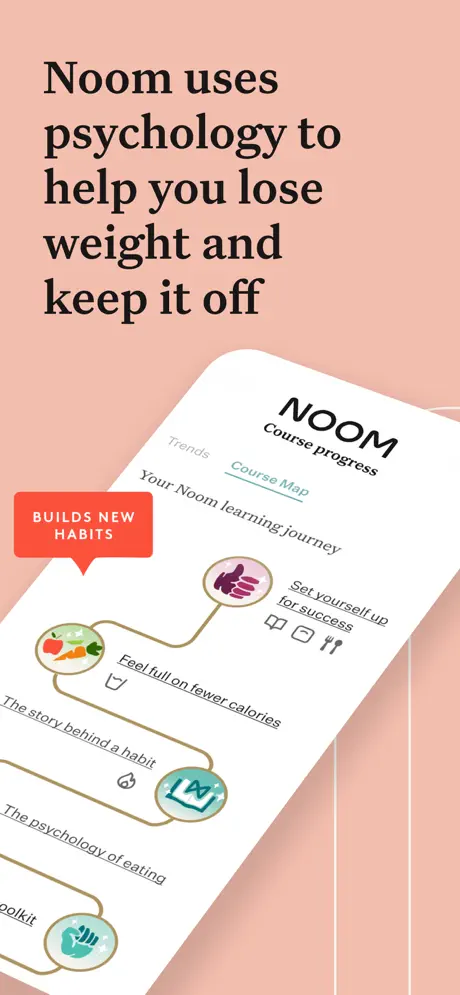
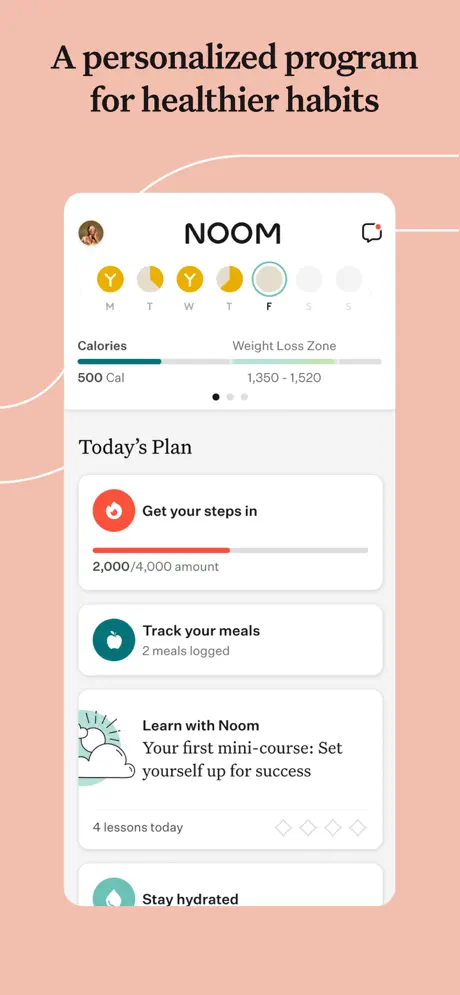
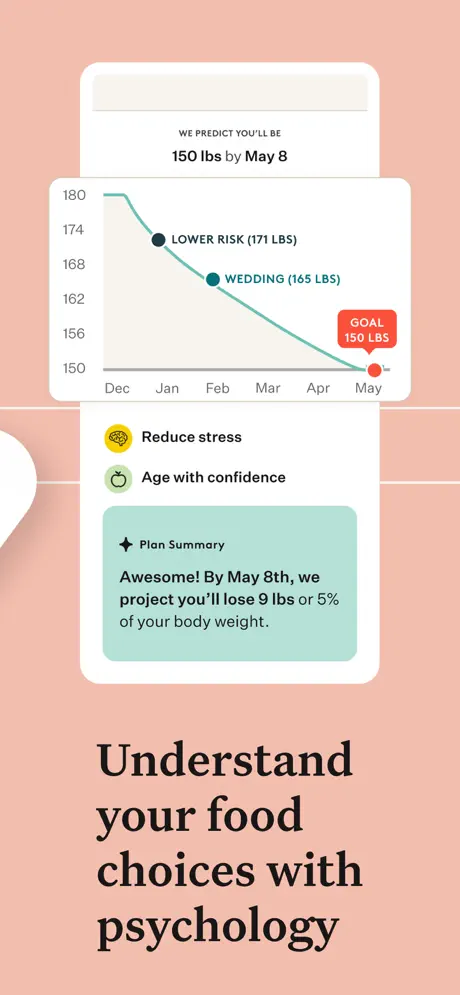
Noom is a New York based behavioral weight loss program founded in 2008 by Saeju Jeong and Artem Petakov that combines daily psychology lessons, food logging, and remote coaching, and it sits at a strange crossroads in 2026. The pitch is still a behavior-change platform that teaches you why you eat rather than only what you eat, and the underlying cognitive behavioral therapy framing has real research behind it. The track record is harder to ignore. A federal court in the Southern District of New York approved a $62 million class action settlement in Mahood v. Noom in 2022, two rounds of layoffs that year cut a meaningful share of the human coaching team, and the company has since reoriented around GLP-1 prescriptions through Noom Med while a new AI assistant called Welli absorbs the lower-tier questions that used to reach a coach.
01Billing and cancellation
The Mahood v. Noom class action covered roughly two million users who purchased auto-renewing subscriptions through Noom's website or mobile app between May 12, 2016 and October 6, 2020, and it produced a $62 million settlement composed of $56 million in cash and $6 million in subscription credits. The complaint described a sequence in which users signed up for a "risk-free" trial, were enrolled into Healthy Weight Subscription plans ranging from roughly $45 to $400, and then had to message an in-app coach who routed them to instructions for canceling through iTunes or Google Play. A former senior software engineer at Noom was quoted in court filings saying the cancellation flow was "difficult by design," with the stated purpose of generating revenue from customers who failed to cancel before the renewal posted. The Deceptive.design case file and Fox Business coverage of the settlement lay out the documentary record.
The post-settlement obligations are specific. Noom must substantially enhance its auto-renewal disclosures, require a separate affirmative action such as a checkbox or digital signature to accept auto-renewal, and surface a real cancellation button on the account page rather than gating cancellation through the coaching chat. The Winston and Strawn analysis treats the order as one of the canonical post-ROSCA enforcement outcomes for subscription apps. Reviewers since the settlement still describe friction during cancellation, but the path is at least documented and self-serve in a way it was not before October 2020.
02Human coaching vs automated lessons in 2026
Noom expanded aggressively into human coaching during the pandemic and then reversed course. In April 2022 the company laid off 495 wellness coaches across two waves, with 180 cut on the first day and 315 over the following week, representing close to a quarter of the roughly 2,000 coach workforce at the time. Gizmodo's reporting details the timing. In October 2022 Noom let go of roughly 500 additional employees, weighted again toward the coaching team, alongside the departure of the chief financial officer. TechCrunch covered the second round and tied it to a broader reorganization. Subsequent reductions in 2024 reflected a mix shift toward GLP-1 medication revenue rather than human coaching hours.
The replacement is Welli, an AI assistant Noom announced in June 2024 and rolled out across the member base. Welli is positioned as on-demand support for routine questions like how to eat well while traveling, how to make smart choices in social settings, and how to manage GLP-1 side effects, with the explicit goal of leaving the remaining coaches more time for relationship building and motivation. The Noom engineering write-up describes Welli as trained on Noom-specific content. The practical effect is that the first response a member receives is now AI rather than a coach, which is a different product than the human-led coaching the brand was built on.
03Noom Med pivot
Noom Med is the prescription arm and the part of the company driving the current growth narrative. The product line covers FDA-approved Wegovy and Zepbound, off-label Ozempic, compounded semaglutide where state law and clinical guidelines permit, and a Microdose 0.6mg semaglutide program. The Microdose page lists pricing that starts between $79 and $99 per month for the lower-dose program, and full Noom Med plans climb through tiers that reach roughly $279 per month for branded GLP-1 access plus medication cost depending on insurance. A telehealth-only entry point is listed at around $69. The Pharmaphorum coverage of the microdose launch frames the pricing as a deliberate move to capture users who want medical weight loss without committing to the full GLP-1 dose ladder.
The product mix matters because it changes what Noom is. The behavioral coaching content still ships, but the revenue and the marketing have shifted toward medication-led weight loss with an app wrapper, and the AI assistant has absorbed the lower-cost coaching interactions. A 12-month longitudinal review at Healthline walks through a tester who started on the behavioral program, stalled, and migrated to Noom's GLP-1 plan inside the same subscription, which is the shape of the funnel in practice.
04Traffic light food system
Noom's signature framing is the traffic light food system that sorts foods into green, yellow, and orange categories based on calorie density. Registered dietitian Abby Langer's long-form Noom review makes the central critique. Nuts, seeds, nut butters, and avocado are nutrient dense and highly satiating, and yet they sit in the orange category beside cake because the system is built around calories per gram. Langer documents users in Noom Facebook groups challenging each other to eat only green foods to "save calories" and avoiding orange foods because they have been coded as bad, which contradicts the no bad foods messaging the brand uses in its onboarding lessons. The gamification effect is the issue, not the underlying nutrition science, because the color system trains a binary green-good orange-bad heuristic that the app's own copy says it does not want to teach.
05Eating disorder safety
The pattern dietitians flag most often involves three defaults working together. The calorie target frequently lands at or near 1,200 calories per day for women regardless of height, weight, or activity level, daily weigh-ins are part of the standard cadence, and the onboarding survey does not ask about eating disorder history or current recovery status. The Femestella write-up compiles user accounts of restrictive defaults and weigh-in driven anxiety, and the Choosing Therapy review reaches the same conclusion that Noom is not a safe choice for anyone with a diagnosed eating disorder or a history of disordered eating. The "anti-diet" language Noom uses in marketing makes the gap more pointed because it borrows the framing of the Health at Every Size and intuitive eating communities while shipping a calorie-restricted weigh-in driven program underneath.
06Pricing
Noom Weight is sold as a 12-month plan at $209 in the standard configuration, which works out to roughly $17.42 per month at the annual rate. Monthly and quarterly options exist at higher per-month rates, and the entry point most users encounter is a 14-day pay-what-you-can trial that accepts $0.50 to $18.37 up front before converting to a recurring plan. Noom Med is priced separately. Telehealth-only access starts at around $69 per month, the Microdose 0.6mg semaglutide program starts at $79 to $99 per month with medication included, and full GLP-1 plans for branded Wegovy or Zepbound climb to roughly $149 to $279 per month plus the cost of the medication itself based on insurance. The Noom cost page and the NutriScan Noom Med pricing breakdown cover the current tiers.
07Who Noom is built for
Noom fits a narrow band of users well. The program rewards readers who will sit with a daily five to ten minute psychology lesson, who are comfortable accepting calorie-density rules for food categorization, and who do not have a current or historical eating disorder. Members who want supervised access to GLP-1 medication and who are willing to tolerate a wrapper that is more medication-led than coach-led also fit the current product. The fit is poor for users who want a real human coach throughout the day rather than an AI chat, who want food guidance that does not categorize whole foods like nuts and avocado as orange, and who want a logging layer that keeps pace with newer AI-first trackers.
08Sources for this review
- Deceptive.design case file for Mahood v. Noom
- Fox Business on the $62 million settlement
- Winston and Strawn analysis of post-settlement requirements
- TechCrunch on the October 2022 layoffs
- Pharmaphorum on the Noom Microdose GLP-1 launch
- Abby Langer's dietitian review of the traffic light system
- Femestella on eating disorder concerns
- Healthline 12-month Noom journey
09Who should choose Noom
Noom is a behavioral weight loss program whose underlying philosophy is more coherent than its operating record, and the legal and structural track record now sits in tension with the brand promise of psychology-first sustainable change.
Noom is best for users with no eating disorder history who are comfortable with calorie-density rules, who will read a daily psychology lesson, and who want a structured behavioral curriculum at the $209 annual price point. The Noom Med tiers also fit users who specifically want supervised access to GLP-1 medication through a single subscription and who can stomach an app wrapper that has shifted from human coaching to AI-first support.
Fuel is built for Apple users who want the opposite of what Noom became. Fuel pairs the best AI in food logging, where you can photograph a meal or a label, describe it in voice or text, and correct the result with natural-language correction until it matches what you actually ate, with a real coach that checks in throughout the day rather than handing the first response to a chatbot. The live daily health score breaks down five dimensions of pacing across calories, macro quality, micronutrients, limits, and movement, a personalized morning recap tells you how yesterday landed, and an in-depth weekly review delivers an explicit action plan for the week ahead. Deep Apple ecosystem integration covers Apple Health, Apple Watch, and on-device privacy, the billing flow is self-serve and free of the dark patterns that produced the Mahood settlement, and the food framing avoids the green-orange gamification that registered dietitians have flagged in Noom for years.