
YAZIO has a real reputation in Europe as the go-to intermittent-fasting tracker, and the polish lives up to it. Clean type, smooth transitions, an "AI" badge on everything, and an interface that looks like it belongs in a design portfolio. The frustration is that the data underneath that surface is less reliable than the design implies. A peer-reviewed ScienceDirect comparison of food tracking apps found Yazio underestimated total energy intake by an average of 5.4 kcal per item, the largest gap among the apps tested. Darwin Nutrition's dietitian review documented half an avocado logged anywhere from 165 kcal to 560 kcal depending on the entry. The fasting suite is genuinely the best in the category. Whether that is enough depends on how much you trust the calorie numbers underneath.
YAZIO is German-built, founded in 2011 in Erfurt, with more than 50 million downloads and a food database of roughly 2.5 million items skewed heavily toward EU brands, regional dishes, and barcoded packaged goods sold in Germany, Austria, Switzerland, and France. That European focus is the reason European users prefer it to MyFitnessPal, and the reason US users hit accuracy issues more often. American packaged goods, restaurant chains, and produce entries are thinner and more inconsistent.
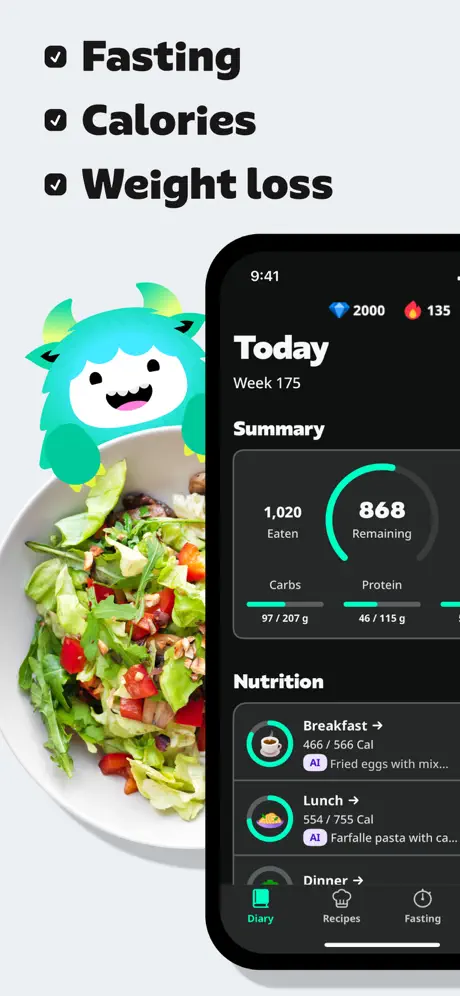
The intermittent fasting suite is where YAZIO genuinely leads the category. It supports 16:8, 18:6, 20:4, 5:2, OMAD, 12:12, 1:1, 6:1, and fully custom windows, with timers that integrate directly into the food log so eating windows shape your daily targets rather than sitting in a separate tab. There is ketosis tracking, educational content, and an automatic calorie adjustment for shorter eating windows that competitors do not match. If your primary strategy is time-restricted eating, this is the most thoughtful implementation available.
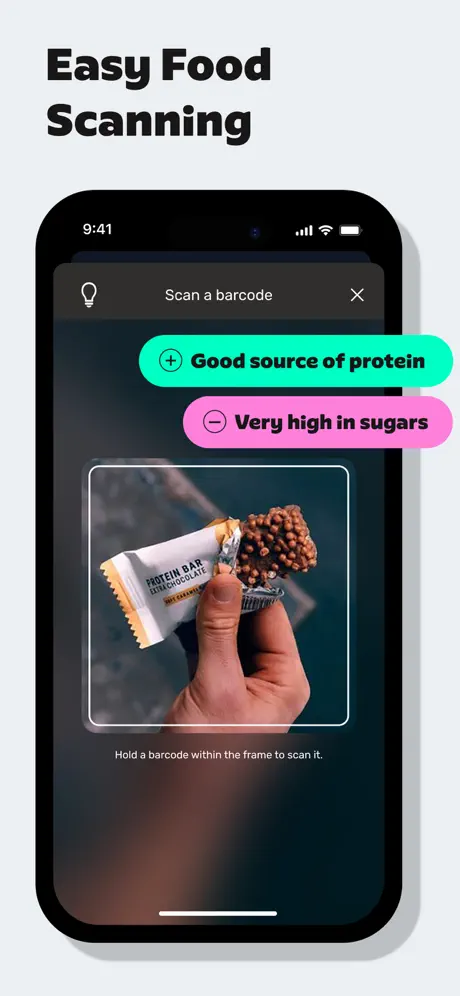
The recipe library holds 2,500 to 2,700 dietitian-tested recipes filterable by keto, vegan, low-carb, sugar-free, lactose-free, and high-protein, with adjustable serving sizes that auto-recalculate ingredient amounts. The recipes are gated to PRO. So is the barcode scanner, fiber, vitamins, sugar tracking, advanced nutrient analysis, mood and symptom tracking, and wearable integration with Garmin, Fitbit, and Apple Watch.
PRO runs $47.90 per year (about $7 per month for the standard plan and closer to $4 per month with the most common discounted offer), $9.99 per month, or roughly $20 to $24 for a quarter. That puts it between Lose It Premium at $39.99 per year and MyFitnessPal Premium at $79.99 per year. The free tier is now closer to a trial than a usable product, since the features most people want are PRO-only.
The accuracy criticism is the dominant signal across reviews. The Darwin Nutrition writeup, calorie-trackers.com, App Store reviews, and Trustpilot all converge on the same pattern. Database entries diverge from package labels, multiple versions of the same food carry wildly different calorie counts, and the food picker itself becomes a source of error. Roughly 97 percent of users who leave detailed feedback flag database accuracy as the primary issue. The peer-reviewed evidence backs them up. The ScienceDirect study found an average underestimation of 5.4 kcal per item, the largest gap among the apps tested in that comparison.
The AI photo logger shipped in late 2025 and is PRO-only. Standardized meal testing puts its calorie deviation at roughly plus or minus 6.1 percent, with weaker performance on non-branded items and mixed dishes. It is competent rather than category-leading, and it inherits whatever accuracy issues the underlying database has.
Integrations cover Apple Health, Health Connect (which is replacing Google Fit because Google is retiring that API in late 2026), Garmin, and Fitbit. Apple Health is bidirectional and reliable. Android users on Google Fit will need to migrate to Health Connect.
Billing is the operational pain point. Yazio's own help center confirms the friction. App Store subscribers must cancel through Apple, web subscribers must log into yazio.com/app/account separately, and Yazio cannot terminate App Store contracts on a user's behalf. Trustpilot complaints describe being charged after stated cancellation, including one user whose September 2025 cancel did not stick and was billed again in January 2026, plus refund disputes where Yazio claimed payment had failed while the invoice had already cleared. Auto-renew without a clear pre-charge reminder is a recurring theme.
Who should choose YAZIO
YAZIO is the strongest intermittent-fasting tracker in the category and the best calorie counter for European users, and it is also the app where database accuracy and billing friction draw the loudest complaints.
It is best for European users who need EU brand and regional coverage, dedicated intermittent fasters who want the most thoughtful 16:8, 18:6, 20:4, 5:2, OMAD, and custom-window implementation available, and design-led users who prioritize polish over precision. If your goals depend on tight calorie accuracy or you live in a country where the database is thin, the tradeoffs are harder to absorb.
Fuel addresses YAZIO's three weakest dimensions directly. On US database accuracy, Fuel uses Apple Health as the source of truth and pairs it with an AI logger tested for accuracy against competitors, so corrections happen in natural-language correction rather than through a database picker that returns four versions of an avocado. On billing, Fuel keeps the free tier transparent with a full week of AI coaching, daily and weekly reviews, and a clear preview of what Pro unlocks, with no two-step cancel through both Apple and a website. On paywalled fundamentals, the things YAZIO reserves for PRO sit in Fuel's free experience by default. Fuel is built for Apple users who want the best AI in food logging (photograph the meal or the label, describe it in voice or text, correct it in natural language), a real coach available throughout the day, a live daily health score with five-dimensional breakdowns, a morning recap, an in-depth weekly review with an explicit action plan, deep Apple ecosystem integration, and on-device privacy. Try Fuel.