App Comparison

Cal AI vs MyFitnessPal

Fuel Nutrition Team • March 22, 2026

Cal AI

3/ 10
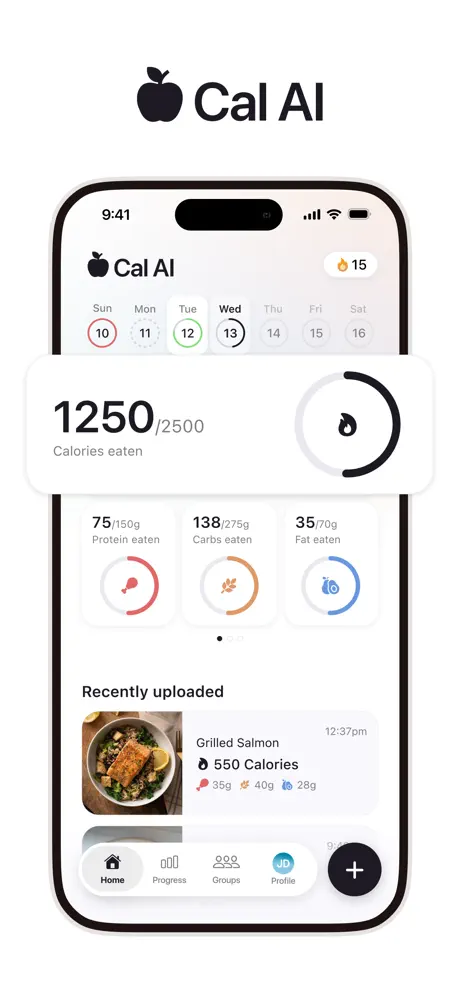
Cal AI screenshot
VS

MyFitnessPal

5/ 10
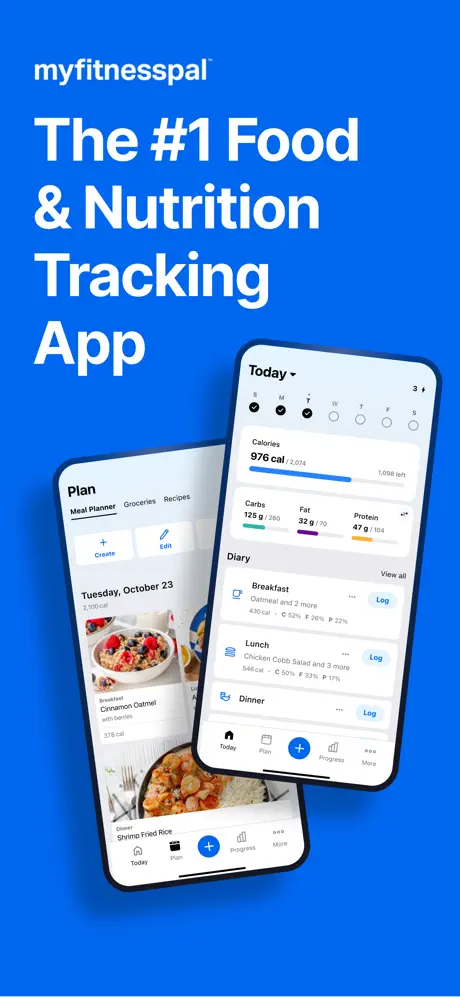
MyFitnessPal screenshot

Feature comparison

Feature
Cal AI
MyFitnessPal

Food logging

Cal AIPhoto AI — snap and estimate
MyFitnessPalBarcode scanner (Premium) + manual database search

Database

Cal AIAI estimates from photos — no verified database
MyFitnessPal14M+ crowd-sourced entries

Accuracy

Cal AIPhoto estimates described as unreliable, math errors
MyFitnessPalCrowd-sourced — accuracy varies entry to entry

Apple Watch

Cal AIDescribed as non-functional
MyFitnessPalBasic logging

Ads

Cal AINone
MyFitnessPalIntrusive ads including graphic food imagery in log feed

Barcode scanning

Cal AIAvailable but values don't match labels
MyFitnessPalPremium only ($19.99/mo)

Coaching

Cal AIBasic calorie target
MyFitnessPalStatic calorie target — no coaching layer

Ownership

Cal AIAcquired by MyFitnessPal (December 2025)
MyFitnessPalParent company (Under Armour → Francisco Partners)

Price

Cal AIFree download, but hard-paywalled during onboarding; no app access otherwise; $19.99-$29.99/year in current testing
MyFitnessPalFree tier + $19.99/mo Premium

Pros & Cons

Cal AI

  • Fastest logging method — photo-based AI estimation
  • No database navigation or barcode scanning needed
  • Clean interface without ads
  • AI frequently misidentifies dishes and portions
  • Corrections don't persist between scans
  • No food database to fall back on
  • Apple Watch described as non-functional
  • Road map uncertainty post-acquisition

MyFitnessPal

  • Largest food database in the category (14M+ entries)
  • Massive community and third-party integrations
  • Long track record since 2005
  • Basic Apple Watch integration
  • Barcode scanning paywalled at $19.99/mo Premium
  • Intrusive ads including graphic food imagery in log feed
  • Crowd-sourced database with accuracy inconsistencies
  • No coaching or adaptive goals
  • Premium is the most expensive mainstream tracker

Cal AI and MyFitnessPal are now corporate siblings — MyFitnessPal acquired Cal AI in December 2025, retaining the seven-person team and keeping the app running independently. But the products remain fundamentally different in how they approach food logging, and comparing them as a user in 2026 reveals two distinct philosophies with distinct weaknesses. This is an unusual comparison because the apps share ownership, which adds road map uncertainty that affects both products.

Key Takeaways

- Cal AI is faster and ad-free but relies on AI photo estimates that users describe as frequently inaccurate, with corrections that do not persist. - MyFitnessPal has the largest food database (14M+ entries) but paywalls barcode scanning at $19.99/month and fills the free tier with intrusive ads. - The December 2025 acquisition means both products share ownership, creating road map uncertainty about whether they will remain separate long-term.

What is Cal AI?

Cal AI is a photo-first calorie tracking app that uses AI to estimate macronutrients from pictures of your food. It was designed to be the fastest possible food logger — no database browsing, no barcode scanning, just point your camera and get numbers. The app was acquired by MyFitnessPal in December 2025 and continues operating as a standalone product with its original seven-person team. Cal AI's target user is someone who finds traditional food logging tedious enough to quit, and the app bets that speed alone can keep people tracking. The accuracy problems — misidentified dishes, wrong portions, non-persistent corrections, macro math errors — are the cost of that speed.

What is MyFitnessPal?

MyFitnessPal is the most widely used nutrition tracker in the world, with the largest crowd-sourced food database in the category at over 14 million entries. Founded in 2005, it has been through multiple ownership changes — from Under Armour to Francisco Partners — and remains the default recommendation for calorie tracking. MFP uses manual database search and barcode scanning for food logging, though barcode scanning is now locked behind the $19.99/month Premium subscription. The free tier is functional but heavily laden with ads, including graphic food imagery in the log feed. MFP provides no coaching or adaptive goals — just a static calorie target and a large database.

The Acquisition Context

MyFitnessPal's stated logic for acquiring Cal AI is that they serve complementary user segments — Cal AI for speed-first users, MFP for precision-first users. Cal AI gains access to MFP's database of 20 million items, 68,500 brands, and 380+ restaurant chains. Whether this integration materializes or whether the apps remain separate is uncertain. The history of consumer app acquisitions — particularly in the fitness and nutrition space — suggests that the product you chose at download is rarely the product you have two years later. Both Cal AI and MFP users should factor this uncertainty into their evaluation.

Winner: N/A — context, not a comparison category.

Food Logging Method

Cal AI's photo logging is the fastest input method in nutrition tracking. Photograph your plate, get estimates in seconds. No typing, no scrolling, no scanning. For users who eat unpackaged, home-cooked, or restaurant meals, this is genuinely appealing — there is no barcode to scan and no exact match to search for. The problem remains accuracy: the AI frequently misidentifies dishes, assigns incorrect macro splits, and estimates portions generically. Corrections are possible but do not persist between sessions.

MyFitnessPal's approach is search-and-select from the largest database in the category. Type a food name, choose from results, adjust the serving size. For packaged foods, barcode scanning is faster — but it is now locked behind the $19.99/month Premium paywall, a change from when it was a free feature. The database's size means you will almost always find what you are looking for, but the crowd-sourced nature creates accuracy problems: duplicate entries with conflicting data, user-submitted items with incorrect values, and serving sizes that do not match current packaging.

Winner: Tie — Cal AI is faster for unpackaged foods; MFP is more comprehensive but paywalls its fastest input method.

Data Accuracy

Neither app provides verified nutritional data, but the nature of their inaccuracies differs in ways that affect daily usability. Cal AI's errors are generated by AI interpretation of photographs — a fundamentally imprecise process. The AI confuses visually similar foods (rice bowls and pasta dishes, for example), defaults to average portions regardless of what is actually on the plate, and produces macro breakdowns with arithmetic errors where protein, fat, and carb grams do not sum to the stated calorie total. There is no database to cross-reference and no way to verify an estimate against a known source. The numbers are a black box.

MyFitnessPal's errors come from crowd-sourced data. With 14 million entries, many submitted by users without verification, the database contains duplicates, outdated information, entries for discontinued products, and nutrition data that does not match current product formulations. Searching for a common food like "banana" might return five entries with five different calorie counts, and there is no curation layer to indicate which is correct. However, the data is at least inspectable — you can see what you are logging, compare entries, read the nutrition breakdown, and choose the most reasonable option based on your own knowledge. This transparency gives MFP a meaningful edge over Cal AI's opaque estimation process.

Winner: MyFitnessPal — inspectable crowd-sourced data, despite its flaws, is more trustworthy than opaque AI estimates.

Ad Experience and Interface

This is where Cal AI has a clear, unambiguous advantage. Cal AI's interface is clean — a camera, a calorie display, and minimal visual noise. There are no ads, no promotional banners, no sponsored content, and no interruptions in the logging flow. The simplicity is both a design choice and a natural reflection of having fewer features to surface. You open the app, log your food, and leave without being marketed to.

MyFitnessPal's free tier is one of the most ad-heavy experiences in the entire health and fitness app category. Users report intrusive advertisements including graphic food imagery that appears directly in the food log feed — a bizarre and counterproductive choice for an app focused on nutritional awareness and, for many users, weight management. Ads load between interactions, slow the interface noticeably on older devices, and interrupt the logging workflow at points where focus and accuracy matter most. The advertising is aggressive enough that many users cite it as the primary reason for upgrading to Premium or switching to a competitor entirely. Premium at $19.99/month removes ads but is the most expensive mainstream tracker subscription on the market, making the ad-free experience a luxury rather than a standard.

Winner: Cal AI — an ad-free experience is a genuine quality-of-life advantage, especially for an app you interact with multiple times daily.

Apple Ecosystem Integration

MyFitnessPal offers a basic Apple Watch app that displays your daily calorie summary and lets you log water from your wrist. It is not a full food logging tool, but it provides at-a-glance access to your daily progress without pulling out your phone. Apple Health integration syncs calorie data and exercise, though users report a persistent double-counting issue: when wearable exercise data flows through both Apple Health and MFP's own integrations simultaneously, the same workout can appear twice, inflating the daily burn estimate. This can lead to artificially high calorie budgets for users who rely on exercise adjustments. The integration is functional but requires careful configuration to avoid data duplication.

Cal AI's Apple Watch app is consistently described as non-functional by users — it fails to load, shows outdated data, or crashes on launch. Apple Health sync is partial: water data flows to Apple Health but food and macro data does not. For users who expect their nutrition tracker to participate in the broader Apple Health ecosystem — sharing data with workout apps, health dashboards, or doctor-facing health records — Cal AI is essentially absent from that integration layer.

Winner: MyFitnessPal — basic but functional Apple Watch and Health integration beats a non-functional Watch app, despite the double-counting issue.

Coaching and Guidance

Neither app offers coaching. Cal AI provides a static calorie target set during onboarding. MyFitnessPal provides a static calorie target based on your goal weight and timeline. Neither adapts to your progress, suggests dietary adjustments, offers behavioral guidance, flags problematic eating patterns, or does anything beyond displaying the numbers you log against a fixed goal. This is the shared weakness of both products — they are data-entry tools without an intelligence layer.

For the largest nutrition tracker in the world and its recently acquired AI counterpart to both lack any coaching capability is a notable gap in 2026. Other trackers in the category have moved beyond passive logging: MacroFactor offers adaptive expenditure-based coaching, Noom provides behavioral psychology modules with human coaches, and newer entrants are building AI-driven coaching loops. Neither Cal AI nor MFP provides anything in this space. You log your food, see it against a number, and figure out the rest yourself. For users who already know what they need to eat and just need a recording tool, this is fine. For users who need guidance, it is a significant limitation.

Winner: Tie — neither offers any coaching or adaptive intelligence.

Pricing and Value

Cal AI is a free download, but it has a hard paywall during onboarding and there is no access to the app otherwise. In current testing, the annual offer shown varies between $19.99/year and $29.99/year. For that price, you receive photo logging and a calorie target.

MyFitnessPal's free tier provides database search and basic tracking but is ad-heavy and lacks barcode scanning. Premium at $19.99/month — the most expensive mainstream option — unlocks barcode scanning, an ad-free experience, and additional analytics. The value proposition at that price point is questionable when competitors offer similar or better features for a fraction of the cost.

Winner: Tie — both have pricing concerns. Cal AI offers no usable unpaid access and very narrow value even after payment; MFP charges a premium price for what used to be free.

Who Should Choose Cal AI vs MyFitnessPal

Choose Cal AI if logging speed is your top priority and you want an ad-free experience. Cal AI is best suited for users who eat mostly unpackaged, home-cooked meals where there is no barcode to scan and who prefer approximate AI estimates over database searching. The accuracy trade-offs are real and persistent, but the interface is cleaner and the logging is faster. If you are willing to pay for a narrow, speed-first tool and do not need database depth, Cal AI delivers that limited value.

Choose MyFitnessPal if you need the largest food database in the category and rely heavily on barcode scanning for packaged foods. MFP's database breadth is unmatched — 14 million entries, 68,500 brands, and 380+ restaurant chains — and the community-built ecosystem of recipes, forum knowledge, and third-party integrations adds value that no competitor replicates. Be prepared to either tolerate aggressive ads on the free tier or pay $19.99/month for Premium to unlock barcode scanning and an ad-free experience. MFP is the right tool for users who eat a mix of packaged and homemade foods and want the best chance of finding any item in the database, provided the Premium price or ad experience is acceptable.

Verdict

The Cal AI vs MyFitnessPal comparison is uniquely complicated by the December 2025 acquisition. As standalone products today, MyFitnessPal offers more — a vastly larger database, functional barcode scanning (behind a paywall), basic Apple Watch integration, and the community infrastructure built over nearly two decades. Cal AI offers speed and simplicity — a faster, cleaner logging experience uncluttered by ads or feature complexity.

Both share fundamental weaknesses: neither offers coaching, neither provides verified data, and neither adapts to your progress. The acquisition raises questions about long-term product direction for both apps. Users choosing either should expect that the product may evolve in ways driven by corporate strategy rather than user needs.

Looking for accurate AI logging that works independently of corporate acquisitions — with coaching, Apple Watch support, and an ad-free experience? Fuel combines correctable photo logging with a daily coaching loop and full Apple ecosystem integration, at a fraction of MFP Premium's price.

Frequently Asked Questions

Did MyFitnessPal acquire Cal AI?

Yes. MyFitnessPal acquired Cal AI in December 2025, retaining the seven-person team and keeping the app independent. The stated rationale is that Cal AI serves speed-first users while MFP serves precision-first users.

Will Cal AI be merged into MyFitnessPal?

Unknown. MyFitnessPal has stated the apps will remain separate, but the history of consumer app acquisitions suggests product direction may change over time. Cal AI users should be aware of road map uncertainty.

Why is MyFitnessPal barcode scanning behind a paywall?

MyFitnessPal moved barcode scanning to the Premium tier ($19.99/mo) as part of its monetization strategy. This is a significant change from when it was a free feature and makes MFP one of the most expensive trackers for full functionality.

Which app has more accurate food data?

Neither excels. Cal AI uses AI photo estimates that users describe as unreliable. MyFitnessPal has the largest database (14M+ entries) but it is crowd-sourced, with duplicate entries and incorrect data common. Verified databases like Cronometer offer better accuracy than either.

Do both apps lack coaching?

Yes. Neither Cal AI nor MyFitnessPal offers coaching, adaptive goal adjustment, or behavioral guidance. Both provide a static calorie target and a logging tool.