
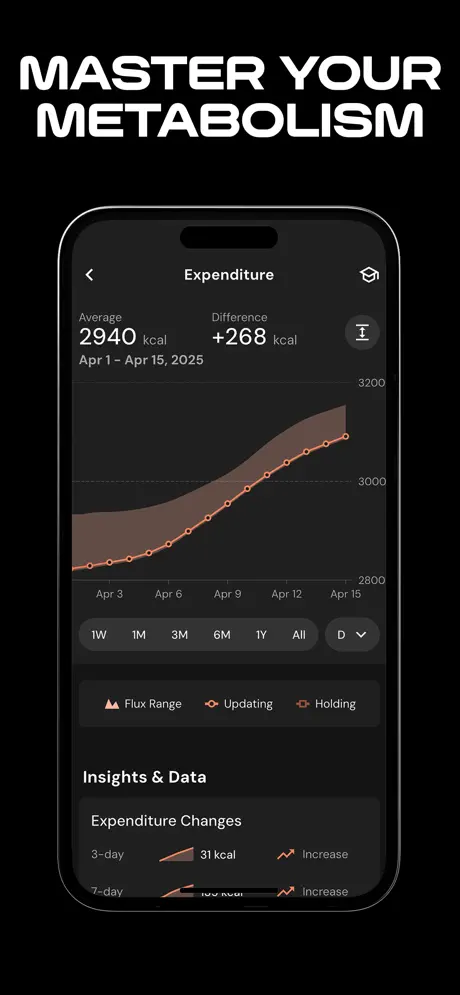
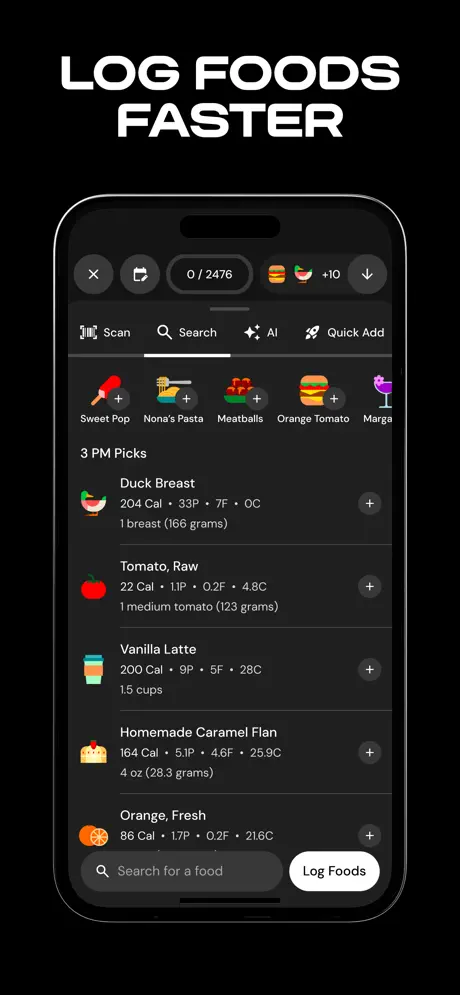
MacroFactor was built by Greg Nuckols and Dr. Eric Trexler, the same team behind Stronger By Science and the MASS research review. That research-review pedigree is something no competing consumer app can match, and it shows up in the product.
01Adaptive expenditure algorithm
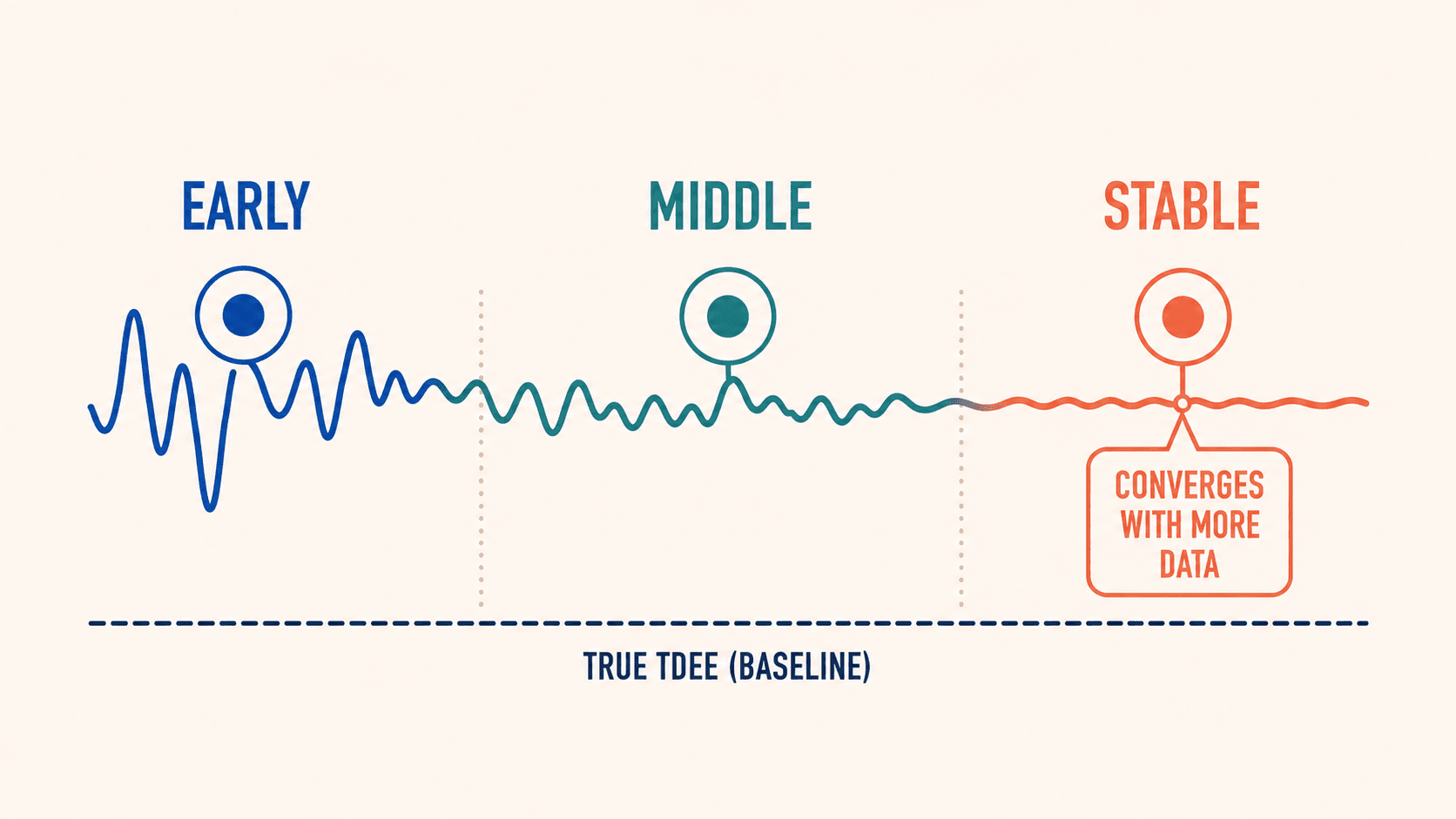
The core engine is an adaptive expenditure algorithm that models your actual energy expenditure from logged intake and weight trend, then continuously recalibrates your calorie and macro targets. After two to three weeks of consistent logging and weigh-ins, the system converges on your real TDEE rather than relying on the generic Mifflin-St Jeor estimate it starts with.
02Three coaching modes
The app operates inside three program styles. Coached fully automates your targets and adjusts every week. Collaborative gives you a weekly calorie budget you can disperse however you like across the seven days, which is the mode most powerlifters and physique athletes settle into. Manual hands the analytics over and lets you set everything yourself. Switching modes is seamless and loses no historical data, so you can move between them as your phase changes.
03Why missed days do not punish the model
The algorithm's design philosophy is adherence-neutral. If you eat above target on a given day, the model treats that as new information about expenditure rather than a violation, and on days you do not log it assumes typical intake instead of zero. The practical consequence is that refeeds, diet breaks, weekend social meals, and the occasional missed entry do not break the math. The expenditure number keeps converging, and the next week's budget reflects what actually happened. This is the explicit difference between MacroFactor and the static-target approach used by MyFitnessPal or Lose It, and it is the reason coaches in the Outlift and FeastGood communities consistently rank it first.
04AI photo logging and Workouts as separate bets
The product has expanded meaningfully in the last twelve months. April 2025 introduced AI photo logging that captures a meal photo and breaks it into editable ingredient entries pulled from the verified food database. Each entry is fully inspectable, and the system groups items into recipes you can explode into individual components when you want more control. The same release added a recipe importer and an expanded favorites system. In January 2026 the team launched the MacroFactor Workouts app with Jeff Nippard, which syncs body weight, metrics, and progress photos with the nutrition app and brings the same algorithmic philosophy to training.
05Pricing
Pricing remains $11.99 monthly, $7.99 per month on the six-month plan, and $5.99 per month on the annual plan at $71.99 per year, with a 7-day free trial. The team has held that price unchanged for six years, which is unusual in this category. The app holds 4.8 stars across more than 400,000 users, which lines up with the qualitative pattern in the reviews.
06Who MacroFactor fits
The audience fit is specific. MacroFactor is purpose-built for experienced lifters running structured cuts and bulks, coaches managing client phases through Collaborative mode, and anyone willing to weigh in daily and log most meals. It is less suited to casual calorie trackers, beginners who want a single number on a home screen, or users without a kitchen scale. The mobile-only delivery is a real constraint for desk workers who would prefer to log from a laptop, and the daily weigh-in cadence is non-negotiable if you want the algorithm to do its job.
07Sources for this review
- Stronger By Science on the MacroFactor team and methodology
- Outlift on the adaptive expenditure model
- FeastGood on paid versus free tradeoffs
- MacroFactor on the AI food logging release
- MacroFactor on the Workouts app launch with Jeff Nippard
- App Store reviews for MacroFactor
08Who should choose MacroFactor
MacroFactor is the right choice for serious lifters and coaches who weigh in daily, run structured nutrition phases, and want the most rigorous adaptive coaching engine in the category. The Stronger By Science and MASS pedigree, the two-to-three-week convergence on true TDEE, the three-mode flexibility, and the six-year stable pricing all justify the rating. For everyone else, including most people who simply want to eat better and see steady progress, the daily weigh-in burden, the mobile-only delivery, and the immediate paywall add friction that the algorithm does not pay back.
Fuel mirrors MacroFactor's three-mode structure with a different default. Fuel's adaptive layer functions like Coached mode out of the box. The plan timeline recalculates your goal completion date in real time as you log, and the daily targets adjust automatically without the user having to interpret a weekly budget. Where MacroFactor is mobile-only and demands a daily weigh-in to keep the algorithm honest, Fuel runs deep in the Apple ecosystem with first-class Apple Watch logging, on-device privacy, and Health app integration that pulls weight data when it is available rather than requiring it. Fuel pairs that with the best AI in food logging in the category. You photograph the meal or the nutrition label, describe it in voice or text, and correct the result with natural-language correction until the entry matches what you actually ate. The coach is present throughout the day rather than confined to a weekly recalibration. The live daily health score breaks down into five dimensions, the morning recap personalizes each day, and the in-depth weekly review ships with an explicit action plan. Most evaluation happens inside the free tier, so you can test the adaptive system before any paywall.