Why this page exists
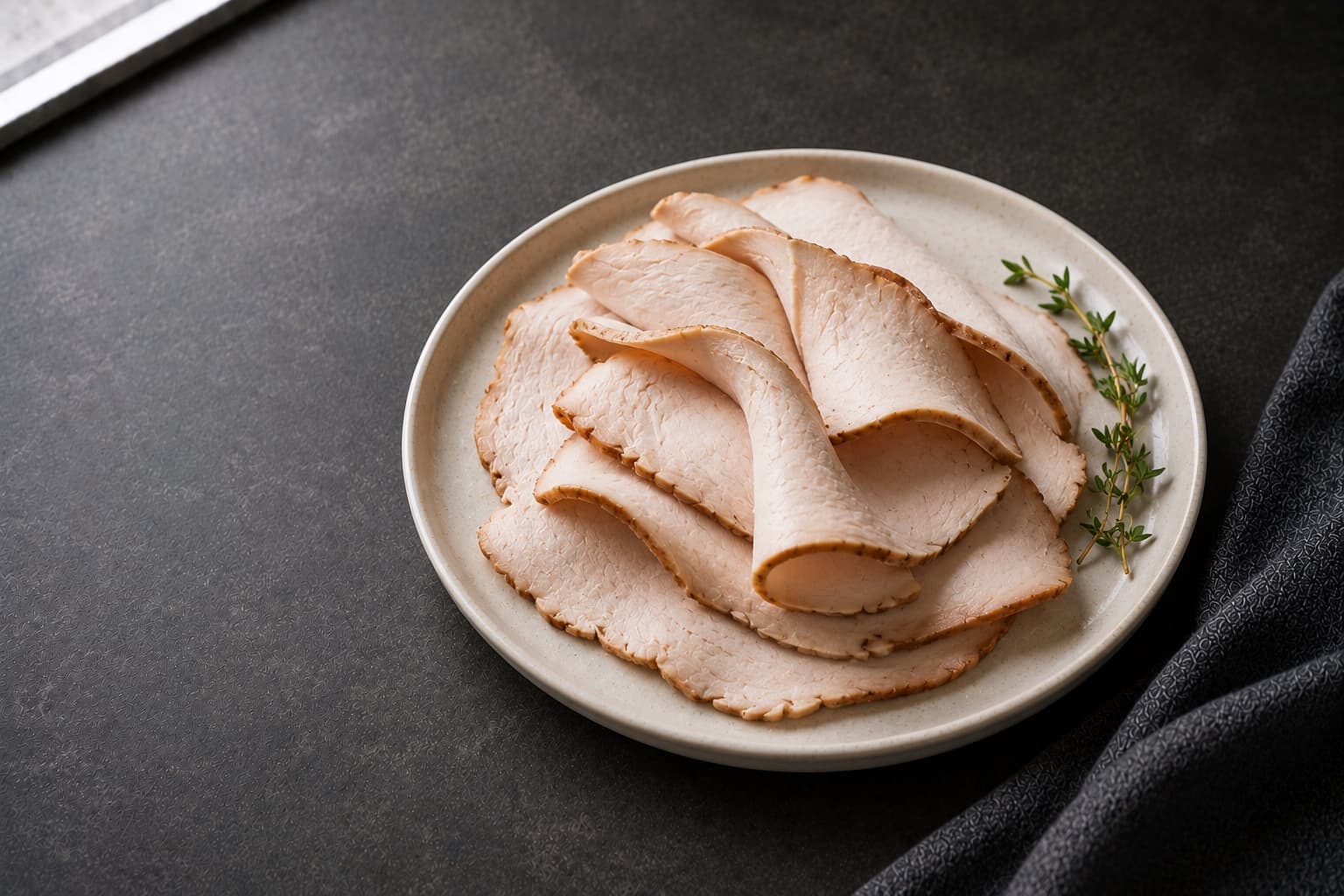
The turkey aisle sells at least three products and this page carries a record for one of them. Ground turkey labeled 93% lean, raw or pan-broiled, is what the USDA dataset behind this page reports. A 99% lean ground turkey tube sitting next to it in the same case is a different formulation with a different fat number, and a roasted whole breast or a stack of deli slices is a different cut entirely. If the log entry says "turkey" and the package in your hand says something other than 93/7 ground, the record on this page is not describing what you ate.
Everything below is scaled from the two records this page carries, raw and pan-broiled, both 93% lean. The serving control changes the amount, the variant selector changes which state you're looking at, and every figure carries the FDC identifier it came from.
What is in a serving
Every figure below is scaled from the USDA record named at the bottom of this panel.
Serving basisgrams
100 gof Ground 93/7, raw
- Calories
- 153 cal
- Protein
- 17.3 g
- Carbs
- 0 g
- Fat
- 9.6 g
| Nutrient | Per serving100 g | Per 100 greference |
|---|---|---|
| Calories | 153 cal | 153 cal |
| Protein | 17.3 g | 17.3 g |
| Carbs | 0 g | 0 g |
| Fat | 9.6 g | 9.6 g |
| Fiber | not reportedUnavailable. This record does not report fiber. | not reportedUnavailable. This record does not report fiber. |
| Sugar | not reportedUnavailable. This record does not report sugar. | not reportedUnavailable. This record does not report sugar. |
| Sodium | 80 mg | 80 mg |
Fiber and Sugar are not reported on Ground 93/7, raw.
A nutrient the record does not measure shows as — and never as 0. A zero here is a measured zero.
FDC 2514747USDA Foundation FoodsTurkey, ground, 93% lean/ 7% fat, rawPublished April 20, 2023
The records behind this page
One food family, 2 source records. The figures are per 100 g, which is the basis the USDA publishes and the only fair way to compare records whose servings differ.
| Record | Caloriescal | Proteing | Carbsg | Fatg | Fiberg | Sugarg | Sodiummg |
|---|---|---|---|---|---|---|---|
| Turkey, Ground, 93% Lean/ 7% Fat, RawFDC 2514747FoundationRawShown by default | 153 | 17.3 | 0 | 9.6 | not reportedUnavailable. This record does not report fiber. | not reportedUnavailable. This record does not report sugar. | 80 |
| Turkey, Ground, 93% Lean, 7% Fat, Pan-Broiled CrumblesFDC 746785Foundation | 220 | 27.1 | 0 | 11.6 | not reportedUnavailable. This record does not report fiber. | not reportedUnavailable. This record does not report sugar. | 90 |
Logging ground turkey without guessing
93/7 is the fat level this page can quote, and it is a real number, not a rounding of "lean." Per 100 g, raw 93/7 reports 153 calories, 17.3 g of protein, and 9.6 g of fat. That is closer to 85/15 ground beef territory than to a lean poultry breast, because "93% lean" describes the ratio of lean tissue to fat by weight in the grind, not a claim about how the finished macros compare to chicken. A reader who buys 93/7 because it says "turkey" and expects chicken-breast numbers is buying the wrong product for that goal. If the package says 99% lean, this page cannot quote it. That formulation is closer in composition to turkey breast, and turkey breast is the exact figure this family dropped for want of a USDA record. Weigh it and log it as its own thing until a source-backed record exists.
Cooking concentrates the grind the same way it concentrates chicken breast. Raw 93/7 reports 153 calories and 17.3 g of protein per 100 g. Pan-broiled crumbles of the same 93/7 grind report 220 calories and 27.1 g of protein in the same 100 g, roughly 44% more calories and 57% more protein. Nothing was added by the pan. Water left the meat, and the protein and fat that were always there now sit in a smaller mass. This is the same water-loss mechanism documented on the chicken breast page: cook the grind, weigh what's left, and log the cooked record rather than scaling the raw one down by eye.
Weigh raw when you can, weigh cooked when you can't, and log the record that matches which one you did. Raw 93/7 at the USDA reference amount of 114 g logs at 19.7 g of protein. Cook that same 114 g and it will weigh less once it comes out of the pan, and it now belongs against the cooked record, not the raw one scaled down after the fact. If you're working from a browned batch with no raw weight to check, USDA's own portion for pan-broiled crumbles, 155 g, reports 42 g of protein for 341 calories, a real weight to check a kitchen scale against.
Sodium moves with the state, not by much, and neither number reflects added seasoning. Raw reports 80 mg per 100 g, pan-broiled reports 90 mg. Both are what an unseasoned grind carries on its own. A pre-seasoned patty, a breakfast sausage blend, or a marinated cutlet will run well outside that band, and neither record here represents it. Log those from the package label when one exists.
Fiber and sugar report as unavailable on both records, a gap in what the USDA measured rather than a claim about the food. Neither the raw nor the pan-broiled record carries a fiber or sugar figure, so the table marks both unavailable rather than filling in a zero. Ground turkey has no meaningful carbohydrate content either way, carbs read 0 g on both records, but an unmeasured fiber figure and a measured zero are different claims and this page only has grounds for the first.
Where ground turkey fits, and where it does not
The swap from chicken breast is about the skillet, not the macros. Raw skinless chicken breast reports more protein and less fat per 100 g raw than 93/7 ground turkey does, and the gap does not close once both are cooked. A reader reaching for ground turkey instead of chicken breast is usually doing it because ground meat browns faster, holds a taco seasoning better, or breaks the week's monotony, not because the nutrition label improved. That's a legitimate reason to buy it. It is not a reason to expect the protein-per-calorie ratio to beat chicken breast, because on this page's own numbers it does not.
A skillet meal is exactly the raw-versus-cooked pair this page was built to cover. Recipes that call for "1 lb ground turkey" are specifying the raw weight, and the plate that gets served afterward weighs less and reports different numbers per 100 g. Log the raw record against what came out of the package, log the cooked record against what went on the plate, and treat those as two different lookups for the same cooking session rather than one number carried through.
Where this page cannot follow you. If what's actually in the fridge is a roasted whole breast, a rotisserie half, or deli slices from the counter, this page has no record for any of them. Ground turkey and turkey breast are different cuts with different fat content, and folding a breast or a deli slice into the ground 93/7 numbers here would understate the protein and overstate the fat for what you're eating. Log those as a separate entry, from a package label when one exists, until a source-backed record covers them.
The decision rule for the whole page is short. Confirm the package says 93/7 before you log against either record here, match raw or pan-broiled to the state on the scale, and send turkey breast, deli slices, and any 99% lean product elsewhere, because none of them are what these two records describe.
Where it fits against a goal
Weighing the raw grind before it goes in the pan
114 g of Turkey, Ground, 93% Lean/ 7% Fat, RawFDC 2514747
- Protein
- 19.7 g
- Calories
- 174 cal
- Fat
- 10.9 g
114 g is the USDA reference amount for raw 93/7 ground turkey, and it logs at 19.7 g of protein for 174 calories and 10.9 g of fat. That figure will look low next to the cooked numbers further down this page. The gap is water that has not left the meat yet, not a smaller portion.
Logging a skillet batch by what's in the pan, not the package
155 g of Turkey, Ground, 93% Lean, 7% Fat, Pan-Broiled CrumblesFDC 746785
- Protein
- 42 g
- Calories
- 341 cal
- Fat
- 18 g
USDA's own cooked portion for pan-broiled crumbles is 155 g, and it reports 42 g of protein for 341 calories and 18 g of fat. If the raw package promised four servings before it hit the heat, weigh what's actually in the pan afterward and log against this record instead of dividing the raw weight by four.
Clearing a per-meal protein floor after cooking
114 g of Turkey, Ground, 93% Lean, 7% Fat, Pan-Broiled CrumblesFDC 746785
- Protein
- 30.9 g
- Calories
- 251 cal
114 g of cooked crumbles, the same reference weight the raw record uses, clears 30.9 g of protein for 251 calories. That is enough on its own to anchor a per-meal target. Weigh the cooked crumbles to 114 g rather than assuming a raw quarter-pound patty lands there once it shrinks.
Where this page stops short of the data
One claim this page would like to make does not resolve to a record in the dataset. Each one carries the decision that was made about it.
Claim dropped
Per-100-g figures for turkey breast, whether roasted whole or sliced as deli meat
No record supports this, so the page does not say it. There is no estimate standing in for the missing figure.
Methodology
Where the numbers come from
Every figure on this page is scaled from a per-100 g value in a USDA record by one shared function, so the numbers here and the numbers on a meal page that uses this ingredient cannot disagree. Values are rounded once, at the point of display.
- FDC 2514747Turkey, ground, 93% lean/ 7% fat, rawUSDA Foundation Foods
- FDC 746785Turkey, ground, 93% lean, 7% fat, pan-broiled crumblesUSDA Foundation Foods
Unavailable values
A nutrient a record does not measure is shown as unavailable and never as zero. Across the 405 records in this dataset, 165 report no fiber and 228 report no sugar, so the distinction is not a rare edge case. A zero on this page means the analysis measured zero.
Source coverage
This family has 1 recorded gap between the editorial brief and the dataset, each shown above with the decision made about it.
Datasets
- USDA FoodData Central Foundation FoodsExport 2026-04-30 · 363 of 395 entries normalized
- USDA FoodData Central SR LegacyExport 2018-04 · 42 of 7793 entries normalized