
Key Takeaways
Lifesum and Noom both aim to be more than basic calorie counters. Lifesum uses AI-powered logging and lifestyle features, while Noom uses behavioral psychology and human coaching. Both have compelling ideas. Both have execution problems that seriously undercut those ideas. Lifesum is seven times cheaper but less ambitious. Noom's coaching has genuine depth but sits on top of an app that frequently does not work.
01About Lifesum
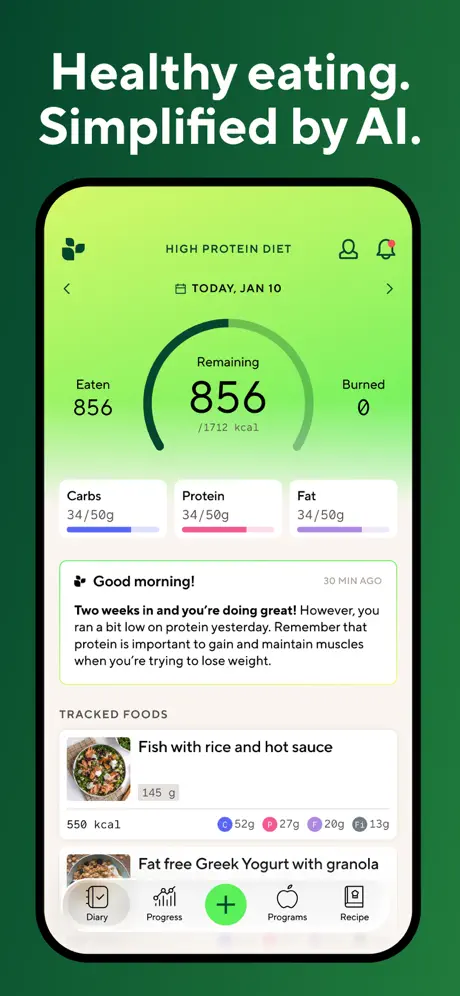
Lifesum is a lifestyle-oriented nutrition app that pivoted to AI-powered text logging in a major recent update. The vision: replace tedious food database searching with natural language descriptions that AI converts to nutritional estimates. The app also offers diet plans covering popular approaches (keto, intermittent fasting, Mediterranean, and others), a recipe library, and a Life Score gamification system that rates wellness across food quality, hydration, and activity.
The execution has not matched the vision. AI accuracy is questioned, the ability to correct AI-generated entries was removed, and the tracker breaks after updates with features reverting to previous behavior without explanation. Structured meal slots were replaced with a flat list that mis-assigns foods to wrong meals. Paid users report periods where food entry simply fails. At $9.99/month, the Premium subscription buys access to features that may not work as described.
02About Noom
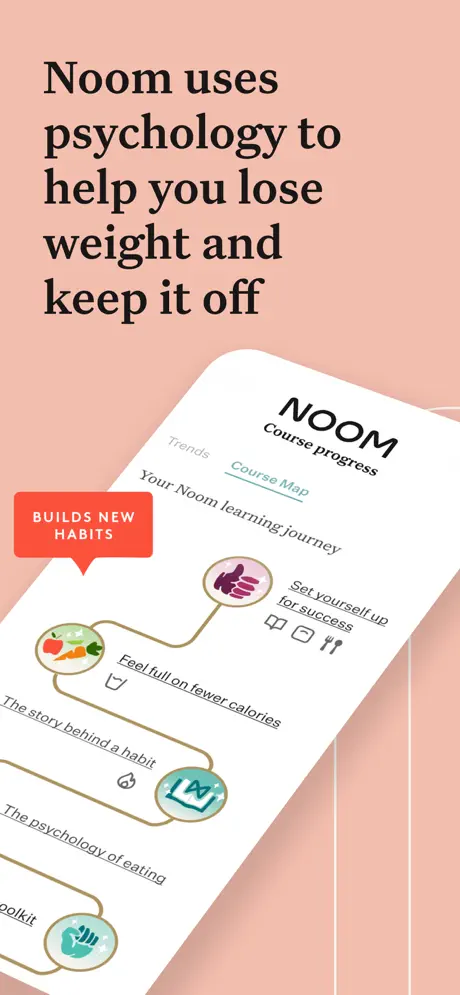
Noom is a behavioral psychology program delivered through a mobile app. The core product is a coaching curriculum, not a calorie tracker. Daily content modules teach food psychology, build awareness of eating patterns, and introduce behavioral change frameworks backed by clinical research. A human coach provides accountability and guidance. The approach is intellectually coherent and the content has genuine depth for users who engage with it.
The app, however, is a different story. Noom's technical execution is among the weakest in the category. The app frequently fails to load. The recommended fix (reinstalling) resets all user preferences and progress context. Food logging is basic manual search with no barcode scanning, no photo capability, no voice input, and no meal copying between days. Customer support is effectively unreachable. At approximately $70/month, Noom asks a significant premium for coaching content delivered on an unreliable platform.
03Coaching style and daily feedback
This is Noom's clear strength and the core reason for the price difference. Noom's psychology-based modules, daily lessons, and human coach access represent a genuine attempt to change how you think about food and count what you eat. The content covers emotional eating, portion perception, habit formation, and food categorization through a color-coding system. Users who engage deeply with the curriculum report meaningful shifts in their relationship with food.
Lifesum offers diet plans and recipes behind its subscription, plus the Life Score wellness gamification. These are curated content packages and behavioral nudges, not structured coaching. The diet plans provide guidance on what to eat but do not adapt to your behavior or address the psychology behind your choices. There is no human coach, no daily curriculum, and no behavior change framework.
Winner: Noom. Genuine psychology-based coaching with human accountability is categorically different from static diet plan content.
04How each app handles food logging
Both apps have significant logging weaknesses, but in different ways.
Lifesum's AI text logging is faster in concept. Describe your food and get an estimate. The implementation problems are fundamental: accuracy is questioned, corrections were removed, and the flat meal list mis-assigns foods. The speed advantage disappears when you cannot trust or fix the output.
Noom's logging is an afterthought to the coaching content. Manual search only, with no barcode scanning, no photo input, no voice logging, and no meal copying between days. The database is limited, manual entries behave inconsistently, and the overall logging experience feels like it was built to check a box rather than serve as a daily tool. Noom exists to teach you about food, not to help you log it efficiently.
Winner: Lifesum. Despite the AI accuracy issues, text-based logging is faster and more capable than Noom's basic manual search with no barcode support.
05Crashes and day-to-day stability
Both apps have serious stability problems. This is a remarkable situation for tools that people depend on multiple times daily.
Lifesum's AI pivot introduced instability. The tracker breaks after updates, behavior reverts without explanation, features appear and disappear between versions, and paid users report periods where food entry fails entirely. What was a reliable tracker became unpredictable.
Noom's reliability problems are more fundamental. The app frequently will not open at all. Users launch the app and encounter a blank screen or an infinite loading state. The official recommendation is to reinstall, which resets all your preferences, coach conversation history context, and customized settings. This cycle repeats with some regularity. Customer support, when issues arise, is effectively unreachable.
Both apps fail, but Noom's failures are more severe. An app that does not open is worse than an app with feature regressions.
Winner: Lifesum. Feature instability is bad, but at least the app opens.
06Free tiers and paid walls
The gap is enormous. Lifesum Premium costs $9.99/month ($119.88/year). Noom costs approximately $70/month for shorter plan commitments, with discounts for longer terms that still place it well above $40/month.
Noom's price includes human coaching access, which explains part of the premium. But at roughly seven times the cost of Lifesum, the value proposition depends entirely on how much you engage with the psychology content and coaching. Users who read every lesson and interact with their coach may find it worthwhile. Users who primarily use it as a calorie tracker are dramatically overpaying.
Winner: Lifesum. $9.99/mo versus ~$70/mo is a meaningful gap, even accounting for Noom's human coaching.
07Diet Plans & Lifestyle Features
Lifesum offers structured diet plans (keto, intermittent fasting, Mediterranean, sugar detox, and others) with a recipe library and Life Score gamification. These provide concrete guidance on what to eat and how to score your daily wellness. The features are behind the subscription but they exist as standalone tools.
Noom's approach is educational rather than prescriptive. It teaches you to categorize foods by caloric density (the green/yellow/orange system) and builds food psychology awareness. It does not provide structured meal plans or recipes. The coaching content is the product, and it expects you to apply the principles independently.
Winner: Lifesum. Structured diet plans and recipes provide immediately actionable guidance. Noom's educational approach requires more user initiative.
08Apple Watch & Integrations
Neither Lifesum nor Noom offers an Apple Watch app. Both require your phone for every interaction. For users who want wrist-based logging, at-a-glance calorie tracking, or Watch-based reminders, both apps are non-starters.
Noom integrates with some fitness platforms for step counting but has no meaningful hardware ecosystem. Lifesum's integrations are similarly limited.
Winner: Draw. Neither offers Apple Watch support or meaningful wearable integration.
09Who should pick Lifesum vs Noom
Choose Lifesum if you want a budget-friendly lifestyle tracker with AI logging, diet plans, and recipes. At $9.99/month with a free tier, Lifesum is accessible and provides concrete tools for daily use. Accept the AI instability and the loss of correction capability as the cost of a product that is still evolving. Lifesum is best for users who want practical logging and diet structure without the commitment of a coaching program.
Choose Noom if behavioral psychology coaching is your priority and you can afford approximately $70/month. Noom's curriculum and human coach access are genuinely valuable for users who engage with them, particularly those whose weight challenges are rooted in emotional eating, portion perception, or habit patterns. Accept the app reliability issues and the basic logging experience as the cost of accessing a coaching program that most competitors do not offer.
10Final pick based on your priority
Lifesum and Noom both have compelling ideas undercut by execution problems. Noom's coaching is deeper but its app is less reliable and its price is seven times higher. Lifesum's logging is more modern but its AI pivot has eroded daily dependability. Neither offers an Apple Watch experience. Both require you to accept meaningful compromises for what they deliver.
Looking for coaching that is built into a reliable daily tool, as a content program on top of a stable base? Fuel delivers correctable AI logging, daily and weekly coaching, and a stable Apple ecosystem experience at a fraction of Noom's price.
Frequently Asked Questions
Is Noom worth $70 a month?
Noom's psychology-based coaching and human coach access are genuinely valuable for users who engage with them. The content is research-backed and the behavior change framework has depth. The question is whether the app's reliability issues, frequent load failures, preference resets on reinstall, unreachable support, undermine the value of that content at a premium price.
Does Lifesum have coaching?
Lifesum offers diet plans and recipes behind its subscription, plus a Life Score wellness gamification system. These are static content packages, not adaptive coaching. They do not adjust based on your progress, and there is no human coach or daily feedback loop.
Which app is more reliable?
Neither is consistently reliable. Lifesum's AI tracker breaks after updates, with features reverting and food entry failing. Noom's app frequently will not open, and the recommended fix (reinstalling) resets all preferences. Both have serious stability problems for daily-use tools.
Can I try Noom before paying?
Noom offers trial periods, but the pricing structure is opaque and varies by plan length and promotion. Users report being charged after forgetting to cancel trials. Lifesum has a functional free tier that lets you evaluate basic features without entering payment information.
Do either app work on Apple Watch?
Neither Lifesum nor Noom offers an Apple Watch app. Both require your phone for every interaction. If wrist-based tracking matters, neither is an option.