
Key Takeaways
Lifesum and MyFitnessPal take different approaches to the same market. MyFitnessPal is the incumbent with the largest food database and strongest brand recognition. Lifesum is the challenger, pivoting to AI-powered logging to leapfrog database dependency. MyFitnessPal is more stable and has better coverage. Lifesum is cheaper, has more lifestyle features, and offers a forward-looking logging approach that has not stabilized. Neither provides coaching.
01About Lifesum
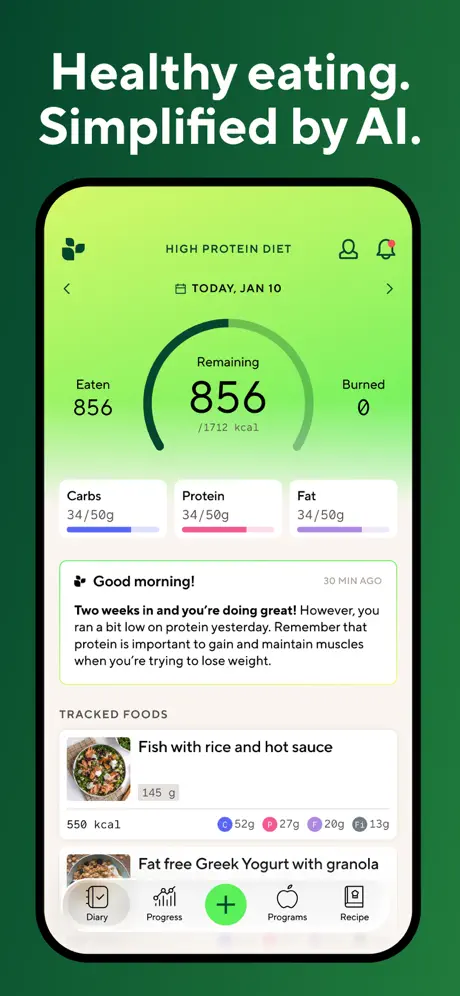
Lifesum is a lifestyle-oriented nutrition app that pivoted to AI-powered text logging in a recent major update. Instead of searching a food database, you describe what you ate in natural language and the AI estimates the nutritional content. The app wraps this with diet plans (keto, intermittent fasting, Mediterranean, and others), a recipe library, and a Life Score system that gamifies your overall wellness across food quality, hydration, and activity.
The pivot has been problematic. AI accuracy is questioned by users, the ability to correct AI-generated entries was removed, structured meal slots were replaced with a flat list that mis-assigns foods to wrong meals, and the tracker breaks after updates. Paid users at $9.99/month report periods where food entry fails entirely. Lifesum's vision is more ambitious than MyFitnessPal's, but the execution gap is significant.
02About MyFitnessPal
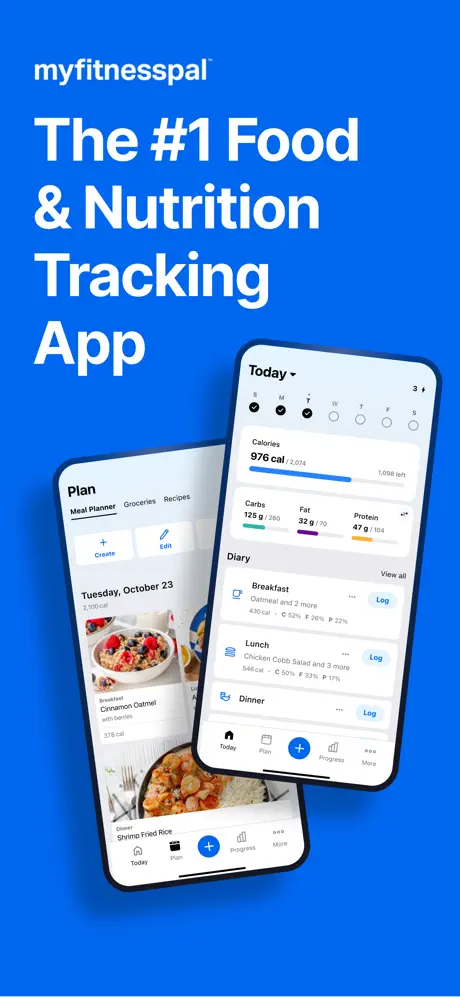
MyFitnessPal is the most widely used calorie tracking app in the world, built around a 14-million-entry crowd-sourced food database. The workflow is traditional: search the database, select a food, choose a serving size, and log it. Barcode scanning provides the fastest path to logging packaged foods but is now locked behind a $19.99/month Premium subscription.
The brand recognition is unmatched. More people have used MyFitnessPal than any other nutrition app, and the database benefits from that scale. The trade-offs are monetization and stagnation: the free tier is cluttered with intrusive ads (including graphic food imagery in the log feed), the $19.99/month Premium is among the category's most expensive, and the app offers no coaching, no adaptive goals, and no lifestyle features beyond basic calorie and macro tracking.
03How each app handles food logging
MyFitnessPal's logging is powered by the largest food database available. Whatever you eat, branded products, restaurant meals, international items, generic ingredients, you will almost always find an entry. The database is crowd-sourced, so accuracy varies, but scale provides natural redundancy: multiple entries for the same product let you cross-reference and pick the most plausible one. The critical limitation is the barcode paywall: the most practical logging shortcut costs $19.99/month.
Lifesum's AI text logging bypasses the database entirely. Describe what you ate and the AI generates an estimate. When the AI is accurate, this is genuinely faster than search-and-select. The problems are fundamental: accuracy is inconsistent, corrections were removed in the pivot update (meaning you cannot fix errors), and the flat meal list that replaced structured slots regularly assigns foods to the wrong meal. You trade database dependency for AI dependency, and Lifesum's AI is not reliable enough to justify that trade.
Winner: MyFitnessPal The largest database with verifiable entries beats unverifiable AI estimates that cannot be corrected, even with the barcode paywall.
04Pricing & Value
Lifesum Premium costs $9.99/month ($119.88/year). MyFitnessPal Premium costs $19.99/month ($239.88/year). Lifesum is exactly half the price.
At the free tier level, Lifesum offers a cleaner experience. Ads are minimal, and basic tracking is usable without constant visual intrusion. MyFitnessPal's free tier is dominated by ads (including graphic food imagery that appears in your food log feed) and locks barcode scanning behind the paywall, which degrades the core logging workflow.
The value question: Lifesum gives you more for less money (AI logging, diet plans, recipes, Life Score), but the core AI logging is unreliable. MyFitnessPal gives you less for more money (database search, barcode scanning, no coaching), but what it gives you works consistently. Stability carries a premium.
Winner: Lifesum Half the price with more features, even accounting for the instability trade-off.
05Lifestyle Features & Diet Plans
Lifesum offers structured diet plans behind its subscription (keto, Mediterranean, intermittent fasting, sugar detox, and others). A recipe library provides meal ideas aligned with your chosen plan. The Life Score system gamifies your overall wellness. These are genuine features that MyFitnessPal does not match.
MyFitnessPal has community features, a recipe importer that pulls nutrition from URLs, and a large ecosystem of third-party integrations. But there are no structured diet plans, no lifestyle scoring, and no curated approach to what you should eat. MFP tells you what is in your food. It does not tell you what food to choose.
Winner: Lifesum Diet plans, recipes, and lifestyle scoring provide guided structure that MyFitnessPal does not offer.
06Crashes and day-to-day stability
MyFitnessPal is the more stable daily tool. Despite its monetization issues, the core tracking experience works consistently. Database search returns results, entries save correctly, and features do not regress between updates. The app delivers a predictable daily experience.
Lifesum's AI pivot introduced serious instability. The tracker breaks after updates, behavior reverts without explanation, and paid users report being unable to add foods during certain periods. Feature availability fluctuates between versions. For a daily-use tool, predictability matters more than ambition, and Lifesum cannot guarantee the former.
Winner: MyFitnessPal Consistent daily reliability versus unpredictable post-update breakage.
07Ads & User Experience
Lifesum's free tier has minimal advertising. The interface is clean, and subscription prompts are standard rather than aggressive. The design (when it works) is pleasant.
MyFitnessPal's free tier is aggressively ad-supported. Graphic food imagery from advertisers appears directly in the food log feed. Banner ads persist throughout the interface. The visual experience on the free tier feels designed to push you toward Premium rather than function as a standalone product.
Winner: Lifesum Minimal ads versus graphic food imagery in the log feed.
08Apple Watch logging and Health sync
MyFitnessPal offers basic Apple Watch logging (quick food entry from your wrist). It is not a comprehensive companion experience, but it exists.
Lifesum has no Apple Watch app. There is no wrist-based logging, no calorie checking, and no Watch integration of any kind.
Winner: MyFitnessPal Basic Watch logging versus nothing.
09Who should pick Lifesum vs MyFitnessPal
Choose Lifesum if you want AI-powered logging with diet plans and lifestyle features at half the price of MyFitnessPal Premium. Lifesum appeals to users who want guidance on what to eat (with diet structure and recipe recommendations) and who are willing to accept instability for a more ambitious product vision. If you actively use diet plans and recipes, Lifesum offers meaningfully more than MFP.
Choose MyFitnessPal if food database coverage and logging reliability are your top priorities. The 14-million-entry database is unmatched, and the daily experience is predictable. If you need the broadest possible food coverage and can afford $19.99/month (or tolerate the ad-heavy free tier), MyFitnessPal is the established choice. Accept the absence of coaching and lifestyle features as the trade-off for scale.
10Final pick based on your priority
MyFitnessPal wins on stability and database coverage. Lifesum wins on price, lifestyle features, and ad-free experience. Both have significant weaknesses: MFP's barcode paywall and intrusive ads, Lifesum's AI instability and missing corrections. Neither offers coaching or adaptive goals. Both are tracking tools that leave progress entirely to the user.
Looking for AI logging backed by coaching, without the instability or the ads? Fuel combines correctable AI logging with daily coaching, Apple Watch support, and a clean experience at a fraction of MFP Premium's price.
Frequently Asked Questions
Is Lifesum or MyFitnessPal better for weight loss?
Both can support weight loss, but neither offers coaching or adaptive goal adjustment. MyFitnessPal provides the largest food database for accurate logging if you verify entries. Lifesum provides diet plans that structure what you eat. Neither tells you what to change based on your actual progress.
Which app is cheaper?
Lifesum Premium is $9.99/month ($119.88/year). MyFitnessPal Premium is $19.99/month ($239.88/year). Lifesum is half the monthly cost. Both have free tiers, but MyFitnessPal's free tier is more ad-heavy and locks barcode scanning behind the paywall.
Does Lifesum use AI for food logging?
Yes. Lifesum pivoted to AI-powered text logging where you describe food in natural language. The accuracy has been widely questioned, and the ability to correct AI-generated entries was removed in the update. MyFitnessPal still uses traditional database search.
Can I use MyFitnessPal without paying?
Yes, but the free tier is limited. Barcode scanning requires Premium ($19.99/mo), and the free experience includes intrusive ads with graphic food imagery in your log feed. Manual database search still works without paying.
Do either app work on Apple Watch?
MyFitnessPal offers basic Apple Watch logging. Lifesum has no Apple Watch app. Neither provides a full Watch companion experience with comprehensive tracking features.