

Key Takeaways
Lifesum and MacroFactor target fundamentally different users. Lifesum is a lifestyle tracker that pivoted to AI logging. Broader features, lower barrier, less reliable execution. MacroFactor is a serious macro coaching tool with adaptive expenditure modeling. Deeper science, steeper learning curve, geographic limitations. The right choice depends on whether you want accessible breadth or rigorous depth.
01About Lifesum
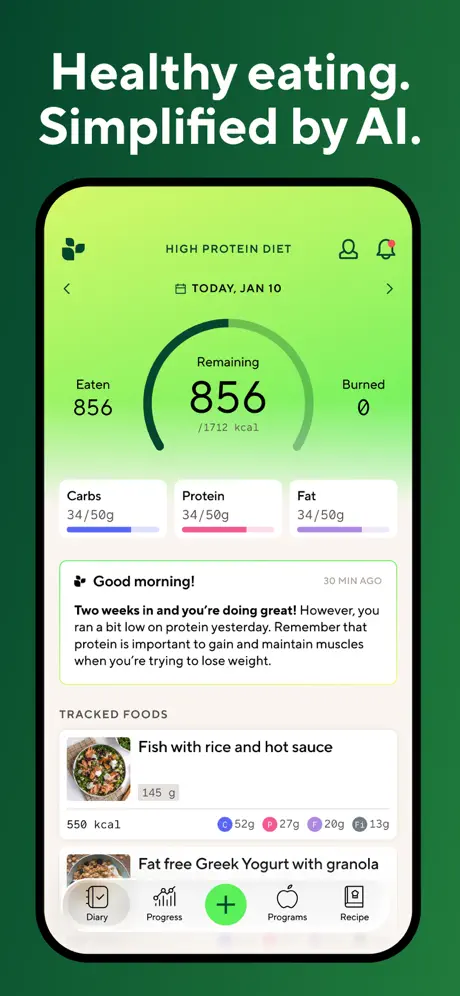
Lifesum is a lifestyle-oriented nutrition app from Stockholm that recently pivoted its core logging experience to AI-powered text input. Instead of searching a food database, you describe what you ate and the AI estimates the nutritional content. The app wraps this with diet plans (keto, intermittent fasting, Mediterranean, and others), a recipe library, and a Life Score gamification system that rates your overall wellness across food quality, hydration, and activity.
The AI pivot has been contentious. Users describe the update as replacing a functional system with an unreliable one. AI accuracy is questioned, the ability to correct entries was removed, structured meal slots were replaced with a flat list that mis-assigns foods, and the tracker breaks after updates. Sometimes reverting to pre-pivot behavior, sometimes losing functionality entirely. Lifesum's ambition is real, but its execution has not caught up. The free tier lets you explore before committing, and Premium at $9.99/month unlocks the full feature set.
02About MacroFactor
MacroFactor is a macro tracking and coaching app built by the team behind Stronger By Science, one of the most respected evidence-based fitness publications. Its defining feature is an adaptive expenditure model that tracks your logged intake alongside your body weight trends, models your actual energy expenditure, and continuously recalibrates your macro targets based on how your body responds.
This is not a static calorie target. MacroFactor adjusts as you go. If you plateau, your targets shift. If you lose faster than expected, they shift again. The science is rigorous and the implementation is stable. The trade-offs are access and geography: there is no free tier ($11.99/month from day one), the learning curve is steeper than casual trackers, and the food database has significant gaps outside North America that make it difficult for international users. MacroFactor expects committed, data-literate users and does not apologize for that.
03Coaching style and daily feedback
This is the defining difference. MacroFactor's adaptive expenditure model is genuinely unique in the nutrition app category. It does not assign a calorie target at onboarding and leave you alone. It builds a dynamic model of your metabolism from your actual data, recalibrates weekly, and presents updated targets that reflect your real-world response. Users who engage with it report that watching their expenditure model converge on reality is one of the most valuable data experiences in fitness.
Lifesum offers diet plans and recipes behind its subscription. Keto, Mediterranean, intermittent fasting, and others. These are curated content packages, not adaptive coaching. They do not adjust based on your progress, your weight trends, or your adherence patterns. The Life Score gamification system provides a wellness rating but no actionable coaching feedback. Lifesum's features are broader but shallower.
Winner: MacroFactor. Adaptive expenditure coaching that recalibrates from real data is categorically different from static diet plan content.
04How each app handles food logging
Lifesum's AI text logging is theoretically faster. Describe your food in natural language and get an estimate in seconds, no database search required. When the AI is accurate, it genuinely saves time. The problems: accuracy is inconsistent, corrections were removed in the pivot update, and the flat meal list regularly mis-assigns foods. You cannot verify what the AI logged with the same confidence as a traditional entry, and you cannot fix it when it is wrong.
MacroFactor uses traditional database search and barcode scanning. The workflow is slower. Search, select, confirm serving size. But you see exactly what you are logging and can adjust before it enters your diary. The database is reliable within its coverage area, with entries that generally match product labels. The critical limitation is geography: outside North America, coverage drops sharply, and international users report frequent gaps that make daily logging frustrating.
Winner: Conditional. MacroFactor in North America for verifiable accuracy. Lifesum internationally for coverage, despite the accuracy trade-off.
05Crashes and day-to-day stability
MacroFactor is stable. The core tracking and coaching features work consistently across updates. The expenditure model calculates reliably. The food database returns consistent results. Users do not report feature regressions or post-update breakage.
Lifesum's AI pivot introduced meaningful instability. The tracker breaks after updates, behavior reverts without explanation, and paid users report periods where food entry fails entirely. Feature availability fluctuates between app versions. For a tool you use multiple times daily, this unpredictability undermines the value of every other feature Lifesum offers.
Winner: MacroFactor. Consistent stability versus unpredictable post-update breakage.
06Ease of starting and free access
Lifesum has a clear advantage here. The free tier lets you explore basic tracking, see the interface, and evaluate the AI logging before committing. The onboarding is fast, the design is approachable, and the lifestyle framing appeals to casual health-conscious users who are not ready for macro-level precision.
MacroFactor has no free tier. You pay $11.99/month from the first interaction. The onboarding involves a detailed questionnaire, and the app's fans acknowledge that the learning curve is "annoying at first." This is deliberate. MacroFactor is built for users who are ready to engage seriously. But it means you commit financially and intellectually before you know whether the approach works for you.
Winner: Lifesum. A free tier and approachable onboarding lower the barrier meaningfully.
07Breadth of lifestyle features
Lifesum offers more categories of features: diet plans, a recipe library, Life Score wellness gamification, hydration tracking, and lifestyle content. It positions itself as a wellness companion that covers multiple dimensions of health. The feature set is broad, even if the execution on individual features is uneven.
MacroFactor is deliberately narrow. It tracks macros and models expenditure. There are no diet plans, no recipes, no lifestyle scoring, and no gamification. What it does, it does with scientific depth. What it does not do, it does not attempt.
Winner: Lifesum. Broader feature set across lifestyle categories. MacroFactor is deeper but narrower by design.
08Free tiers and paid walls
Lifesum Premium costs $9.99/month ($119.88/year). MacroFactor costs $11.99/month ($143.88/year). The monthly difference is small, about $2. Lifesum's free tier means you can evaluate before paying, while MacroFactor requires payment from day one.
The value calculation depends on what you need. MacroFactor's adaptive coaching is genuinely unique and provides ongoing value that justifies its price for serious trackers. Lifesum's broader feature set provides more categories of content but with less depth and less reliable execution.
Winner: Draw. Similar monthly costs. Lifesum has a free tier advantage. MacroFactor delivers more coaching value per dollar for its target audience.
09Who should pick Lifesum vs MacroFactor
Choose Lifesum if you want a lifestyle-oriented tracker with AI logging, diet plans, and a wellness scoring system, and you prefer to try before committing. Lifesum appeals to casual and moderate health-conscious users who want guidance on what to eat without the rigor of macro-level tracking. Accept the instability as the cost of a product that is still finding its footing after a major pivot.
Choose MacroFactor if you are a serious macro tracker who wants the most scientifically rigorous adaptive coaching available. If you are in North America, willing to pay upfront, and ready to engage with a steeper learning curve, MacroFactor's expenditure model delivers something no other app in the category matches. It is not for casual users and does not pretend to be.
10Final pick based on your priority
MacroFactor is the better product for its target audience. Serious trackers who want adaptive coaching grounded in real metabolic data. Lifesum is the more accessible product for its target audience. Casual users who want lifestyle features and AI logging without a financial commitment upfront. They rarely compete for the same user, and the right choice depends almost entirely on how serious you are about macro-level tracking.
Lifesum still does not offer an Apple Watch experience. MacroFactor now has a Watch app, but its database limitations still exclude much of the international market. Lifesum's instability undermines its ambitious feature set.
Looking for adaptive coaching with AI logging that works globally? Fuel combines a living plan timeline with correctable AI logging, Apple Watch support, and a coached free week. No geographic limitations, no post-update breakage.
Frequently Asked Questions
What is MacroFactor's adaptive expenditure model?
MacroFactor tracks your logged food intake alongside your body weight trends over time, then models your actual energy expenditure, not a generic formula estimate. It continuously recalibrates your macro targets based on how your body is actually responding. If you plateau, your targets adjust. If you lose faster than expected, they adjust again. It is real adaptive coaching, not a static calorie number.
Is Lifesum's AI logging better than a database?
In theory, AI logging is faster. Describe food instead of searching. In practice, Lifesum's implementation has accuracy problems, and the ability to correct AI estimates was removed. Traditional database search (like MacroFactor's) is slower but lets you see and verify exactly what you are logging.
Does MacroFactor work outside North America?
MacroFactor's food database has significant coverage gaps outside North America. EU and international users report that many local products are missing, making daily logging difficult. The adaptive coaching model still works, but the logging experience is compromised by database limitations.
Can I try either app for free?
Lifesum has a functional free tier that lets you explore basic tracking before paying. MacroFactor has no free tier. You pay $11.99/month from the first day. This means you commit to MacroFactor's approach before experiencing it, which is a meaningful barrier given its steeper learning curve.
Do either app have an Apple Watch app?
MacroFactor now offers a Watch app with core logging and weight tracking. Lifesum still does not offer an Apple Watch app. If wrist-based logging or at-a-glance tracking matters to you, MacroFactor now has the practical edge.