
Key Takeaways Cronometer and Noom could hardly be more different. Cronometer gives you the most accurate nutrition data available. 80+ verified micronutrients from USDA sources at $5.49/mo. Noom gives you a psychology-based behavioral coaching program with human coach access at ~$70/mo. One is a precision data instrument. The other is a mindset change program. The right choice depends on whether your challenge is informational or behavioral.
01About Cronometer
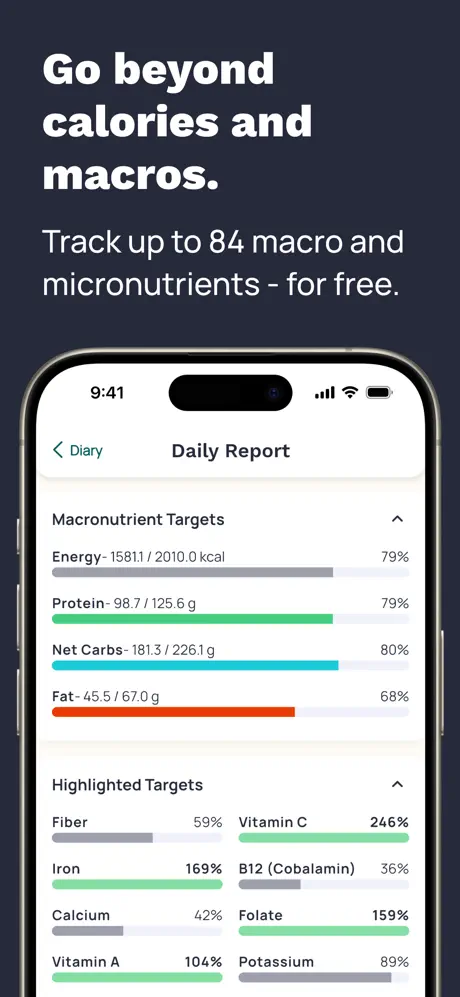
Cronometer is a nutrition tracking app built on the USDA National Nutrient Database and verified institutional sources. It is the category leader in data accuracy and micronutrient depth. Every food entry is verified against published nutritional research, and the app tracks over 80 micronutrients. Full amino acid profiles, individual B vitamins, trace minerals like selenium and manganese, omega fatty acid breakdowns, and the complete vitamin spectrum from A through K.
The app offers free barcode scanning that returns verified data, a functional free tier, and a Gold subscription at $5.49 per month for advanced reporting features. There are no ads and no upsell pressure to speak of. The interface is built for data density. You see every nutrient tracked for every food, with clear daily totals against your targets.
Cronometer's fundamental limitation is that it stops at data display. It shows you exactly what you consumed with institutional-grade accuracy, but offers zero coaching, zero behavioral guidance, and zero interpretation. There are no psychology modules, no habit-building tools, no human coaches, and no adaptive goals. You set a target manually, Cronometer shows you how your intake compares, and the rest is up to you. There is no Apple Watch app, the Daily Report scroll-resets on interaction, and consumed totals are shown without remaining calculations.
02About Noom
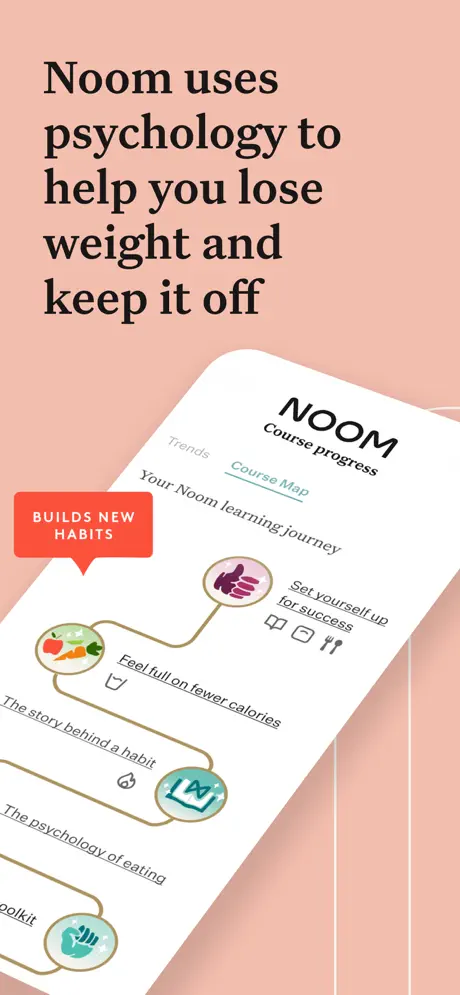
Noom is a behavioral health program that uses psychology-based coaching to help users change their relationship with food. It is primarily a coaching platform that includes a basic food tracker as a secondary tool. The core product consists of daily psychology lessons drawn from cognitive behavioral therapy and motivational interviewing techniques, access to a human coach who provides accountability and guidance, and a color-coded food categorization system (green, yellow, red) designed to simplify eating decisions without requiring precise calorie counting.
The approach is fundamentally different from traditional nutrition apps. Noom's thesis is that most people who struggle with weight or nutrition have a behavior problem. Emotional eating, unconscious portion inflation, and habit-driven food choices are addressed through the coaching curriculum rather than through more granular data.
Noom's food tracking tools reflect this philosophy. They are intentionally minimal. There is no barcode scanning, no photo logging, no voice input, no AI text logging, and no meal copying. Food search is manual only. The tracker is an afterthought. The product is the coaching content and human interaction.
The app costs approximately $70 per month depending on plan length, making it by far the most expensive option in the nutrition app category. It has no Apple Watch app. The app itself has documented reliability issues. Users report frequent load failures that require full reinstalls, which resets all preferences and coaching progress. Customer service is frequently unreachable when these issues occur.
03Database noise and accuracy sources
Winner: Cronometer
As a nutrition tracking tool, Cronometer is in a completely different class. Its USDA-verified database provides laboratory-measured nutritional values for every entry, tracking over 80 micronutrients with institutional-grade accuracy. You can see your full amino acid intake, trace mineral levels, individual B-vitamin consumption, and omega fatty acid ratios. This is the kind of granular data that clinical dietitians work with.
Noom's food tracking is intentionally shallow. The color-coded system categorizes foods by caloric density. Green foods are low-density (fruits, vegetables), yellow foods are moderate (lean meats, grains), and red foods are high-density (oils, sweets). This is useful as a quick decision heuristic but tells you almost nothing about actual nutritional content. There are no micronutrient data, no amino acid profiles, and no verified nutritional values.
For users who need accurate data (tracking a deficiency, optimizing performance nutrition, or managing a medical dietary condition), Cronometer is the only viable choice between these two.
Noom's color system does have pedagogical value as a teaching tool. Learning to distinguish caloric density at a glance can build food intuition that persists after you stop using the app. But it is a simplification designed for behavior change, not a measurement tool designed for precision. These are different things serving different purposes.
04Coaching style and daily feedback
Winner: Noom
This is Noom's entire value proposition, and it delivers something that Cronometer does not attempt. The psychology-based coaching curriculum includes daily lessons on topics like emotional eating triggers, the psychology of portion perception, habit loop identification, and cognitive reframing techniques for food-related thoughts. A human coach provides periodic check-ins, accountability, and personalized guidance.
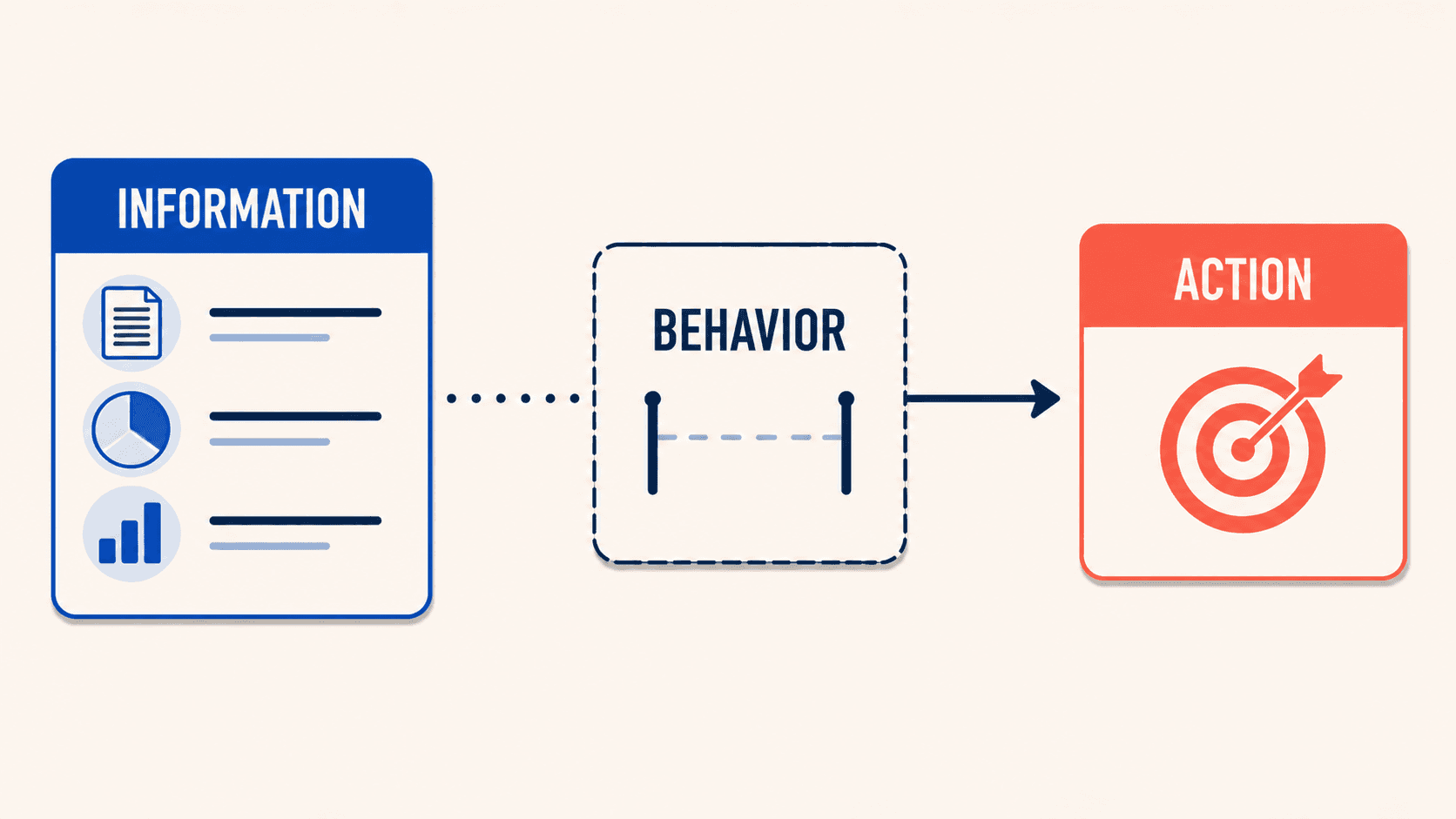
For users whose nutritional challenges are primarily behavioral (they know what they should eat but struggle to do it consistently), Noom's approach addresses a dimension that no amount of data accuracy can reach. Understanding that you consumed 2,400 calories today (Cronometer's strength) is different from understanding why you ate 800 of those calories in a stress-driven evening binge (Noom's focus).
Cronometer offers no coaching at all. No lessons, no behavioral content, no human interaction, no goal adaptation. It is a pure data instrument. For self-directed users who can translate data into action, this is fine. For users who need the behavioral layer, Cronometer leaves a fundamental gap.
The caveat: Noom's coaching quality varies by assigned coach, and the app reliability issues mean that coaching content and progress can be disrupted by technical failures. When the app fails to load and requires a reinstall, coaching progress and lesson history may be lost. This undermines the continuity that behavioral change programs depend on.
It is also worth noting that Noom's psychology curriculum is finite. After completing the lesson sequence, the ongoing value comes from coach interaction and the habits you have built. Some users report diminishing returns after the initial curriculum is complete. Cronometer's data value is inherently ongoing. Your need for accurate nutritional data does not expire.
05Food Logging Experience
Winner: Cronometer
Despite its data-dense interface, Cronometer offers a substantially better food logging experience than Noom. Cronometer provides database search with verified results, free barcode scanning, careful portion selection tools, and the ability to save custom foods and meals. The logging is precise and repeatable.
Noom's logging is the most limited of any major nutrition app. Manual text search only. No barcode scanning, no photo logging, no AI input, no voice logging, and no quick-add shortcuts. Logging a meal in Noom requires typing every food item individually and searching through results that may or may not be accurate. There is no meal copying, no recipe builder, and no way to log a complex meal efficiently.
This limitation is by design. Noom considers detailed food logging secondary to the coaching experience. For users who want to track their food with any degree of efficiency or precision, the logging experience is a significant daily friction point.
The irony is that Noom charges the highest price in the category while offering the most basic logging tools. Even free-tier apps from competitors offer barcode scanning and faster search. Users paying $70 per month might reasonably expect state-of-the-art logging convenience, but Noom delivers the opposite because its product philosophy deprioritizes the tracker entirely.
06Crashes and day-to-day stability
Winner: Cronometer
Cronometer is stable in its core functionality. The known issues (Apple Health sync gaps with re-import problems and the Daily Report scroll-reset behavior) are annoyances that do not prevent you from using the app. Your data is consistent, your history is accessible, and the tracker works every day. You can open Cronometer with confidence that it will function as expected and that your logged data will be intact.
Noom has documented reliability problems that go beyond inconvenience. Users report that the app frequently fails to load entirely, requiring full uninstall-and-reinstall cycles that reset coaching progress and preferences. Customer service is frequently unreachable during these outages. For an app that costs $70 per month and depends on consistent daily engagement with coaching content, reliability failures are particularly damaging. They disrupt the habit loop that the coaching is trying to build.
07Apple Watch logging and Health sync
Winner: Draw
Neither Cronometer nor Noom offers an Apple Watch app. Neither provides a strong Apple Health integration. This is a shared gap. Both apps leave users in the Apple ecosystem without wrist access or seamless health data connectivity.
08Free tiers and paid walls
Winner: Context-dependent
The price difference between these apps is dramatic. Cronometer Gold costs $5.49 per month. Noom costs approximately $70 per month. That is roughly thirteen times more. Cronometer also offers a meaningful free tier. Noom does not.
But comparing the prices directly is somewhat misleading because the products are fundamentally different. Cronometer is a nutrition tracking tool. Noom is a behavioral coaching program. You are paying for psychology-based curriculum, human coach access, and a behavior change framework when you pay $70 per month for Noom.
The question is whether that coaching is worth the premium. For users who have tried data-driven approaches and failed because their challenges are behavioral, Noom's price may be justified. For users who can self-direct with accurate data, Cronometer delivers more per dollar by a massive margin.
The reliability issues complicate Noom's value proposition significantly. Paying premium pricing for a service that intermittently fails to load and offers limited customer support when it does is a real concern. A behavioral change program that depends on daily engagement loses its effectiveness when the app blocks that engagement through technical failures.
For users considering the investment, it may be worth trying Noom's shortest available plan to evaluate whether the coaching quality justifies the ongoing cost before committing to a longer subscription.
09Who should pick Cronometer
Cronometer is the right choice for self-directed users who know what to do with nutritional data and just need the most accurate numbers available. If you are tracking micronutrients, managing dietary intake for health optimization, supporting athletic performance, or want the verified truth about what you eat, Cronometer is unmatched. At $5.49 per month, it is also among the best values in the category. The absence of coaching is only a limitation if coaching is what you need. For users who already have nutritional knowledge and just need a reliable instrument to measure their diet, Cronometer is the best tool in the category by a wide margin.
10Who should pick Noom
Noom is the right choice for users whose primary challenge is behavioral, not informational. If you understand calories conceptually but struggle with emotional eating, unconscious portion sizes, or breaking entrenched food habits, Noom's psychology-based coaching addresses a dimension that data tools ignore. The human coach access adds accountability. The price is high and the app has reliability issues, but for users who have tried and failed with data-only approaches, the behavioral framework may be what makes the difference. Just be prepared for a minimal tracking experience and occasional app instability.
11Final pick based on your priority
Cronometer and Noom solve entirely different problems. Cronometer gives you the most accurate nutrition data available and trusts you to act on it. Noom gives you behavioral coaching and trusts that mindset change will drive better eating with only basic food tracking along the way. One is a precision data instrument at $5.49 per month. The other is a psychology program at $70 per month. Neither is wrong. They serve different needs.
What neither provides is the combination: accurate data with daily coaching that helps you act on it. If you want verified nutritional tracking alongside actionable daily guidance, Apple Watch support, and a coaching loop that translates data into decisions, Fuel brings the data and the guidance together. Precision and coaching without choosing between them.