
Key Takeaways
- Carb Manager is the better dietary toolkit. Purpose-built keto tracking, meal plans, free barcode scanning, and a functional free tier at $7.99/mo. - Noom is the better behavioral change program. Psychology-based coaching with a human coach, but at roughly $70/mo with significant app reliability issues. - These apps solve fundamentally different problems: Carb Manager answers "what should I eat on keto?" while Noom answers "why do I eat the way I do?"
01About Carb Manager
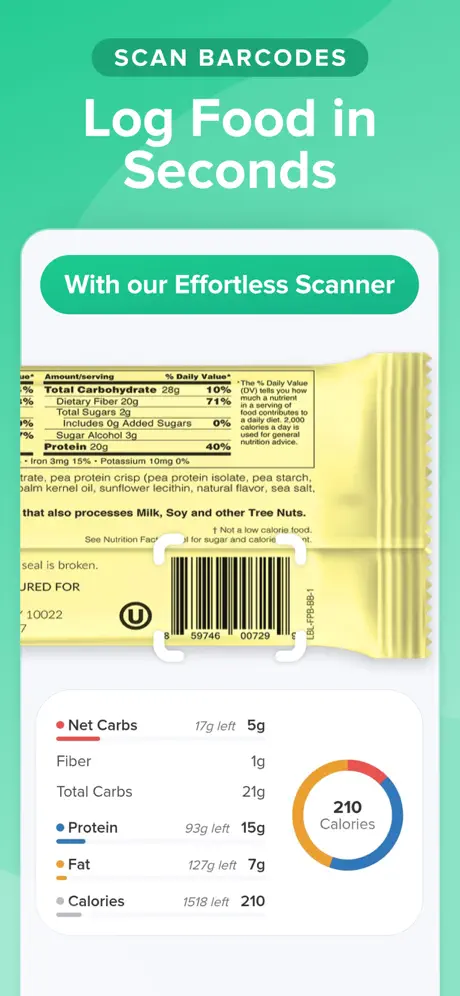
Carb Manager is a nutrition tracking app purpose-built for keto and low-carb diets. It features net carb tracking with proper fiber and sugar alcohol subtraction, ketosis targets that monitor your daily carb range compliance, a weekly meal plan builder with a large keto recipe library, and free barcode scanning on all tiers. The core tracking experience is generally stable and reliable for daily use, and the app provides a structured framework for users committed to low-carb eating. Carb Manager Premium costs $7.99 per month and unlocks the full meal planning suite. There is a functional free tier, no coaching, no behavioral content, and no Apple Watch companion.
02About Noom
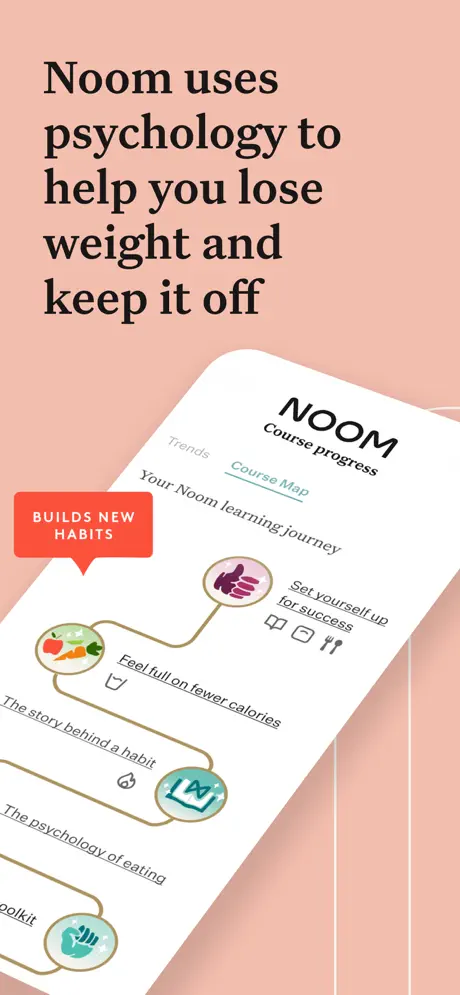
Noom is a behavioral psychology coaching program delivered through a mobile app, designed to change your relationship with food rather than just track what you eat. The program provides daily psychology lessons about eating behavior and habit formation, a structured curriculum that builds self-understanding over weeks and months, and access to a human coach for personalized guidance and accountability. The food logging component is deliberately minimal. Manual search only, with no barcode scanning, no photo input, and no voice logging. Noom costs roughly $70 per month depending on plan length and promotional pricing, making it among the most expensive nutrition-related apps available. The app has documented reliability issues including load failures that require full reinstallation, which resets user preferences and curriculum progress.
03Diet tools vs behavior psychology
Carb Manager is a keto toolbox. Noom is a behavior-change curriculum. Carb Manager says: here is the dietary framework (keto), here are the specific tools to follow it (net carb tracking, meal plans, recipes, ketosis targets), and here is how to measure whether you are succeeding (macro compliance). It is a comprehensive toolbox that assumes you already understand why you want to change your diet and provides the instruments to execute that change effectively.
Noom says: before worrying about what you eat or how much you eat, let us understand why you eat the way you do in the first place. The psychology curriculum addresses emotional eating triggers, the relationship between stress and food choices, cognitive patterns that drive overconsumption, the formation and disruption of habits, and the deeper motivations behind eating behaviors. The human coach adds a personalized layer that no automated tool can replicate. Someone who reads your check-ins and responds with tailored guidance.
These are not competing products solving the same problem. They are complementary approaches addressing different aspects of the nutrition challenge. Users who lack dietary tools (who know their psychology but need a framework to follow) need Carb Manager. Users who lack self-understanding (who know they should eat differently but cannot sustain the change) need Noom. Users who lack both need something that neither app provides.
Winner No clear winner. These apps solve fundamentally different problems, and the "better" choice depends entirely on which problem you actually have.
04Food Logging Speed and Capability
Carb Manager is the dramatically better food logging tool, and this is not a close comparison. Free barcode scanning on all tiers allows fast logging of packaged foods. Keto-specific database entries include proper net carb calculations with fiber and sugar alcohol subtraction already handled. Standard food search covers a reasonable range of generic and branded items. The logging experience has friction points. Copying meals from previous days requires multiple taps with no bulk option, and water logging uses fixed 8-ounce increments that cannot be customized. The core workflow is functional, reliable, and reasonably efficient for daily use.
Noom's food logging is minimal by deliberate design, and it shows. Manual search is the only input method. There is no barcode scanning, no photo recognition, no voice input, and no text-based AI logging. The search interface lacks the speed features that make daily compliance easier, such as quick-add from recent foods, meal copying, or favorites lists. Noom treats logging as a means to an end, a tool for building awareness of patterns, rather than as a precise, efficient data-capture system. If accurate and efficient food tracking matters to your daily experience, Noom's logging is genuinely inadequate by modern standards.
Winner Carb Manager. Significantly better logging tools across every dimension, from barcode scanning to database depth to daily workflow efficiency.
05Coaching style and daily feedback
Noom's coaching is its core value proposition, and it is something Carb Manager does not attempt to offer at any level. The psychology curriculum covers meaningful territory: emotional eating triggers and how to identify them, the relationship between stress, sleep, and food choices, the science of habit formation and how to build or break habits deliberately, strategies for sustaining behavior change through motivation dips, and cognitive reframing techniques for food-related decisions. The content is structured as daily lessons that build on each other over weeks, creating a progressive educational experience.
The human coach component adds personalization that automated systems cannot replicate. A real person reads your check-ins, understands your context, and provides tailored feedback and accountability. Coach quality varies. Some users report deeply engaged coaches while others describe formulaic responses. The concept of human coaching in a nutrition context is genuinely valuable for users who struggle with consistency and self-direction.
Carb Manager offers net carb targets and ketosis goals but no coaching or behavioral support whatsoever. The app does not help you understand why you overeat, does not provide strategies for consistency, does not adapt its guidance based on your behavior patterns, and does not offer any form of human or automated coaching. It is purely a measurement and planning tool. If you struggle with the behavioral and psychological side of nutrition (maintaining consistency, managing emotional eating, building sustainable habits) Carb Manager provides zero support.
Winner Noom. Genuine coaching with psychological depth and human personalization that Carb Manager does not offer at all.
06App Reliability and Daily Experience
Carb Manager's core tracking experience is generally stable and reliable. The meal plan builder has well-documented crashes and filter failures. The fundamental logging and tracking workflow (searching for foods, scanning barcodes, reviewing daily totals, checking ketosis compliance) works reliably every day. App updates do not typically break core functionality, and users can count on the tracking experience being available when they need it without worrying about whether the app will load.
Noom's app reliability is a serious and documented problem that directly undermines its value proposition. Users report frequent load failures. The app simply will not open. Full reinstallation is required. Reinstalling resets preferences, loses progress through the psychology curriculum, and disrupts the coaching relationship. Customer service is extremely difficult to reach for support. This creates a frustrating cycle. The app breaks, you cannot get help, you reinstall and lose your history. For an app that costs roughly $70 per month and depends on daily engagement with a progressive curriculum, this level of unreliability is particularly damaging. A coaching program only works if you can access it consistently.
Winner Carb Manager. A $7.99/mo app that works reliably every day is more useful than a $70/mo app that frequently refuses to load and loses your progress when you reinstall.
07Meal Planning and Dietary Structure
Carb Manager's weekly meal plan builder generates keto-tuned plans with recipes, nutritional breakdowns, and consolidated shopping lists. The builder has stability issues (documented crashes and unreliable preference filters). The concept provides genuine daily value for users who want structured guidance on what to eat. The keto recipe library is large and varied enough to support weeks of structured eating without repetitive meals. For users who find meal planning stressful or time-consuming, having the app generate a compliant weekly plan is a meaningful reduction in daily decision fatigue.
Noom offers no meal planning at all. The psychology curriculum may help you develop better instincts about food choices over time, but it does not tell you what to cook for dinner on Wednesday or how to assemble a week of meals that hit your nutritional targets. For users who want specific, actionable, daily meal guidance, Noom leaves a complete gap. Its coaching content (however psychologically valuable) cannot fill that gap. Understanding why you eat poorly does not automatically translate into knowing what to eat well.
Winner Carb Manager. Structured meal planning with recipes and shopping lists provides concrete daily guidance that Noom's psychology curriculum does not.
08Free tiers and paid walls
The price gap between these apps is enormous and unavoidable in any honest comparison. Carb Manager Premium costs $7.99 per month. Affordable by nutrition app standards. Noom costs roughly $70 per month, though the exact price varies by plan length and promotional offers. That means Noom costs nearly nine times more than Carb Manager. Additionally, Carb Manager offers a functional free tier that covers basic tracking and barcode scanning. Noom has no meaningful free tier. The investment is required from day one, and the pricing is often opaque before signup with varying commitment lengths and promotional rates that make true cost comparison difficult.
Both apps offer value within their respective domains. Whether Noom's psychology curriculum and human coaching justify a 9x price premium over Carb Manager's dietary toolkit is a deeply personal calculation that depends on how much you value behavioral guidance versus practical tools. For many users, the answer is that both matter, but not at a 9x price difference.
Winner Carb Manager on affordability and accessibility. $7.99/mo with a free tier vs roughly $70/mo with no free option is a gap that shapes the entire decision.
09Who should pick Carb Manager vs Noom
Choose Carb Manager if you know you want to follow keto and need practical tools to execute that plan effectively. The meal plan builder, net carb tracking, keto recipe library, free barcode scanning, and stable core tracking give you a structured and affordable toolkit. You provide the behavioral motivation and self-discipline. Carb Manager provides the dietary instruments and framework to channel them.
Choose Noom if you believe your nutrition challenges are primarily psychological. If you understand what you should eat but cannot sustain the change, if emotional eating undermines your plans, or if you need human accountability to stay consistent. The coaching curriculum has genuine depth and the human coach adds personalization. You must accept the high monthly cost, the minimal logging tools, the documented app reliability problems, and the absence of any meal planning or dietary structure.
10Final pick based on your priority
Carb Manager and Noom are not really competitors in the traditional sense. They answer fundamentally different questions about the nutrition challenge. Carb Manager provides keto-specific dietary tools at a reasonable price point with reliable daily performance. Noom provides behavioral psychology coaching at a premium price with documented reliability issues. If you need a dietary toolbox, Carb Manager is the obvious and affordable choice. If you need a behavioral psychologist in your pocket, Noom has genuine depth. The 9x price gap, Noom's app reliability problems, and the absence of practical tracking tools should weigh heavily in your decision.
Neither app offers both. Practical tracking tools combined with adaptive coaching that guides and adapts to your actual behavior over time.
Looking for both tracking tools and daily coaching? Fuel delivers AI logging with adaptive coaching at a fraction of Noom's price, supporting any dietary approach including keto. With an app that reliably works every day.
Frequently Asked Questions
Is Carb Manager or Noom better for weight loss?
They approach weight loss completely differently. Carb Manager provides keto-specific tracking tools (meal plans, net carb targets, recipes) that support weight loss through dietary structure. Noom provides psychology-based coaching that tries to change your relationship with food. Neither is objectively better. It depends on whether you need tools or behavioral change.
Why is Noom so much more expensive than Carb Manager?
Noom charges roughly $70/month because it includes access to a human coach and a structured psychology curriculum beyond a tracking app. Whether that coaching justifies a 9x price premium over Carb Manager depends on how much you value behavioral guidance vs dietary tooling.
Does Noom have barcode scanning?
No. Noom offers only manual food search. There is no barcode scanning, no photo recognition, and no voice input. Carb Manager includes free barcode scanning on all tiers.
Can I use Noom for keto?
Noom does not support keto specifically. Its approach is psychology-based and diet-agnostic. It focuses on behavior patterns rather than macro targets. Carb Manager is purpose-built for keto with net carb tracking, ketosis targets, and keto meal plans.
Is Noom's app reliable?
Noom's app has documented reliability issues. Users report frequent load failures that require reinstallation, and reinstalling resets preferences and progress. Customer service is extremely difficult to reach for support.