Fuel JournalMacro Tracking & Meal Planning9 min read

True Food Kitchen Macro-Friendly Orders

A macro-tracker's guide to True Food Kitchen orders, with ranked picks for fat loss, high protein, training-day carbs, lower sodium, plant-forward, and social dinner, plus sauce, side, and logging caveats.

Published May 15, 2026

True Food Kitchen looks like the safest sit-down option in the lineup. The menu reads as anti-inflammatory, vegetable-forward, and seasonally rotated, which is the marketing problem. The same menu hides 2,790 mg of sodium inside the grilled salmon, hands you a 420 kcal Greek Salad with 7 g of protein, and serves a 1,120 kcal breakfast plate that posts an honest number behind a "wellness" frame.1 Macro tracking still depends on protein density, the dressing-and-fat load, the sodium math, and whether the order can be logged cleanly afterward.

Last verified: May 15, 2026.

This page ranks True Food Kitchen orders for fat loss, high-protein lunches, training-day carbs, lower-sodium picks, plant-forward meals, and a social dinner. Fuel is not partnered with True Food Kitchen, the rankings below were not reviewed or paid for, and the numbers are pulled from True Food's April 2026 Spring Nutritional Guide.12 Treat them as the best public anchor available rather than a guarantee for any single visit, because True Food itself flags that test items, regional specials, supplier substitutions, hand preparation, and portion variance can move the values you actually receive.1

01How to choose at True Food Kitchen when macros matter

Most True Food orders are two decisions stacked. The base item (salad, bowl, sandwich, entrée) sets the calorie floor and the carbohydrate. The protein add-on, the dressing, and the side decide whether the meal finishes near 40 g of protein or stalls at 12 g. True Food publishes per-portion values for both layers in the April 2026 Spring Nutritional Guide, which is the document worth reading once and saving as a custom entry library inside Fuel's Eat Out feature.21

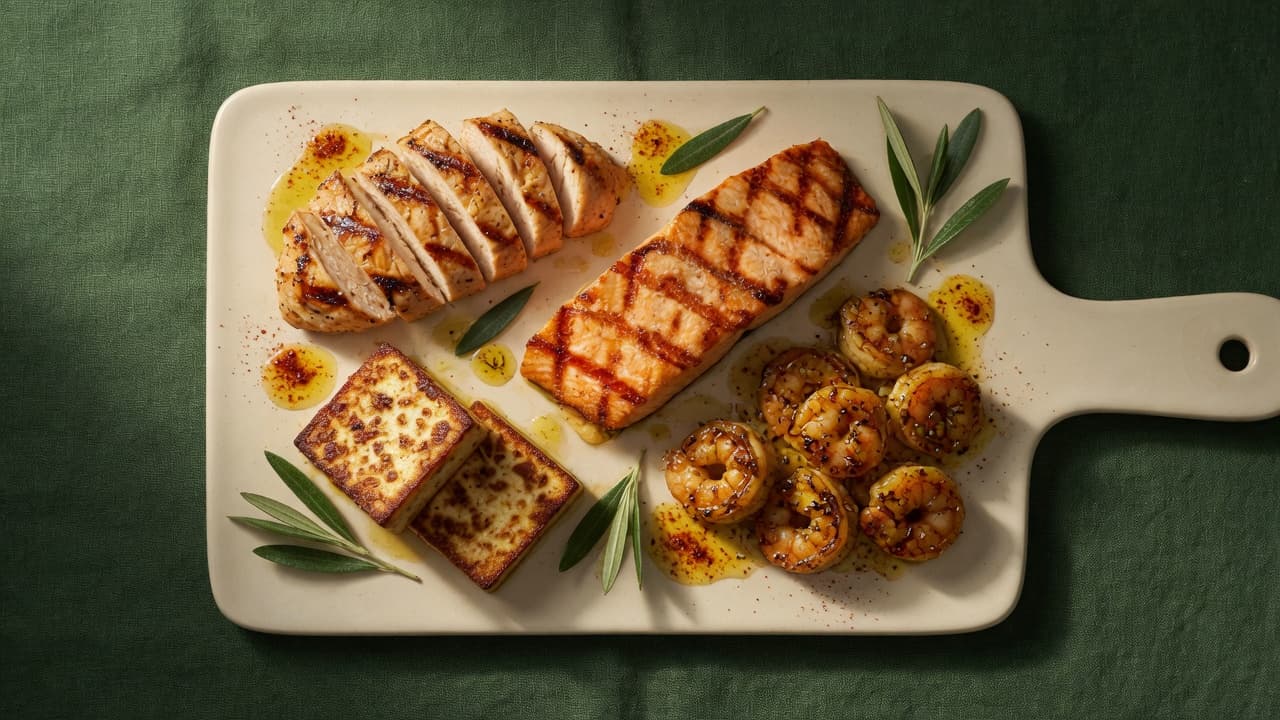
The protein-first read travels across the menu. Antibiotic-Free Chicken is 260 kcal for 37 g protein and 800 mg sodium. Sustainable Arctic Salmon is 290 kcal for 29 g protein and only 90 mg sodium, the lowest-sodium animal-protein scoop on the page. Shrimp is 200 kcal for 33 g protein, with 3,240 mg of sodium attached to the add-on alone. Grass-Fed Steak is 315 kcal for 29 g protein and 2,160 mg sodium. Organic Tofu is 160 kcal for 14 g protein and 70 mg sodium. Crisp'd Chicken adds 390 kcal, 18 g fat, and 30 g protein in a fried preparation, fine on a bulk day and a poor fit on a cut.1

Sauces are the silent fat layer. Chili Garlic Crunch is 250 kcal and 26 g fat per 1 oz. TFK Special Sauce is 190 kcal and 18 g fat per 1.5 oz. Thai Basil Vinaigrette is 120 kcal and 14 g fat. Original and Spicy Ranch run 100 to 120 kcal and 15 to 16 g fat per pour.1 Treat any one of those as a deliberate add rather than a default.

02Best True Food Kitchen orders by goal

Each row below is a working pattern, not a single SKU. Calorie and macro figures combine the published base value with the published protein add-on, with arithmetic shown in the next section. Portion variance at the restaurant is real, and True Food flags supplier and preparation drift in its own guide.1

GoalPattern that winsApproximate macrosWhat to avoid
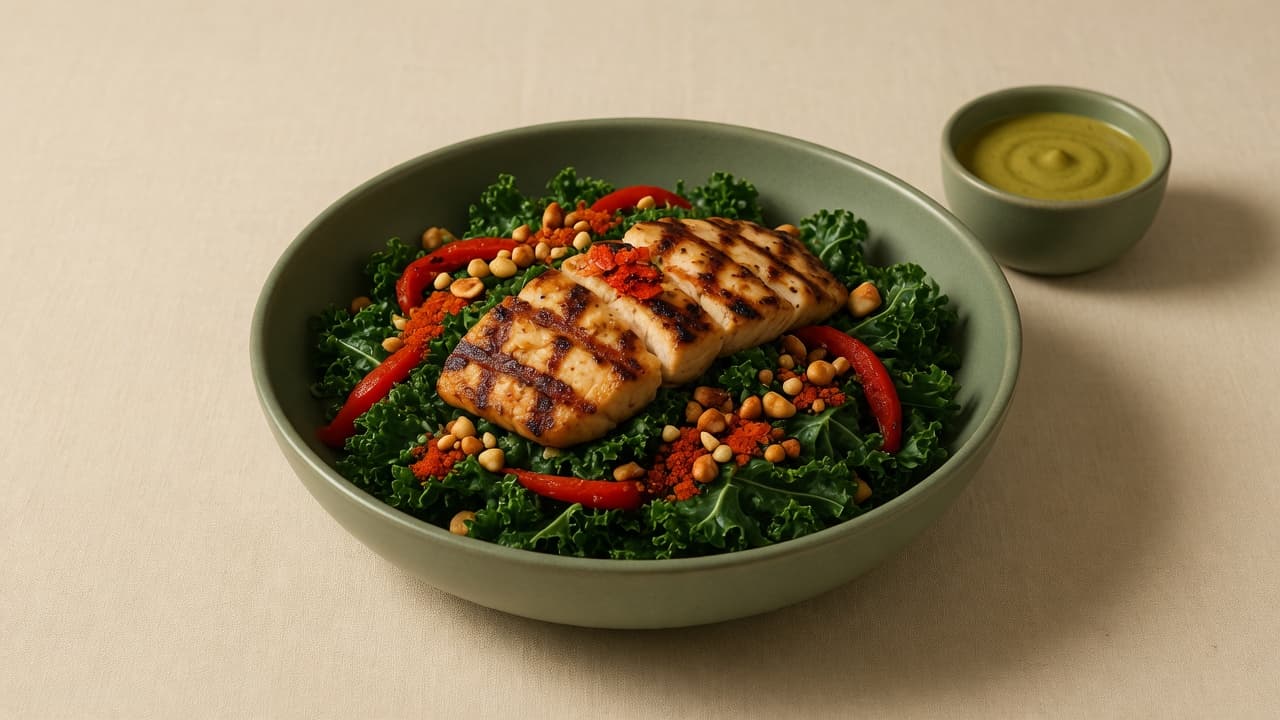
Fat loss, ~350 to 500 kcal lunchOrganic Tuscan Kale no dressing + Antibiotic-Free Chicken add-on, lemon only~350 kcal, ~14 g fat, 13 g carbs, 44 g proteinChinese Chicken Salad with full dressing, Crisp'd Green Salad
High protein, recomp lunchMediterranean Hummus + Antibiotic-Free Chicken add-on, skip the bread basket~940 kcal, 43 g fat, 86 g carbs, 60 g proteinKorean Noodle Bowl without a protein add
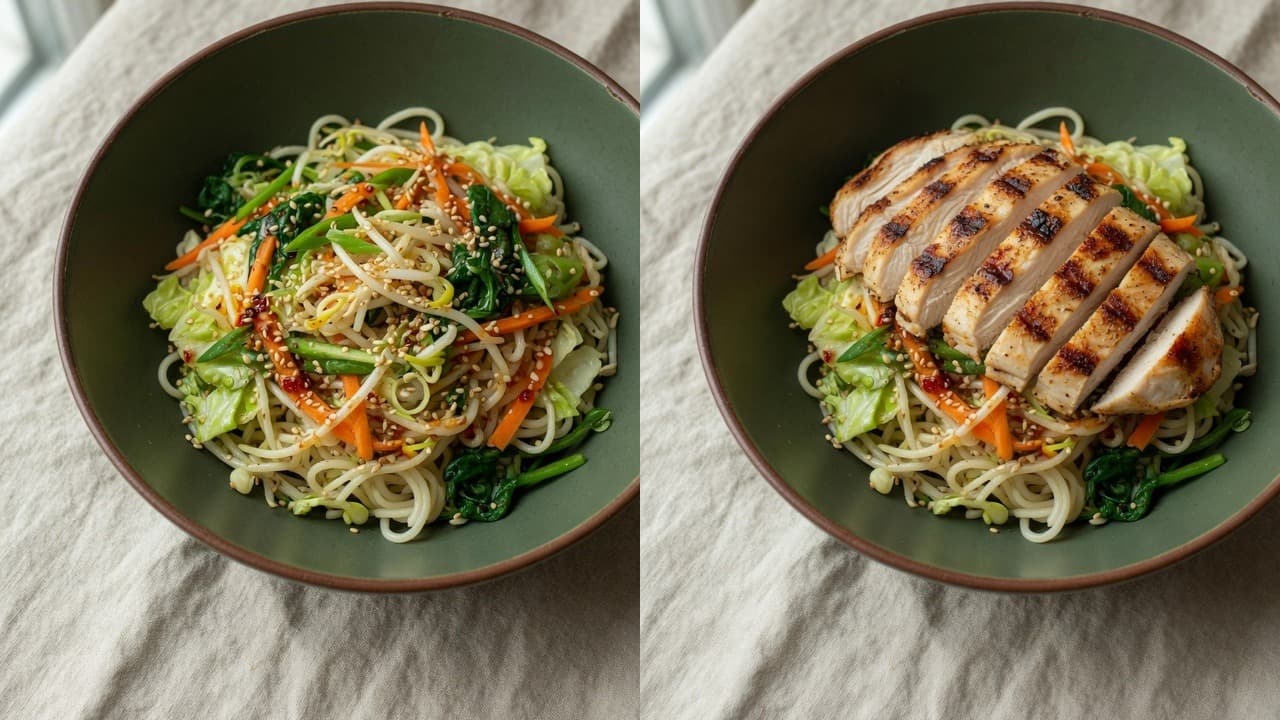
Training-day carbsKorean Noodle Bowl + Antibiotic-Free Chicken, water on the side~880 kcal, 27 g fat, 113 g carbs, 52 g proteinSpicy Panang Curry, which lands 10 g of protein per bowl alone
Lower sodium relative pickTeriyaki Quinoa Bowl + Sustainable Arctic Salmon add-on, sauce on the side~740 kcal, 42 g fat, 63 g carbs, 39 g protein, ~940 mg sodiumGrilled Sustainable Salmon entrée (2,790 mg), Asian Shrimp entrée
Vegetarian or plant-forwardMediterranean Hummus + Organic Tofu, lemon herb tahini swap if available~840 kcal, 40 g fat, 86 g carbs, 37 g proteinGreek Salad alone (7 g protein), Teriyaki Quinoa without an add
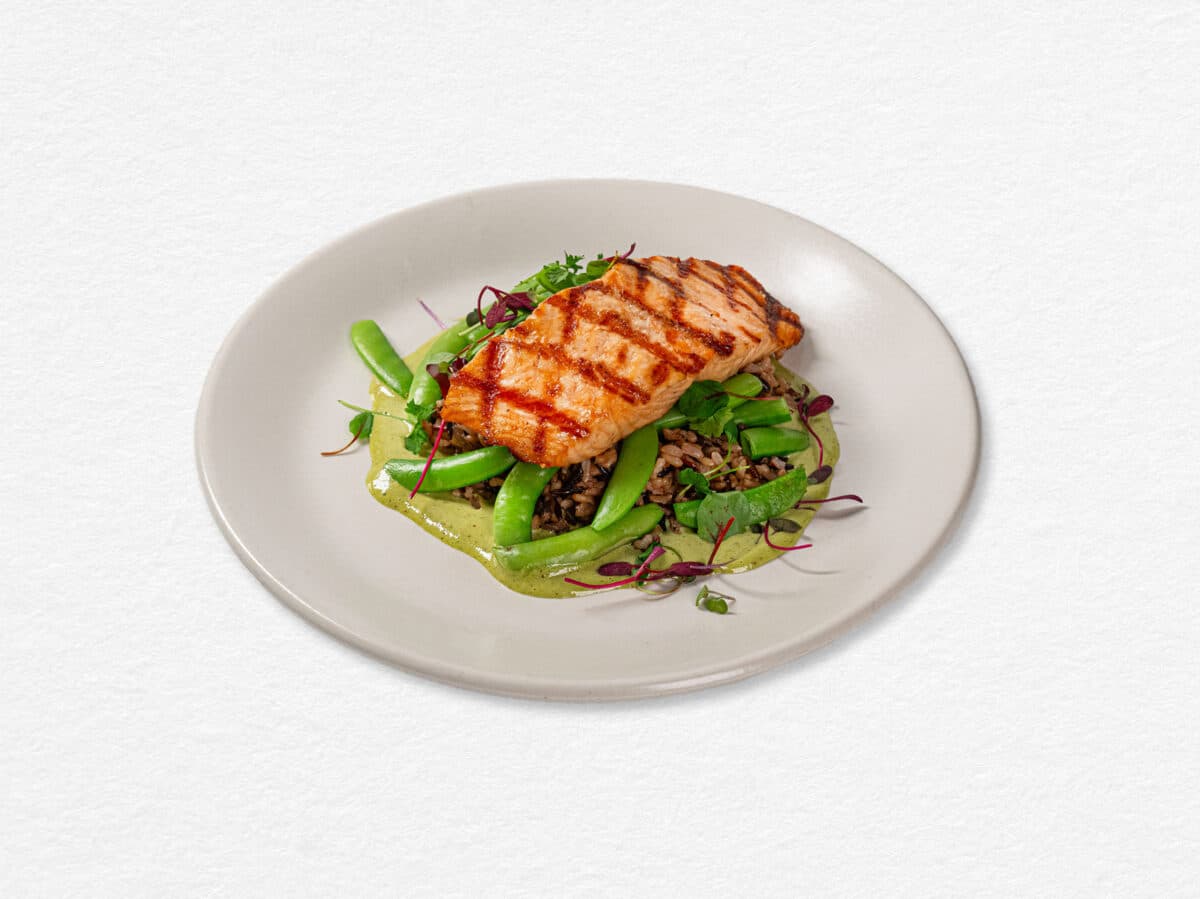
Social dinner, calories flexibleGrilled Sustainable Salmon entrée, wine 6 oz, log next morning's water carefully~790 kcal, 48 g fat, 19 g carbs, 37 g protein, ~2,800 mg sodiumAsian Wild-Caught Shrimp (5,700 mg sodium), Steak Frites (1,190 kcal)

The fat-loss row is the most underused order on the menu. The Tuscan Kale base without dressing is 90 kcal and 7 g of protein, and pairing it with the chicken add-on yields roughly 350 kcal and 44 g of protein in a single plate.1 No other table item is that protein-dense at that calorie line.

03Protein anchors and add-on math

Most salads and bowls publish values that exclude the protein add-on. A scoop is required on the Seasonal Market Salad, Chopped Salad, Organic Tuscan Kale Salad, Greek Salad, Teriyaki Quinoa Bowl, Korean Noodle Bowl, Spicy Panang Curry Bowl, Ancient Grain Bowl, and Mediterranean Hummus.1 The Chinese Chicken Salad, Crisp'd Green Salad, Tuna Poke Bowl, sandwich items, and the entrées have protein already built in. The arithmetic below adds published base values to published add-on values.

CombinationCaloriesFatCarbsProteinSodium
Tuscan Kale, no dressing + Chicken90 + 260 = 3503.5 + 11 = 14.511 + 2 = 137 + 37 = 44240 + 800 = 1,040
Tuscan Kale, no dressing + Salmon90 + 290 = 3803.5 + 21 = 24.511 + 0 = 117 + 29 = 36240 + 90 = 330
Chopped Salad, no dressing + Chicken370 + 260 = 63012 + 11 = 2358 + 2 = 6013 + 37 = 50150 + 800 = 950
Teriyaki Quinoa Bowl + Salmon450 + 290 = 74021 + 21 = 4263 + 0 = 6310 + 29 = 39850 + 90 = 940
Korean Noodle Bowl + Chicken620 + 260 = 88016 + 11 = 27111 + 2 = 11315 + 37 = 521,440 + 800 = 2,240
Ancient Grain Bowl + Chicken560 + 260 = 82034 + 11 = 4555 + 2 = 5712 + 37 = 491,030 + 800 = 1,830
Mediterranean Hummus + Chicken680 + 260 = 94032 + 11 = 4384 + 2 = 8623 + 37 = 601,350 + 800 = 2,150
Mediterranean Hummus + Tofu680 + 160 = 84032 + 8 = 4084 + 2 = 8623 + 14 = 371,350 + 70 = 1,420
Greek Salad + Shrimp420 + 200 = 62035 + 10 = 4522 + 3 = 257 + 33 = 40870 + 3,240 = 4,110

Crisp'd Chicken is the asymmetric scoop. Adding it instead of grilled chicken adds 130 kcal and 7 g of fat for the same ~30 g of protein, plus 12 g of additional carbohydrate from the breading.1 It works on a bulk day and stops working on a cut.

04Bowl and salad traps

The Chinese Chicken Salad reads as the obvious high-protein answer at 570 kcal and 39 g of protein. The dressing swap is the lever. Without dressing it is 490 kcal and 37 g of protein, the same protein for 80 kcal less fat. The same swap on the Crisp'd Green Salad drops it from 780 kcal and 54 g fat to 600 kcal and 36 g fat with no protein change.1 On any salad that ships with a creamy or vinaigrette dressing, asking for it on the side and using half is worth 60 to 290 kcal per meal.

The Tuna Poke Bowl is the protein-dense outlier with sodium attached. At 500 kcal, 32 g of protein, and 3,220 mg of sodium per bowl, it spends 140% of the FDA Daily Value of 2,300 mg in one plate.13 It is a clean macro lunch on a heavy-training day and a poor choice on a low-activity afternoon when extracellular water retention will distort the next morning's weigh-in.

The Korean Noodle Bowl, Spicy Panang Curry, and Teriyaki Quinoa Bowl are starch dishes with token protein. Without an add, the Spicy Panang Curry is 700 kcal and 10 g of protein. The Korean Noodle Bowl is 620 kcal and 15 g of protein.1 Ordering either without a protein scoop is the most common macro mistake on the True Food menu.

05Entrées, sandwiches, and brunch items that look healthy but are harder to fit

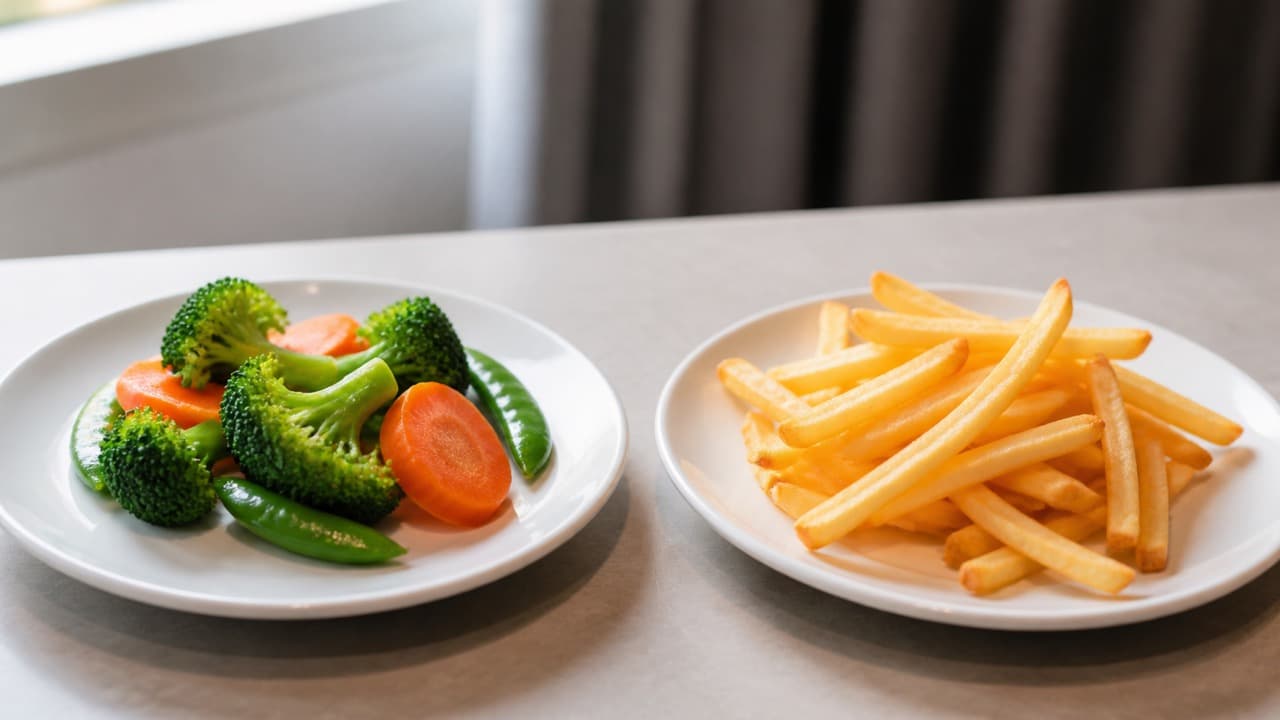
The TFK Classic Chicken Sandwich grilled is 620 kcal and 50 g of protein with 1,180 mg of sodium. The fried version is 830 kcal and 39 g of protein with 1,620 mg of sodium.1 The grilled order delivers more protein for 210 kcal less, which is the swap most trackers should default to. The Turkey Burger is 600 kcal and 43 g protein, the Grass-Fed Burger 660 kcal and 51 g protein with 2,370 mg sodium, the All-American Burger 710 kcal and 51 g protein with 42 g fat. Side excluded means the True Crisp'd Air Fried French Fries at 310 kcal and 1,010 mg sodium are not in those numbers. Swapping the fries for Fresh Veggies (60 kcal, 50 mg sodium) is the cleanest cut-day move on a burger.1 The Buffalo Chicken Sandwich is the outlier at 890 kcal grilled and 1,090 kcal fried, one sandwich spending 45 to 55% of a typical daily target before sides.1

Entrées run hot on fat and sodium. Grilled Sustainable Salmon is 640 kcal and 37 g protein with 2,790 mg sodium, above a full day's FDA Daily Value.13 Steak Frites is 1,190 kcal and 78 g protein, a deliberate bulk dinner rather than a default. Chicken Parmesan publishes 900 kcal and 50 g protein with 3,620 mg sodium. Asian Wild-Caught Shrimp publishes 830 kcal and 5,700 mg sodium in one plate.1 The Asian Wild-Caught Shrimp is the menu item where the sodium number alone justifies skipping the dish on most days.

Brunch is the section where the "healthy restaurant" frame is least accurate. Blueberry Pancakes are 780 kcal and 12 g protein, a high-carbohydrate plate with almost no protein anchor.1 Rancher's Hash is 1,110 kcal, 57 g protein, and 2,940 mg sodium, which makes it a deliberate high-calorie brunch rather than a default. Farmers Market Scramble is the higher-protein current pick at 760 kcal and 40 g protein with 2,510 mg sodium. Mediterranean Breakfast Bowl is the lighter current pick at 480 kcal, 22 g protein, and 1,370 mg sodium when the rest of the day still needs room.1

06Sauce, side, and sodium caveats

Sides are the second silent line on a True Food order. Seasonal Herb Roasted Veggies are 270 kcal, 20 g fat, and 680 mg sodium per portion, roasted-in-oil territory rather than a green-vegetable side. Seasonal Veggies are 150 kcal and 370 mg sodium. Fresh Veggies are 60 kcal and 50 mg sodium, the cleanest side on the menu. Simple Salad is 140 kcal and 170 mg sodium. True Crisp'd Air Fried French Fries are 310 kcal and 1,010 mg sodium.1

Sodium is the variable most macro trackers underweight at True Food. The FDA Daily Value for sodium is 2,300 mg/day.3 A Grilled Sustainable Salmon entrée alone spends 121% of that value, Asian Wild-Caught Shrimp spends 248%, and the Tuna Poke Bowl spends 140%.1 One dinner can hold water through the next two mornings, which is why a Wednesday weigh-in tells a cleaner story than a Tuesday one after a True Food Sunday.

Beverages round out the picture. Green or Black Iced Tea is 0 kcal. The Lemon-Lime Spritzer is 5 kcal. A Moscow Mule is 160 kcal, a Spicy Pineapple Margarita 180 kcal, a Citrus Skinny Margarita 170 kcal, and a Smoke Show Old Fashioned 230 kcal. Wine pours are 150 kcal for 6 oz and 220 kcal for 9 oz.1 One cocktail is manageable on most budgets, two stacked with a 900 kcal entrée is the part of the meal that gets logged late.

07How to log True Food Kitchen in Fuel

Fuel's Eat Out feature lets you scan a True Food menu and rank items against the calories and macros you have left, with the same caveats restaurant nutrition data always carries.4 Three logging rules hold up across visits.

Log the components on bowls and salads rather than the menu name. The Mediterranean Hummus on the published page is 680 kcal and 23 g of protein before the add, and a logged entry that uses the menu name without the chicken or tofu line will undercount the meal by 160 to 290 kcal and 14 to 37 g of protein every visit.1 Build the bowl from base plus add-on, save it as a Fuel custom entry, and reuse it after that. The same component-level logic from the food database accuracy audit applies here.

Treat sauce as a separate entry. Asking for dressing or chili garlic crunch on the side gives you a real serving you can decide on rather than a poured value you cannot measure. A logged entry that assumes half the ramekin is more honest than one that copies the full published pour and never adjusts. Read sodium as scale noise the next morning rather than as fat gain. A Sunday dinner that spent 2,500 to 4,000 mg of sodium will hold water through Monday and probably Tuesday. The trend line over 7 to 14 days is the right measurement window, the same pattern covered in the restaurant, takeout, and travel guide and the home-cooking budget version of the same fat math in macro meal planning for weight loss.

True Food's own guide notes that values are current as of September 2025, that test items and regional specials may not be included, and that recipe changes, hand preparation, supplier substitutions, dishware, packaging, and seasonal sourcing can move what you receive.1 The kitchen is also not a nut-free or gluten-free environment.2 Restaurant calorie postings can miss individual dishes in either direction, with one audit of 269 items finding a heavy right tail where about 19% of items exceeded their stated calories by more than 100 kcal.5 The saved Fuel entry is a starting estimate rather than a guarantee.

If your remaining calories are below 500 and you still need protein, default to Organic Tuscan Kale with no dressing and an Antibiotic-Free Chicken add-on, lemon as the only finish. If you have 800 to 1,000 kcal available and want one plate to carry the meal, run Mediterranean Hummus with a chicken or tofu add-on. If sodium is the limiting variable, run Teriyaki Quinoa with a salmon add rather than the Grilled Sustainable Salmon entrée, the Tuna Poke Bowl, or any shrimp dish. If the meal is a social dinner and the daily budget can take it, the Grilled Sustainable Salmon entrée is the cleanest protein-dense plate, sodium caveat read against the trend rather than the next morning's scale.

True Food Kitchen is closer to a macro-friendly default than most sit-down chains, and the reason it earns that reputation is the same reason it can quietly undo a deficit. Grilled protein, tofu, and greens are easy. Olive oil, glazes, finishing sauces, sodium-heavy cures, and "roasted" sides are also easy, and they stack into plates that look like the healthy choice while reading like a 900 kcal event on the back end. Order to the goal you are eating for today, log the components when you build the bowl yourself, and read scale movement on the right day.

Footnotes

  1. True Food Kitchen. April 2026 Spring Nutritional Guide (PDF). April 2026 Nutritional Guide. True Food states values are for the full dish, are current as of September 2025, and are compiled from supplier data, USDA, recipe analysis, and True Food analysis. Test items, regional specials, supplier substitutions, hand preparation, dishware, packaging, and seasonal sourcing may move actual values.

  2. True Food Kitchen. Nutritional and Allergen page. truefoodkitchen.com/nutritionalguide. The page notes True Food takes precautions but is not a nut-free or gluten-free kitchen, and links to the current Spring 2026 nutritional guide.

  3. U.S. Food and Drug Administration. Daily Value on the Nutrition and Supplement Facts Labels. Sodium Daily Value 2,300 mg/day. FDA

  4. Fuel Nutrition. Eat Out help article. Eat Out is a menu-scan and ranking feature, not a guarantee of restaurant nutrition values.

  5. Urban LE, McCrory MA, Dallal GE, Das SK, Saltzman E, Weber JL, Roberts SB. Accuracy of stated energy contents of restaurant foods. JAMA. 2011, 306(3):287-293. PubMed

Keep readingAll stories