In a group of 81 German recreational runners, vegan women had the highest average ferritin among the female groups and the lowest share with depleted stores, 18% compared with 26% among omnivore women.1 A 2026 review likewise found no consistent excess of iron deficiency in vegetarian athletes, though its authors noted limited data on female and elite athletes.2
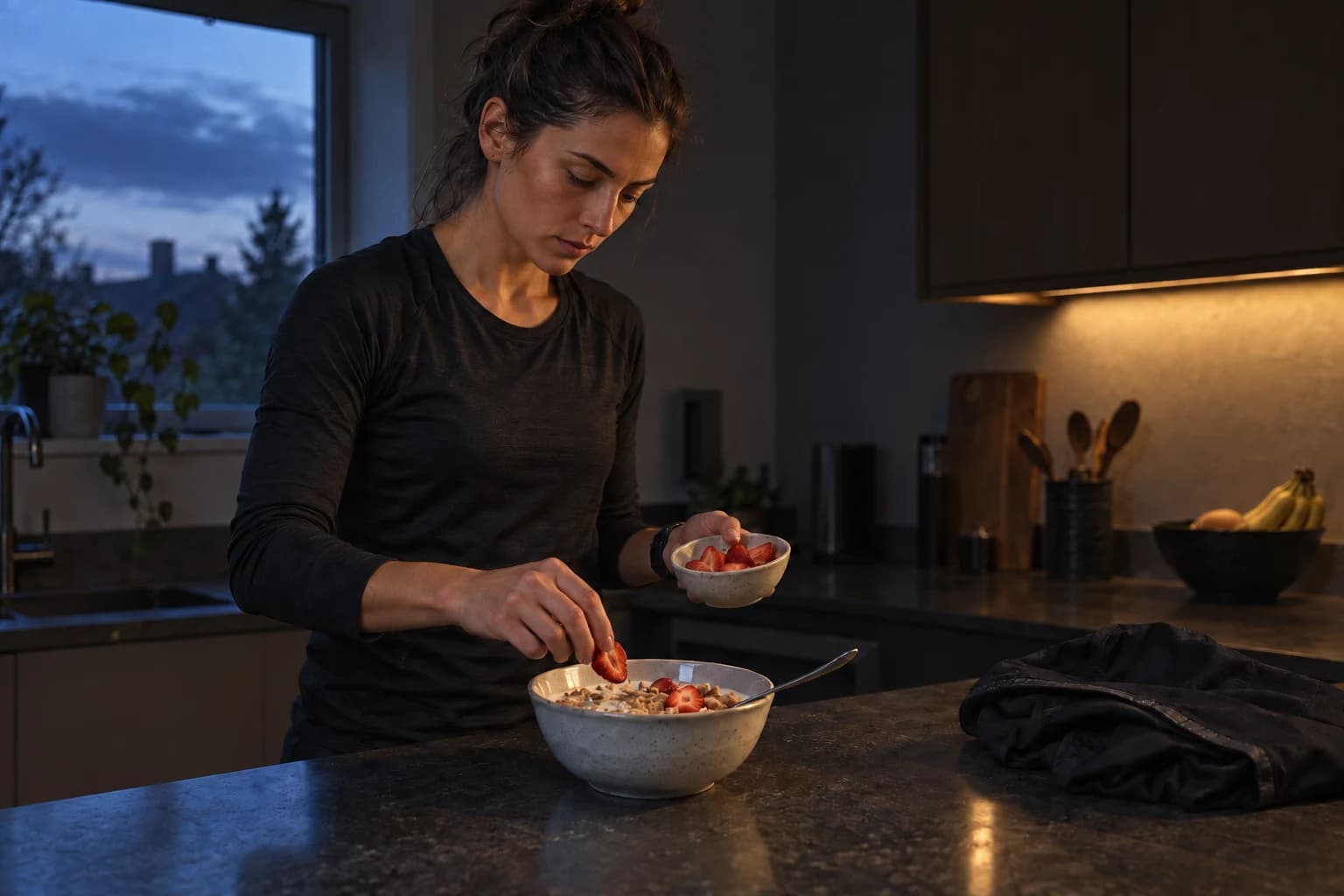
Nonheme iron from plant foods is less bioavailable than heme iron. The 2026 review found that vegetarians often consume as much total iron as omnivores or more, and described increased absorption and reduced losses as possible adaptations.2 A practical plan still needs a food target, attention to timing around hard sessions, and lab results when iron status is uncertain.
01Vegetarian athletes iron deficiency
Luna and colleagues reviewed iron status in lacto-ovo, lacto, ovo, and vegan athletes in Current Nutrition Reports in 2026. They found that studies do not consistently show more iron deficiency in vegetarian athletes than in omnivores. Vegetarians often eat as much total iron as omnivores or more. The body also adapts by absorbing a larger share of iron when stores fall and by losing less of it. The authors concluded that vegetarian athletes are not inherently at greater risk. They also flagged mixed study methods and thin data on elite and female athletes as limits on that conclusion.2
The Nebl runner study shows what that looks like in real numbers. It compared 27 omnivores, 26 lacto-ovo vegetarians, and 28 vegans, all recreational runners.1
| Group | Ferritin, women (µg/L) | Ferritin, men (µg/L) | Women with ferritin under 15 µg/L |
|---|---|---|---|
| Omnivore | 25.9 | 115 | 26% |
| Lacto-ovo | 23.9 | 64.3 | 23% |
| Vegan | 32.1 | 64.6 | 18% |
The men split by diet. Omnivore men averaged 115 µg/L, and both plant-based groups sat near 64 µg/L. That difference was statistically significant. Sixty-four is still a healthy store for a recreational runner. No man in any group had depleted stores, and nobody in the study had iron deficiency anemia.1
The women did not differ significantly by diet group. Each group averaged between 24 and 32 µg/L, and 18% to 26% had ferritin below 15 µg/L in each group.1
Controlled feeding points the same way. Hunt and Roughead fed 21 women a lacto-ovo vegetarian diet and a meat-containing diet for 8 weeks each. In the 10 women whose whole-diet nonheme iron absorption was measured, absorption averaged 1.1% on the vegetarian diet and 3.8% on the meat diet.7 Serum ferritin, hemoglobin, and transferrin saturation did not change over the 8 weeks. Absorption falls on plants. Status often holds anyway, at least on that timescale.
02Daily iron target for vegetarians
The Food and Nutrition Board estimates that people on vegetarian diets need 1.8 times as much iron as people who eat meat. Meat supplies heme iron, which absorbs better, and it also raises absorption of the nonheme iron eaten with it.3
| Life stage | Standard RDA | Plant-based target (1.8 times) |
|---|---|---|
| Teen boys, 14 to 18 | 11 mg | About 20 mg |
| Teen girls, 14 to 18 | 15 mg | About 27 mg |
| Men, 19 to 50 | 8 mg | About 14 mg |
| Women, 19 to 50 | 18 mg | About 32 mg |
| Adults 51 and older | 8 mg | About 14 mg |
U.S. women older than 19 average 12.6 to 13.5 mg of iron a day from food. That is less than half of the 32 mg target for vegetarian women aged 19 to 50.3 These are overall-population data, not a measurement of plant-based women's usual intake, so use them as context rather than as an estimate of an individual athlete's food log.
Training adds a further drain that the RDA does not model. Foot-strike hemolysis, sweat, and GI bleeding during hard running all pull iron out. The mechanisms are covered in the iron repletion guide for endurance athletes. Treat 1.8 times the RDA as a floor for a plant-based athlete in heavy training.
03A plant-based meal plan
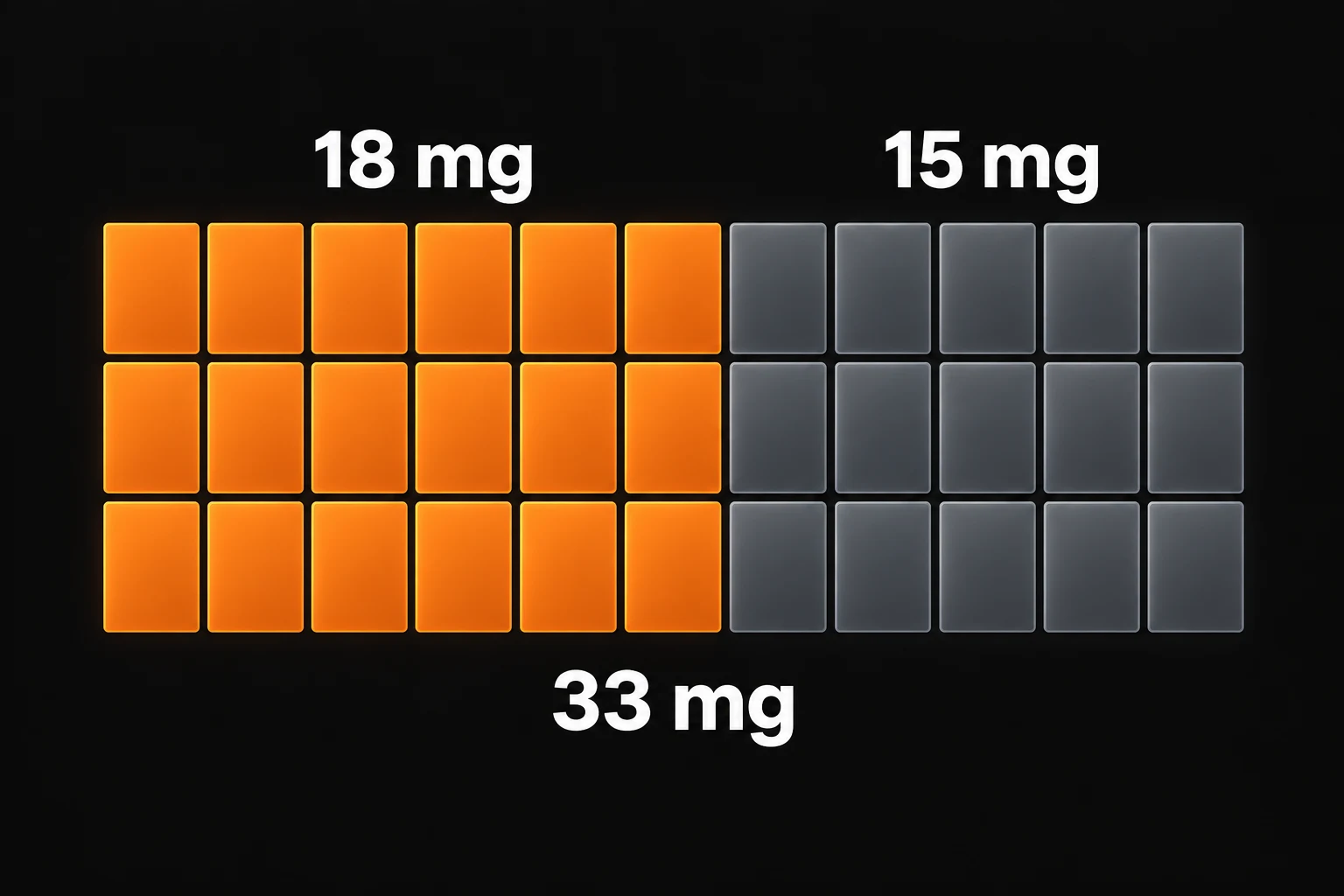
The example day below gets 18 mg of iron at breakfast and 15 mg across lunch, dinner, and snacks.3
| Food | Iron per serving |
|---|---|
| Breakfast cereal fortified to 100% DV | 18 mg |
| White beans, canned, 1 cup | 8 mg |
| Lentils, boiled, ½ cup | 3 mg |
| Tofu, firm, ½ cup | 3 mg |
| Spinach, boiled, ½ cup | 3 mg |
| Chickpeas, boiled, ½ cup | 2 mg |
| Kidney beans, canned, ½ cup | 2 mg |
| Dark chocolate, 45 to 69% cacao, 1 oz | 2 mg |
| Cashews, 1 oz | 2 mg |
| Potato, baked with skin, 1 medium | 2 mg |
| Tomatoes, canned and stewed, ½ cup | 2 mg |
| Whole wheat bread, 1 slice | 1 mg |
| Brown rice, cooked, 1 cup | 1 mg |
| Egg, 1 large | 1 mg |
| Milk, 1 cup, or cheddar, 1.5 oz | 0 mg |
The values above come from the NIH iron table.3 Spinach looks good on paper and absorbs poorly because it carries polyphenols and other absorption inhibitors. Count it, but do not build the day around it. Dairy contributes essentially no iron, and its calcium can blunt absorption from the same meal. A lacto-ovo vegetarian who fills protein targets with yogurt and cheese is filling them with zero-iron foods.
| Meal | Foods | Iron |
|---|---|---|
| Breakfast | Fortified cereal with soy milk and a cup of strawberries | 18 mg |
| Lunch | 1 cup lentils in a bowl with red bell pepper and lemon | 6 mg |
| Dinner | ½ cup firm tofu, 1 cup brown rice, broccoli | 5 mg |
| Snacks | 1 oz cashews, 1 oz dark chocolate | 4 mg |
| Total | 33 mg |
Remove the cereal and the day gets much harder. Reaching about 31 mg without it takes 1 cup of white beans, 1 cup of lentils, 1 cup of chickpeas, ½ cup of tofu, a potato, stewed tomatoes, two slices of whole wheat bread, cashews, and dark chocolate. That is three and a half cups of legumes and tofu. Some athletes eat that way happily. Many do not, especially during a high-carbohydrate block when rice, pasta, and sports drinks take up the calories. Fortified cereal is the single most efficient iron food a plant-based woman can eat. Check the label, because only some brands are fortified to 100% of the Daily Value.
The legume-heavy version also lines up with protein. The same lentils, beans, and tofu carry most of the leucine in a plant-based day, which is why the plant-based protein guide and this iron plan end up recommending many of the same meals.
04Long runs impact iron absorption
Barney and colleagues had 28 collegiate cross-country runners with low average ferritin, about 22 ng/mL, complete a run lasting about 99 minutes. Two hours later they ate a standardized meal with a stable iron isotope. Hepcidin was 51% higher than on a rest day, and fractional iron absorption from the meal was 36% lower.4 Hepcidin is the liver hormone that shuts iron out of the bloodstream. Exercise raises it within hours.
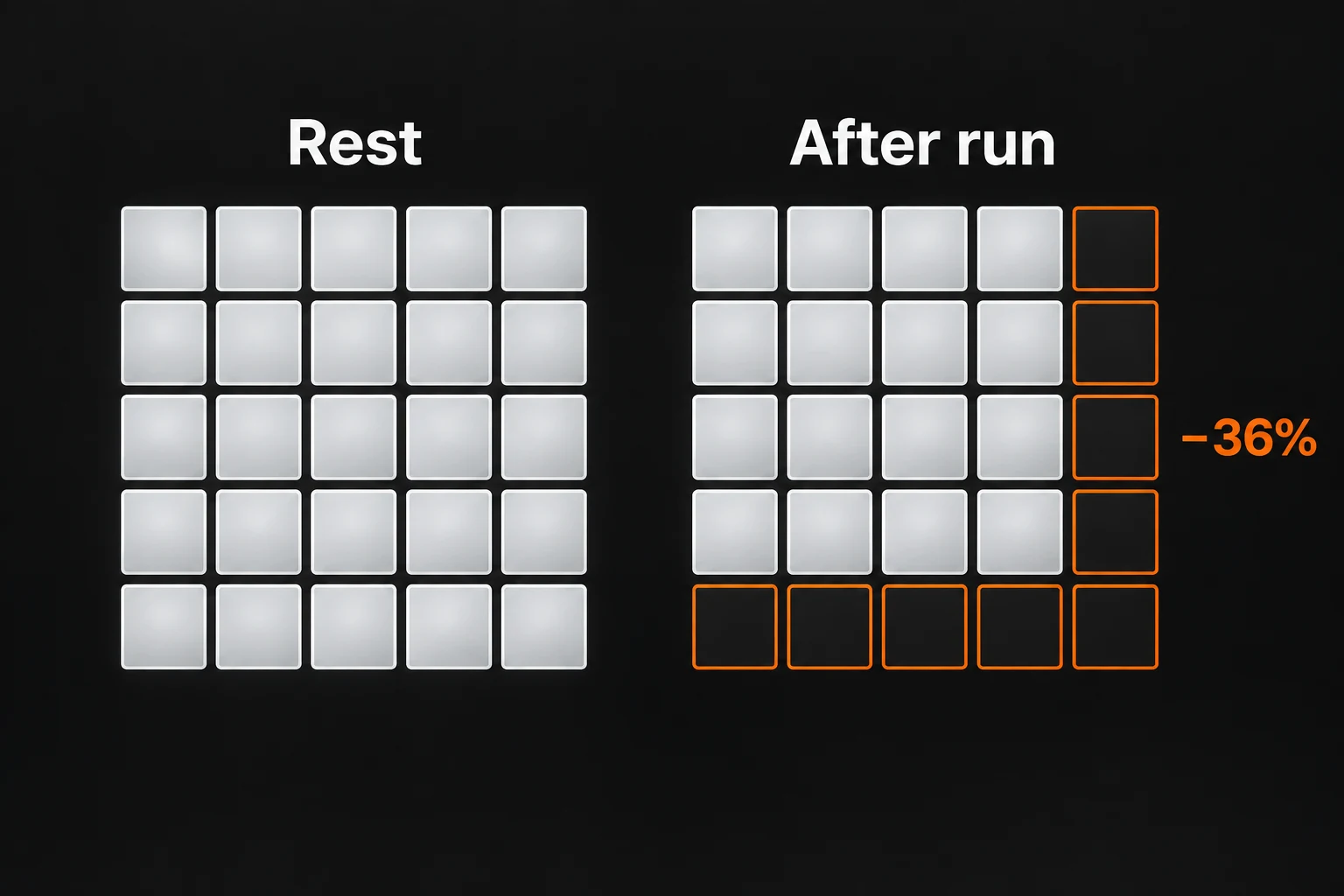
The tiles show a relative difference in the 28 runners, not absolute absorption percentages.4
An exploratory analysis in that study suggested the hepcidin rise was driven mostly by the men. That finding needs replication before anyone plans around it. Female athletes should still treat the post-session window as a poor time for iron.
| Day type | Best iron meal | Why |
|---|---|---|
| Rest day | Breakfast and lunch | Hepcidin sits near its low point with no training bump |
| Easy aerobic day | Any meal | Short, easy sessions raise hepcidin little |
| Hard morning session | Breakfast before training, if tolerated | Absorption happens before the post-exercise rise |
| Hard afternoon session | Breakfast | The evening meal lands in the 3 to 6 hour window |
| Long run or race | The next day's breakfast | The recovery meal should focus on carbohydrate and protein |
None of this means skipping iron after training. Recovery meals still count toward the daily total. The goal is to place the fortified cereal or the big lentil bowl where it absorbs best.
Energy deficit makes the post-exercise hepcidin rise larger. A plant-based diet is high in fiber and bulky, so athletes on it under-eat more easily when training volume climbs. If ferritin keeps drifting down despite a good food plan, check total energy intake. That loop is covered in low energy availability in female endurance athletes.
05Drink tea and coffee later
Ahmad Fuzi and colleagues gave 12 iron-replete women a porridge meal labeled with 4 mg of isotope iron on three occasions. Absorption was 5.7% with water, 3.6% with tea served at the meal, and 5.7% with tea served one hour after the meal. The study's estimated inhibitory effect fell from 37.2% to 18.1% with the delay, so the effect was smaller but remained.5 Coffee drunk an hour before a meal did not reduce absorption in an older trial by Morck and colleagues.8
- Drink coffee before the morning session and eat the iron breakfast at least an hour later.
- Save afternoon tea for a snack that is not your main iron source.
- Put 50 mg or more of vitamin C on the iron plate. Bell pepper, citrus, kiwi, strawberries, and broccoli all clear that bar in a normal serving.
The phytate, polyphenol, and calcium evidence behind those rules is covered in depth in phytate, oxalate, and lectins in a plant-heavy diet.
06Inflammation and iron panel data
A single ferritin number misleads more often than athletes expect. Ferritin rises with infection, inflammation, and heavy training. A draw taken the morning after a race can look healthy while stores are low.
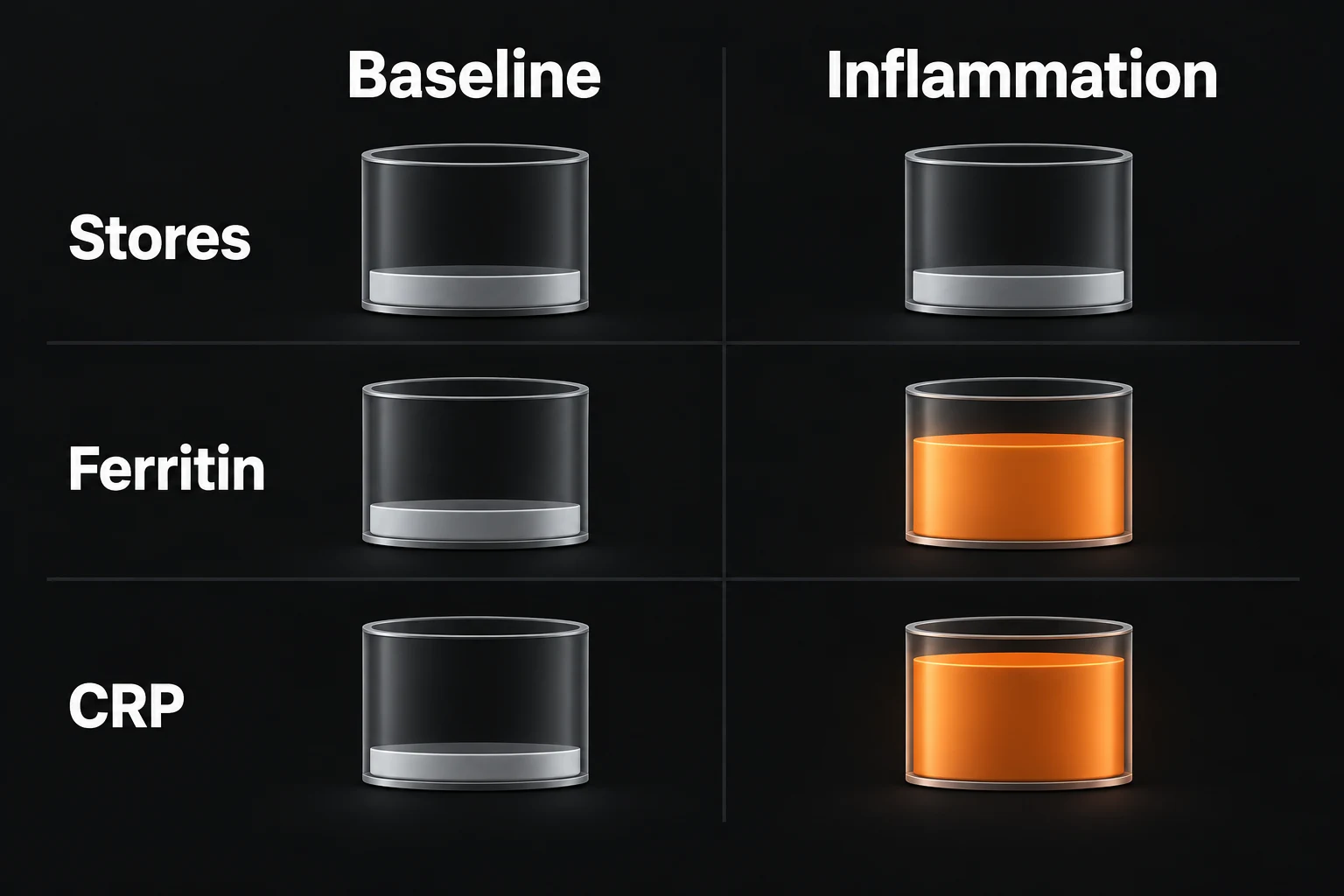
This is a qualitative diagram, not a diagnostic scale. Inflammation can raise ferritin despite low iron stores.6
| Marker | What it tells you | Common low cutoff |
|---|---|---|
| Ferritin | Stored iron | Under 15 µg/L depleted (WHO). Many sports clinicians act under 30 |
| Transferrin saturation | Iron available for red cell production | Under 16% |
| Hemoglobin | Anemia, a late sign | Under 12 g/dL in women and 13 g/dL in men |
| CRP | Inflammation that can inflate ferritin | Any elevation changes how ferritin reads |
The ferritin, transferrin saturation, and hemoglobin cutoffs are the WHO values the Nebl runner study used.1 WHO's 2020 ferritin guideline adds a rule for inflammation. In adults with infection or inflammation, ferritin under 70 µg/L may indicate iron deficiency.6 A plant-based athlete with ferritin of 45 and an elevated CRP may be lower than the number suggests.
Schedule the blood draw for a morning after a rest or easy day, well clear of illness and races. Get a baseline when you switch to plant-based eating or start a heavy training block. Retest in 8 to 12 weeks if ferritin is low or falling. The broader panel is explained in iron levels.
07Labs and clinical assessment
In the runner study, reported iron-supplement use was not associated with iron biomarkers in any diet group.1 That cross-sectional result does not show why participants took iron or whether supplements improve labs after confirmed deficiency. Use lab results and clinical assessment to decide whether an iron supplement is needed.
The adult upper intake level from all sources is 45 mg a day.9 Clinical repletion doses often exceed that, and they belong under a clinician. High doses cause GI upset, and people with hereditary hemochromatosis absorb extra iron that loads into organs. Iron supplements also reduce absorption of levothyroxine and levodopa, so anyone taking either medication should ask their prescriber or pharmacist how to time iron.9
| Lab picture | Response |
|---|---|
| Ferritin above 50, normal hemoglobin and CRP | Keep the food plan. Retest once or twice a year in heavy training |
| Ferritin 30 to 50, no symptoms | Tighten the food plan and meal timing. Retest in 8 to 12 weeks |
| Ferritin under 30, or falling across two draws | Food plan plus a clinician conversation about alternate-day iron |
| Ferritin under 15, or low hemoglobin | Clinician-led treatment and a search for causes beyond diet |
| High ferritin with high transferrin saturation | No iron. Ask about hemochromatosis testing |
When a supplement is warranted, the protocol matters as much as the pill. Alternate-day morning dosing absorbs better than daily dosing, and the iron repletion guide covers the form, dose, and stopping point. Food keeps working in the background either way, so the 1.8 times target still applies while ferritin climbs.
The evidence is thinnest for elite female plant-based athletes. The 2026 review found that studies include few women and few elite athletes.2 Until larger studies include that group, measure iron status, plan the food around the target, and let clinical assessment guide supplementation.
Footnotes
Nebl J, Schuchardt JP, Ströhle A, et al. Micronutrient status of recreational runners with vegetarian or non-vegetarian dietary patterns. Nutrients. 2019, 11(5):1146. PubMed
Back to textBack to text 2Back to text 3Back to text 4Back to text 5Back to text 6Back to text 7Luna F, Rossi EV, Moreno ML, Heim T, Arrieta EM. Iron deficiency in vegetarian athletes: a narrative review. Curr Nutr Rep. 2026, 15(1):44. PubMed DOI
Back to textBack to text 2Back to text 3Back to text 4Back to text 5National Institutes of Health Office of Dietary Supplements. Iron fact sheet for health professionals. RDAs, the 1.8 times vegetarian requirement, food iron values, and average US intakes. NIH ODS
Back to textBack to text 2Back to text 3Back to text 4Back to text 5Back to text 6Barney DE, Ippolito JR, Berryman CE, Hennigar SR. A prolonged bout of running increases hepcidin and decreases dietary iron absorption in trained female and male runners. J Nutr. 2022, 152(9):2039-2047. PubMed
Back to textBack to text 2Back to text 3Ahmad Fuzi SF, Koller D, Bruggraber S, et al. A 1-h time interval between a meal containing iron and consumption of tea attenuates the inhibitory effects on iron absorption. Am J Clin Nutr. 2017, 106(6):1413-1421. PubMed
Back to textBack to text 2World Health Organization. WHO guideline on use of ferritin concentrations to assess iron status in individuals and populations. 2020. WHO
Back to textBack to text 2Back to text 3Hunt JR, Roughead ZK. Nonheme-iron absorption, fecal ferritin excretion, and blood indexes of iron status in women consuming controlled lactoovovegetarian diets for 8 wk. Am J Clin Nutr. 1999, 69(5):944-952. PubMed
Back to textMorck TA, Lynch SR, Cook JD. Inhibition of food iron absorption by coffee. Am J Clin Nutr. 1983. PubMed
Back to textNational Institutes of Health Office of Dietary Supplements. Iron fact sheet for consumers. Upper limits and medication interactions. NIH ODS
Back to textBack to text 2