Most low-ferritin athletes do the same thing. They take an iron pill every morning, retest in two months, and find that ferritin barely moved. The instinct is to take more. The better move is usually to take less, less often, and to put each dose in the right place around training.
The reason is hepcidin. Hepcidin is the liver-derived hormone that decides how much iron the gut is allowed to absorb and how much stored iron the body is willing to release. Two things raise it sharply. One is hard endurance training. The other is a single oral iron dose. Both effects last long enough that the next dose lands in a window where the body has already closed the door.
The athletes who climb out of low ferritin fastest are the ones who treat repletion as a timing problem, not a milligram problem.
01How endurance training drains iron in the first place
Iron loss in endurance athletes is not a single mechanism. It is the sum of small drains that look unimportant in isolation and large in aggregate.
Foot-strike hemolysis is the best known. Repeated impact at the foot ruptures a small share of red blood cells in the capillaries of the sole each time the foot lands. The free hemoglobin that results is partly recovered, partly excreted, and the net is real iron loss across thousands of foot strikes per session. Telford and colleagues showed measurable hemolysis in distance runners that exceeded the levels seen in cyclists running the same training time, which is one reason runners trend lower on ferritin than other endurance athletes at the same training load.1
Sweat losses are smaller per session and additive across years, and the same sweat carries zinc out beside the iron, which is why a runner auditing one trace mineral should look at the other. The parallel zinc drain and its supplement decision are covered in Zinc for Athletes. GI microbleeding shows up under hard sustained running and under high-volume training blocks, especially with NSAID use. Menstruation adds a recurring monthly loss for half of the athlete population. None of these is solved by eating more iron alone, because the body's willingness to absorb iron is also dropping during the same training load.
That is where hepcidin starts to matter.
02The hepcidin window
Hepcidin works by closing ferroportin, the iron exporter on enterocytes and macrophages. When hepcidin is high, dietary iron sits in the gut cell and gets shed when the cell turns over. When hepcidin is low, ferroportin opens and absorbed iron reaches plasma.
Hepcidin rises with two stimuli that an athlete encounters constantly.
The first is exercise. Peeling, McKay, Sim, and Burden have summarized a consistent finding across endurance modalities. Hepcidin tends to peak roughly 3 to 6 hours after a sustained or hard session, with the size of the rise scaling with session duration, intensity, and any inflammatory load.2 Barney and colleagues quantified this in trained runners with low iron stores. A prolonged run raised serum hepcidin by 51 percent and reduced fractional dietary iron absorption by 36 percent compared with rest.3
The second is a single oral iron dose. Moretti and colleagues showed that one oral iron dose produces a hepcidin rise that lasts beyond 24 hours, which means a second dose given the next morning lands while ferroportin is still partly closed.4 McCormick and colleagues then showed that pairing exercise with energy deficit makes the hepcidin response worse. Hepcidin was 108 percent higher in the energy-deficit condition than in energy balance, and peak plasma isotope appearance after an iron tracer was 74 percent lower than at rest.5
The practical map looks like this.
| Stimulus | Hepcidin response | Window where iron absorption drops |
|---|---|---|
| Single 60–200 mg oral iron dose | Sharp rise, persists more than 24 hours | Most of the next day |
| Prolonged run or hard endurance session | 50 percent or higher acute rise, peaks 3–6 hours | About 3–6 hours post session |
| Hard session combined with low energy intake | Roughly doubled response vs. fed state | Same window, larger magnitude |
| Light aerobic session at modest duration | Small or no rise | Minimal absorption hit |
| Acute illness, heavy DOMS, post-race breakdown | Inflammation-driven rise | Days, not hours |
If you only fix one piece of an iron protocol, fix the timing of the dose around hepcidin. The athlete who takes ferrous sulfate at 7 PM after a 90-minute tempo run is throwing most of that pill away.
03Why daily dosing loses to alternate-day dosing
The tidiest demonstration that timing wins comes from Stoffel and colleagues at ETH Zurich. In two open-label randomized trials in iron-depleted women, they tested 60 mg and 120 mg single oral iron doses given as either consecutive daily doses or alternate-day single morning doses across 14 days, measuring fractional and total iron absorption with stable isotopes.6
The result was clean. Alternate-day dosing produced higher fractional absorption per dose and higher cumulative iron absorbed over the dosing period than daily dosing, despite involving fewer total pills. A follow-up trial showed that splitting the same total daily dose across morning and afternoon was worse than giving it as one morning dose, again because the second dose hit a hepcidin-elevated window.7
A simple translation for athletes.
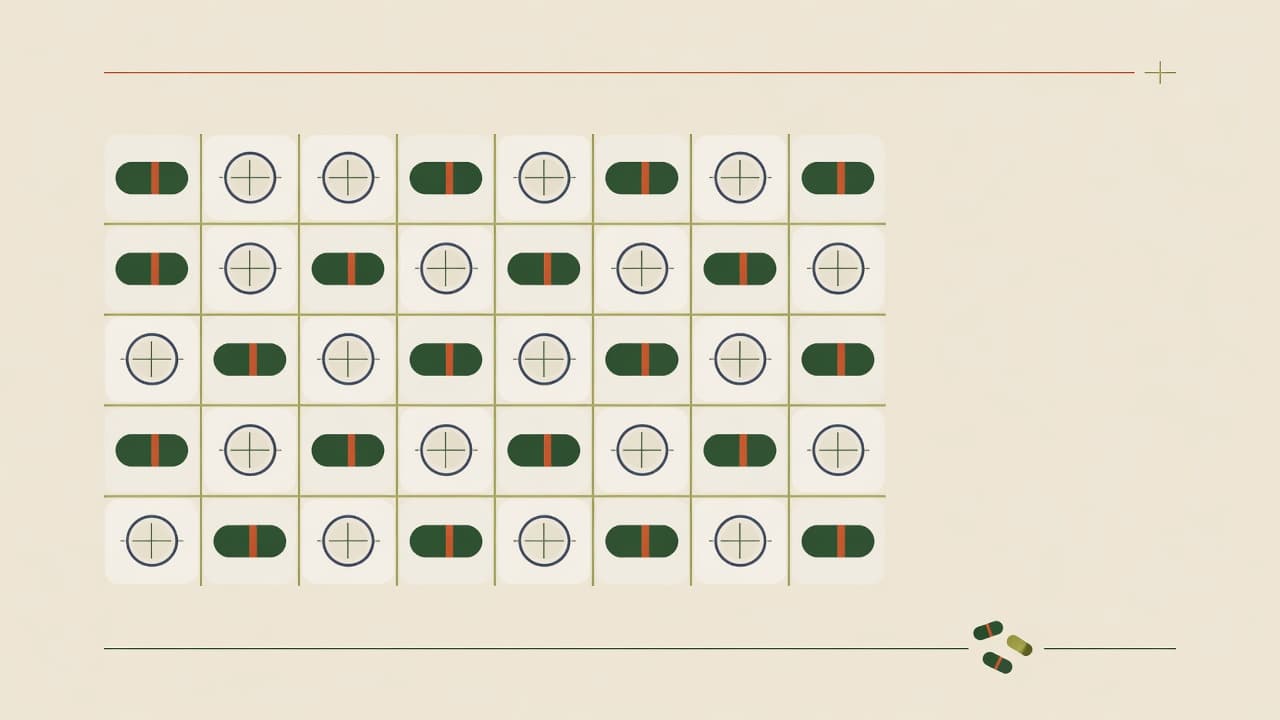
| Dosing pattern | Pills per week | Practical absorption picture |
|---|---|---|
| 60–100 mg ferrous iron, every morning | 7 | Each dose lands while hepcidin from the previous dose is high |
| 100–200 mg ferrous iron, every other morning | 3 to 4 | Hepcidin has time to fall back toward baseline between doses |
| 50 mg twice daily | 14 | Worst absorption per pill, highest GI side-effect rate |
| 200 mg every third day, paired with vitamin C, fed | 2 to 3 | Reasonable in athletes with bad GI tolerance and good adherence |
For most low-ferritin endurance athletes who do not have severe anemia, an alternate-day single morning dose at 100 to 200 mg of elemental iron is the modern default. It usually produces faster ferritin rise, fewer GI complaints, and better adherence than the every-day pattern most clinicians still write on the bottle.
04Where to put the dose around training
Once dosing frequency is correct, the second decision is when in the day the dose lands.
Morning, fed, with vitamin C, before training is a practical option. The body has been resting overnight, hepcidin is near its diurnal trough, and the meal window with citrus or pepper raises non-heme absorption two to three times.8 Evidence in trained runners supports avoiding the post-exercise hepcidin window, but it does not establish a universally reliable pre-exercise dosing protocol for every athlete.23
The two slots to avoid are the hours immediately after a hard session and the late evening after an endurance day.
| Time slot | Verdict for iron dosing |
|---|---|
| Morning, before training, with food | Best slot for most athletes |
| Mid-morning on a rest day | Excellent. Use rest days to bank absorption |
| 1–6 hours after a hard endurance bout | Worst slot. Hepcidin is rising or near peak |
| Late evening after a hard training day | Poor. Hepcidin still elevated and GI side effects more likely |
| With coffee, tea, or a calcium-heavy meal | Avoid. Polyphenols and calcium can inhibit non-heme iron absorption.12 |
Athletes on a single hard session per day usually do well taking iron at breakfast on rest days and easy days. Athletes who train twice a day need to anchor iron to the morning before any session begins. The last thing you want is iron in the gut as the first hard interval pushes hepcidin up.
05Iron form matters less than dose timing
The most studied iron salt is ferrous sulfate. It is cheap, effective, and has the highest rate of GI side effects. Switching form is the standard move when nausea, constipation, or epigastric pain is killing adherence.
| Form | Elemental iron per dose unit | Practical read |
|---|---|---|
| Ferrous sulfate | 65 mg per 325 mg tablet | Reference standard, well studied, more GI side effects |
| Ferrous bisglycinate (chelated) | About 18 to 28 mg per common capsule | Often better tolerated. Comparable absorption at lower elemental dose |
| Ferrous gluconate | 35 mg per 300 mg tablet | Lower elemental content. Sometimes used as a tolerability step |
| Sucrosomial iron | Varies, often 30 mg per dose | Bypasses some hepcidin gating. Newer, smaller evidence base, generally well tolerated |
| Heme iron polypeptide | Varies | Limited large-trial evidence. Useful in select cases of severe oral intolerance |
| IV iron (clinician-administered) | Per protocol | Reserved for repletion failure, true intolerance, or pre-altitude time pressure |
Athletes who fail oral iron after eight to twelve weeks of compliant alternate-day dosing, or who cannot tolerate any oral form, are the population where IV iron has a real role. Burden and colleagues showed in a randomized trial in elite athletes with low ferritin that IV iron raised ferritin sharply but did not produce a significant performance gain over oral iron in the population they studied, which suggests IV is a fix for the absorption problem rather than a shortcut to performance.9
The practical decision tree is short. Start with ferrous sulfate alternate-day. Switch to bisglycinate or sucrosomial iron if GI tolerance is the problem. Escalate to IV iron through a clinician if compliance is good, time matters, and ferritin still will not move.
06How fast ferritin should climb, and when to stop
A reasonable expectation in a healthy athlete on alternate-day dosing is a ferritin rise of about 10 to 20 µg/L per month, with wide person-to-person variation driven by absorption, baseline inflammation, ongoing training load, and menstrual losses. Plan to recheck ferritin at 8 to 12 weeks rather than 4. Earlier blood draws often catch acute-phase noise rather than a real trend, and ferritin rises as an acute-phase reactant during illness, hard race weeks, and inflammatory loads.10
Stopping is not optional. Iron supplementation should not be a permanent habit unless a clinician has set that course for a documented reason. Targets in the literature vary, with most sports-medicine reviews suggesting that supplementation can taper or stop once ferritin sits comfortably above 50 µg/L for non-altitude athletes and above roughly 70 to 100 µg/L for athletes preparing for an altitude block.11 Above those bands, the marginal performance gain disappears and the risk of iron loading rises. Athletes heading into a camp should get labs early enough that repletion has weeks rather than days to work, since low ferritin can blunt the entire erythropoietic point of the trip, a mechanism covered in altitude training nutrition for endurance athletes.
Iron overload is rare in athletes but real. A rapid ferritin rise on a modest dose, a personal or family history of hemochromatosis, persistent transferrin saturation above 45 percent, or unexplained liver enzyme drift should all push the conversation toward a clinician and toward genetic testing rather than toward more pills.
07The non-pill levers most low-ferritin athletes still get wrong
Repletion runs faster when the food and training context cooperates.
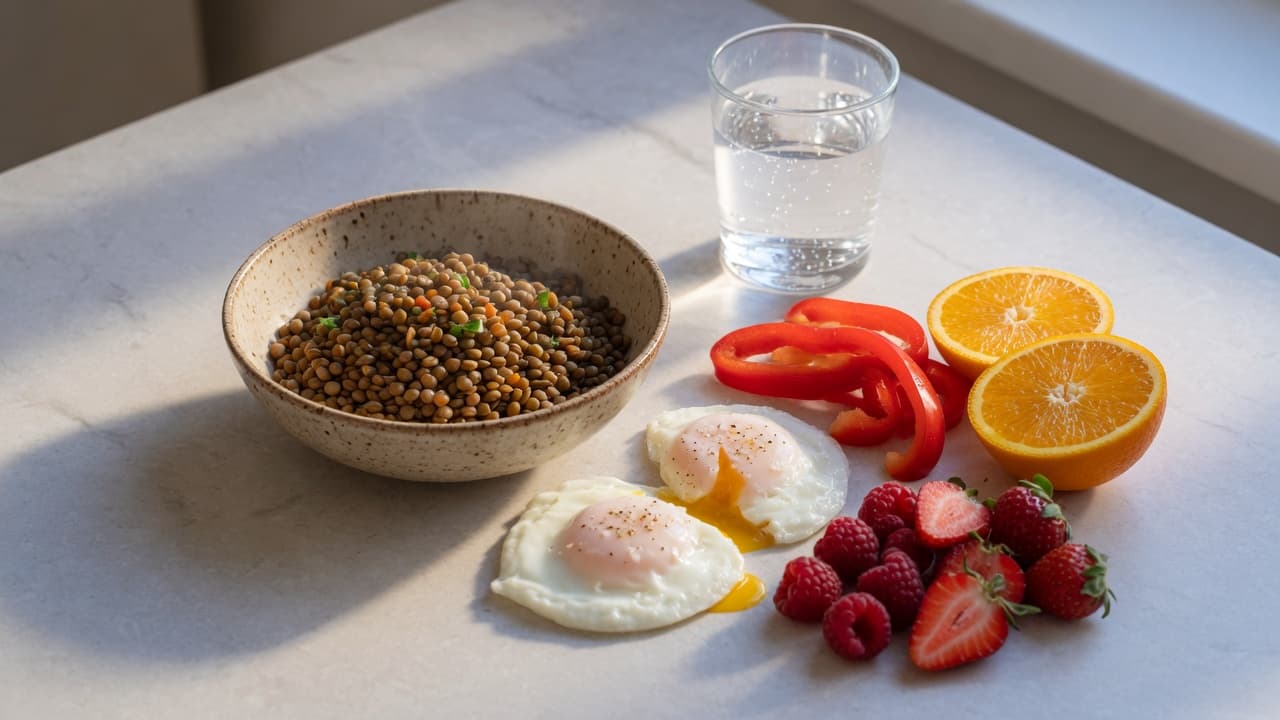
Iron-dense meals are easier to build than most athletes believe once they treat them as planned events rather than coincidences. Two to three servings of red meat, organ meat, oysters, sardines, or other heme sources per week put a real floor under intake without dominating the diet. For plant-leaning athletes, the lever is non-heme density paired with vitamin C and protected from inhibitors. Lentils, beans, tofu, and dark leafy greens with bell pepper, citrus, or strawberries at the same plate is a different intake number than the same foods with coffee or tea.
Coffee and tea are the two beverages athletes underestimate as iron blockers. Their polyphenols can inhibit non-heme iron absorption when consumed with the same meal.12 Move them away from iron-dense plates, or place them around training rather than around meals.
Calcium can also inhibit non-heme iron absorption when consumed with the same meal. The simplest fix is to keep large dairy servings out of the meal you have built around iron, not to remove dairy from the diet.12
Energy availability sits upstream of all of this. Repeated underfueling raises hepcidin on its own, blunts iron absorption further, and tends to lower iron intake because total food volume drops. Female endurance athletes are the population where this matters most, and the path to a stable ferritin number often goes through fixing fueling first. The framework for that is in Low Energy Availability in Female Endurance Athletes, and the marker context is in Ferritin and Iron Levels.
08Simple iron repletion decision flow
Most low-ferritin endurance athletes fit one of three lanes.
| Starting picture | First move |
|---|---|
| Ferritin 20–40 µg/L, no anemia, training quality dipping | Alternate-day morning iron, 100–200 mg elemental, with vitamin C, away from coffee. Fix any energy-availability gap. Recheck at 10–12 weeks |
| Ferritin under 20 µg/L, possible mild anemia, frequent fatigue | Same dosing pattern with clinician oversight. Look for a cause beyond training. Recheck at 8 weeks |
| Ferritin 40–50 µg/L heading into an altitude block in less than 6 weeks | Pre-camp repletion. Consider clinician-led IV if oral cannot reach target in time |
The thread that runs through all three is the same. Iron status is a trend, not a single number. Build quarterly ferritin into heavy training blocks. Place each dose where hepcidin is low. Spend pills on rest days and easy days. Stop when ferritin is repleted, not when the bottle is empty. Treat coffee, tea, and calcium as scheduling problems rather than eliminations.
Athletes who follow that logic usually find that the climb out of low ferritin is faster, cheaper, and more durable than the daily-dosing plan most of them started with. The iron was not missing. The window was.
Footnotes
Telford RD, Sly GJ, Hahn AG, Cunningham RB, Bryant C, Smith JA. Footstrike is the major cause of hemolysis during running. J Appl Physiol. 2003. PubMed
Back to textPeeling P, McKay AKA, Pyne DB, et al. Iron status and the acute post-exercise hepcidin response in athletes. PLoS ONE. 2014;9(3):e93002. DOI
Back to textBack to text 2Barney DE, Ippolito JR, Berryman CE, Hennigar SR. A prolonged bout of running increases hepcidin and decreases dietary iron absorption in trained female and male runners. J Nutr. 2022. PubMed
Back to textBack to text 2Moretti D, Goede JS, Zeder C, et al. Oral iron supplements increase hepcidin and decrease iron absorption from daily or twice-daily doses in iron-depleted young women. Blood. 2015. PubMed
Back to textMcCormick R, Moretti D, McKay AKA, et al. The impact of morning versus afternoon exercise on iron absorption in athletes. Med Sci Sports Exerc. 2019. PubMed Hennigar SR, McClung JP, Hatch-McChesney A, et al. Energy deficit increases hepcidin and exacerbates declines in dietary iron absorption following strenuous physical activity: a randomized-controlled cross-over trial. Am J Clin Nutr. 2021;113(2):359-369. https://doi.org/10.1093/ajcn/nqaa289
Back to textStoffel NU, Cercamondi CI, Brittenham G, et al. Iron absorption from oral iron supplements given on consecutive versus alternate days and as single morning doses versus twice-daily split dosing in iron-depleted women: two open-label, randomised controlled trials. Lancet Haematology. 2017. PubMed
Back to textStoffel NU, Zeder C, Brittenham GM, Moretti D, Zimmermann MB. Iron absorption from supplements is greater with alternate day than with consecutive day dosing in iron-deficient anemic women. Haematologica. 2020. PubMed
Back to textHallberg L, Brune M, Rossander L. The role of vitamin C in iron absorption. Int J Vitam Nutr Res Suppl. 1989. PubMed
Back to textBurden RJ, Morton K, Richards T, Whyte GP, Pedlar CR. Is iron treatment beneficial in iron-deficient but non-anaemic endurance athletes? A systematic review and meta-analysis. Br J Sports Med. 2015. PubMed
Back to textWorld Health Organization. WHO guideline on use of ferritin concentrations to assess iron status in individuals and populations. 2020. WHO
Back to textClénin G, Cordes M, Huber A, et al. Iron deficiency in sports. Definition, influence on performance and therapy. Swiss Med Wkly. 2015. PubMed
Back to textNational Institutes of Health Office of Dietary Supplements. Iron fact sheet for health professionals. NIH ODS
Back to textBack to text 2Back to text 3