Tracking tells you what happened. Coaching tells you what to do next. That difference is small on paper and massive in real life.
Nutrition coaching is decision support in the moments that decide your week: the rushed breakfast, the restaurant order, the travel day, the late-night snack, the stretch where training ramps up and appetite follows. A tracker records those moments after the fact. A coach changes them while they are happening.
In 2026, almost every nutrition app claims to offer coaching. Sometimes that means a library of lessons. Sometimes it means a chat box that responds once a week. Sometimes it means a real feedback loop that reads your data, calls out the pattern, and gives you a specific next action that fits your constraints.
How to read these recommendations. Fuel publishes this guide and is one of the products compared. “Editor's Choice” means our editorial pick for the stated use case, not an independent award. The September 8, 2026 update checks official feature and subscription documentation. We prioritize the task each app solves, what the free tier actually permits, and how easily a reader can verify an entry. We have not run a new controlled, same-device benchmark across every app; reported feature availability is separate from measured speed or accuracy.
An automated coach, a human coach, a registered dietitian, and a prescribing clinician provide different services. Choose the level of help first, then compare programs within that group. Before paying, ask who responds, how often, what credentials they hold, and whether appointments, sensors, labs, or medication cost extra.
01The nutrition coaching app landscape in 2026
| Program | Type of help | Best-fit question | Cost and eligibility check |
|---|---|---|---|
| Fuel | Automated feedback from your logs and activity | What should I change in my meals and routine? | iPhone/Apple Watch; Pro subscription for full coaching |
| Noom | Lessons and behavior-change support; coaching varies by program | Which habits keep interrupting my plan? | Program and term; medical tiers are separate |
| WeightWatchers | Points, community, and plan-dependent support | Would a simpler food framework help me stay consistent? | Membership terms; Clinic is a separate service |
| Nourish | Registered-dietitian appointments | Do I need individualized nutrition care? | Insurance eligibility and out-of-pocket fees |
| Calibrate | Clinician-led weight management with coaching | Do I need a medical program as well as behavior support? | Program fees, commitment, labs, and medication costs |
| Signos | CGM-based feedback | Would glucose data answer a specific question? | Confirm current availability, sensor costs, and support before buying |
02Nutrition coaching apps compared for 2026
| App | Best for | What stands out in 2026 | Watch-outs | Typical pricing structure |
|---|---|---|---|---|
| Fuel | Fast nutrition coaching with an adaptive coaching loop and macro targets | Live performance grade, daily recap, weekly action plan, AI logging with natural language correction, Apple Watch-first workflows | Coaching is data-driven, so it works best when you log most meals and sync Apple Health | Free tier plus Pro subscription |
| Noom | Psychology-based behavior change with structured lessons and coaching options | Strong curriculum, daily lessons, coaching and community, plus multiple program tiers including GLP-1 support | Coaching experience varies by plan and region, and the product is primarily weight-loss oriented | Subscription pricing varies by term and program (see Noom cost and program overview) |
| WeightWatchers | A simple framework and strong community support | The Points system reduces decision fatigue, and the program is built around accountability and repetition | Pricing is promo-driven and commitment-based, and the framework is less precise for macro-first athletes | Subscription pricing varies by plan and promotion (see WeightWatchers plan pricing and terms) |
| Nourish | Working with a registered dietitian, often covered by insurance | Clinical-grade personalization, dietitian matching, and ongoing support beyond generic meal plans | Out-of-pocket cost can be high without insurance coverage | Often $0 with insurance, or per-visit out of pocket (see Nourish insurance and pricing FAQ) |
| Calibrate | Clinic-led GLP-1 plus structured coaching and insurance navigation | A full medical and coaching workflow, with 1:1 video coaching and clinician support integrated into one program | Not a general nutrition app, and program fees exclude labs and medication costs under your insurance | $199 per month with an initial commitment (see Calibrate Metabolic Reset pricing) |
| Signos | CGM-driven nutrition guidance and metabolic insights | Continuous feedback from glucose response, plus coaching and structured habits for many users | Requires a CGM workflow and added complexity, and it is not built for macro precision | Confirm the current program, sensor costs, and billing term with Signos |
03Features that separate coaching apps
If macro tracking is measurement, coaching is control. The best coaching apps reduce noise, reduce decisions, and keep you pointed at the right next step even when your week goes sideways.
Choose a coaching model that matches your constraint
Some people need knowledge. Some need a plan. Most need execution support.
A human coach is best when your situation is complex, like a medical condition, eating disorder recovery, pregnancy, sports performance, or a diet that must be coordinated with medication. A human coach can also see when the real problem is not the macros, it is your schedule, your sleep, and your stress.
An AI-first coach is best when the barrier is day-to-day friction. If your issue is that you forget to plan meals, forget to log, or overeat at the end of the day because your protein was low at lunch, you need fast feedback more than you need a monthly video call.
A hybrid model can work extremely well when the system is designed correctly. The best version is AI handling the daily decisions and a clinician or dietitian handling the high-stakes edges.
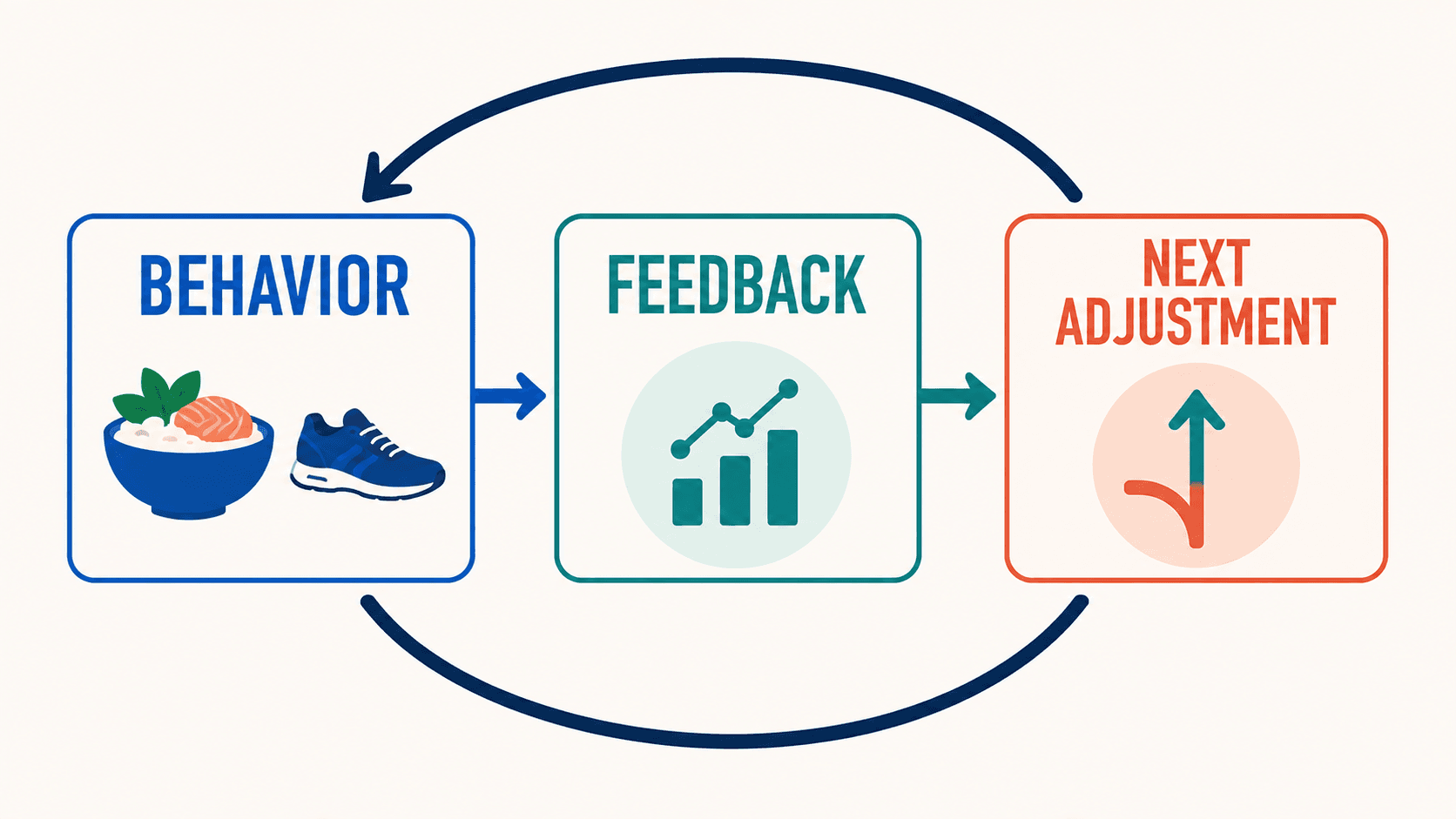
Demand a real feedback loop
Many apps give advice as content. Coaching apps give advice as a response to your data.
A real loop has three properties.
First, it is timely. Feedback that arrives next week is education. Feedback that arrives before dinner is coaching.
Second, it is specific. “Eat more protein” is a slogan. “Add 35g protein at lunch and keep dinner unchanged so your cravings do not spike at 9 pm” is a move you can actually execute.
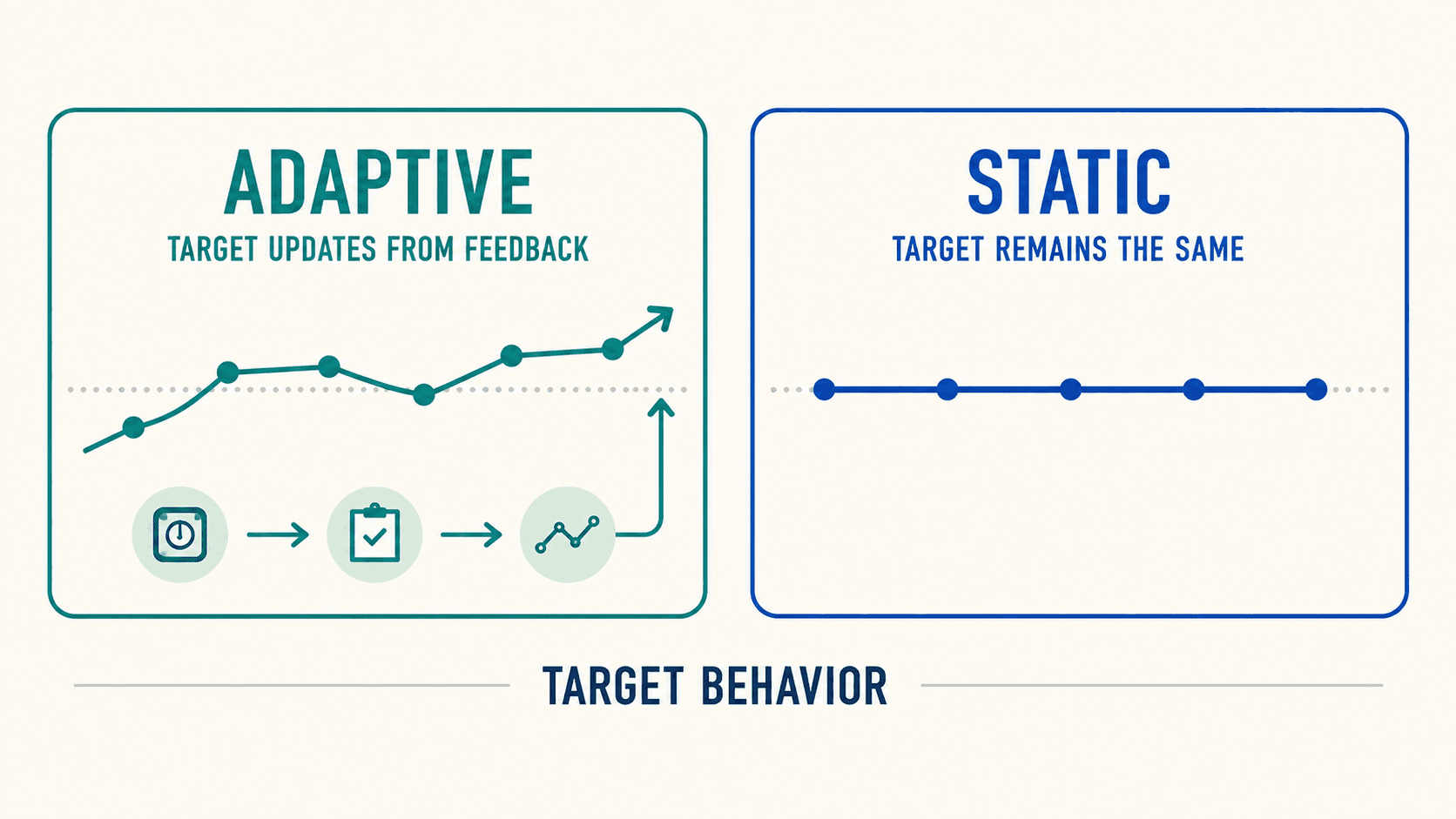
Third, it adapts. If you miss workouts, sleep poorly, or travel, your targets and plan should respond to reality, not punish you for deviating from an onboarding questionnaire.
Make food logging a non-issue
Coaching quality is capped by data quality. If logging feels like a second job, your coach is blind.
Look for workflows that let you log quickly and correct quickly. Photo logging is useful, but only if you can fix what the model missed without reopening a database search rabbit hole. Text logging is useful, but only if it understands real meals. Barcode scanning helps, but only if entries are reliable. The best systems combine fast capture with fast correction, and then they use the data for decisions rather than guilt.
Check whether the app can do meal planning, not just tracking
Coaching fails when it stays reactive. Planning is how coaching gets ahead of your cravings.
Meal planning does not need to be a rigid calendar. It can be a shortlist of meals you will default to, a set of macro-aligned recipes, or a “what should I eat next” suggestion that matches your remaining targets. The key is that the app helps you choose, not just record.

Price is not the point, the unit of value is attention
A $20 tracker has little value if you never use it. A $200 coaching program is expensive if it gives you generic advice. Value is the ratio between cost and behavior change.
You are paying for one of three things.
You are paying for knowledge, like lessons and education.
You are paying for attention, like a coach or dietitian who reviews your week.
You are paying for automation, like AI that reduces friction and keeps the loop tight.
Pick the one you actually need.
04Top nutrition coaching apps 2026
Fuel (Editor’s Choice)
Best for: People who want coaching that feels like a system, not a content library. Fuel is built for the execution layer, meaning the daily decisions, the weekly trend, and the plan that updates when reality changes.
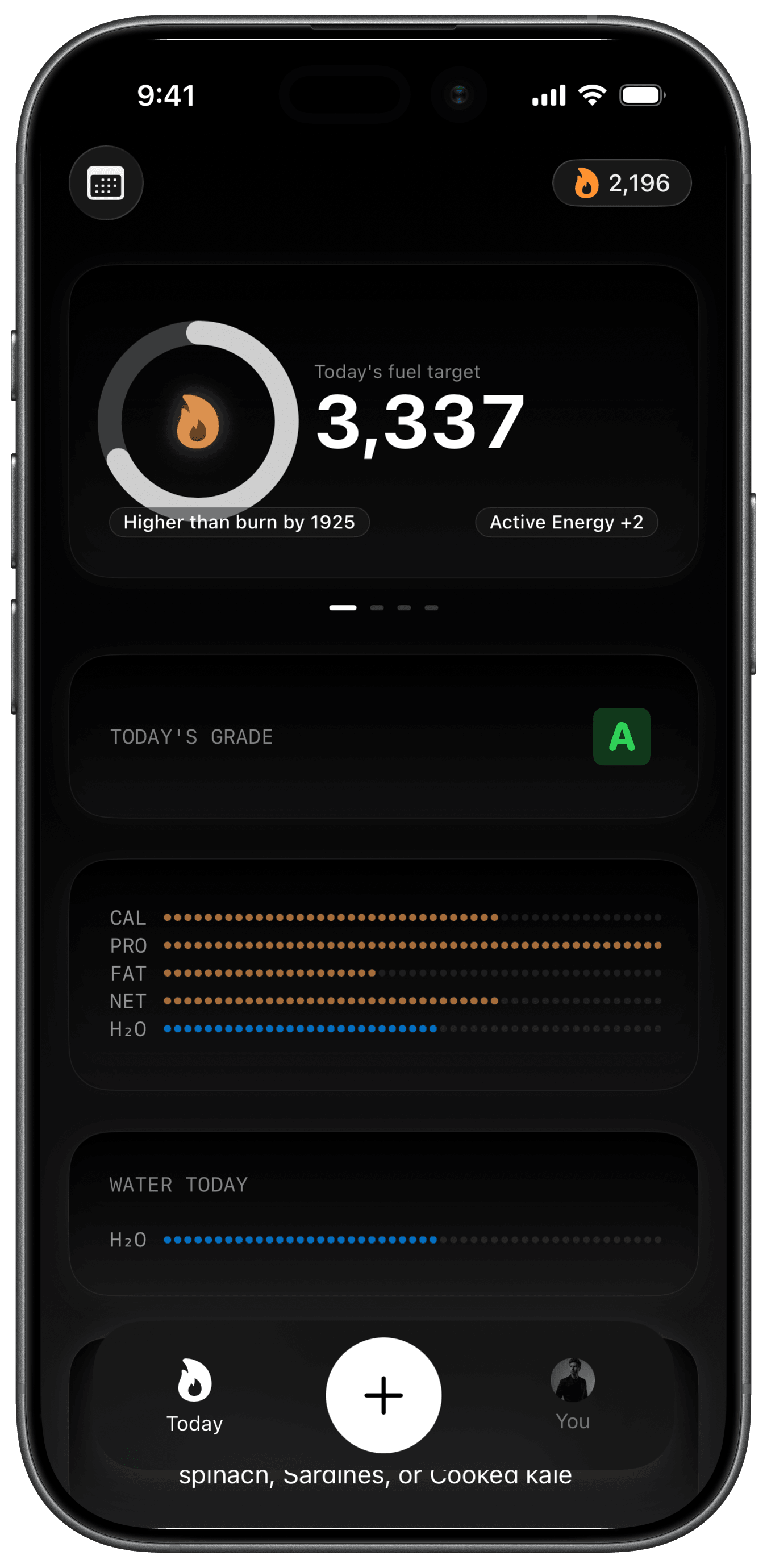
Fuel is an Apple Watch-first nutrition app that treats coaching as a loop, not a feature. Most apps help you log food. Fuel tries to help you make a better decision next, then uses that decision to update tomorrow.
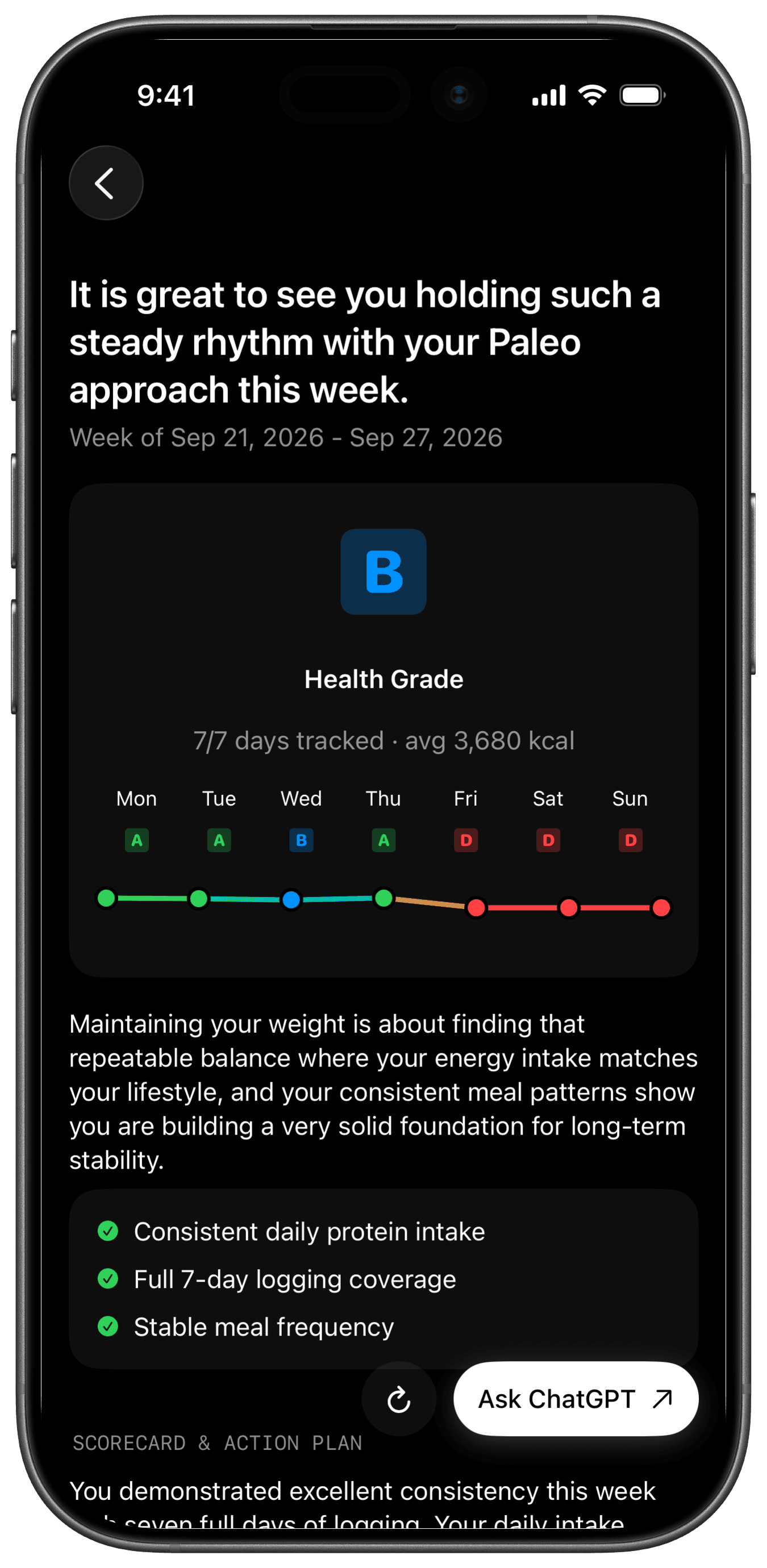
Live performance grade. Fuel translates calories, macros, and movement into a live grade that updates throughout the day. That matters because most people do not fail at the end of the day. They fail at the decision points that happen before the day is over. Fuel’s grade is designed to make those moments visible, not to shame you after the fact. Fuel describes this coaching loop on its product site.
Daily recap and weekly action plan. The daily recap turns yesterday into a short review you can use today. The weekly review turns seven days of data into an explicit plan for the next week. A coaching app that never asks you to review your week is not coaching, it is just tracking with motivational quotes.
AI logging with natural language correction. Photo, text, or voice is table stakes now. The difference is whether you can correct the log quickly when the portion or ingredient is wrong. Fuel is built around fast capture and fast correction so that data stays usable without becoming a chore.
Adaptive targets that move with you. If you set a goal date, Fuel updates the timeline based on real adherence. This prevents the common trap where your plan stays frozen while your life changes, and then you feel like you are failing a plan that was never updated.
Pros include a tight coaching loop with daily and weekly structure, Apple Health integration that makes activity part of the plan, and a workflow that makes consistency feel lighter than traditional tracking.
Cons include that you get the best results when you log most meals and weigh in regularly, because the coaching loop is built on your data. It is also Apple ecosystem-first by design.
Pricing: Fuel Pro is listed as an in-app purchase, with pricing that varies by region and store (see the Fuel App Store listing).
If you want the tracking market overview, start with The Best Macro Tracking Apps (2026 Edition). If you want the daily workflow, Macro tracking tips covers execution.
Noom
Best for: People who want structure, education, and mindset work, and who respond well to daily lessons as a behavior change scaffold.
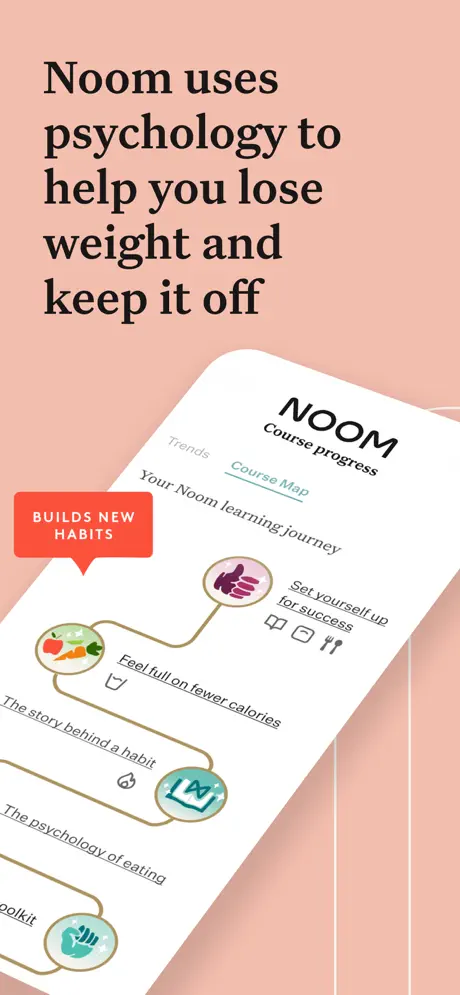
Noom built its brand on the idea that the barrier is not math, it is psychology. The app is organized around daily lessons, tracking tools, and coaching support that varies by plan. In 2026, Noom also offers multiple program tiers that extend into clinical support, including GLP-1 pathways, while keeping the same habit-change framework at the core.
Noom is at its best when your main problem is consistency. If you know what to do but do not do it, a curriculum that keeps you engaged can be the difference between a month of good intentions and a year of real change.
Pros include a strong educational backbone, daily touchpoints that keep you engaged, and an ecosystem that includes multiple support levels for different needs.
Cons include that the coaching experience is not uniform across plans and regions, and the system is less macro-precise than performance-first users may want.
Pricing: Noom publishes a 2026 cost and program overview that varies by program and plan term, with examples like a lower effective monthly rate on a longer commitment and separate pricing for GLP-1 program tiers.
Read our full Noom review.
WeightWatchers
Best for: People who want a simple framework, community accountability, and a program that has been refined through repetition over decades.
WeightWatchers works because it reduces decision load. Instead of asking you to solve nutrition from first principles every day, it gives you a consistent framework, tracking, recipes, and community reinforcement. In 2026, WeightWatchers also offers clinical pathways through Weight Watchers Clinic, including plans tied to GLP-1 support, though costs and terms depend on plan selection and promotions.
WeightWatchers is often the right answer when you want simplicity over precision. Many people do not need a perfect macro split. They need fewer choices and more consistency.
Pros include a clear system, a strong community layer, and a program that supports people who want to stay in one ecosystem for years.
Cons include that macro-first athletes may find the framework less direct for performance goals, and pricing is promo-driven with commitment terms that can be confusing.
Pricing: WeightWatchers publishes US plan pricing and terms that commonly feature an introductory month at a lower price tied to a longer commitment, followed by a higher monthly rate for the remainder of the term, with clinic plans and medication costs treated separately.
Nourish
Best for: People who want to work with a registered dietitian, especially if they have insurance coverage that makes 1:1 care accessible.
Nourish is less like a typical consumer nutrition app and more like a dietitian network delivered through an app. The value proposition is straightforward: match with a registered dietitian, meet over video, and get a plan that is built around your medical history, preferences, and lifestyle. That matters if you have constraints that generic programs cannot handle well.
Pros include credentialed 1:1 support, personalization that goes beyond templates, and a model that can be cost-effective when insurance covers visits.
Cons include that if you are paying out of pocket, sessions can be expensive, and progress still depends on your willingness to execute between visits.
Pricing: Nourish states that many members pay $0 out of pocket with insurance coverage, and also lists an out-of-pocket per-appointment cost for those without coverage in its insurance and pricing FAQ.
Calibrate
Best for: People pursuing clinician-guided weight loss where medication support is part of the plan, and who want the program to integrate medical care, coaching, and insurance navigation.
Calibrate is not a general nutrition coaching app. It is a clinic-led program built around metabolic health and GLP-1 support, paired with structured coaching and curriculum. If you are looking for a lifestyle-only app, Calibrate is not the tool. If you want a single program that bundles clinician visits, coaching, and a process for insurance navigation, it is a leading option.
Pros include a cohesive medical and coaching workflow, 1:1 video coaching, and program structure that is designed for long-term adherence rather than short sprints.
Cons include that program fees, lab work, and medication costs are handled separately in ways that depend on your insurance. It also centers weight loss, not performance nutrition.
Pricing: Calibrate lists its Metabolic Reset membership pricing starting at $199 per month, with an initial commitment and separate notes on what is and is not included.
Signos
Best for: People who want metabolic feedback from a CGM, and who are willing to wear a sensor and use glucose response as a coaching signal.
Signos is built around continuous glucose monitoring as a behavior change tool. The idea is simple: feedback changes behavior faster than theory does. If you can see how certain meals affect your glucose response, you can often find substitutions that are both satisfying and easier on your appetite and energy.
Pros include continuous feedback that can sharpen food choices quickly, and a coaching model that is grounded in measurable response rather than generic advice.
Cons include the practical overhead of CGM logistics and cost, plus the risk of over-focusing on glucose numbers when your real issue is sleep, protein intake, or meal timing.
Pricing: Confirm current program availability, sensor supply, support, and the full billed term directly with Signos before committing. A previously advertised monthly equivalent is not a current quote.
05Other coaching apps worth a look
Weight loss and nutrition coaching is converging with telehealth, biomarkers, and employer-sponsored programs, so there are several options that are excellent in narrower use cases.
Fay is another dietitian-first platform that emphasizes insurance coverage and dietitian matching for 1:1 support (see Fay's insurance and pricing information).
Nutrisense offers CGM-driven insights with dietitian support, which can be useful if you specifically want feedback tied to glucose response and coaching around it (see the Nutrisense plans for current pricing and details).
Levels is a metabolic health membership that focuses on education and insights, with pricing that is separate from the CGM hardware itself (see the Levels membership pricing overview).
Omada and Lark are coaching programs commonly offered through employers or health plans, often at no direct cost to the participant when eligible (see Omada FAQ and Lark program overview).
06Match a coaching app to the help you need
A practical way to choose is to identify what is actually failing in your current system.
If your problem is direction, meaning you do not know what to do, start with a program that teaches and scaffolds. Noom and WeightWatchers are designed for that.
If your problem is execution, meaning you know what to do but you do not do it, choose a tool that makes decisions easier inside your day. Fuel is designed around that loop.
If your problem is complexity, meaning you have medical constraints or a long history of failed plans, choose credentialed care. Nourish and Fay exist for that, and they are often the best value when insurance coverage applies.
If medication support is part of your plan, use a program designed to coordinate it. Calibrate and WeightWatchers Clinic are built around that workflow, and Noom’s GLP-1 tiers cover a similar territory with a different product philosophy.
If you want biomarker feedback, choose a CGM program and commit to learning from the signal rather than obsessing over it. Signos, Nutrisense, and Levels target this segment.
07Habits that make coaching apps work
Most people do not fail because they chose the wrong app. They fail because they do not set the conditions for the app to work.
Log imperfectly rather than perfectly. Coaching needs trend data, not courtroom evidence.
Set one default meal for weekdays. Decision reduction is a performance enhancer.
Review your week every week. If the app does not force a weekly review, create one anyway.
Keep coaching actions small. One adjustment that you execute for seven days beats five adjustments you never implement.
If you want a deeper workflow for AI-assisted logging, Easy Ways to Log Food and Track Macros with AI breaks down the options and the trade-offs.
08Where coaching apps are headed next
The next step is not more data. It is better interpretation.
AI coaching is shifting from one-off suggestions to ongoing systems that integrate food, movement, and recovery signals. The best implementations will feel less like chatbots and more like a control system that is quiet, consistent, and specific.
Clinical programs will keep expanding, especially where GLP-1 support and insurance navigation are part of the value. The best programs will be the ones that treat medication as a tool, not as the whole plan.
Dietitian networks will keep growing as payers and employers look for scalable, credentialed care that can support prevention and chronic condition management.
09Pick one app and run a 30-day trial
If you want a nutrition coaching app that behaves like a coach inside your day, choose a system that gives you fast feedback, daily review, and a weekly plan you can actually execute. Fuel is built around that loop.
If you want a mindset-first curriculum that focuses on habit change and psychology more than precise nutrition tracking, Noom can still fit that use case, but it is a weaker choice if you need reliable day-to-day logging.
If you want a simple points-based structure and community accountability that reduces decision fatigue, WeightWatchers can be a practical fit, but it is best for people who want a branded program rather than a highly customized nutrition system.
If you want credentialed 1:1 care, a dietitian platform like Nourish or Fay makes more sense, especially if insurance coverage applies, but that model depends much more on the quality of the individual provider you match with.
If you are integrating medication support, choose a program built for that workflow, like Calibrate, but treat it as a medical-plus-coaching service rather than a flexible everyday nutrition app.
The best app is the one you will use. Pick a model you can sustain, then let the coaching loop compound.
If the Fuel workflow fits your needs, try Fuel on iPhone and use the free allowance to check your own meals before upgrading. The current US Pro reference price is $24.99 monthly or $149.99 annually; regional offers are shown in the store.