

Key Takeaways
Noom and YAZIO sit at opposite ends of the nutrition-app pricing spectrum. Noom costs roughly $70 per month, YAZIO costs $6.99 per month. That 10x price gap reflects a fundamental difference in product philosophy: Noom is a behavioral coaching program that uses food logging as a secondary tool. YAZIO is a calorie tracker that uses visual polish and gamification as engagement tools. Both have meaningful execution issues that complicate the comparison. The choice comes down to whether you need coaching or tracking and how much you are willing to pay for either.
01About Noom
Noom is a behavioral psychology coaching program delivered through a mobile app. Its core product is a structured curriculum of daily psychology-based lessons designed to change your relationship with food, not a food log. Drawing on cognitive behavioral therapy principles, Noom's content explores emotional eating patterns, stress-driven food choices, cognitive biases that sustain unhealthy habits, and the psychological mechanics of long-term behavior change. The program includes access to a human coach who provides periodic check-ins and accountability support.
Food logging exists within Noom but is deliberately minimal. Manual search is the only input method. No barcode scanning, no photo logging, no voice input, and no ability to copy meals between days. The tracking infrastructure reflects Noom's philosophy that understanding why you eat matters more than precisely measuring what you eat. The app costs approximately $70 per month, making it the most expensive mainstream nutrition app by a wide margin. Noom has no Apple Watch integration, no meaningful free tier, and a documented history of app reliability problems.
02About YAZIO
YAZIO is a Germany-based calorie tracking app known for one of the most visually polished interfaces in the nutrition-app category. Clean typography, smooth animations, and modern design make the daily tracking experience feel premium. The core experience centers on calorie and macro tracking with barcode scanning, database search, and intermittent fasting timers with preset and customizable eating windows.
YAZIO offers a functional free tier with minimal ads, plus a Pro subscription at $6.99 per month. Gamification elements include diamond chests and a reward system intended to drive daily engagement, though users report these mechanics frequently do not trigger as described. YAZIO has a basic Apple Watch integration. The app's strength is accessibility: a beautiful interface, a low price, and a feature set that covers the basics of daily calorie tracking. Its weakness is the data underneath.
03Coaching vs Tracking
Winner: Noom
This is the comparison's defining axis and the primary justification for Noom's 10x price premium. Noom offers genuine behavioral coaching: a structured psychology curriculum with daily lessons, human coach access, and content designed to produce lasting habit change. The approach is research-backed, and some users describe it as transformative. Noom tells you how many calories you ate and explores why you made those food choices and what psychological patterns you can change.
YAZIO provides calorie tracking with gamification layered on top. Diamond chests and reward systems add surface-level engagement. They analyze your behavior, explore your relationship with food, and adjust based on your progress by tracking calorie intake. Users report that the gamification rewards frequently do not trigger as described, turning what should be a motivational mechanic into a source of confusion.
For users whose nutrition challenge is behavioral (understanding and changing the habits that drive overconsumption), Noom addresses a dimension that YAZIO does not even acknowledge. The coaching gap between the two products is vast and unbridgeable within either app's current architecture. YAZIO would need to build an entirely new content and coaching system to approach what Noom offers. Noom's coaching is the product itself, not an add-on feature.
04How each app handles food logging
Winner: YAZIO
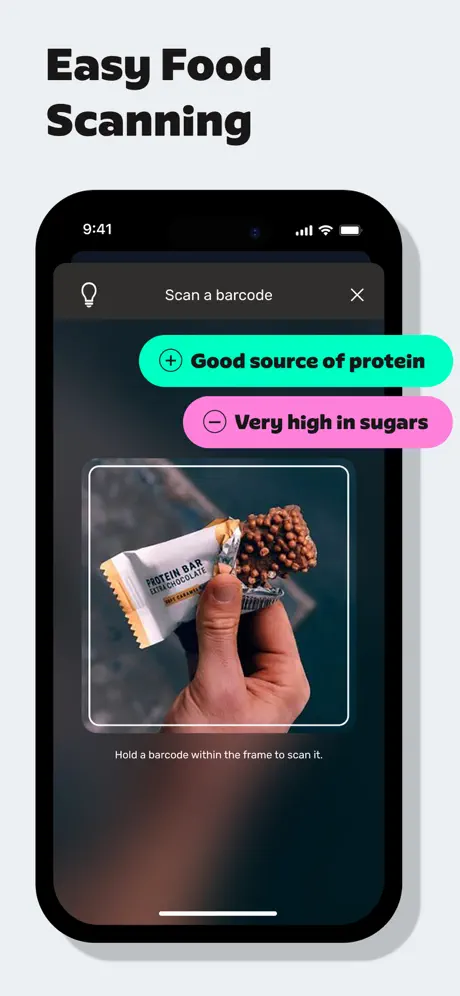
YAZIO is the significantly better logging tool. It includes barcode scanning in all tiers, a food database with search functionality, and intermittent fasting timers integrated into the daily view. The logging experience is visually polished and reasonably efficient for standard packaged foods.
Noom's food logging is an afterthought by design. Manual search is the only method. No barcode scanning, no photo logging, no voice input, no meal copying. The experience adds friction to every meal logged. Manual entries behave inconsistently. For users who eat packaged products and expect to scan a barcode, Noom's logging will feel like a significant step backward from virtually any other nutrition app on the market.
The caveat with YAZIO is data accuracy. Nutrition values do not always match package labels, phantom entries inflate totals, and custom food entries hit dead-end errors. YAZIO is the better logging tool in terms of convenience and input methods, but the underlying data requires verification for users who need precision.
05Crashes and day-to-day stability
Winner: Tie. Both have daily issues
Both apps have reliability problems that affect daily use, but the failure modes differ in character and impact.
Noom's app frequently fails to load. Users encounter blank screens, error states, and crashes that block access to lessons, logging, and coaching content entirely. The standard troubleshooting fix is to uninstall and reinstall the app. This resets all user preferences, including notification settings, lesson progress, and coaching configurations. Customer support is unreachable for many users who encounter these issues. For a $70/month coaching program that depends on daily lesson engagement, the inability to open the app represents a fundamental delivery failure.
YAZIO's reliability problems center on data corruption rather than access. The calendar breaks after app updates, displaying incorrect daily summaries or failing to render historical data. Phantom entries appear overnight. Foods that were never logged inflate calorie totals. Switching phones causes historical data to fail to load. Cross-device sync is inconsistent. The app opens reliably, but the data inside it may not be trustworthy.
Noom blocks you from the product. YAZIO lets you in but shows you unreliable data. Both failures undermine the core value proposition. Neither app delivers the consistency that daily health tracking requires.
06Day-to-day UI friction
Winner: YAZIO
YAZIO is one of the most thoughtfully designed nutrition apps available. The visual experience (layouts, animations, typography, color palette) is cohesive and modern. Daily logging feels smooth. The fasting timer is elegantly integrated. The macro summary is visually clear. Every interaction feels intentional.
Noom's interface is functional but content-focused rather than design-focused. The app prioritizes delivering psychology lessons and tracking content engagement over visual polish. Navigation is straightforward but unremarkable. The daily experience centers on reading and responding to lesson content, which provides value but does not match YAZIO's tactile quality.
For users who care about how their daily app interactions feel (the micro-moments of opening, logging, and reviewing), YAZIO delivers a distinctly more polished experience.
07Streaks badges and habit games
Winner: Noom (marginally)
Both apps use gamification, but with different levels of intentionality.
Noom ties its gamification to the psychology curriculum. Completing lessons, engaging with content, and logging meals contribute to a progress system that is integrated with the coaching approach. The rewards are meaningful within the context of behavior change. They reinforce the habits that Noom is trying to build.
YAZIO uses diamond chests and rewards as standalone engagement mechanics. The system is not connected to any deeper coaching or behavioral framework. Users report that rewards frequently do not trigger as described. Completing the actions that should unlock chests produces nothing, while rewards sometimes appear without clear triggers. The result is confusion rather than motivation.
Neither app's gamification is fully reliable, but Noom's at least serves the coaching mission when it works. YAZIO's operates independently of any behavioral framework and fails to execute consistently.
08Free tiers and paid walls
Winner: YAZIO
The 10x price gap is the most striking number in this comparison. YAZIO Pro costs $6.99 per month with a functional free tier. Noom costs approximately $70 per month with no meaningful free tier. Over a year, that is $83.88 versus roughly $840.
Noom's price is partially justified by human coach access, which is expensive to deliver. But the combination of high price, unreliable app performance, and unreachable customer support makes the value equation risky. If the app fails to load on the days you need it most, $70 buys you access to a product you cannot use.
YAZIO delivers a polished daily tracking experience with barcode scanning, fasting tools, and gamification at a price that represents minimal financial risk. The data accuracy issues are a real concern, but at $6.99 per month, the financial stakes of discovering the product does not meet your needs are low. You can evaluate YAZIO's entire free tier without spending anything and upgrade to Pro only if the core experience works for you. This is a luxury Noom's pricing model does not permit.
For most users, YAZIO's value per dollar is dramatically higher. The math is straightforward: ten months of YAZIO Pro costs less than one month of Noom. Noom's premium is only justified if behavioral coaching specifically addresses your primary barrier and if the app reliably delivers that coaching without the load failures and support gaps that currently plague the experience.
09Apple Watch logging and Health sync
Winner: YAZIO
YAZIO offers basic Apple Watch integration for wrist-based logging and progress checking. The experience is limited but present.
Noom does not have an Apple Watch app. For users who have integrated Apple Watch into their daily health workflow (checking progress between meetings, logging water on the go, or reviewing calorie balance without pulling out their phone), Noom's absence from the platform is a gap. YAZIO at least shows up on the wrist with basic calorie and progress checking, even if the experience is limited compared to dedicated health apps. Having any wrist presence is better than having none for users whose daily routine involves frequent glances at their Watch for health data.
10Who should pick Noom
Noom is the right choice if your nutrition challenge is fundamentally behavioral. You understand what you should eat. You have counted calories before. The problem is the patterns, emotional triggers, and deep-rooted habits that override your knowledge, not information. You value human accountability and are willing to invest $70 per month and daily time in psychology content. You can tolerate an app that sometimes fails to load and customer support that may not respond when you need it. You have tried calorie counting before and found that the problem was the habits behind the numbers, not the numbers themselves.
11Who should pick YAZIO
YAZIO is the right choice if you want a polished, affordable daily tracker with intermittent fasting tools and barcode scanning. You need a consistent logging habit in an app that is pleasant to use, not behavioral coaching. You prefer a low-risk financial commitment, you can work around occasional data accuracy issues, and you value design quality in the tools you use daily. At $6.99 per month, YAZIO delivers functional tracking without asking for a significant financial or psychological investment.
12Final pick based on your priority
Noom and YAZIO are almost incomparable products at wildly different price points. Noom is a coaching program with genuine psychological depth, undermined by an app that frequently fails to deliver it. YAZIO is a tracking tool with genuine design polish, undermined by data that you cannot always trust. The 10x price gap makes the choice straightforward for most users. YAZIO delivers a solid daily tracking experience at a fraction of Noom's cost. The exception is users for whom behavioral coaching is specifically what they need. Noom's psychology curriculum has no equivalent in the tracking-app category, and for the right person, it addresses a problem that YAZIO does not even recognize. If your barrier is behavioral, polished calorie tracking will not solve it. If your barrier is tracking consistency, psychology content will not replace a good daily tool.
Looking for coaching built into a reliable daily tool without the $70 price tag or the data integrity problems? Fuel delivers AI-powered logging, daily health scoring, and weekly coaching that compounds inside a product that actually works.
Frequently Asked Questions
Is Noom or YAZIO better for weight loss?
They approach weight loss from entirely different angles. Noom offers behavioral psychology coaching to change your habits and relationship with food. This is effective for users whose barrier is behavioral. YAZIO offers calorie tracking with a polished interface and fasting tools. This is effective for users who need a consistent logging habit. The 10x price difference makes YAZIO the lower-risk choice unless Noom's coaching specifically addresses your needs.
Is Noom worth 10x the price of YAZIO?
Noom's ~$70/mo includes human coach access and a structured psychology curriculum. Whether that justifies 10x YAZIO's $6.99/mo depends on whether your weight management challenge is behavioral. If you understand nutrition but cannot sustain habits, Noom addresses the root cause. If you just need a daily tracking tool, YAZIO delivers far more value per dollar.
Does YAZIO offer any coaching?
No. YAZIO provides calorie and macro tracking with gamification elements, but no coaching, no behavioral content, and no adaptive goals. The gamification (diamond chests) is surface-level engagement that users report does not function reliably.
Which app is more reliable?
Neither is consistently reliable. Noom frequently fails to load and reinstalling resets all preferences. YAZIO's calendar breaks after updates, phantom entries appear, and cross-device data is lost. Both have daily reliability issues. Noom blocks access to content, YAZIO corrupts tracking data.
Does Noom have barcode scanning?
No. Noom offers only basic manual food search. No barcode scanning, no photo logging, no voice input, and no meal copying. YAZIO includes barcode scanning in all tiers, making it the significantly better logging tool.