App Comparison
MyFitnessPal vs YAZIO
Fuel Nutrition Team • March 22, 2026
MyFitnessPal

YAZIO

Market strength
Database
Barcode scanning
Ads
UI polish
Data integrity
Gamification
Apple Watch
Price
Key Takeaways
MyFitnessPal and YAZIO compete for the mainstream calorie-counting audience from different home markets and with different strengths. MyFitnessPal dominates in the United States with the largest food database in the category and unmatched brand recognition. YAZIO is popular in Europe with one of the most polished tracker interfaces available, free barcode scanning, and intermittent fasting tools. Both are crowd-sourced calorie counters with no coaching — but they fail in different ways and excel in different areas. The choice often comes down to geography, budget, and whether you value database scale or daily experience.
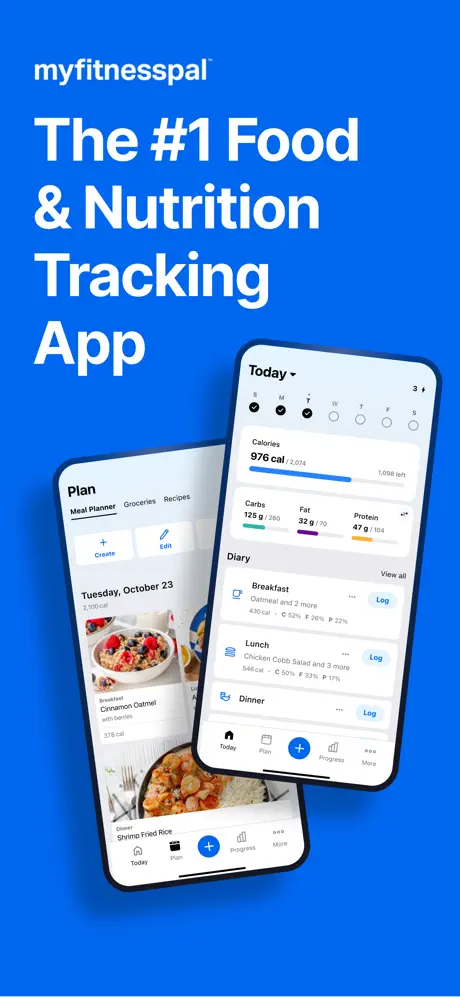
MyFitnessPal is the most widely recognized nutrition app in the world. Built on a crowd-sourced food database of over 14 million entries, it has been the default calorie counter since launching in 2005. The core workflow is search-and-log: find your food in the database, select a serving size, and track your daily calorie and macro totals against a target set during onboarding.
MyFitnessPal offers a functional free tier with ads, plus a $19.99/month Premium subscription that unlocks barcode scanning, nutrient insights, and an ad-free interface. The app includes a recipe importer, community forums, meal copying, and basic Apple Watch logging. Third-party integrations are extensive — MyFitnessPal connects with more fitness devices and apps than nearly any competitor. The interface is functional but feels dated in places, reflecting the product's long history and incremental updates rather than modern redesign. MyFitnessPal has not fundamentally changed its approach in years: log food, count calories, check your balance. That simplicity is both its greatest strength and its most obvious limitation when compared to apps that have been designed from scratch in recent years.
YAZIO is a Germany-based calorie tracking app that has become one of the most popular nutrition tools in Europe. Its defining characteristic is visual polish — clean typography, smooth animations, modern layouts, and a daily experience that feels carefully designed rather than purely functional. YAZIO includes calorie and macro tracking, barcode scanning in all tiers, and intermittent fasting timers with preset and customizable windows.
YAZIO offers a functional free tier with minimal ads, plus a Pro subscription at $6.99 per month. The app features gamification elements — diamond chests and reward systems — intended to boost daily engagement, though users report these mechanics frequently do not trigger as described. YAZIO has a basic Apple Watch integration. The app's strength is its daily experience: opening YAZIO feels like using a premium product, even on the free tier. Every interaction — from logging a meal to checking your fasting window — feels intentional and well-crafted. Its weakness is the data underneath that polished surface: nutrition values that do not always match labels, phantom entries that inflate totals, and a calendar that breaks after updates.
Winner: MyFitnessPal
MyFitnessPal's 14-million-entry database is the largest in the category. For US users eating branded, commercially packaged food, coverage is nearly comprehensive. Whatever you eat — from national chains to regional brands to specialty products — there is almost always an entry in the database. The crowd-sourced model introduces accuracy variance — duplicate entries for the same product, incorrect macro data, and limited serving sizes are common complaints — but the sheer volume means you can usually find a correct entry among the options if you are willing to compare a few versions.
YAZIO's database is smaller, with better regional coverage for European products. But the database has a more serious problem than size: data integrity. Users consistently report that nutrition values in the app do not match the values on actual product packaging. Phantom entries appear in daily logs — foods that were never logged inflate calorie totals without explanation. Custom food entries trigger dead-end errors that say "data doesn't add up" with no resolution path. After app updates, the calendar breaks, displaying incorrect daily summaries or failing to load historical data.
MyFitnessPal's database has accuracy variance within a massive pool of entries — the volume itself provides a correction mechanism because multiple entries for the same product increase your odds of finding an accurate one. YAZIO's database has accuracy problems within a smaller pool, and the errors are harder to detect because fewer alternative entries exist for comparison. A missing entry in MyFitnessPal is inconvenient; a wrong entry in YAZIO is more insidious because you may not realize your daily totals are inaccurate until your progress stalls unexpectedly and you begin questioning your adherence rather than your tool.
Winner: YAZIO
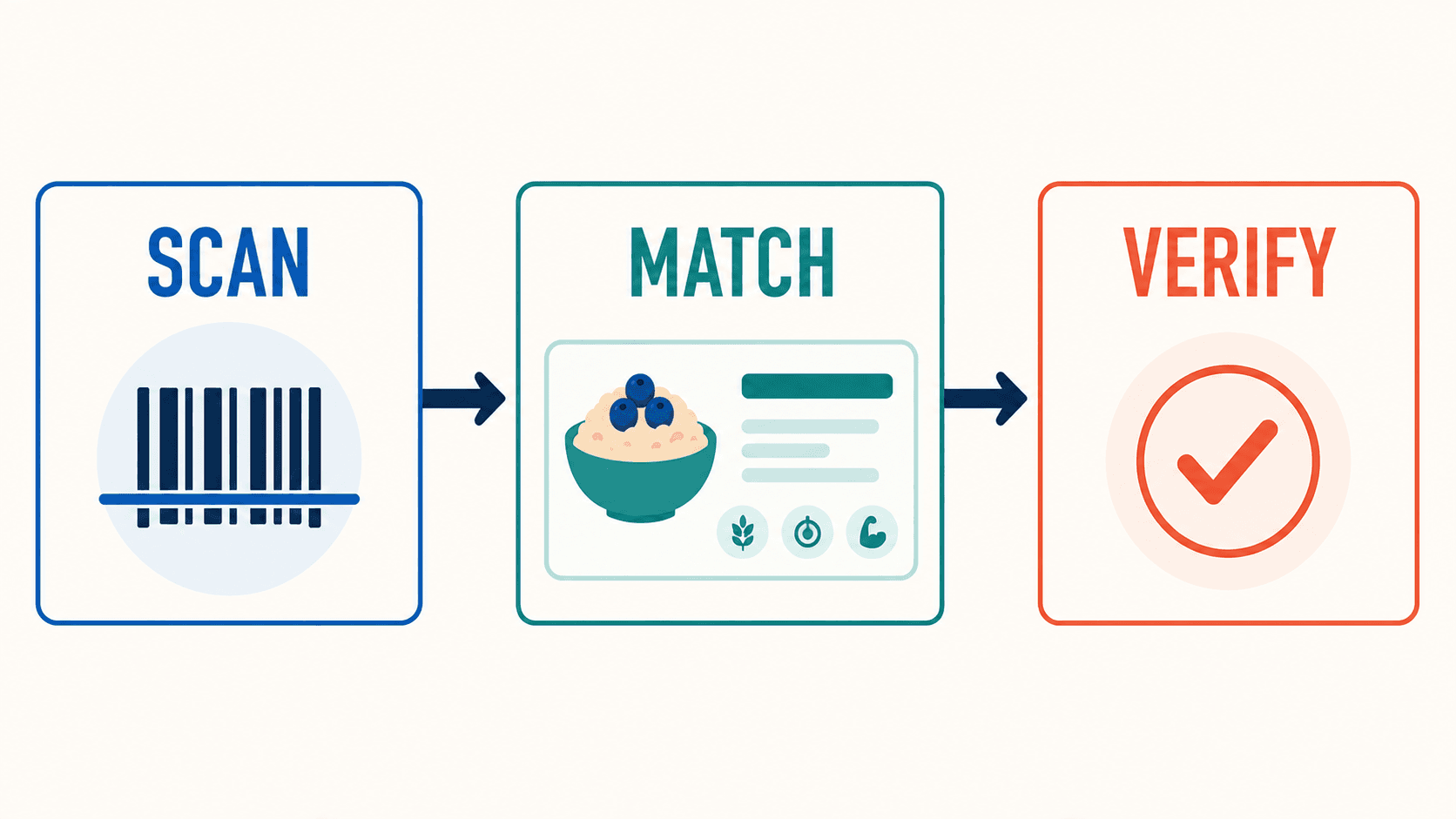
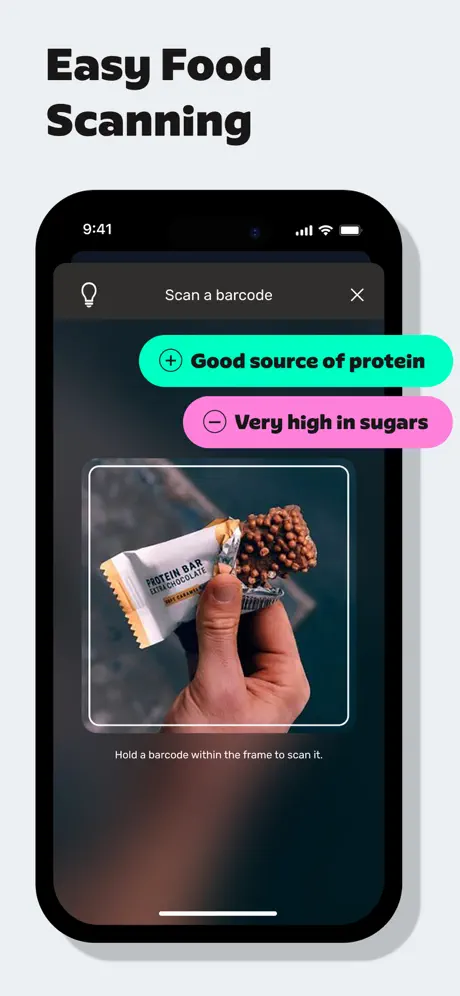
YAZIO includes barcode scanning in all tiers, including the free version. Download the app, scan a product, and log it immediately.
MyFitnessPal locks barcode scanning behind its $19.99/month Premium subscription. On the free tier, you must manually search for foods by name. For users who eat packaged products daily — which is most users — this paywall adds significant friction to the most common logging action. The decision to lock barcode scanning behind Premium is one of MyFitnessPal's most criticized monetization choices.
For users who want barcode scanning without paying a premium subscription, YAZIO wins this point clearly.
Winner: YAZIO
YAZIO is one of the best-designed nutrition apps on the market. The interface is visually polished — clean layouts, smooth transitions, thoughtful typography, and a cohesive design language that makes daily logging feel pleasant. The intermittent fasting timer integrates naturally into the daily view. The macro summary is clear and attractive. Opening YAZIO feels like using a product that cares about design.
MyFitnessPal is more functional than beautiful. The interface has accumulated layers of features over nearly two decades, and the result feels dated in places. Navigation works but is not elegant. The ad-supported free tier adds visual clutter that further degrades the experience. MyFitnessPal Premium cleans up the ads but does not modernize the design.
For users who open their nutrition app multiple times per day and want each interaction to feel smooth and well-crafted, YAZIO delivers a meaningfully better experience. Design quality matters for daily-use tools because friction at the interface level directly affects whether you maintain the habit. An app that feels pleasant to use is an app you are more likely to open consistently.
The caveat: YAZIO's polish masks deeper issues. Post-update, the calendar breaks and displays incorrect daily summaries. Phantom entries appear overnight, inflating calorie totals with foods that were never logged. Switching phones causes historical data to fail to load. Cross-device sync is inconsistent. MyFitnessPal's interface is less attractive but generally more stable underneath — the experience is not as pleasant, but the data tends to persist correctly across sessions and devices.
Winner: YAZIO
YAZIO Pro at $6.99 per month is less than a third of MyFitnessPal Premium at $19.99 per month. Over a year, that is $83.88 versus $239.88 — a difference of over $150. YAZIO's free tier includes barcode scanning and minimal ads. MyFitnessPal's free tier locks barcode scanning and clutters the interface with intrusive ads, including graphic food imagery in the log feed.
The value gap is wide. YAZIO delivers barcode scanning, a polished interface, and fasting tools at a fraction of MyFitnessPal's price. MyFitnessPal's premium commands a price that is difficult to justify purely on the basis of database scale, especially when the ad-supported free tier feels punitive rather than generous. For users evaluating both options, the question is whether MyFitnessPal's larger database is worth paying nearly three times more per month — and losing free barcode scanning in the process.
Users do report auto-renew surprises with YAZIO after trial periods, so confirming subscription management settings through your device's app store before committing is advisable. Despite this caveat, YAZIO's overall monetization approach is meaningfully less aggressive than MyFitnessPal's — you get more core functionality for less money with less daily friction from ads.
Winner: YAZIO
YAZIO includes built-in intermittent fasting timers with preset windows (16:8 is the most common) and fully customizable schedules. The fasting timer is integrated into the daily tracking view, making it easy to manage eating windows alongside calorie targets.
MyFitnessPal does not offer any fasting tools. Users who practice intermittent fasting alongside calorie tracking need a separate timer app to manage their eating windows — adding another tool to a workflow that YAZIO handles in a single interface. For the growing number of users who combine fasting with calorie counting, YAZIO's integrated approach is a meaningful convenience. The ability to see your eating window, calorie progress, and macro breakdown in one daily view eliminates the context switching that a two-app workflow requires.
Winner: Tie
Both apps offer basic Apple Watch integration. Neither provides a full companion experience — no robust daily summaries, no comprehensive logging from the wrist, no progress rings that reflect your full nutritional picture. The Watch support on both platforms is a minimal feature rather than a differentiated experience. For users who want a comprehensive wrist-based nutrition experience — quick logging, progress rings, daily summaries, and water tracking — neither app delivers. The Apple Watch integration on both platforms is functional but shallow, offering basic calorie checking without the depth that health-focused Watch users have come to expect from the platform.
MyFitnessPal is the right choice if you are primarily based in the United States, need the largest possible food database, and value wide third-party integrations. You eat a varied diet with many branded products and want the confidence that almost anything will be in the database. You are willing to pay $19.99/month for barcode scanning and an ad-free experience, or you can tolerate the ads on the free tier. You do not need coaching, fasting tools, or a polished design — you need comprehensive food coverage. The app's massive community and ecosystem of integrations also provide value for users who connect their nutrition data with fitness trackers, gym apps, and other health platforms.
YAZIO is the right choice if you value a polished daily experience, want barcode scanning without a premium subscription, and prefer an accessible price point. You may be based in Europe, where YAZIO's regional food coverage is stronger than MyFitnessPal's US-centric database. You practice intermittent fasting and want a tracking app with built-in fasting tools rather than a separate timer app. You can tolerate occasional data accuracy issues and are willing to verify nutrition values against product labels when precision matters. At $6.99/month, the financial risk of trying YAZIO is minimal compared to the $19.99/month commitment that MyFitnessPal Premium requires. Over a year, the savings compound: YAZIO Pro costs $83.88 annually while MyFitnessPal Premium costs $239.88 — a $156 difference that buys equivalent core functionality with better design and free barcode scanning.
MyFitnessPal wins on database scale and third-party integrations. YAZIO wins on design, price, barcode accessibility, and fasting tools. In the United States, MyFitnessPal's database coverage is the deciding factor for users who eat widely varied diets with many branded products. In Europe, YAZIO offers better regional coverage and a dramatically more polished experience at less than a third of the price. Neither offers coaching, adaptive goals, or AI-powered logging. Both are calorie counters that display your numbers without guidance on what to change when progress stalls. Both are crowd-sourced calorie counters with no coaching layer — choose based on whether you prioritize the breadth of the database or the quality of the daily experience. For US users with varied diets, MyFitnessPal's scale is hard to beat. For European users or design-conscious trackers who practice fasting, YAZIO offers a more complete package at a fraction of the price.
Looking for a tracker that goes beyond calorie math? Fuel delivers AI-powered logging, daily coaching, and Apple Health as your data backbone — no crowd-sourced accuracy issues, no phantom entries, no $19.99 barcode paywall.
Neither offers coaching or adaptive goals — both provide static calorie targets. MyFitnessPal has the larger database for logging convenience. YAZIO has a more polished interface and fasting tools. Neither will analyze your data and adjust your plan. Choose based on which daily experience sustains your consistency.
YAZIO has documented data integrity issues. Users report nutrition values that do not match package labels, phantom entries that inflate daily totals, and custom food errors with no resolution. The interface is polished, but verifying entries against labels is advisable for precision.
MyFitnessPal locks barcode scanning behind its $19.99/mo Premium subscription. YAZIO includes barcode scanning in all tiers, including the free version. For daily convenience, YAZIO's approach is significantly more accessible.
Yes. YAZIO includes intermittent fasting timers with preset windows like 16:8 and customizable schedules. MyFitnessPal does not offer fasting tools. If fasting is part of your routine, YAZIO has a clear advantage.
Both offer basic Apple Watch integration, but neither provides a full companion experience. Wrist-based logging and progress checking are available in limited form on both platforms.