
Key Takeaways
Lose It! and YAZIO are both approachable calorie trackers with clean designs and friendly interfaces. The differences are under the surface. Lose It! is more reliable and more affordable but aggressively upsells. YAZIO is more visually polished but has data integrity problems that undermine the fundamental purpose of a calorie tracker. Lose It! costs half as much annually and does not lose your data when you switch phones.
01About Lose It!
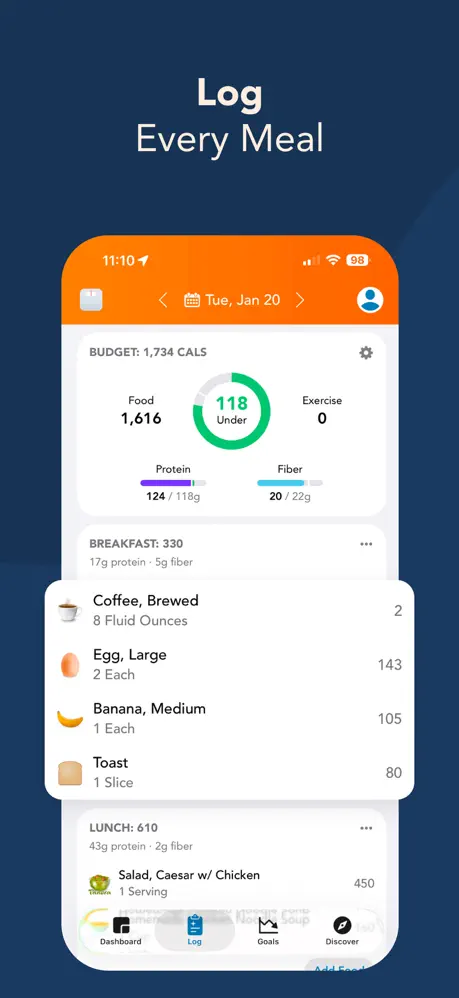
Lose It! is one of the most approachable calorie tracking apps available, designed for people who want straightforward calorie counting without complexity. The interface is clean and friendly, food search is fast, and barcode scanning is free on all tiers. The daily workflow is simple: scan or search, log your food, and stay under your calorie target. Meal copying lets you repeat common meals without re-entry.
At $39.99/year for Premium, Lose It! is among the cheapest tracking apps in the category. The free tier is functional but aggressively upsell-driven with discount timers, persistent banners, and promotional nudges on nearly every screen. There is no coaching, no adaptive goals, no gamification, and no AI features. Lose It! is a reliable calorie counter that works every day, annoys you into upgrading, and does not pretend to be more than what it is.
02About YAZIO
YAZIO is a German-based nutrition tracking app with one of the most visually polished interfaces in the category. The typography is considered, transitions are smooth, and the overall aesthetic communicates a level of design care that most nutrition apps do not achieve. Standard meal structure is maintained with clear breakfast, lunch, dinner, and snack slots. A gamification system awards diamond chests for streaks and milestones. The app targets European markets with local product coverage.
Underneath the visual polish, YAZIO has significant data integrity problems. Nutrition values frequently do not match package labels. Custom food entries trigger cryptic "data doesn't add up" errors with no resolution path. Phantom entries appear in the food log that the user never created, inflating calorie totals. The calendar view breaks after updates. Switching phones causes food history to fail to load. The diamond chest gamification, a selling point of the engagement system, does not trigger as described. YAZIO Pro costs $6.99/month and includes a basic Apple Watch integration.
03Database noise and accuracy sources
This is the most consequential difference for a calorie tracker. Lose It! has a meaningful advantage.
Lose It!'s crowd-sourced database has accuracy issues. Users report wrong portions, implausible calorie counts, and inconsistent serving sizes. These are common crowd-sourced problems shared with every app that relies on user-submitted data. But the app itself is reliable. Logged entries persist, the food database returns consistent results, and updates do not break core functionality. The data issues are in the database. The app handles that data reliably.
YAZIO's data problems are deeper and more varied. Nutrition values diverge from package labels. You scan a product, and the calories or macros in YAZIO do not match what the manufacturer printed. Phantom entries appear in your food log without your input, adding calories you never ate. Custom food entries trigger dead-end errors that prevent saving. The calendar breaks after updates, making historical review impossible. Switching phones can cause your entire food history to fail to load, a data loss risk that no calorie tracker should present.
Lose It!'s database may have wrong entries, but at least you logged them. YAZIO adds entries you never logged and loses entries you did.
Winner: Lose It! Database accuracy issues are manageable. Phantom entries, data loss, and entries that do not match labels are not.
04Design & Visual Polish
YAZIO is the more visually polished app. The interface design is consistently praised in reviews and app store listings. Smooth animations, clean typography, modern layout, and thoughtful use of color create a premium aesthetic experience. For users who care about design quality and for whom the daily app experience is partly visual, YAZIO is one of the best-looking trackers available.
Lose It! is clean and friendly but more utilitarian. The design prioritizes function over form. The interface communicates information clearly without the visual refinement that YAZIO achieves. It looks like a well-made tool. YAZIO looks like a design showcase.
The question is whether visual polish matters more than data reliability. A beautiful interface that shows you incorrect calorie counts is worse than a functional interface that shows you accurate ones.
Winner: YAZIO Genuine design excellence that most nutrition apps do not achieve.
05Barcode Scanning & Food Logging
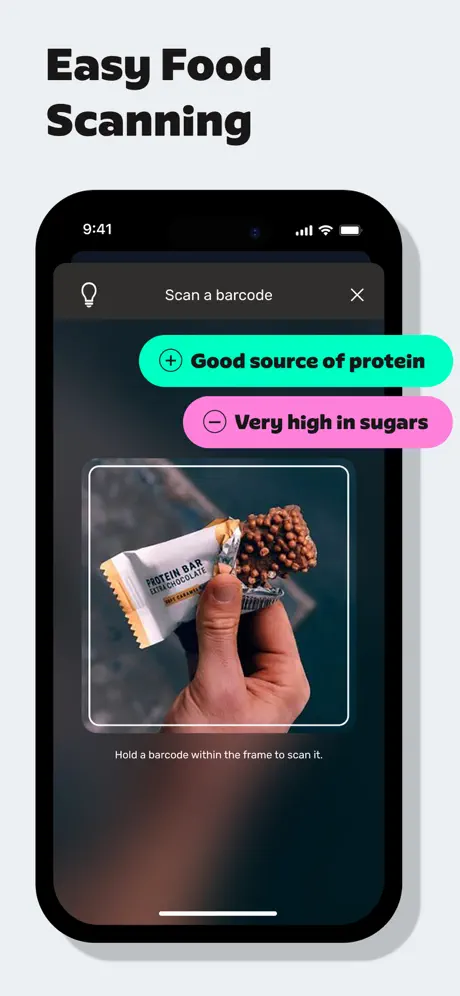
Both apps offer barcode scanning. Lose It! includes it free, while YAZIO makes it available as well. The daily logging workflow is comparable: scan or search, select the entry, confirm serving size, and log.
Lose It!'s food search is fast and returns relevant results. The database is large enough for most North American branded foods. Meal copying allows you to duplicate previous days' meals, saving time for routine eating patterns.
YAZIO's food search works within its database, but custom food creation is where problems emerge. Users report that creating custom entries triggers cryptic "data doesn't add up" errors that prevent saving. If your food is not in the database, you may not be able to add it, a fundamental gap in a calorie tracker.
Winner: Lose It! Reliable custom food entry and meal copying, not dead-end errors on custom foods.
06Stability after major app updates
Lose It! is generally stable across updates. Core tracking features work consistently, the food database remains accessible, and logged data persists. Updates introduce new features without breaking existing ones. For a daily-use tool, this predictability matters.
YAZIO has documented post-update stability problems. The calendar view, which lets you review historical food logs, breaks after updates. Users report that the calendar either fails to load or displays incorrect data after installing a new version. For users who review past meals to maintain consistency or track patterns, a broken calendar view removes a core feature.
Winner: Lose It! Stable updates without calendar breakage and data display issues.
07Cross-Device Continuity
Lose It! handles device switching through standard cloud sync. Users can switch phones without reported data loss. Food history, settings, and preferences transfer as expected.
YAZIO has a serious cross-device problem. Users report that switching phones causes food history to fail to load on the new device. Data that was accessible on the original phone (potentially months or years of food logs) may not transfer. For a tool where long-term data matters (tracking trends, reviewing patterns, maintaining continuity), this is a critical failure.
Winner: Lose It! Standard cloud sync that preserves data without documented cross-device data loss.
08Streaks badges and habit games
YAZIO offers diamond chests, a gamification system that awards rewards for streaks and milestones. In concept, this adds an engagement layer that encourages consistency. In practice, users report that the chests do not trigger as described. Streaks and milestones pass without the expected reward appearing. Broken gamification is worse than no gamification, because it creates expectations and then fails to meet them.
Lose It! has no gamification system. It does not promise engagement rewards, and therefore does not disappoint with broken ones.
Winner: Draw YAZIO's gamification concept is appealing, though the broken implementation provides no advantage over Lose It!'s absence of it.
09Free tiers and paid walls
Lose It! Premium costs $39.99/year. YAZIO Pro costs $6.99/month ($83.88/year). Lose It! is roughly half the annual price.
Both have functional free tiers. YAZIO's free tier has a noted trust issue: users report being charged after forgetting to cancel trials, and auto-renew surprises are a recurring complaint. Lose It!'s upsell pressure is aggressive but transparent. You always know what you are being asked to pay for.
Winner: Lose It! Half the annual cost with transparent monetization, not trial auto-renew surprises.
10Apple Watch logging and Health sync
Both apps offer basic Apple Watch integration. Neither provides a full companion experience with comprehensive logging, coaching, or health scoring from the wrist. Both allow calorie checking and basic food entry. This is a functional draw.
Winner: Draw Both offer basic Watch integration with similar limitations.
11Who should pick Lose It! vs YAZIO
Choose Lose It! if you want the most reliable and affordable calorie tracking experience. Free barcode scanning, stable updates, cross-device data continuity, and $39.99/year pricing make Lose It! the practical choice for daily tracking. Tolerate the upsell pressure and the utilitarian design as the trade-off for a tool that works consistently and does not lose your data.
Choose YAZIO if visual design quality is a priority and you are primarily tracking within the European market. YAZIO's polished interface and local product coverage are genuine advantages. Accept the data accuracy issues, the phantom entries, and the cross-device risk as the trade-off for the most beautiful tracking experience in the category. Verify nutrition values against packaging before trusting them.
12Final pick based on your priority
Lose It! is the more reliable daily tool at a lower price. YAZIO is the more beautiful daily tool with deeper data integrity problems. For a calorie tracker where the entire value proposition depends on accurate calorie numbers, reliability matters more than aesthetics. Lose It! costs half as much, does not add phantom entries, does not lose your data when you switch phones, and does not break its calendar after updates.
Neither app offers coaching or adaptive goals. Both are calorie counters with different strengths and different failure modes.
Looking for a tracker that is reliable, visually clean, and goes beyond calorie counting? Fuel uses Apple Health as your data backbone, delivers AI-powered logging, and provides daily coaching without phantom entries, post-update breakage, or data loss.
Frequently Asked Questions
Which app is more reliable day to day?
Lose It! is significantly more reliable. Core features work consistently across updates, and the app does not break fundamental functionality. YAZIO has post-update stability problems (calendar breaks), cross-device data loss when switching phones, and phantom entries that inflate calorie totals.
Is YAZIO's data accurate?
YAZIO has documented data accuracy issues. Users report nutrition values that do not match package labels, phantom entries that appear in the log without user input, and custom food entries that trigger dead-end errors. The polished interface can mask these underlying data problems.
Which app is cheaper?
Lose It! Premium costs $39.99/year. YAZIO Pro costs $6.99/month ($83.88/year). Lose It! is about half the annual cost. Both have functional free tiers.
Do either app offer coaching?
Neither Lose It! nor YAZIO offers coaching, adaptive goal adjustment, or a daily feedback loop. Both provide static calorie targets. YAZIO adds gamification (diamond chests) but this is not coaching. Users report the gamification does not trigger as described.
What happens if I switch phones with YAZIO?
Users report that switching phones with YAZIO causes food history to fail to load. Data that was reliably accessible on the original device may not transfer. Lose It! handles cross-device continuity through standard cloud sync without reported data loss issues.