
Key Takeaways
Lifesum and YAZIO are both popular European nutrition trackers with compelling surface presentations and deeper reliability problems. Lifesum's AI logging pivot trades database dependency for AI dependency, faster but unverifiable. YAZIO's polished interface sits on top of data integrity issues that affect every logged meal. Both have post-update stability problems. The choice comes down to whether you prefer AI speed with instability or visual polish with inaccuracy.
01About Lifesum
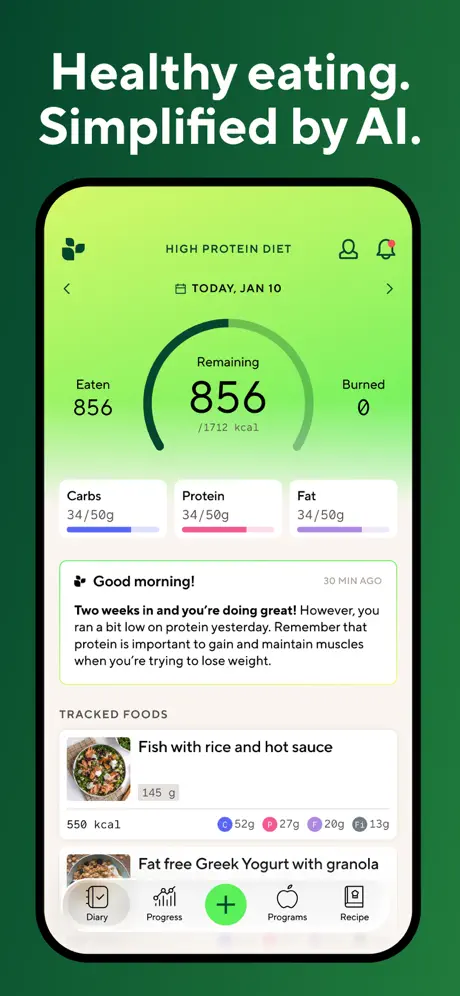
Lifesum is a Stockholm-based lifestyle nutrition app that recently pivoted to AI-powered text logging. The updated approach replaces traditional food database searching with natural language input. Describe what you ate and the AI estimates the nutritional content. Surrounding this core feature are diet plans (keto, intermittent fasting, Mediterranean, and others), a recipe library, and a Life Score gamification system that rates your overall wellness.
The pivot has been divisive. Users report that AI accuracy is unreliable, the ability to correct entries was removed, and structured meal slots were replaced with a flat list that regularly mis-assigns foods to wrong meals. The tracker breaks after updates, behavior reverts without explanation, and paid users at $9.99/month report periods where food entry fails entirely. Lifesum's ambition to leapfrog database-dependent tracking is genuine, but the execution has created daily reliability problems that did not exist before the pivot.
02About YAZIO
YAZIO is a German-based nutrition tracking app that has built one of the most visually polished experiences in the category. The typography is clean, transitions are smooth, and the interface looks like a design portfolio piece. Standard meal structure is maintained with clear breakfast, lunch, dinner, and snack slots. The overall aesthetic communicates care and attention to detail.
Underneath the polish, YAZIO has significant data integrity problems. Nutrition values frequently do not match package labels. Custom food entries trigger cryptic "data doesn't add up" errors with no resolution path. Phantom entries appear in the food log that the user did not create, inflating calorie totals. The calendar breaks after updates. Switching phones causes food history to fail to load. And the gamification system (diamond chests awarded for streaks and milestones) does not trigger as described. YAZIO Pro costs $6.99/month and includes a basic Apple Watch integration.
03Database noise and accuracy sources
Both apps have fundamental data problems, but they manifest differently.
YAZIO's issues are about the underlying data. Nutrition values diverge from package labels. You scan a product, and the calories or macros in YAZIO do not match what the manufacturer printed. Custom food entries trigger dead-end errors that prevent saving. Phantom entries inflate your daily totals with foods you never logged. Cross-device sync fails when you switch phones, potentially losing your entire food history. The data you depend on for calorie tracking is unreliable at every level.
Lifesum's issues are about the AI layer. The AI estimates are questioned for accuracy, and the removal of corrections means you cannot fix errors. The flat meal list mis-assigns foods. Feature behavior fluctuates between updates. You cannot trust what the AI logged, and you cannot verify or correct it.
Both apps ask you to trust calorie numbers that may be wrong. YAZIO's database entries are inaccurate, and Lifesum's AI estimates are unverifiable.
Winner: Draw. Both have serious data integrity problems. YAZIO's are database-level, Lifesum's are AI-level.
04Day-to-day UI friction
YAZIO is the more visually polished app. The interface design is consistently praised for smooth animations, clean typography, and modern layout. It looks and feels like a premium product. Standard meal structure with dedicated slots for breakfast, lunch, dinner, and snacks provides a familiar logging framework.
Lifesum was similarly well-regarded before the AI pivot. The updated interface replaced structured meal slots with a flat chronological list that loses the visual clarity of dedicated meal sections. The design still looks good in screenshots, but the daily experience has been destabilized. Features rearrange between updates, and the flat list makes it harder to review what you ate at each meal.
Winner: YAZIO. Consistently polished design with standard meal structure versus a destabilized interface post-pivot.
05How each app handles food logging
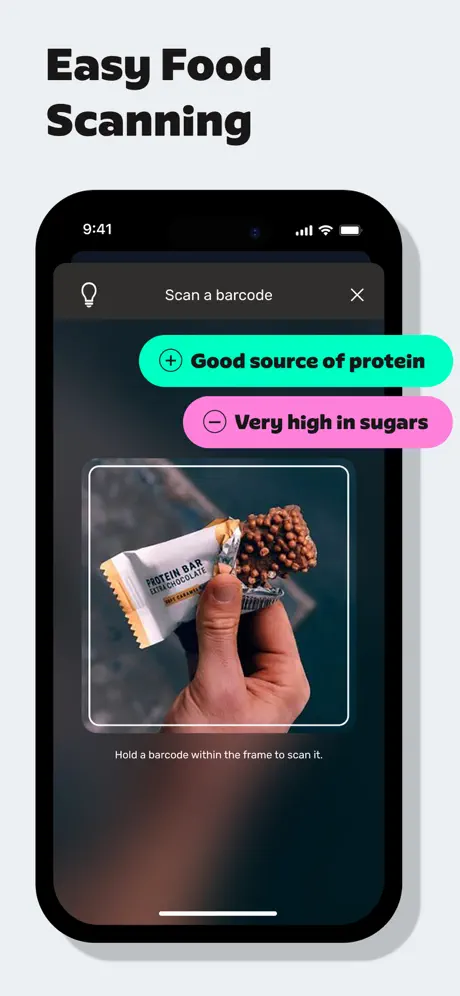
YAZIO uses traditional database search and barcode scanning. When entries are accurate (and many are), the workflow is standard and verifiable. You see the entry, confirm the serving size, and log it. The problems arise with custom foods (dead-end errors) and data accuracy (values that do not match labels). The logging mechanism works. The data underneath it is unreliable.
Lifesum's AI text logging is faster when it works. Describe your food and get an instant estimate. No searching, no scrolling, no serving-size selection. When the AI is accurate, it is a genuinely better experience. When it is not, you cannot correct it. You may not even know it is wrong, because there is no reference data to compare against.
Winner: Conditional. YAZIO for verifiable logging when accuracy matters. Lifesum for speed when precision is secondary.
06Stability after major app updates
Both apps have post-update stability problems. This is an unusual pattern that suggests ongoing engineering challenges at both companies.
Lifesum's updates break the AI tracker. Features revert to previous behavior. The flat meal list sometimes reverts to structured slots and back. Paid users lose access to features they are paying for. The experience is unpredictable after any app update.
YAZIO's updates break the calendar. Historical data display fails. Cross-device sync disrupts. The gamification system (diamond chests) stops triggering as described. The core logging usually survives updates, but peripheral features become unreliable.
Lifesum's post-update problems are more severe because they affect core logging. YAZIO's affect peripheral features and historical display.
Winner: YAZIO. Post-update issues affect peripherals rather than core logging.
07Free tiers and paid walls
YAZIO Pro costs $6.99/month ($83.88/year). Lifesum Premium costs $9.99/month ($119.88/year). YAZIO is about 30% cheaper annually.
Both have functional free tiers that allow basic calorie tracking. Lifesum's free tier gives access to AI logging with limitations. YAZIO's free tier provides standard database logging with ads. Both gate meaningful features behind their respective subscriptions.
For similar core tracking capability with different accuracy trade-offs, YAZIO offers better value on price alone.
Winner: YAZIO. $6.99/mo versus $9.99/mo for comparable core tracking.
08Apple Watch logging and Health sync
YAZIO offers basic Apple Watch integration for calorie checking and simple logging from your wrist. It is not a comprehensive companion experience, but it provides at-a-glance access to daily progress.
Lifesum has no Apple Watch app. All interactions require your phone.
Winner: YAZIO. Basic Watch integration versus none.
09Who should pick Lifesum vs YAZIO
Choose Lifesum if you want AI-powered text logging with diet plans and lifestyle features. Lifesum's broader feature set (diet plans, recipes, Life Score) provides more guided structure than YAZIO's pure tracking approach. Accept the AI accuracy trade-off and the post-update instability as the cost of a more ambitious product. Best for users who value speed and lifestyle breadth over data precision.
Choose YAZIO if visual design and standard meal structure matter most. YAZIO's polished interface and familiar logging workflow provide a more predictable daily experience. The lower price point adds value. Accept the data accuracy problems and the phantom entry issue as the cost of a product that looks and feels premium. Best for European users who want an affordable, well-designed tracker.
10Final pick based on your priority
YAZIO offers a more stable daily experience at a lower price with standard meal structure and a polished interface. It has data accuracy issues. Lifesum offers a more ambitious approach with AI logging and lifestyle features. It has instability introduced by the pivot. Both have significant data integrity problems that undermine the fundamental purpose of a calorie tracker.
The deeper problem is shared: neither app can guarantee that the calorie numbers you see are correct. YAZIO because the database entries diverge from labels. Lifesum because the AI estimates cannot be verified or corrected.
Looking for a tracker that combines AI logging, data reliability, and coaching without the post-update breakage? Fuel uses Apple Health as your data backbone, with correctable AI logging and daily coaching that stays consistent across updates.
Frequently Asked Questions
Which app has better data accuracy?
Neither app has reliable data accuracy. Lifesum's AI logging produces estimates that cannot be corrected since the pivot update. YAZIO's database entries frequently do not match package nutrition labels, and phantom entries inflate calorie totals. Both have data integrity problems that affect daily tracking reliability.
Is YAZIO cheaper than Lifesum?
Yes. YAZIO Pro costs $6.99/month ($83.88/year). Lifesum Premium costs $9.99/month ($119.88/year). YAZIO is about 30% cheaper annually. Both have functional free tiers.
Do either app break after updates?
Both have post-update stability problems. Lifesum's AI tracker breaks after updates, with features reverting to previous behavior. YAZIO's calendar breaks after updates, and cross-device data sync can fail when switching phones. Neither guarantees a stable experience across updates.
Does YAZIO have an Apple Watch app?
YAZIO offers basic Apple Watch integration. Lifesum does not have an Apple Watch app. Neither provides a full companion Watch experience.
Which app is better for European users?
Both Lifesum and YAZIO have strong European user bases. Lifesum is based in Stockholm and YAZIO in Germany. Both databases include European products, though YAZIO's data accuracy issues apply regardless of region. For European users, database coverage is similar. The deciding factors are logging approach (AI vs database) and pricing.