App Comparison
Cronometer vs YAZIO
Fuel Nutrition Team • March 22, 2026
Cronometer

YAZIO

Database source
Micronutrients
Data integrity
UI polish
Fasting
Barcode scanning
Apple Watch
Price
Key Takeaways Cronometer offers the most accurate nutrition data available with 80+ USDA-verified micronutrients but wraps it in a utilitarian interface. YAZIO is one of the most visually polished trackers with fasting tools and gamification but has documented data integrity problems including phantom entries and mismatched nutrition values. The choice comes down to whether you trust your data or enjoy your interface more.
Cronometer is a nutrition tracking app built on the USDA National Nutrient Database and verified institutional sources. It tracks over 80 micronutrients — full amino acid profiles, individual B vitamins, trace minerals like selenium and manganese, omega fatty acid breakdowns, and the complete vitamin spectrum. Every food entry has been verified against published nutritional research, making it the most data-accurate consumer nutrition tracker available.
The app offers free barcode scanning that returns verified data, a functional free tier, and a Gold subscription at $5.49 per month for advanced reporting features. There are no ads and no aggressive upsell pressure. The interface is built for users who want to see every nutrient for every food — data density is the priority, not visual appeal.
Cronometer does not have an Apple Watch app, does not include fasting tools, and offers no gamification or lifestyle features. The Daily Report scroll-resets on every interaction, the app only shows consumed totals without remaining calculations, and there is no coaching layer. It is a precision data instrument — nothing more and nothing less.
YAZIO is a nutrition tracking app that originated in Germany and has built a strong following, particularly in Europe. It is one of the most visually polished nutrition trackers available — clean typography, smooth animations, modern card-based layouts, and an interface that feels considered and intentional. The daily experience of using YAZIO is pleasant in a way that most nutrition apps are not.
Beyond basic calorie and macro tracking, YAZIO includes an intermittent fasting timer that supports 16:8 and custom schedules, gamification elements that reward consistent logging, recipe suggestions, and a basic Apple Watch integration. The Pro subscription costs $6.99 per month, and there is a functional free tier.
The serious concern with YAZIO is data integrity. Users have documented cases where the nutritional values displayed for scanned foods do not match the package label — sometimes significantly. Phantom entries appear in daily logs overnight without user input, inflating calorie and macro totals. The calendar and history views have been reported to break across devices, making it difficult to review past data reliably. Cross-device synchronization sometimes causes history to fail to load entirely.
These are not minor UX issues. When a nutrition tracker's data cannot be trusted at the entry level, the tracking itself loses its diagnostic value — no matter how beautiful the interface presenting that data may be.
The phantom entry issue is particularly insidious because it means your daily totals can change without your knowledge or input. If you check your calories at dinner and plan your evening meal accordingly, only to find inflated totals the next morning, the entire planning process is undermined. Data integrity is the foundation on which every other feature depends.
Winner: Cronometer
This is the defining difference between these two apps, and it is severe. Cronometer's USDA-verified database provides laboratory-measured nutritional values for every entry. When you scan a barcode or search a food in Cronometer, the data has been validated against published institutional sources. The 80+ micronutrients it tracks are not estimates — they are measured values that clinical nutrition research relies on.
YAZIO's crowd-sourced database has documented integrity problems that go beyond the typical inaccuracies of user-contributed data. The three most concerning issues:
First, nutrition values frequently do not match package labels. Users report scanning a product and seeing calorie counts, protein values, or fat content that differs from what is printed on the package. For a nutrition tracker, this is a fundamental trust violation — if you cannot trust that a scanned item reflects reality, every daily total becomes suspect.
Second, phantom entries appear in daily logs. Users open the app in the morning to find foods logged overnight that they did not add. These phantom entries inflate calorie and macro totals, making the daily picture inaccurate even if every entry you personally added was correct.
Third, calendar and history views break across devices. If you use YAZIO on multiple devices or reinstall the app, historical data may fail to load, making it impossible to review trends or compare past behavior.
For any user who relies on their nutrition data for decision-making, these integrity issues are disqualifying. Beautiful charts built on unreliable data are decoration, not information.
Winner: YAZIO
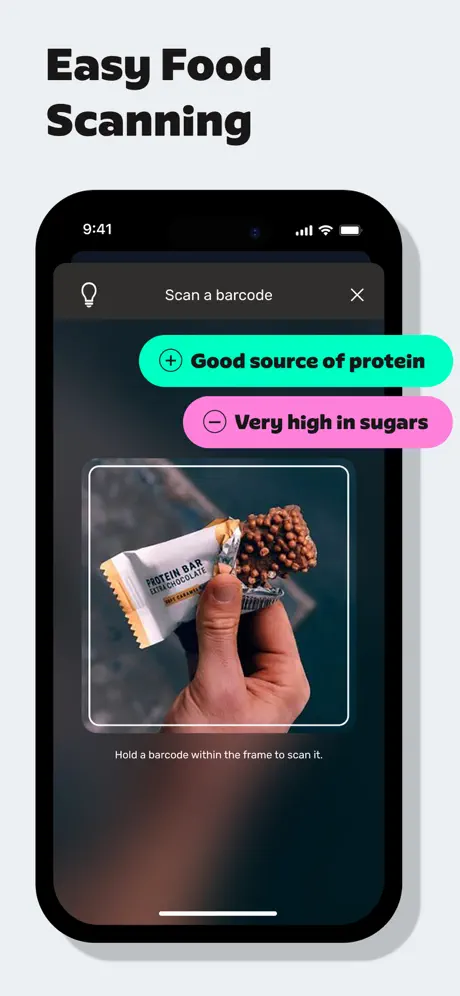
Credit where it is due: YAZIO is one of the best-designed nutrition apps available. The interface uses clean card-based layouts, consistent typography, thoughtful color choices, and smooth transitions between screens. The daily dashboard presents calorie and macro progress in a way that is immediately readable. The fasting timer integrates naturally into the daily flow. Even the barcode scanning experience feels polished.
Cronometer's interface is utilitarian by comparison. It prioritizes data density — fitting 80+ micronutrients into a readable layout means the design is functional rather than beautiful. The Daily Report scroll-resets on every interaction, which creates friction when reviewing your day. The app only shows consumed totals without calculating what remains toward your targets, requiring mental math. The overall aesthetic has improved over the years but remains clearly in the "built by scientists" rather than "built by designers" camp.
For users who find that a pleasant daily experience increases adherence — and there is evidence that it does — YAZIO's design advantage is meaningful. The question is whether that design advantage outweighs the data integrity concerns underneath it.
Design quality in a daily-use app is not trivial. A nutrition tracker that you enjoy opening is one you are more likely to use consistently, and consistency matters more than any single-day accuracy. YAZIO understands this. But the benefit of a beautiful interface is limited when the data it presents may be wrong — you are consistently logging, but you may not be consistently learning the truth about your diet.
Winner: Cronometer
Cronometer tracks over 80 micronutrients with verified accuracy. This includes all vitamins (A through K, individual B-vitamin subtypes), essential and trace minerals (calcium, iron, zinc, selenium, chromium, manganese, molybdenum), all essential amino acids and most non-essential ones, and omega-3 and omega-6 fatty acid ratios. The data is sourced from the USDA and equivalent institutional databases.
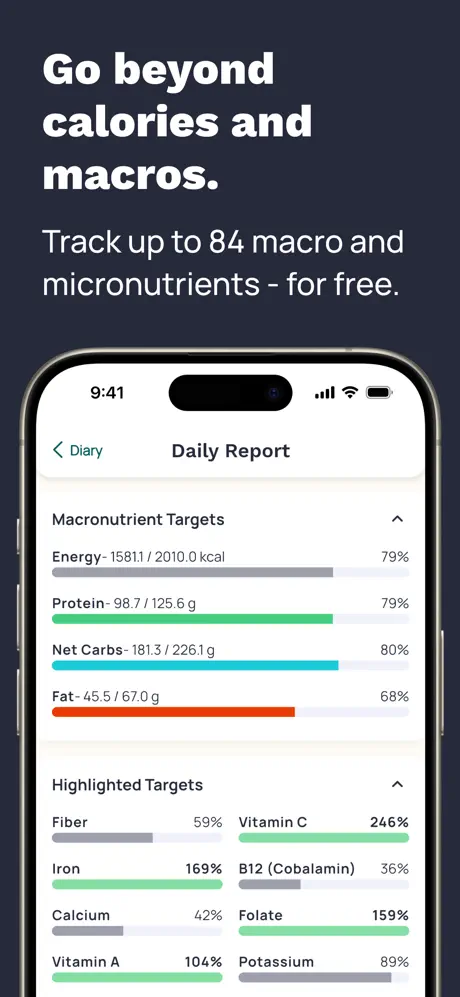
YAZIO tracks calories and basic macronutrients — protein, carbohydrates, fat, and fiber. There is no vitamin tracking, no mineral visibility, no amino acid data, and no fatty acid breakdown. For users who only care about macros, this is fine. For anyone interested in nutrition beyond the macro level, YAZIO does not compete.
This gap matters most for users tracking nutrition for health optimization, managing specific deficiencies, or monitoring dietary intake at a clinical level. Cronometer is the only option between these two for that use case.
Winner: YAZIO
YAZIO includes a built-in intermittent fasting timer that supports the popular 16:8 protocol and custom schedules. The timer integrates into the daily dashboard, shows your current fasting window progress, and tracks your fasting history over time. For users who practice time-restricted eating, having the fasting timer built into the same app as the food tracker is genuinely convenient.
YAZIO also offers gamification elements — streaks, achievements, and engagement rewards — that some users find motivating for maintaining daily tracking habits. These features are absent from Cronometer entirely.
Cronometer has no fasting tools, no gamification, and no lifestyle features beyond its core nutrient tracking. If you practice intermittent fasting with Cronometer, you use a separate app or your own discipline to manage your eating window.
For users who combine intermittent fasting with calorie tracking, having both tools in one app reduces the number of health apps to manage. YAZIO's fasting timer is well-implemented — it shows current window status clearly, supports popular protocols, and tracks fasting history. This is a genuine convenience that Cronometer does not offer and would need to be replaced with a separate dedicated fasting app.
Winner: YAZIO
YAZIO offers a basic Apple Watch integration that provides calorie tracking progress and quick access from the wrist. It is not comprehensive — detailed logging still requires the phone — but it provides at-a-glance information that Cronometer lacks entirely.
Cronometer has no Apple Watch app. Its Apple Health integration is partial, with documented re-import gaps where historical data does not backfill correctly after sync disruptions.
Neither app delivers an exceptional Apple ecosystem experience, but YAZIO's basic Watch support gives it a clear edge over Cronometer's absence.
Winner: Draw
Neither app offers coaching. Cronometer displays verified data without interpreting it. YAZIO displays macro data without guiding you on what to do with it. Neither provides adaptive goals, actionable daily recommendations, or any form of human or AI coaching.
Both apps assume you know what to do with the numbers they show you. For users who want guidance alongside their data, both leave the same gap.
Winner: Cronometer
Cronometer Gold costs $5.49 per month. YAZIO Pro costs $6.99 per month. The price difference is not dramatic, but what you get for each dollar is starkly different.
Cronometer Gold gives you verified data from institutional sources, 80+ micronutrients tracked with accuracy you can trust, free barcode scanning, and no ads. Every number you see has been validated.
YAZIO Pro gives you a beautifully designed interface, fasting tools, gamification, and basic Apple Watch support — but the nutritional data underneath has documented integrity issues. You are paying for a polished experience built on a data foundation that may not be reliable.
For users who prioritize data trust, Cronometer is the better value at the lower price. For users who prioritize the daily experience and do not require data precision, YAZIO's additional features may justify the modest premium.
The price difference — $1.50 per month — is small enough that it should not be the deciding factor. The real question is what you value more: trustworthy data or a more enjoyable daily experience. Both are legitimate priorities, and both apps charge reasonable prices for what they deliver. The difference is in what each delivers, not what it costs.
Cronometer is the right choice for users who need to trust every number they see. If you are tracking micronutrients for health optimization, managing dietary intake around a medical condition, supporting athletic performance with verified macro and micronutrient data, or simply care about data accuracy above all else, Cronometer is unmatched. The interface is functional rather than beautiful, but every number you see has been verified against published research. For data-serious users, no other consumer app comes close.
YAZIO is the right choice for users who prioritize the daily experience of tracking over the precision of the data. If you value a polished, modern interface, want built-in fasting tools alongside your calorie tracking, appreciate gamification elements that encourage habit formation, and are tracking general calorie and macro awareness rather than precise micronutrient intake, YAZIO provides a more enjoyable daily tool. Just be aware of the documented data integrity issues and consider cross-referencing scanned entries against package labels.
Cronometer and YAZIO represent a fundamental trade-off between data trust and product experience. Cronometer gives you the most accurate nutrition data available in a consumer app — verified, comprehensive, and trustworthy — in a utilitarian package. YAZIO gives you one of the most beautifully designed tracking experiences available, with fasting tools and gamification, on top of a data layer that has documented integrity problems. One builds trust in the numbers. The other builds enjoyment in the process.
Neither app offers coaching or adaptive goals. If you want accurate tracking wrapped in a coached daily experience with Apple Watch support and data you can trust, Fuel delivers AI logging, daily coaching, and health scoring — reliable data with a product experience that guides you forward.