Why this page exists
A can of light tuna says 5 ounces on the label. Drain it and weigh what is left and the fish itself comes to 107 g, not 142 g. The record on this page measures the drained solids, so logging the can's printed weight against it overstates a single can by roughly 7 g of protein and 32 calories, a gap built entirely from this page's own drained-can and total-can-contents portions applied to the same record.
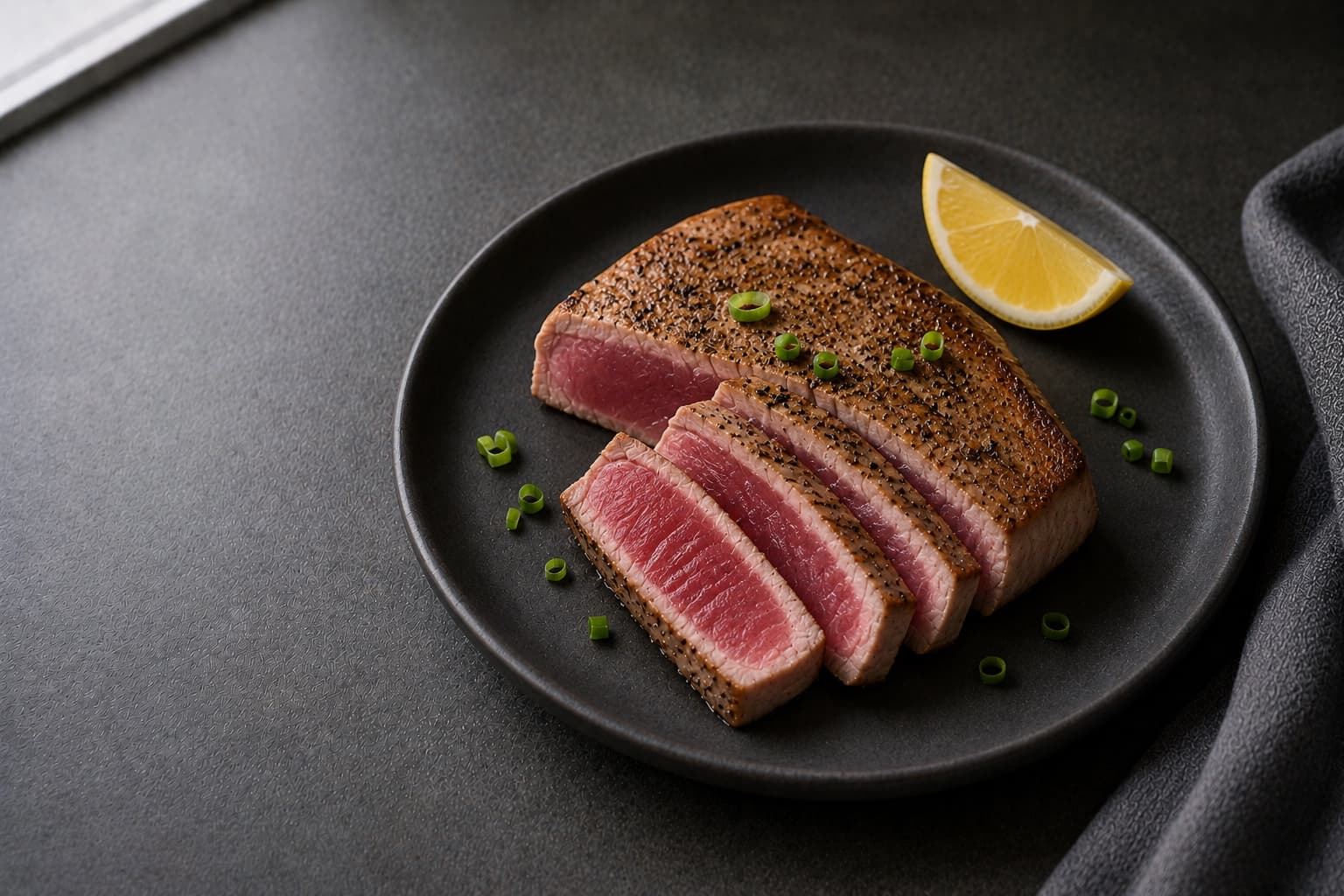
Two records sit on this page and neither one stands in for the other. Canned light tuna in water, drained, runs 19 g of protein for 90 calories per 100 g and needs nothing more than a fork. Raw wild yellowfin runs 24.7 g of protein for 102 calories per 100 g and is a fillet that has to be thawed, cut, and cooked before it is a meal. A tracker entry that just says "tuna" is quietly choosing one of these two foods, and the prep time difference alone should tell you which one it usually means.
What both records share is an unusually good protein-to-calorie ratio. The canned record buys roughly 21 g of protein for every 100 calories spent, a figure most of a grocery budget cannot otherwise reach. The sections below cover how to log a can without the drained-weight error and where tuna earns its place against salmon, chicken breast, and Greek yogurt.
What is in a serving
Every figure below is scaled from the USDA record named at the bottom of this panel.
Serving basisgrams
100 gof Canned Light, Water, Drained
- Calories
- 90 cal
- Protein
- 19 g
- Carbs
- 0.1 g
- Fat
- 0.9 g
| Nutrient | Per serving100 g | Per 100 greference |
|---|---|---|
| Calories | 90 cal | 90 cal |
| Protein | 19 g | 19 g |
| Carbs | 0.1 g | 0.1 g |
| Fat | 0.9 g | 0.9 g |
| Fiber | not reportedUnavailable. This record does not report fiber. | not reportedUnavailable. This record does not report fiber. |
| Sugar | 0 g | 0 g |
| Sodium | 219 mg | 219 mg |
Fiber is not reported on Canned Light, Water, Drained.
A nutrient the record does not measure shows as — and never as 0. A zero here is a measured zero.
FDC 334194USDA Foundation FoodsFish, tuna, light, canned in water, drained solidsPublished April 1, 2019
The records behind this page
One food family, 2 source records. The figures are per 100 g, which is the basis the USDA publishes and the only fair way to compare records whose servings differ.
| Record | Caloriescal | Proteing | Carbsg | Fatg | Fiberg | Sugarg | Sodiummg |
|---|---|---|---|---|---|---|---|
| Fish, Tuna, Light, Canned in Water, Drained SolidsFDC 334194FoundationCannedShown by default | 90 | 19 | 0.1 | 0.9 | not reportedUnavailable. This record does not report fiber. | 0 | 219 |
| Tuna, Ahi or Yellowfin, Frozen, Wild CaughtFDC 2747673FoundationFrozen | 102 | 24.7 | 0 | 0.4 | not reportedUnavailable. This record does not report fiber. | not reportedUnavailable. This record does not report sugar. | 94 |
Logging tuna without guessing
The can's printed weight is not the drained weight. A standard can lists 142 g of total contents, liquid included. Drained, the solids come to 107 g. Log the 142 g figure against this page's drained-solids record and you print 128 calories and 27 g of protein for a can that actually gave you 96 calories and 20.3 g. Log the 107 g drained weight, or use the USDA reference amount of 85 g if you are not draining a whole can at once, and the number on the label stops fighting the number in your tracker.
Water-packed and oil-packed are different foods, and this page only measures one. Every figure here comes from the light-in-water record. There is no oil-packed record on this page, so nothing here tells you what a can packed in oil weighs once drained or how much fat it carries. If the can in your pantry says "in oil," check that can's own label rather than borrowing this page's water-packed numbers. The two are close in protein and far apart in fat and calories, and guessing the gap defeats the point of tracking it.
The calorie side is what makes canned tuna worth reaching for, more than the protein side. 19 g of protein is a solid number, but plenty of foods clear it. What makes the can worth reaching for is that it costs only 90 calories to get there, with 0.9 g of fat and 219 mg of sodium along for the ride. That sodium figure matters if you are already watching salt from other sources in the day, since a single drained can at 107 g runs 234 mg on its own.
Fresh yellowfin has no published portion here, so put it on a scale. This page carries no can, no fillet weight, no cup for the frozen yellowfin record, only the per-100-g figures. A grocery fillet is not a can with a printed weight on the label. Weigh the raw fillet before it goes in the pan and scale from the 100 g figures above, because any "one fillet" entry a tracker offers you is somebody else's guess about the fillet you bought.
Weigh the can's drained solids, or use the 85 g reference amount if you have not drained a full can. Weigh a yellowfin fillet raw before it hits the pan. Anything else is a guess wearing a gram sign.
Where tuna fits, and where it does not
The cheap protein anchor when the grocery budget is the constraint. At 21 g of protein per 100 calories, the canned record is difficult to beat without cooking anything, and it holds at room temperature until the can opens. It is the practical core of the tuna yogurt bowl and a straightforward add to the high-protein salad template.
The budget omega-3 source, without a number this page's table can print. The canned light-tuna source record retains EPA and DHA fields, while the fresh yellowfin record does not; neither field appears in this page's macro table, so this page will not invent a gram figure for either fish. What holds without a displayed number is the relative case: canned tuna is cheaper per gram of protein than salmon, and it is still a fish, not a land animal, which is the distinction that matters for the mechanism covered at omega-3 fatty acids and omega-3 index. A reader priced out of a salmon fillet is not priced out of omega-3 entirely.
Mercury and how often, which this page can only answer with an outside source. The USDA records here measure macros, not mercury, so the frequency question needs a citation rather than a record. For people who are pregnant, may become pregnant, or are breastfeeding, FDA and EPA guidance defines a serving as 4 oz and lists canned light tuna, mostly skipjack, as a "Best Choices" fish at 2 to 3 servings a week, while fresh or frozen yellowfin sits in the "Good Choices" tier at 1 serving a week. The two records on this page are not interchangeable on this question either.mercury
Where it does not fit. Tuna is lean at both records, which makes it the wrong tool for a reader trying to add calories on a bulk. Olive oil or a fattier cut does that job without the sodium load of a second or third can. And a reader who dislikes the texture of either canned or seared tuna is better served checking chicken breast or Greek yogurt for the same protein density in a form they will actually eat.
The decision for this page is short. Log the drained weight, not the can's printed weight. Treat the canned and fresh records as two different foods rather than one tracker entry. And check the mercury guidance by species before deciding how many times a week either one belongs on the plate.
Footnotes
FDA and EPA, Advice About Eating Fish. The guidance uses a 4 oz serving for the populations covered above. Canned light tuna (mostly skipjack) is listed under "Best Choices" at 2 to 3 servings a week. Fresh or frozen yellowfin (ahi) is listed under "Good Choices" at 1 serving a week.
Back to text
Where it fits against a goal
Cutting on a fixed calorie budget
107 g of Fish, Tuna, Light, Canned in Water, Drained SolidsFDC 334194
- Protein
- 20.3 g
- Calories
- 96 cal
One drained can, 107 g at the USDA's own drained-solids portion, delivers 20.3 g of protein for 96 calories. That ratio is close to the best a grocery budget can buy, and it comes from a food that needs no stove.
Zero-prep protein between sessions
85 g of Fish, Tuna, Light, Canned in Water, Drained SolidsFDC 334194
- Protein
- 16.2 g
- Calories
- 77 cal
The USDA reference amount of 85 g, close to a single pouch, delivers 16.2 g of protein for 77 calories straight from the container. No thawing, no pan, no dishes after.
A cooked fillet, not a snack
100 g of Tuna, Ahi or Yellowfin, Frozen, Wild CaughtFDC 2747673
- Protein
- 24.7 g
- Calories
- 102 cal
Raw wild yellowfin runs denser than the canned record, 24.7 g of protein for 102 calories per 100 g, but it is raw fish that needs a thaw and a pan before it is a meal. Budget the extra step before you count on it.
Salt-conscious tracking
100 g of Tuna, Ahi or Yellowfin, Frozen, Wild CaughtFDC 2747673
- Protein
- 24.7 g
- Sodium
- 94 mg
100 g of the raw yellowfin record carries 94 mg of sodium against 219 mg for the same weight of the canned-in-water record. Canning in brine adds sodium that the raw fish does not carry on its own.
Methodology
Where the numbers come from
Every figure on this page is scaled from a per-100 g value in a USDA record by one shared function, so the numbers here and the numbers on a meal page that uses this ingredient cannot disagree. Values are rounded once, at the point of display.
- FDC 334194Fish, tuna, light, canned in water, drained solidsUSDA Foundation Foods
- FDC 2747673Tuna, ahi or yellowfin, frozen, wild caughtUSDA Foundation Foods
Unavailable values
A nutrient a record does not measure is shown as unavailable and never as zero. Across the 405 records in this dataset, 165 report no fiber and 228 report no sugar, so the distinction is not a rare edge case. A zero on this page means the analysis measured zero.
Source coverage
Every claim on this page resolves to one of the records listed here. This family has no open source gaps.
Datasets
- USDA FoodData Central Foundation FoodsExport 2026-04-30 · 363 of 395 entries normalized
- USDA FoodData Central SR LegacyExport 2018-04 · 42 of 7793 entries normalized